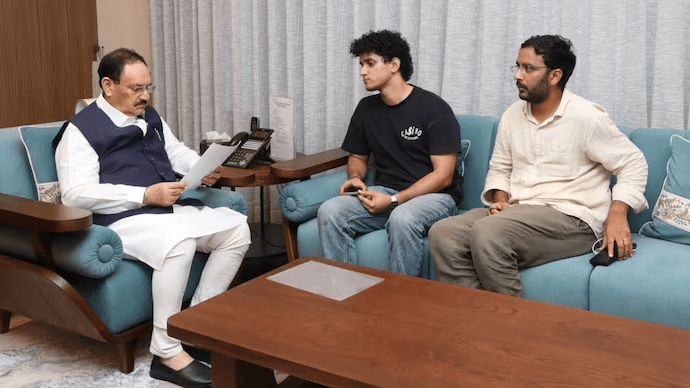
CJP Delegation Meets Health Minister JP Nadda: Three-Point Memorandum Demands Release of Sonam Wangchuk, Sacking of Dharmendra Pradhan, and Rs 1 Crore Compensation for NEET-Related Suicides
New Delhi, July 20, 2026 — In a significant escalation of protests against the recurring controversies surrounding the National Eligibility cum Entrance Test (NEET-UG), a delegation from Citizens for Justice and Peace (CJP) met Union Health Minister Jagat Prakash Nadda on Monday and submitted a detailed memorandum outlining three urgent demands. The memorandum calls for the immediate release of prominent Ladakhi activist and educator Sonam Wangchuk from Safdarjung Hospital, the removal of Education Minister Dharmendra Pradhan, and the provision of Rs 1 crore in compensation to the families of each NEET aspirant who allegedly died by suicide in the aftermath of the 2024-2026 paper leak scandals.
The meeting comes amid heightened tensions in the national capital, where Wangchuk has been on an indefinite hunger strike since late June, now entering its fourth week. Protests at Jantar Mantar have drawn students, civil society activists, celebrities, and opposition leaders, highlighting deep-seated frustrations with the education system’s integrity and the mental health toll on millions of young aspirants.
Background: The NEET Paper Leak Saga and Its Human Cost
The NEET-UG examination, conducted by the National Testing Agency (NTA), has been mired in controversy for years, but the 2024 scandal marked a new low. Allegations of widespread paper leaks, irregularities in grace marks, and impersonation rocked the exam, affecting over 24 lakh candidates. Protests erupted across states, with students and parents demanding a re-examination and accountability from the highest levels.
According to various reports and activist compilations, the leaks and subsequent stress led to a tragic spike in student suicides. Families from Bihar, Uttar Pradesh, Rajasthan, and other states reported cases where aspirants, burdened by years of intense preparation, coaching fees running into lakhs, and shattered dreams, took their own lives. Unofficial tallies by student groups and media investigations put the number of such deaths at over 20 in the direct aftermath, though official figures remain disputed.
One heart-wrenching case involved Riya Kumari, whose family spoke at rallies about her investing everything into NEET only to face a system that appeared rigged. Similar stories have flooded social media and protest sites, painting a picture of a generation betrayed by institutional failures.
Sonam Wangchuk, the engineer-activist who inspired the character Phunsukh Wangdu in the blockbuster film 3 Idiots, joined the fray with his trademark resolve. Known for his pioneering work in sustainable education through the Students’ Educational and Cultural Movement of Ladakh (SECMOL) and innovations like the Ice Stupa for water conservation, Wangchuk has long championed reforms in India’s examination-centric education model. His hunger strike at Jantar Mantar, later shifted to hospital care under medical supervision, has become a focal point for broader demands on education justice.
Wangchuk’s involvement lent moral weight to the protests. In notes issued from Safdarjung Hospital, he conditioned ending his fast on concrete governmental action, including parliamentary discussions on systemic fixes like secure question banks, multiple exam windows, and swift re-tests for compromised papers.
The CJP Memorandum: Three Demands in Detail
The CJP delegation, comprising lawyers, activists, educators, and affected parents, presented the memorandum to Minister Nadda with a sense of urgency. Here’s a breakdown of the three key demands:
1. Immediate Release and Medical Support for Sonam Wangchuk
Wangchuk’s health has deteriorated due to the prolonged fast. Supporters argue that his detention-like monitoring in the hospital, amid restrictions on visitors and protests, amounts to suppression of dissent. The memorandum demands his unconditional release, full medical transparency, and an end to any coercive measures. Celebrities like Shabana Azmi and Prakash Raj have publicly rallied in his support, emphasising his contributions to education and the environment.
Critics within the government circles have questioned the protest’s timing during the Monsoon Session of Parliament, but activists counter that the lives of students cannot wait for bureaucratic calendars.
2. Sacking of Education Minister Dharmendra Pradhan
The demand for Pradhan’s removal stems from accusations of oversight failures in the NTA and repeated exam leaks under his tenure. Opposition leaders, including Rahul Gandhi, have highlighted over 150 paper leaks nationwide since 2014, calling it an “auction of futures.” Protesters allege a lack of accountability, with no high-level resignations despite massive irregularities.
The memorandum cites specific lapses: delayed responses to leaks, opaque investigations, and inadequate support for affected candidates. It argues that ministerial accountability is essential to restore faith in the system.
3. Rs 1 Crore Compensation for Families of Deceased Aspirants
This is perhaps the most emotionally charged demand. CJP has compiled lists of alleged suicide cases linked to NEET stress post-leak. The Rs 1 crore ex gratia payment is proposed as a recognition of the state’s responsibility and a deterrent against future negligence. Families have shared stories of financial ruin from coaching loans and emotional devastation.
Legal experts in the delegation referenced precedents in compensation for institutional failures, such as in disaster or medical negligence cases, arguing that the psychological impact of a flawed high-stakes exam qualifies similarly.
Reactions from Stakeholders
Union Minister JP Nadda is said to have listened attentively but made no immediate commitments, promising to forward the memorandum to relevant ministries. Government sources emphasise ongoing investigations into leaks and reforms like biometric checks and CBT enhancements.
Opposition parties have thrown their weight behind the protests. Rahul Gandhi’s recent rally in Dehradun amplified the issue, demanding a systemic overhaul. Student unions like AISA and various civil society groups have joined the Jantar Mantar sit-in.
However, not all voices are unified. Some commentators question the scale of “NEET deaths” and point to pre-existing mental health challenges among students. Others criticise the hunger strike as disruptive, especially with reports of police interventions during attempted marches to Parliament. Delhi Police have defended their actions, citing security protocols, and denied excessive force.
Broader Context: India’s Examination Crisis
To understand the depth of this crisis, one must look at the scale. NEET-UG determines entry into medical and related courses for lakhs of students annually. The pressure cooker environment — single exam determining fate, coaching mafia, rural-urban divides — has long been criticised.
Wangchuk’s SECMOL model promotes activity-based, culturally rooted learning over rote memorisation, offering a counter-narrative. His Ice Stupas address Ladakh’s climate vulnerabilities, showcasing holistic problem-solving that many argue should inform national policy.
The 2026 protests coincide with Parliament’s Monsoon Session, where education is likely to dominate debates. Calls for a complete overhaul — from NTA restructuring to alternative assessment models — are growing louder.
Voices from the Ground
During the Jantar Mantar protests, parents like those from Bihar recounted sleepless nights and shattered aspirations. “My son studied 18 hours a day. The leak stole his future,” said one father, who wished to remain anonymous.
Students shared experiences of anxiety, depression, and financial strain. Mental health experts warn of a silent epidemic, with India’s student suicide rates already alarmingly high, according to NCRB data.
Celebrity endorsements have amplified reach. Actors and public intellectuals have used social media to demand justice, turning the issue into a national conversation.
Historical Parallels and Future Implications
Paper leaks are not new. Previous governments faced similar scandals, but the frequency and scale in recent years have eroded trust. The memorandum to Nadda references these patterns, urging bipartisan action.
If accepted, the demands could set precedents for victim compensation and ministerial responsibility. Rejection might fuel further unrest, especially with Wangchuk’s health in focus.
Medical bulletins from Safdarjung indicate Wangchuk is stable but weakened. His supporters vow to continue until demands are met or Parliament takes cognisance.
Analysis: What Lies Ahead?
The CJP initiative represents a convergence of education reform, mental health advocacy, and governance accountability. Success hinges on governmental response amid political pressures.
Experts suggest comprehensive solutions: technology for leak-proof exams, counselling infrastructure, diversified career pathways, and reduced emphasis on single exams.
For now, the ball is in the government’s court. As Parliament convenes, the eyes of millions of students and families remain fixed on Delhi.
==