
As the BMW PGA Championship unfolds this weekend at Wentworth Club in Surrey, England—one of the Rolex Series flagship events on the 2026 calendar—the DP World Tour once again finds itself at the centre of professional golf’s evolving landscape. With leaders such as Johannes Veerman and Alejandro Del Rey locked in a tight battle at 12 under through three rounds, and Race to Dubai Rankings leader Patrick Reed still setting the pace for the season, the Tour continues to deliver elite competition across continents. Yet the DP World Tour’s story is far bigger than any single leaderboard. It is the story of a circuit that began as a modest European endeavour in 1972 and has transformed into golf’s most geographically ambitious men’s professional tour.
The European Tour, currently titled the DP World Tour for sponsorship reasons and legally known as the PGA European Tour or European Tour Group, remains the leading men’s professional golf tour rooted in Europe. Its headquarters sit at the iconic Wentworth Club, and its membership and schedule now stretch far beyond the continent that gave it birth. In 2026, the season features 42 tournaments across 25 countries, a record prize fund approaching $157 million, and a structure deliberately designed around “Global Swings,” a high-stakes “Back 9,” and season-ending Play-Offs culminating in the DP World Tour Championship in Dubai.
From Provincial Beginnings to Continental Ambition
The Tour’s origins lie in a determined campaign led by former Ryder Cup player John Jacobs. After nearly two decades of advocacy, the Professional Golfers’ Association formalised an integrated European circuit in 1972. The first official event was the Open de España at Golf Club de Pals in Girona, Spain, played from 12–15 April. Spaniard Antonio Garrido defeated compatriot Valentín Barrios in a playoff to claim the inaugural title and a modest purse of £10,000. That season comprised roughly 20–21 events, the majority in Great Britain and Ireland, with only a handful on the Continent. Tobacco and alcohol companies underwrote many of the early tournaments, and the Order of Merit—later rebranded the Race to Dubai—rewarded consistent performance across a short April-to-October calendar.
Ken Schofield’s appointment as the first full-time executive in the mid-1970s provided administrative stability. By the late 1970s, the Tour had begun to attract genuine continental stars. Seve Ballesteros exploded onto the scene, winning the Dutch Open in 1976 as a teenager and going on to claim a record 50 DP World Tour titles—a mark that still stands and appears unlikely ever to be matched. Bernhard Langer (42 wins), Colin Montgomerie (31), Sir Nick Faldo (30) and Ian Woosnam formed a golden generation that elevated European golf on the world stage, most notably through successive Ryder Cup triumphs beginning in 1985.
Independence from the British PGA arrived in 1984. The circuit steadily expanded. The first event outside Europe was the Tunisian Open in 1982. The Dubai Desert Classic arrived in 1989, signalling the beginning of a deep and enduring relationship with the United Arab Emirates. South Africa, Asia, Australia and the Americas followed. By the turn of the millennium, the Tour was already more global than European in outlook, even if the name had not yet caught up.
The Global Transformation and the DP World Partnership
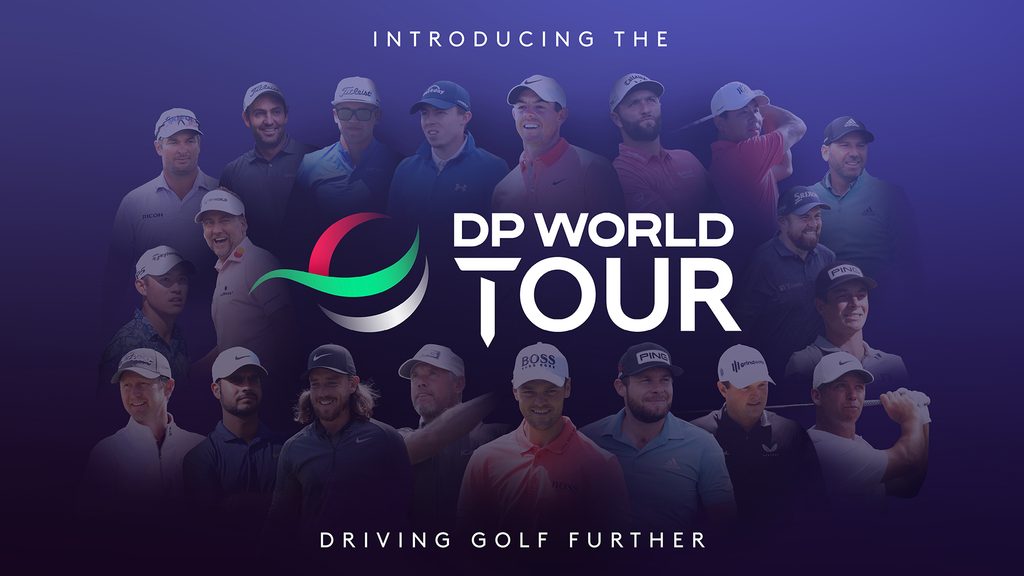
The most visible transformation occurred in November 2021. After five decades as the European Tour, the organisation announced a landmark title sponsorship with Dubai-based logistics giant DP World. From the 2022 season, the premier circuit would be known as the DP World Tour. The deal nearly doubled total prize money to more than $200 million, introduced a minimum $2 million purse for every solely sanctioned event, and expanded the Rolex Series. DP World had already been involved since 2009 as presenting partner of the season-ending championship and title sponsor from 2012. The 2021 agreement elevated the company to overall title partner and reflected the Tour’s genuine worldwide footprint.
Chief executive Keith Pelley described the old name as a “misnomer.” Only a minority of events by that point were staged in Europe itself. The rebranding coincided with the Tour’s 50th anniversary celebrations and a strategic alliance with the PGA Tour first signed in 2020. That alliance provided co-sanctioned events, financial support for prize funds, shared commercial opportunities and a pathway for the top 10 finishers on the Race to Dubai Rankings to earn PGA Tour membership the following season.
In late 2025, DP World extended the title sponsorship through 2035, the largest commercial agreement in the Tour’s history. The logistics company continues as official logistics partner and title sponsor of the season-ending championship while supporting roughly 15 additional events each year. The partnership has delivered measurable growth: higher purses, greater global television exposure, and a clearer narrative of a Tour that celebrates diversity of courses, cultures and players.
Season Architecture: Swings, the Back 9 and the Race to Dubai
The modern DP World Tour season is organised in three distinct phases. It opens with a series of “Global Swings”—Opening, International, Asian, European and Closing—that take the circuit through Australia, Africa, the Middle East, Asia and the Americas before the traditional European summer. Points are awarded toward the Race to Dubai Rankings (delivered by DP World). Enhanced points become available during the “Back 9,” a stretch of nine high-profile events that begins in late August and runs through October. The climax arrives with the DP World Tour Play-Offs: the Abu Dhabi Championship and the DP World Tour Championship at Jumeirah Golf Estates in Dubai, the latter carrying a $10 million purse and 12,000 Race to Dubai points for the winner.
Rolex Series events—currently including the Genesis Scottish Open, BMW PGA Championship, Abu Dhabi Championship and the season finale—offer elevated purses ($8–10 million) and maximum ranking points. The BMW PGA Championship at Wentworth remains a centrepiece, often deciding Ryder Cup places and providing a late-season showcase for Europe’s leading players.
Eligibility rules have tightened. From the end of the 2026 season, the cut-off for retaining a full card drops from the top 110 to the top 100 on the Race to Dubai Rankings. The top 10 players without other PGA Tour status continue to receive cards for the American circuit, maintaining one of the most valuable pathways in the game.
Legends, Stars and the 2026 Contenders
The all-time victory list reads like a hall of fame. Ballesteros’s 50 titles sit clear of Langer’s 42 and Tiger Woods’s 41 (many of the latter earned through majors and World Golf Championships that also count on the European circuit). Montgomerie, Faldo, Woosnam, Ernie Els, Lee Westwood, José María Olazábal and Miguel Ángel Jiménez follow. Among active players, Rory McIlroy has climbed to 21 wins, including multiple Race to Dubai titles and a 2026 Masters victory that further burnished his status.
The 2026 Race to Dubai Rankings, as of mid-September, are led by American Patrick Reed, who has made 17 starts and accumulated more than 3,400 points. McIlroy sits second despite a lighter schedule, followed by Spain’s Eugenio Chacarra, South Africans Casey Jarvis and Jayden Schaper, and New Zealand’s Ryan Fox. The presence of Reed, a multiple major winner who has found a second home on the DP World Tour, underscores the circuit’s ability to attract high-profile talent. Young talents such as Kristoffer Reitan, currently surging at the BMW PGA Championship, and a wave of South African and Spanish players illustrate the depth of the membership.
Navigating Fragmentation: Alliances, LIV and the Asian Tour
The rise of LIV Golf in 2022 presented the DP World Tour with its greatest existential challenge. Several high-profile members defected, leading to suspensions, fines and legal battles. The Tour enforced its regulations, requiring players who competed in conflicting events without releases to pay penalties and serve suspensions. Conditional releases have since been granted to certain LIV players who settled outstanding obligations and committed to additional DP World Tour appearances.
Rather than retreat, the Tour strengthened existing alliances. The strategic partnership with the PGA Tour was extended and deepened. In July 2026, a further multi-year agreement was announced with the Asian Tour, previously aligned with LIV. The new partnership restores co-sanctioned events (including the Hong Kong Open and Singapore Open), creates pathways from the Asian Tour Order of Merit onto the DP World Tour and its developmental HotelPlanner Tour, and extends through at least 2029. Officials described the move as a defence of the traditional ecosystem and a reaffirmation of the value provided by global television distribution, ranking pathways into the majors, and proven routes to the PGA Tour.
Ben Cowen, the Tour’s chief tournament and operations officer, has been forthright about the competitive pressure of the past five years. LIV had targeted venues, sponsors and national opens. The DP World Tour’s response—retaining partners, expanding its own global schedule and forging the Asian Tour alliance—has positioned it as a resilient counterweight. The Australian Open continues in partnership with the PGA Tour, and further co-sanctioned events are expected.
Economic and Cultural Impact
Beyond the fairways, the DP World Tour generates significant economic activity in host cities through tourism, hospitality, employment and infrastructure investment. Events in emerging markets—China (more than 50 visits), India, Turkey, South Africa and the Middle East—have helped grow the game in regions where professional golf was once rare. The Tour has staged events in 51 countries across every inhabited continent. More than 8,000 different players representing over 100 nationalities have competed; winners have come from nearly 40 countries.
Community programmes, junior development and sustainability initiatives form part of the DP World partnership’s stated objectives. The logistics company emphasises that its involvement demonstrates global connectivity—mirroring the movement of goods that defines its core business.
Looking Ahead
As the 2026 season enters its decisive phase, the DP World Tour stands on firmer commercial ground than at any point in its history. The title sponsorship secured until 2035, the expanded alliance with the PGA Tour and Asian Tour, rising prize funds and a coherent seasonal narrative of Global Swings and Play-Offs give the circuit clarity of purpose. Challenges remain: player retention in an era of competing leagues, the ongoing uncertainty surrounding any eventual unification of professional golf, and the need continually to innovate the product for fans and broadcasters.
Yet the fundamental identity is settled. What began in the Spanish sunshine of 1972 as an attempt to organise professional golf across a single continent has become, in the words of its own leadership, “golf’s global Tour.” The name on the leaderboards may now read DP World Tour, but the heritage of Seve, Langer, Faldo, Montgomerie and the generations that followed remains intact. At Wentworth this week, and in Dubai later this autumn, that heritage continues to be written—one competitive round at a time—across a stage that now truly spans the world.