

New York / London / Tokyo – September 21, 2026
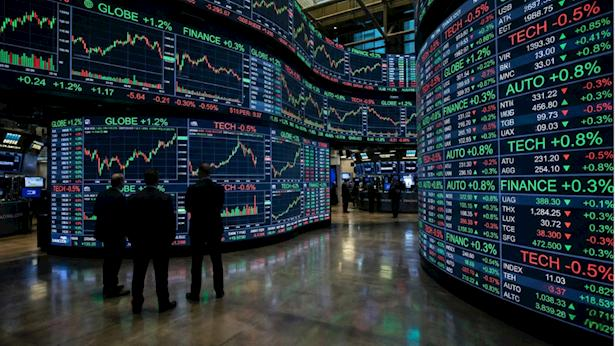
Global stock markets closed a volatile week mixed. Technology-led gains on Wall Street were partly offset by sharp declines across Europe, while Asian equities advanced on semiconductor strength and selective risk appetite. As trading resumes this Monday in Asia and later in Europe and the United States, investors face rising pressure from energy prices above $100 a barrel, tighter monetary policy from major central banks, elevated bond yields near multi-year highs, and questions over whether the artificial intelligence investment boom can keep supporting growth and corporate earnings against rising costs and geopolitical risk.
The latest session data, reflecting Friday’s closes in the United States and Europe and Monday’s early Asian activity where available, painted a picture of regional divergence. In the United States, the S&P 500 edged up 0.17 per cent to 7,650.50, the Nasdaq Composite rose 0.40 per cent to 26,522.50, and the Dow Jones Industrial Average slipped 0.18 per cent to 51,682.60. Europe suffered broader losses, with the FTSE 100 down 1.45 per cent to 10,659.10, the CAC 40 off 1.49 per cent to 8,065.02, and the DAX retreating 1.60 per cent to 25,304.10. Asia showed greater resilience: Japan’s Nikkei 225 climbed 1.38 per cent to 65,018.90, South Korea’s Kospi surged 2.66 per cent to 6,894.23, Hong Kong’s Hang Seng advanced 0.60 per cent to 24,750.80, and China’s Shanghai Composite gained 0.94 per cent to 3,911.87. India’s Nifty 50 closed modestly higher by 0.33 per cent at 23,346.40.
These moves capped a week dominated by central bank decisions and energy-market volatility. The Federal Reserve delivered its first rate increase since 2023, lifting the federal funds target range to 3.75–4.00 per cent and signalling the possibility of further tightening. The European Central Bank had already raised rates earlier in the period, and the Bank of Japan lifted its policy rate to 1.25 per cent—a 31-year high. The Bank of England held steady but struck a distinctly hawkish tone. Oil prices, while easing slightly on reports of diplomatic efforts, remained elevated near or above the $100 mark for Brent crude, feeding inflation concerns that have forced policymakers to pivot from earlier expectations of prolonged holds or eventual cuts. Taken together, the week showed that tighter policy and costly energy are now the dominant market drivers.
United States: Technology Resilience Meets Broader Caution
Wall Street’s mixed performance on Friday reflected the market’s dual personality. Technology and industrials provided support, helping the Nasdaq post a weekly gain of roughly 0.7 per cent even as the Dow recorded a weekly decline of about 1.7 per cent and the S&P 500 finished the five sessions nearly flat to slightly lower. Materials, utilities, and real estate shares lagged, weighed by higher yields and sensitivity to borrowing costs. The 10-year Treasury yield hovered near 5 per cent, touching levels not seen in nearly two decades earlier in the week before settling close to that threshold.
Investors have been forced to recalibrate after the Federal Reserve’s September decision. Under Chair Kevin Warsh, the central bank moved to a more restrictive stance despite political pressure for easier policy. Updated projections showed a majority of officials anticipating at least one additional quarter-point increase before year-end. The move came against a backdrop of still-elevated inflation readings driven in large part by energy, even as core measures have shown some moderation. Labour market data has remained resilient enough to support the case for further tightening if price pressures persist.
The artificial intelligence sector has acted as a partial buffer. Despite high-profile calls earlier in the period from industry leaders for a slowdown in model development over safety concerns, chipmakers and related names recovered ground after supportive comments from political and corporate figures. The AI capital expenditure cycle continues to underpin earnings expectations for a concentrated group of large-cap technology companies, helping the Nasdaq outperform broader averages. Yet valuation concerns and the sensitivity of growth stocks to higher discount rates remain present. Small-capitalisation shares, as measured by the Russell 2000, finished the latest session weaker, underscoring the uneven nature of the advance.
Market participants now look ahead to the coming week’s data, including flash purchasing managers’ indexes that will offer an early read on whether manufacturing and services activity is holding up under higher energy costs and tighter financial conditions. Corporate commentary on input costs and pricing power will also be scrutinised as third-quarter earnings season approaches.
Europe: Fiscal and Energy Pressures Weigh on Sentiment
European equities bore the brunt of the week’s selling. The broad Stoxx 600 and major national indexes posted losses exceeding 1 per cent on the final session, extending weekly declines. French fiscal concerns added an extra layer of pressure, with 10-year government bond yields rising and spreads against German bunds widening at points during the period. Higher energy prices have been particularly acute for the region: European natural gas has climbed sharply since midsummer, and diesel and refined product markets remain tight.
The European Central Bank’s recent rate increase reflected determination to prevent second-round effects from the energy shock. Inflation in the euro area accelerated to 3.3 per cent in August from 2.9 per cent in July, driven primarily by energy. Core measures eased modestly, yet policymakers have emphasised a meeting-by-meeting approach and the risk that elevated headline figures could feed into wages and expectations. Growth remains subdued. Activity indicators suggest limited momentum, with manufacturing still under pressure in several large economies and consumer spending constrained by higher living costs.
The United Kingdom’s FTSE 100 mirrored continental weakness. The Bank of England’s decision to hold rates while warning that persistent energy-driven inflation could necessitate further action left markets uneasy. Sterling has faced periods of pressure, and gilt yields have reflected the higher-for-longer narrative. Across the continent, the combination of tighter monetary policy, elevated energy costs, and residual geopolitical risk has tempered equity valuations and increased the appeal of defensive sectors even as those same sectors face higher financing costs.
Asia: Selective Strength and Divergent Drivers
Asian markets provided a contrasting narrative. Japan’s Nikkei extended gains after the Bank of Japan’s rate hike, which was widely anticipated yet still marked a significant step toward policy normalisation. The yen weakened following the decision, supporting exporters, while technology and semiconductor-related shares contributed to the advance. South Korea’s Kospi posted one of the strongest performances, lifted by chipmakers. Hong Kong and mainland Chinese indexes closed higher, though underlying growth concerns and property-sector challenges continue to limit enthusiasm. India’s benchmarks were modestly positive.
The region’s relative resilience owes much to the semiconductor cycle and ongoing AI-related demand. Taiwan and South Korea have been particular beneficiaries. At the same time, higher global rates and a firm dollar create headwinds for some emerging-market currencies and external financing. China’s policy stance remains cautious; loan prime rates are expected to stay unchanged, with authorities favouring targeted measures over broad stimulus. Japanese markets face a holiday period early in the week, limiting immediate follow-through.
Commodities, Currencies, and Fixed Income: The Energy-Rate Nexus
Commodity markets remain the clearest transmission channel of geopolitical risk into the broader economy. Brent crude has fluctuated around and above $100 a barrel for extended periods, with prices recently easing only modestly on reports of diplomatic outreach involving China and Iran regarding regional maritime security. European gas prices have risen more than 30 per cent since late July in some measures. Gold has traded near multi-year highs, recently around $4,400 an ounce, reflecting both inflation hedging and safe-haven demand. Silver and copper have also shown strength.
The U.S. dollar index has hovered near 100, supported by relative yield advantages and safe-haven flows. The euro has traded around 1.15 against the dollar, while the yen has weakened past 156 per dollar following the Bank of Japan’s move. Higher Treasury yields have ripple effects globally, raising the cost of capital for corporations and governments and pressuring interest-rate-sensitive sectors.
The Broader Economic Backdrop: Resilience Tempered by Risk
Economists and international institutions describe a global economy that has so far avoided a severe downturn despite successive shocks, yet one whose growth trajectory has been revised modestly lower and whose inflation outlook has deteriorated. Projections for 2026 global growth cluster in a range near 2.6 to 3.0 per cent, below longer-term averages and earlier expectations. The United States continues to display relative strength, supported by labour market resilience and AI-related investment. Europe faces a more challenging mix of weak demand and energy vulnerability. Emerging markets present a mixed picture, with commodity exporters better positioned than energy importers.
The Middle East conflict, now approaching the seven-month mark with limited signs of resolution, remains the dominant near-term risk. Supply disruptions, elevated freight and insurance costs, and the potential for further escalation keep energy markets on edge. Central banks have responded by reintroducing tightening, reversing earlier narratives of a prolonged pause. The risk of a stagflationary outcome—higher inflation combined with slower growth—has moved higher in probability assessments, even if it is not the baseline case for most forecasters.
Artificial intelligence investment continues to provide an important offset. Capital spending on data centres, chips, and related infrastructure has supported growth and equity valuations in the technology sector. Whether this cycle can broaden and sustain momentum if financial conditions tighten further and energy costs remain elevated is an open question. Productivity gains from AI are still largely prospective; near-term effects are concentrated in a relatively narrow set of companies and industries.
Fiscal positions in several advanced economies add another layer of complexity. Higher interest costs on elevated debt stocks limit room for counter-cyclical support. In Europe, concerns over fiscal sustainability in individual member states periodically surface in bond markets. Political calendars, including elections and leadership transitions, introduce additional uncertainty around policy continuity.
Investor Positioning and Market Structure
Volatility indexes have remained relatively contained compared with earlier crisis periods, suggesting that while investors are cautious, outright panic has been absent. Positioning data and flows indicate continued preference for large-cap technology and quality growth names, with more selective interest in energy and commodities. Defensive sectors have seen intermittent support during risk-off episodes. Emerging-market equities have underperformed in some periods, reflecting both higher U.S. yields and country-specific factors.
Corporate balance sheets in aggregate remain healthier than in previous tightening cycles, providing a cushion. However, the transmission of higher rates into the real economy occurs with lags, and the full impact of recent policy moves and energy price increases may still be working through investment and hiring decisions.
Looking Ahead: Key Catalysts for the Coming Days and Weeks
The week beginning September 21 brings a series of data releases and policy signals that will help shape sentiment. Chinese loan prime rate decisions are due early in the period, with markets expecting no change. Flash PMI surveys across major economies later in the week will offer timely insight into the health of manufacturing and services. Speeches by Federal Reserve officials and other central bankers will be parsed for clues on the pace of further tightening. Geopolitical developments in the Middle East will continue to dominate commodity markets and risk appetite.
Longer-term questions centre on the durability of the current growth-inflation mix. If energy prices stabilise or decline and core inflation resumes a downward path, central banks may be able to pause after limited additional moves. If supply disruptions intensify or second-round effects become entrenched, the tightening cycle could extend further, raising the probability of a more pronounced growth slowdown. The interaction between AI-driven investment, productivity, and traditional cyclical forces will be critical in determining whether the global economy can navigate the current shock without tipping into recession.
Conclusion: A Market Defined by Competing Forces
As of early Monday in Asia, global equity markets stand at elevated levels by historical standards yet face a constellation of risks that have become more rather than less acute in recent months. Technology leadership has provided ballast, particularly in the United States and parts of Asia. European markets have been more vulnerable to the combination of energy costs and tighter policy. Fixed-income markets have priced higher terminal rates and slower progress on inflation. Commodity markets continue to reflect geopolitical realities that show little immediate prospect of resolution.
The coming sessions will test whether the resilience demonstrated so far can persist. Investors will weigh corporate earnings guidance, inflation data, and any shifts in the geopolitical landscape against the backdrop of a monetary policy environment that has turned more restrictive across major jurisdictions. Economic uncertainty remains elevated, growth forecasts have been tempered, and the path for both equities and bonds is likely to stay volatile. In this environment, careful differentiation across regions, sectors, and balance-sheet quality will matter more than broad directional bets. The global economy has absorbed successive shocks without collapsing, yet the margin for error has narrowed, and markets are pricing that reality with greater caution than at the start of the year.