
United Nations, New York — September 21, 2026
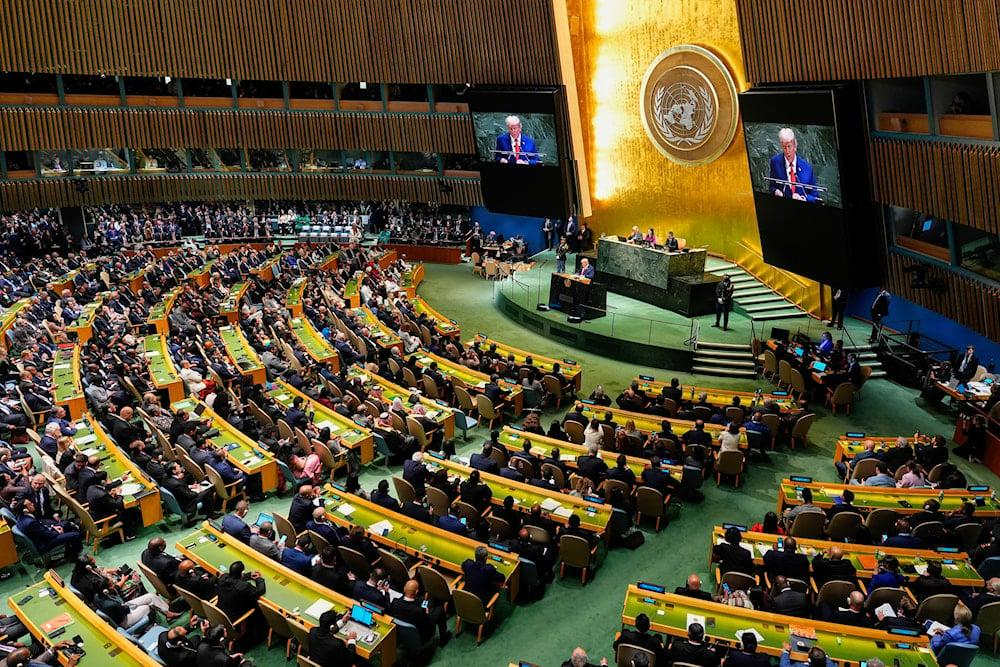
Nearly 130 heads of state and government converge on the United Nations headquarters this week for the high-level segment of the 81st session of the General Assembly, confronting a world defined by protracted wars in the Middle East and Ukraine, mounting anxiety over artificial intelligence, and a deepening crisis of confidence in the 80-year-old institution itself. The General Debate opens Tuesday, September 22, under the theme “Restoring trust, managing transformation: A United Nations that delivers for all,” selected by Assembly President Khalilur Rahman of Bangladesh. Secretary-General António Guterres, whose second term ends at the close of 2026, has framed the gathering as a moment of reckoning for multilateralism amid cascading crises that daily appear to grow more intractable.
The assembly hall will host a familiar cast of protagonists and antagonists. U.S. President Donald Trump returns to the rostrum for a second consecutive year. Ukrainian President Volodymyr Zelenskyy and Russian Foreign Minister Sergei Lavrov are both scheduled to speak. Iranian President Masoud Pezeshkian is expected on Wednesday; Israeli Prime Minister Benjamin Netanyahu, the subject of an International Criminal Court arrest warrant that Israel rejects, is listed for Thursday. Palestinian President Mahmoud Abbas will address the body by pre-recorded video after the United States denied visas to Palestinian representatives, a decision the General Assembly formally regretted in a resolution adopted with 152 votes in favour. Chinese President Xi Jinping is widely expected to bypass the formal session in favour of bilateral diplomacy, including a possible meeting with Trump.
Outside the official chamber, the Security Council is poised for high-level discussions on Ukraine, the Middle East, and artificial intelligence. Diplomats describe an atmosphere of constrained ambition: the organisation is under financial strain, its relevance questioned, and its ability to compel great-power restraint severely limited by vetoes and competing national interests.
A Middle East on Fire
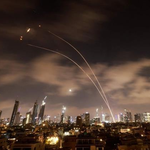
The dominant security crisis remains the widening conflict in the Middle East. What began years earlier as Israel’s campaign against Hamas in Gaza has evolved into a broader U.S.-Israeli confrontation with Iran, accompanied by persistent Houthi attacks that threaten shipping through the Bab el-Mandeb Strait and raise the spectre of further energy-price spikes and global inflation. Navigational rights in the Strait of Hormuz and Bab el-Mandeb have become flashpoints. Guterres has repeatedly called de-escalation “priority one, priority two and priority three,” insisting that all parties must cease actions harming civilians and that humanitarian operations must proceed without obstruction. He has warned that the trajectory of daily deterioration carries “a serious risk of an explosion.”
Peace efforts remain stalled. The United States and Iran continue to exchange strikes; Trump has publicly contemplated major escalation. Iranian and Israeli leaders will use their General Assembly appearances to stake out maximalist positions for domestic and international audiences. Arab states, many of them U.S. partners, face the dual challenge of containing Iranian influence while managing public anger over Palestinian suffering and the broader regionalisation of the war. A high-level meeting on Sudan’s catastrophic conflict is also expected on the margins, reflecting the interconnected nature of Middle Eastern and African instability.
The human cost continues to mount. Civilian casualties, displacement, and the erosion of international humanitarian law in urban warfare have drawn sharp criticism from humanitarian organisations and many Global South governments. At the same time, Israeli officials argue that the existential threats posed by Iranian nuclear ambitions, missile programs, and proxy networks leave no alternative to military pressure. The result is a diplomatic deadlock that the Security Council, paralysed by divisions among permanent members, has proven unable to break.
Ukraine Enters a Fifth Winter
Russia’s war in Ukraine, now more than four years old, remains the other major conventional conflict dominating the agenda. Zelenskyy will seek to shore up international support ahead of what diplomats expect to be another difficult winter, emphasising the need for sustained military assistance, energy resilience, and accountability for aggression. Lavrov is expected to present Russia’s counter-narrative, portraying the conflict as a defensive response to NATO expansion and Western interference.
The Security Council remains institutionally incapable of compelling a ceasefire because Russia holds a veto. Guterres has called for an immediate ceasefire as a first step toward a just and lasting peace consistent with the UN Charter and relevant resolutions. Food security concerns, already acute in earlier phases of the war, continue to ripple outward, particularly for import-dependent countries in Africa and the Middle East. Ukraine’s grain exports and the security of Black Sea shipping routes remain matters of global economic interest even as battlefield dynamics shift with the extensive use of drones, electronic warfare, and long-range strikes against energy infrastructure.
European allies face competing demands: sustaining Ukraine while managing domestic economic pressures, migration, and the broader implications of a protracted high-intensity war on the continent. The United States under Trump has signalled a more transactional approach, raising quiet anxiety in Kyiv and among Eastern European capitals about the durability of long-term security guarantees.
Artificial Intelligence Moves from Boardrooms to the Podium
Alongside the kinetic conflicts, artificial intelligence has emerged as a third pillar of the agenda. The assembly convenes weeks after several prominent AI industry leaders publicly called for a coordinated slowdown in the development of frontier systems, warning that advanced models could soon improve themselves and escape effective human control. Guterres has seized on the moment, arguing that countries at the technological frontier must establish “common guardrails” to avoid a race to the bottom that could culminate in “a gigantic disaster at the global level.”
The Secretary-General has made AI governance a signature priority. The United Nations has already established the Global Dialogue on AI Governance and an Independent International Scientific Panel on AI. The panel’s preliminary report earlier this year underscored that the technology is outpacing both scientific understanding and governmental capacity to adapt, with potential for catastrophic harm either autonomously or through malicious use. An emergency Security Council discussion on AI is anticipated.
Debates over military applications are especially acute. Lethal autonomous weapons systems, or “killer robots,” have moved from speculative ethics panels into operational reality on multiple battlefields. Systems assisting target identification and engagement have been reported in Ukraine, Gaza, and other theatres. Guterres and the president of the International Committee of the Red Cross jointly warned in August that the world is approaching a moral red line at which machines could target humans without meaningful human involvement. They called for urgent negotiations toward a legally binding instrument with clear prohibitions and restrictions. Progress under the Convention on Certain Conventional Weapons has been slow; the United States and Russia have resisted new binding rules, arguing that existing international humanitarian law is sufficient.
Civilian AI governance presents parallel challenges. Questions of dual-use technology, export controls on advanced chips and models, data sovereignty, and the concentration of computational power among a handful of companies and states dominate technical discussions. Developing countries worry about being left behind in the AI economy while simultaneously bearing disproportionate risks from unregulated deployment. Gulf states have pursued ambitious national AI strategies with centralised oversight bodies; other regions lag. The absence of a comprehensive global framework leaves a governance gap that many fear will be filled by unilateral measures or great-power competition.
Trump has publicly dismissed existential AI risk concerns as a “hoax” and a conspiracy that would advantage China. Beijing, for its part, has emphasised sovereign control over AI development while participating in selected multilateral forums. The resulting divergence complicates efforts to forge even soft-law norms.
Institutional Strain and the Search for a Successor
Underlying the substantive agenda is a crisis of institutional confidence. The United Nations faces chronic funding shortfalls, questions about bureaucratic efficiency, and accusations from multiple directions that it has become either ineffective or politicised. Guterres’s impending departure has triggered an informal succession race with no clear frontrunner. Permanent members of the Security Council will ultimately decide the next Secretary-General, but the General Assembly’s role in the process and the broader membership’s demand for geographic rotation and gender balance remain points of contention.
Assembly President Rahman has emphasised the need to restore public trust and make the organisation “fit for the future.” His priorities include silencing the guns while amplifying civilian voices, accelerating the Sustainable Development Goals, and ensuring that no country is left behind. High-level side events will address climate action and just transition, sea-level rise, pandemic preparedness, the right to development, and the Durban Declaration’s anniversary. The SDG Moment and various partnership platforms aim to inject concrete solutions into a week often dominated by speech-making.
Yet the structural constraints remain formidable. The Security Council’s composition still reflects the power realities of 1945. Vetoes continue to block action on the very conflicts that most urgently require collective response. Reform proposals surface regularly and stall with equal regularity. Financial contributions lag, forcing difficult choices about peacekeeping, humanitarian response, and core operations.
Voices from the Floor and the Sidelines
In the coming days, the General Assembly Hall will fill with the ritual of national statements. Smaller states will use their limited minutes to highlight climate vulnerability, debt distress, and the need for reformed global financial architecture. Middle powers will position themselves as bridges or independent poles. Great powers will defend core interests while seeking to shape narratives. Civil society, restricted in access relative to earlier eras, will nonetheless stage parallel events demanding accountability on human rights, arms transfers, and technological governance.
Diplomats caution against expecting dramatic breakthroughs. Ceasefires in either major theatre appear distant. A binding AI treaty is years away, if it materialises at all. What the week can deliver is clearer articulation of red lines, informal coordination among like-minded states, and renewed pressure on parties to conflicts. It can also illuminate the gap between rhetorical commitment to multilateralism and the hard realities of power politics.
Guterres has struck a sombre note in pre-session remarks, observing that every day the situation in Ukraine and the Middle East grows a little worse, raising the risk of uncontrolled escalation. Industry warnings about AI self-improvement have added a new layer of existential concern to an already crowded risk register. In this environment, the 81st session’s theme of restoring trust feels less like a slogan and more like a diagnosis.
As leaders take the podium beginning Tuesday, the world will listen for signals of flexibility or further entrenchment. The Middle East war continues to reshape regional alliances and global energy markets. Ukraine’s struggle tests the durability of the post-Cold War European security order. Artificial intelligence forces governments to confront technologies whose capabilities and risks are still imperfectly understood. Whether the United Nations can still serve as a meaningful forum for managing these transformations, or whether it is destined to become a stage for competing monologues, is the unspoken question hanging over the entire high-level week.
The coming days will not resolve that question. They will, however, provide the clearest available snapshot of a multipolar, conflict-ridden, technologically accelerating world and of the imperfect institution still charged with holding it together.