
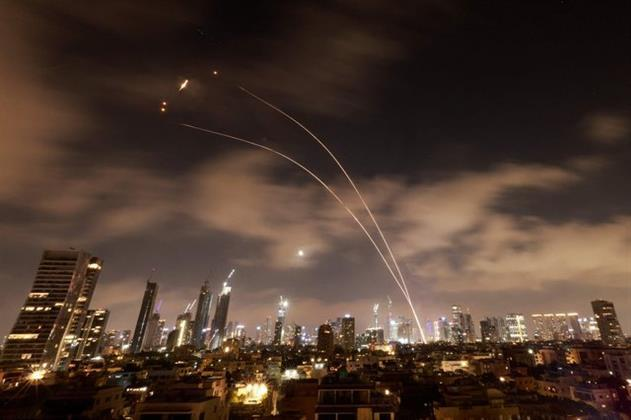
RIYADH, Saudi Arabia – Saudi authorities issued widespread security alerts across the kingdom overnight into Saturday, September 19-20, 2026, as Iran-backed Houthi forces in Yemen launched what they described as coordinated ballistic missile, cruise missile, and drone attacks targeting the capital Riyadh and energy infrastructure on the Red Sea coast. The Saudi-led coalition fighting the Houthis confirmed that its air defences intercepted and destroyed a ballistic missile headed toward Riyadh at dawn, while also thwarting attempts on civilian infrastructure in several other cities. Thick black smoke rose from a fuel depot near King Khalid International Airport, temporarily disrupting flights, though Saudi officials reported no casualties or significant structural damage.
The incident marks a sharp escalation in the renewed confrontation between Riyadh and the Houthis, the first direct targeting of the Saudi capital in the latest phase of fighting that intensified in July after years of relative calm following a 2022 truce. It has heightened fears that the conflict could draw in broader regional players and further threaten global energy supplies and shipping lanes already strained by wider Middle East tensions.
Overnight Alerts and the Dawn Interception
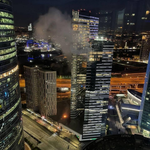
Saudi Civil Defence sent emergency messages to residents in Riyadh and surrounding areas, including Al-Kharj east of the capital, warning of a “hostile aerial threat” and urging people to stay indoors. Similar alerts activated early-warning systems in other cities. Residents in parts of Riyadh reported hearing explosions or booms in the early morning hours. By mid-morning, a large plume of black smoke was visible near the airport highway and terminal area. An AFP journalist observed firefighters extinguishing a blaze on a fuel tank bearing the logo of state oil giant Saudi Aramco at a nearby depot. Flight-tracking data from Flightradar24 indicated major disruptions at King Khalid International Airport, with delays and some cancellations before traffic gradually resumed.
Coalition spokesman Major General Turki al-Maliki stated on the social media platform X that the Royal Saudi Air Defence Forces “successfully intercepted and destroyed a ballistic missile launched by the Houthi terrorist militia towards the city of Riyadh at dawn on Saturday.” He added that the Houthis also attempted to target “civilians and civilian infrastructure in Bisha, Taif, Farasan, and Yanbu,” all of which were thwarted by air defences. Al-Maliki described the actions as “terrorist and aggressive behaviour” and affirmed the coalition’s right to take “appropriate” deterrent measures in accordance with international humanitarian law.
Houthi military spokesman Yahya Saree claimed the group had conducted “two successful military operations using a large number of ballistic and cruise missiles and drones.” The first, he said, targeted “sensitive sites” in Riyadh; the second struck Aramco facilities in Yanbu, a key Red Sea oil export hub and terminal for the kingdom’s east-west pipeline. Saree asserted the attacks caused “massive fires” and framed them as retaliation for recent Saudi airstrikes on Houthi-held areas, including what the group described as attempts to target the Yemeni capital Sanaa. He previously accused Saudi forces of conducting hundreds of strikes across Yemen in the preceding days and weeks. Independent verification of the claimed damage or the precise targets in Riyadh was not immediately available, and Aramco did not immediately comment.
Context of Escalation Since July
The latest strikes come amid a steady intensification of cross-border attacks that began in July 2026. After a period of de-escalation following the 2022 truce, fighting reignited as the Houthis advanced along Yemen’s western Red Sea coast, seizing strategic positions including areas near the Bab el-Mandeb Strait, a critical chokepoint for global shipping. The group declared a naval blockade on Saudi-linked vessels and began targeting oil tankers and energy infrastructure. Saudi Arabia and its coalition partners responded with airstrikes on Houthi positions, while the internationally recognised Yemeni government forces clashed with the rebels on multiple fronts.
Earlier in September, Saudi officials reported Houthi strikes that injured dozens of civilians, including women and children, in southern cities such as those near the Yemen border. One set of attacks in early September injured 73 people and caused temporary disruptions at energy facilities. Saudi authorities also reported intercepting a Houthi drone approaching the vicinity of Mecca, Islam’s holiest city, describing any threat to the holy sites as a “red line.” Houthi leader Abdulmalik al-Houthi dismissed the Mecca claim as “slander and fabrication.” On other occasions, the Houthis claimed large-scale attacks on the King Khalid Air Base in Khamis Mushait and other southern military and civilian sites.
Unconfirmed reports from military sources on both sides of the Yemen conflict indicated that ground fighting on Saturday claimed around 48 lives, with the Houthis saying 31 of their fighters were killed, and government sources reporting 17 soldiers lost. These figures could not be independently verified.
The broader backdrop includes the ongoing wider regional conflict involving Iran and its allies. Analysts note that the Houthis, long supported by Tehran, have used the expanded confrontation to press demands related to the Yemen war while demonstrating their ability to project power deep into Saudi territory with relatively low-cost missiles and drones. Saudi Arabia, which has invested heavily in air defence systems, has so far contained most incoming threats but faces the challenge of protecting sprawling energy infrastructure, ports, airports, and population centres.
Impact on Energy Markets and Shipping
Yanbu’s role as a major Red Sea export terminal has taken on added importance. With shipping through the Strait of Hormuz previously constrained by regional tensions, Saudi Arabia has relied more heavily on Red Sea routes for oil exports. Attacks or threats against Yanbu, the east-west pipeline, and associated facilities raise the risk of supply disruptions at a time when global energy markets remain sensitive. Earlier Houthi actions had already caused temporary offline periods for parts of the pipeline system and increased insurance and shipping costs.
The Bab el-Mandeb Strait remains a focal point of concern. Houthi advances along Yemen’s western coastline have given the group greater ability to threaten commercial shipping. International calls to protect freedom of navigation have intensified. United Nations Secretary-General António Guterres condemned the attacks on Saudi infrastructure and civilian areas, stressing the need to safeguard navigational rights through the strait. Several Arab states, including Kuwait, Bahrain, Egypt, Qatar, and Lebanon, also issued statements condemning the Houthi actions.
International Response and Security Warnings
The United States responded with security alerts. Multiple U.S. embassies across the Middle East, including those in Bahrain, Israel, Iraq, Jordan, Kuwait, Lebanon, Oman, Qatar, Saudi Arabia, and the United Arab Emirates, warned American citizens to exercise “heightened vigilance.” The alerts noted that the military conflict “has the potential to escalate rapidly” and advised awareness of possible flight cancellations, airspace closures, and travel disruptions. The U.S. State Department’s broader regional guidance reflected the fluid security environment. Washington has signalled it does not intend to join offensive strikes against the Houthis in this phase, leaving Saudi Arabia and its partners to manage the direct response.
European and other international voices have urged restraint. The European Union’s foreign affairs spokesperson called on the Houthis to cease military action while expressing solidarity with Saudi Arabia. Regional organisations including the Gulf Cooperation Council, the Muslim World League, and the Organisation of Islamic Cooperation condemned the attacks and expressed support for the kingdom’s right to defend its territory and critical infrastructure.
Domestic Effects in Saudi Arabia
For ordinary residents of Riyadh, the overnight alerts and morning smoke plume brought the distant Yemen conflict directly into daily life for the first time in this escalation cycle. The capital had largely been spared direct targeting in recent months. Schools, workplaces, and public transport operated with heightened awareness, while authorities emphasised that defences had performed as designed. Saudi media and official channels stressed the professionalism of the air defence forces and the absence of confirmed civilian casualties from the intercepted projectiles.
In southern and western cities closer to the Yemen border or Red Sea coast—Taif, Yanbu, Bisha, Farasan, and others—residents have grown more accustomed to intermittent alerts. The cumulative psychological and economic toll includes disrupted routines, temporary business interruptions near affected sites, and ongoing concerns about the security of energy facilities that underpin the national economy.
Strategic Calculations and Risks of Wider Conflict
Military and political analysts describe the current phase as one in which the Houthis appear to be setting the tempo of escalation. By striking the capital and high-value energy nodes, the group demonstrates reach and resilience while seeking to impose costs on Saudi Arabia for its support of the anti-Houthi coalition and for airstrikes inside Yemen. Saudi decision-makers face a difficult balance: responding firmly enough to deter further attacks without triggering a full-scale return to the costly ground and air campaign of the 2015–2022 period, which exacted high humanitarian and financial costs on both sides.
Yemen’s humanitarian situation remains dire. Years of conflict have left millions dependent on aid, with infrastructure damaged and basic services strained. Renewed intensive fighting risks displacing additional populations and complicating already difficult relief efforts. On the Saudi side, Vision 2030 economic diversification plans depend on stability, secure energy exports, and an attractive environment for investment and tourism—factors that repeated alerts and infrastructure threats undermine.
The involvement of Iranian support for the Houthis, whether through technology transfers, training, or political backing, continues to link the Yemen theatre to the larger regional confrontation. Iraqi-based groups aligned with Tehran have also been accused in past weeks of launching drones toward Saudi targets, creating a multi-front pressure dynamic. Saudi officials have previously warned of coordinated threats from north and south.
Looking Ahead
As of September 21, 2026, the immediate aftermath of the Riyadh-directed attack has seen no confirmed further large-scale launches, though the pattern of tit-for-tat strikes suggests the risk of additional rounds remains high. Saudi coalition forces retain the capability for further airstrikes on Houthi launch sites, command nodes, and logistics. The Houthis have repeatedly signalled they will continue operations as long as they perceive Saudi pressure on their positions in Yemen.
Diplomatic channels remain open in principle. Saudi Foreign Minister Prince Faisal bin Farhan has previously indicated that the door to diplomacy is not closed. Mediators and international organisations continue to call for de-escalation, protection of civilians, and preservation of maritime security. Whether those appeals can produce a new ceasefire or merely temporary pauses will shape the trajectory of both the Yemen conflict and the broader regional security environment.
For now, the successful interception of the missile aimed at Riyadh has prevented immediate catastrophic outcomes in the capital. Yet the mere fact of the attempt—coupled with claims of strikes on Aramco facilities, the visible smoke near a major airport, and the issuance of capital-wide alerts—has underscored the vulnerability of even well-defended population and economic centres. The episode has elevated concerns that the Houthi-Saudi confrontation, once relatively contained, is becoming a more volatile and unpredictable front in an already complex Middle Eastern conflict landscape, with potential consequences extending far beyond the borders of Yemen and Saudi Arabia.
The coming days and weeks will test the resilience of Saudi air defences, the calculation of Houthi leadership, the willingness of external actors to restrain or fuel the fighting, and the capacity of regional and international diplomacy to prevent further escalation. Global energy markets, shipping companies, and governments with citizens or interests in the region will be watching closely for signs of either stabilisation or deepening crisis.