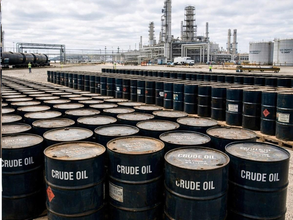

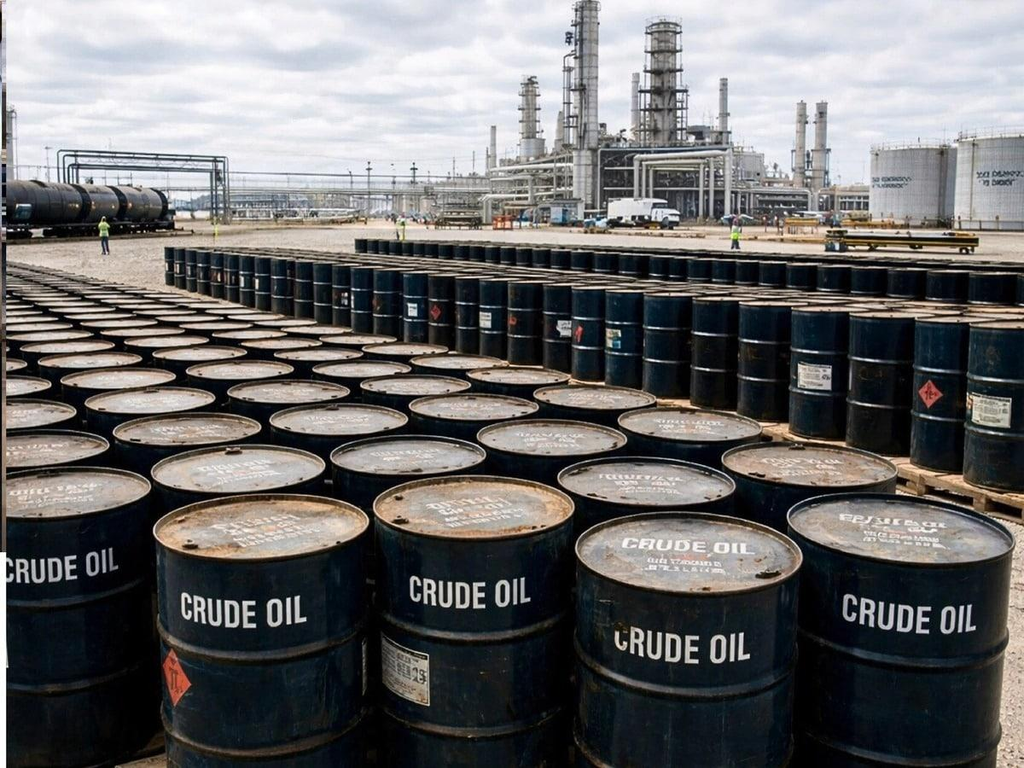
As of mid-to-late September 2026, global oil markets remain under significant strain from the ongoing conflict between the United States and Iran, which began in late February. The crisis has severely disrupted shipping through the Strait of Hormuz—the critical waterway that normally handles roughly one-fifth of the world’s seaborne oil trade—and compounded pressures in the Red Sea and Bab el-Mandeb Strait via Houthi actions. Brent crude, the international benchmark, has traded in a volatile range around $100–$110 per barrel in recent weeks, after earlier peaks above $118–$126 earlier in the year and a temporary retreat below $80 following a short-lived U.S.-Iran understanding in June.
The U.S. Energy Information Administration’s (EIA) September Short-Term Energy Outlook projects Brent averaging about $91 per barrel for full-year 2026, with prices near $90 in the second half, before declining to an average of $74 in 2027 as Middle East flows gradually recover and inventories rebuild. Other forecasts show a similar pattern of elevated near-term prices followed by eventual easing, though risks of further escalation or prolonged disruptions keep upside scenarios in play.
Origins and Scale of the Supply Shock
The conflict effectively constrained traffic through the Strait of Hormuz starting around early March 2026. Pre-war, the strait carried approximately 20 million barrels per day (mb/d) of crude and oil products. Flows collapsed dramatically; by August they averaged just 7.6 mb/d according to International Energy Agency (IEA) data—about 13 mb/d below pre-war levels—with cumulative export losses approaching 2.8 billion barrels. Middle Eastern producers shut in substantial volumes, at times exceeding 10–11 mb/d in the most acute phases.
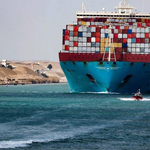
Alternative routes provided partial relief. Saudi Arabia and the UAE redirected crude via the Red Sea port of Yanbu and Fujairah, boosting bypass exports from around 4.1 mb/d in February to a peak near 7.8 mb/d in June. These routes offset more than 500 million barrels of lost Hormuz supply. However, Houthi advances and attacks in the Red Sea, including strikes that damaged or forced the temporary shutdown of Saudi Arabia’s East-West pipeline to Yanbu in early September, reduced those alternative flows and triggered cancellations of some European cargoes. Red Sea shipping traffic has run roughly 60% below pre-late-2023 levels, with further risks from Houthi control of strategic islands and shores.
The net market shortfall has been smaller than the headline Hormuz disruption because of pre-existing surpluses, demand destruction, strategic petroleum reserve releases, and non-Middle East supply growth. Still, global inventories have drawn heavily—estimated by the EIA at hundreds of millions of barrels year-to-date—with OECD stocks reaching multi-year lows. IEA balances point to deficits of roughly 1.7–2.2 mb/d in recent quarters, while the EIA sees a 2026 deficit near 2 mb/d before a large surplus emerges in 2027.
Price Trajectory Through 2026
Oil prices spiked sharply after the conflict began. Brent rose from the low $70s in late February to peaks above $118–$126 in March–April as Hormuz effectively closed. A U.S.-Iran memorandum of understanding in June allowed a partial recovery in shipping and a sharp price retreat toward the high $70s. Renewed tensions, pipeline attacks, and Red Sea escalations pushed prices back above $100 in September, with some sessions near $108–$110 and physical differentials even stronger.
Forecasts have been revised repeatedly. A Reuters poll in late June showed analysts cutting 2026 Brent averages to about $84.50 after the Hormuz reopening eased fears, but subsequent disruptions prompted upward revisions. JPMorgan, after earlier higher targets, projected Brent averaging $86 in Q3 2026 and $80 in Q4, exiting the year near $78, citing weaker-than-expected inventory draws and larger demand losses. HSBC raised its 2026 Brent forecast to $90 (from $80) and 2027 to $85, highlighting product tightness. The EIA’s September STEO settled on a $91 full-year 2026 average and roughly $90 in the second half.
S&P Global and others note that energy price shocks have renewed upward pressure, with Brent back above $100 at times in September. Longer-term views generally expect prices to ease into 2027 as production recovers, though scenarios of prolonged stalemate could keep Brent nearer $120 or higher into next year.
Demand Destruction and Market Rebalancing
High prices and physical shortages have triggered significant demand destruction, particularly in Asia. Global oil demand is forecast by the IEA to decline by about 2.5 mb/d in 2026—steeper than earlier estimates—driven by elevated fuel costs, reduced availability, and policy responses. China’s crude imports fell sharply (near decade lows in some months), with refiners running lower and inventories remaining elevated rather than rebuilding aggressively. Gasoline demand destruction in China alone has been estimated in the range of hundreds of thousands of barrels per day, some of it potentially structural.
This demand response, combined with strategic reserve releases and higher output from the United States, Brazil, Guyana, and other non-OPEC producers, has prevented even larger price spikes. OECD commercial inventories drew less than some models expected because private operators relied more on government stocks. The market has rebalanced through a mix of lower consumption and inventory draws rather than pure supply recovery.
OPEC+ has continued a cautious path of unwinding earlier voluntary cuts. Core members (Saudi Arabia, Russia, Iraq, Kuwait, Algeria, Kazakhstan, and Oman) implemented incremental increases of about 188,000 b/d in several months, completing the phase-out of a prior 1.65 mb/d cut package by September, while keeping October quotas unchanged as they prepare baseline reviews for 2027. Actual output from Middle East members remains constrained by the conflict, far below quota levels.
Shipping Disruptions and Freight Costs
Beyond volume losses, shipping costs and logistics have surged. VLCC rates on Middle East-to-Asia routes reached unprecedented levels above $1 million per day at times. Vessels have been forced onto longer routes around the Cape of Good Hope when Red Sea or Hormuz options were restricted, adding weeks to voyages and inflating insurance premiums. Product tankers and refined product flows have faced similar constraints, amplifying tightness in diesel and gasoline markets.
The dual chokepoint pressure—Hormuz for Gulf crude and Bab el-Mandeb/Red Sea for both crude and products—has created cascading effects. Indian diesel exports to Europe, which transit these routes, have been disrupted, while European and Mediterranean refiners face feedstock and product shortages.
Impact on Fuel Prices
The most visible effects for consumers and industry have been in refined product prices, which have risen more sharply than crude in many markets. U.S. retail gasoline averaged higher in 2026 forecasts (EIA projects about $3.84 per gallon for the year versus $3.10 in 2025), with actual pump prices climbing above $4 per gallon in periods of stress—up more than 30–40% from pre-conflict levels at peaks. Diesel has been especially hard-hit: U.S. retail diesel reached all-time highs near or above $6 per gallon in September, with inventories at multi-year lows.
In Europe, weighted average diesel prices exceeded €2.15–€2.26 per litre in mid-September, setting or approaching records, with petrol also elevated. Refining margins (crack spreads) for diesel in Northwest Europe and the U.S. have widened dramatically—sometimes exceeding $60–$100 per barrel or more than $2 per gallon—reflecting both crude constraints and reduced Middle East/Russian refining and export capacity. Russian diesel export restrictions and Middle East refinery outages have compounded the problem.
These higher fuel costs feed into transportation, agriculture, manufacturing, and broader inflation. Freight rates rise, food and goods prices face upward pressure, and central banks confront renewed energy-driven inflation risks even as growth remains resilient in some regions. Developing economies and energy-intensive industries feel the squeeze most acutely. In Asia, government price controls and strategic reserves have muted some retail impacts, but industrial and power-sector costs have risen.
Outlook for the Remainder of 2026 and Beyond
The baseline outlook from major agencies points to continued tightness through the end of 2026. Inventories are expected to keep drawing, supporting prices near current elevated levels or higher if further disruptions occur. Gradual increases in Hormuz and alternative-route flows are assumed in most forecasts, allowing prices to ease modestly by year-end and more substantially in 2027 as shut-in production returns and non-OPEC supply grows. A large surplus is widely projected for 2027, potentially requiring production adjustments.
Risks remain heavily skewed by geopolitics. A durable ceasefire and full normalisation of Hormuz traffic could accelerate the shift to surplus and pull prices toward the $70s or lower. Conversely, prolonged conflict, expanded Houthi disruptions, or attacks on additional infrastructure could push Brent back toward or beyond previous peaks and deepen product shortages into 2027. Demand recovery in China and elsewhere, winter heating needs, and any further Russian supply constraints will also influence the path.
OPEC+ faces a complex balancing act: quotas have been raised on paper, but physical constraints limit actual supply, and the group must set new baselines for 2027 amid uncertain capacity assessments. Non-OPEC producers, particularly in the Americas, continue to expand, providing a longer-term counterweight.
For consumers, fuel prices are likely to remain elevated relative to 2025 levels through the rest of 2026, with diesel especially vulnerable. Governments may continue strategic releases, subsidies, or demand-management measures. Businesses reliant on transport and energy face higher operating costs that could slow investment or be passed through to end prices.
In summary, the 2026 oil market has been defined by the largest modern disruption to Middle East energy flows, managed through a combination of demand destruction, inventory draws, alternative routing, and strategic stocks. Prices have proven volatile but less extreme than the worst early forecasts, thanks to these offsets. The path through year-end and into 2027 hinges on the trajectory of the conflict and the speed of supply recovery. Markets will remain sensitive to every diplomatic signal, pipeline status update, and shipping advisory until a clearer resolution emerges.