
New York / London / Asia – September 21, 2026
Global equity markets staged a broad-based recovery on Monday, September 21, 2026, as artificial intelligence-related semiconductor stocks led gains, crude oil prices extended their recent slide, and investors focused on constructive signals from high-level U.S.–China discussions ahead of a summit between President Donald Trump and Chinese President Xi Jinping later this week. Major U.S. indexes advanced, with the technology-heavy Nasdaq Composite outperforming, while Asian and European benchmarks also closed higher. The move reflected a shift toward risk-on sentiment after a turbulent previous week marked by elevated oil prices, bond-yield pressure, and geopolitical tensions in the Middle East.
Wall Street’s main indexes rose steadily through the session. The Dow Jones Industrial Average climbed approximately 0.4% to 0.5%, the S&P 500 gained around 0.9% to 1%, and the Nasdaq Composite advanced about 1.5%, reaching levels not seen in more than a month in some reports. Futures had pointed higher from the open, supported by chipmakers and a broader rebound in AI-linked names. In Asia, South Korea’s Kospi surged 1.65% as Samsung Electronics jumped roughly 5%, Taiwan’s Taiex rose about 1.1% with Taiwan Semiconductor Manufacturing Co. (TSMC) adding gains, Hong Kong’s Hang Seng advanced around 1.2%, and Shanghai’s Composite index closed up nearly 1%. Japan’s Nikkei was closed for a holiday, but futures indicated positive momentum. European indexes followed suit, with the Stoxx 600, FTSE 100, DAX, and CAC 40 posting gains of 0.7% to more than 1%.
The day’s narrative centred on three interlocking themes: renewed strength in AI infrastructure and chip demand, a pullback in energy prices that eased inflation and interest-rate concerns, and cautious optimism surrounding U.S.–China engagement on trade and artificial intelligence governance.
AI Chip Stocks Power the Rally
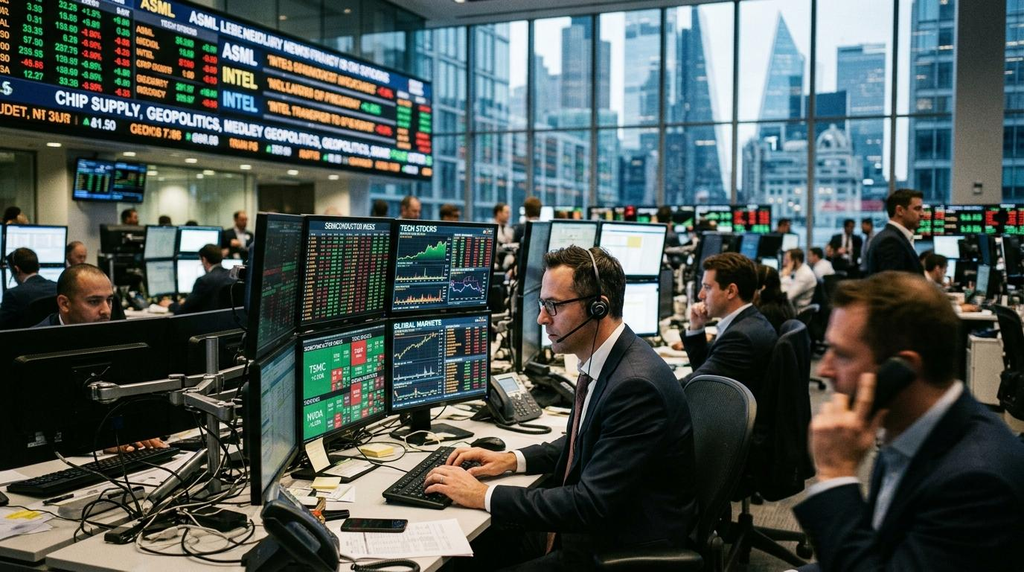
Semiconductor and AI-related equities provided the clearest leadership. Advanced Micro Devices (AMD) stood out, surging as much as 8.5% in some trading reports and briefly reaching a $1 trillion market valuation, joining a select group of chipmakers at that milestone. Micron Technology gained around 3%, Intel advanced more than 5% in early action on partnership news involving Micro LED technology, and Nvidia posted solid gains amid continued confidence in AI demand expressed by CEO Jensen Huang. Broader semiconductor ETFs and memory-related vehicles also advanced, reflecting persistent investor belief in the multi-year capital expenditure cycle for data centres, training clusters, and inference capacity.
In Asia, the strength was equally pronounced. Samsung Electronics’ sharp rise lifted the Kospi, while TSMC’s advance underscored Taiwan’s central role in advanced-node manufacturing. European equipment names such as ASML participated in the upside. Corporate developments reinforced the narrative: Accenture shares rose after announcing a partnership and investment linked to Anthropic for AI evaluation work, and Meta Platforms climbed after a price-target increase from Wells Fargo. The sector’s resilience came after periods of volatility earlier in the year tied to cost pressures, valuation concerns, and questions about the pace of monetisation. Monday’s gains suggested investors were once again prioritising scale and technological leadership over near-term margin questions.
Analysts pointed to several catalysts. First, structural demand for high-performance computing remains robust as hyperscalers and enterprises continue heavy spending. Second, improving diplomatic signals between Washington and Beijing reduced some overhang related to export controls and technology decoupling risks. Third, lower oil prices and softer Treasury yields improved the risk appetite that typically favours growth-oriented technology stocks. Bitcoin’s rebound above $85,000 to multi-month highs further supported risk sentiment, lifting crypto-exposed names such as Coinbase and Strategy.
Oil Prices Slide, Easing Inflation and Yield Pressures
Crude oil prices extended declines for a fourth consecutive session, providing a key tailwind. Brent crude fell more than 2% to around $100–$102 per barrel, hitting multi-day or 11-day lows in various reports, while West Texas Intermediate traded near $93–$98, also sharply lower. The pullback occurred even as Middle East tensions remained elevated: Iran-backed Houthi forces had targeted sites in Saudi Arabia, including areas near Riyadh and export infrastructure, and the United States and Iran exchanged fresh warnings.
Market participants attributed the decline primarily to two factors. Reports indicated that Saudi Arabian oil shipments had recovered more than previously assumed, with analytics firm data showing September exports rising toward 4 million barrels per day after a sharp August drop. Tanker movements through the Strait of Hormuz also appeared more resilient. Simultaneously, hopes for diplomatic progress surrounding the United Nations General Assembly in New York, including potential U.S.–Iran contacts, tempered supply-disruption premiums. President Trump indicated openness to meeting Iranian counterparts. While prices remained well above levels seen earlier in 2026 before regional conflict intensified, the correction from recent peaks above $109 relieved some pressure on inflation expectations and bond yields.
The 10-year U.S. Treasury yield declined several basis points, supporting equity valuations. Lower energy costs reduce input pressures for many industries and lessen the likelihood of further aggressive central-bank tightening in the near term, although Federal Reserve officials continued to monitor strong demand and residual inflation risks. Diesel prices, however, remained elevated at record levels in some U.S. readings, highlighting residual tightness in refined products. Overall, the oil move contributed to a more constructive backdrop for risk assets after a week in which energy-driven inflation concerns had weighed on sentiment.
Investors Focus on US–China Talks and the Trump–Xi Summit
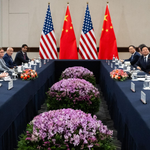
Geopolitical and diplomatic developments between the world’s two largest economies formed the third pillar of Monday’s market action. U.S. Treasury Secretary Scott Bessent and Chinese Vice Premier He Lifeng concluded talks in New York on Sunday. Bessent described the engagement as “very successful,” noting discussions on trade, investment, and artificial intelligence. The U.S. side proposed a new mechanism for AI safety notifications, potentially establishing a formal “U.S.–China AI Dialogue.” Chinese officials characterised the conversations as candid, in-depth, and constructive. Reciprocal tariff reductions on roughly $30 billion of goods from each side remained under discussion, and expectations centred on whether the leaders would signal an extension of an existing trade truce set to expire later in the year.
President Trump is scheduled to attend the UN General Assembly before meeting Xi Jinping, with the bilateral summit expected around Thursday in Washington. China’s Foreign Ministry confirmed Xi’s state visit spanning September 23–25. Topics likely to feature include tariffs, critical minerals, technology governance, and broader economic issues. Market participants also watched for any signals regarding China’s stance on Middle East developments and Iran. While few expected a comprehensive grand bargain, the positive tone from the weekend talks reduced immediate downside risks related to further escalation in trade or technology restrictions.
This backdrop helped Asian markets in particular, given their heavy exposure to technology supply chains and export demand. Chipmakers and related firms benefited from the dual narrative of sustained AI investment and diminished near-term policy friction. Broader indices in Hong Kong and mainland China advanced on hopes that relative stability in bilateral relations would support growth and capital flows.
Broader Market Context and Sector Performance
Beyond semiconductors, other sectors participated selectively. Banks and large-cap technology names contributed to European gains. Media and entertainment stocks such as Warner Bros. Discovery advanced on merger-related optimism in some reports. Energy equities faced pressure from the oil decline, while rate-sensitive areas found support from softer yields. Cryptocurrency-related equities rallied in tandem with Bitcoin’s move. In India, the Sensex and Nifty closed higher, extending recent strength. Australia’s market was roughly flat.
The previous week had been challenging for parts of the market. The Dow had posted its third consecutive weekly decline and its steepest weekly loss since March in some accounts, pressured by Middle East developments and rising energy costs. The S&P 500 had edged lower over the five sessions while the Nasdaq managed a modest gain. Monday’s rebound therefore represented a meaningful recovery in sentiment, bringing the S&P 500 back within roughly 1% of its recent all-time high in certain snapshots.
Central-bank commentary remained on the radar. Federal Reserve officials, including Chicago Fed President Austan Goolsbee, continued to assess demand strength and inflation dynamics. Markets will watch upcoming economic data, particularly the next jobs report, alongside further Fedspeak. Globally, the oil correction reduced some fears of a renewed aggressive hiking cycle that had unsettled investors the prior week.
Outlook: Balancing Optimism with Persistent Risks
Looking ahead, the week’s key events include the UN gatherings, the Trump–Xi meeting, and continued monitoring of Middle East supply routes and diplomacy. Positive outcomes on AI governance frameworks or trade-truce extensions could provide further support for technology and global equities. Conversely, any deterioration in regional security or disappointing summit results could reverse gains. Oil remains sensitive to both physical flows and geopolitical headlines; a sustained move back below $100 for Brent would reinforce the disinflationary impulse, while a rebound would reintroduce yield and inflation concerns.
AI chip stocks face their own set of considerations. Long-term demand appears intact, yet valuations, supply-chain constraints, power availability for data centres, and potential policy shifts continue to shape the risk-reward profile. Memory and logic chipmakers are positioned differently within the cycle, and company-specific execution will matter. Investors will also parse any signals from the AI leaders expected to engage around the China visit.
In summary, Monday’s session delivered a classic risk-on response to improving cross-currents: AI demand reasserted itself through chip stocks, energy prices cooled enough to ease macro pressures, and diplomatic progress between the United States and China provided a constructive narrative. Global indexes advanced across regions, with technology leading the way. Whether this marks the start of a more sustained recovery or a temporary relief rally will depend on the concrete outcomes of the week’s high-stakes meetings and the trajectory of oil and yields in the days ahead. Market participants enter the remainder of the week with renewed optimism tempered by awareness of the still-elevated geopolitical and policy uncertainties that have defined much of 2026 trading.
(Incorporating detailed market moves, sector analysis, geopolitical context, and forward-looking considerations based on the day’s developments.)