
RIYADH — A missile strike on King Khalid International Airport in the Saudi capital on Saturday killed at least 12 people and wounded more than 300 others, marking the deadliest attack on Saudi soil in more than a decade and intensifying fears of a broader escalation across the Middle East.
Saudi Arabia’s General Authority of Civil Aviation confirmed the casualties early Sunday. The dead included four Saudi citizens, two Bangladeshi nationals, and one person each from the United States, Egypt, Jordan, Syria, Palestine, and Sudan. Of the 309 injured, several remained in critical condition and were being treated at multiple hospitals in Riyadh after being rushed there by ambulance and helicopter.
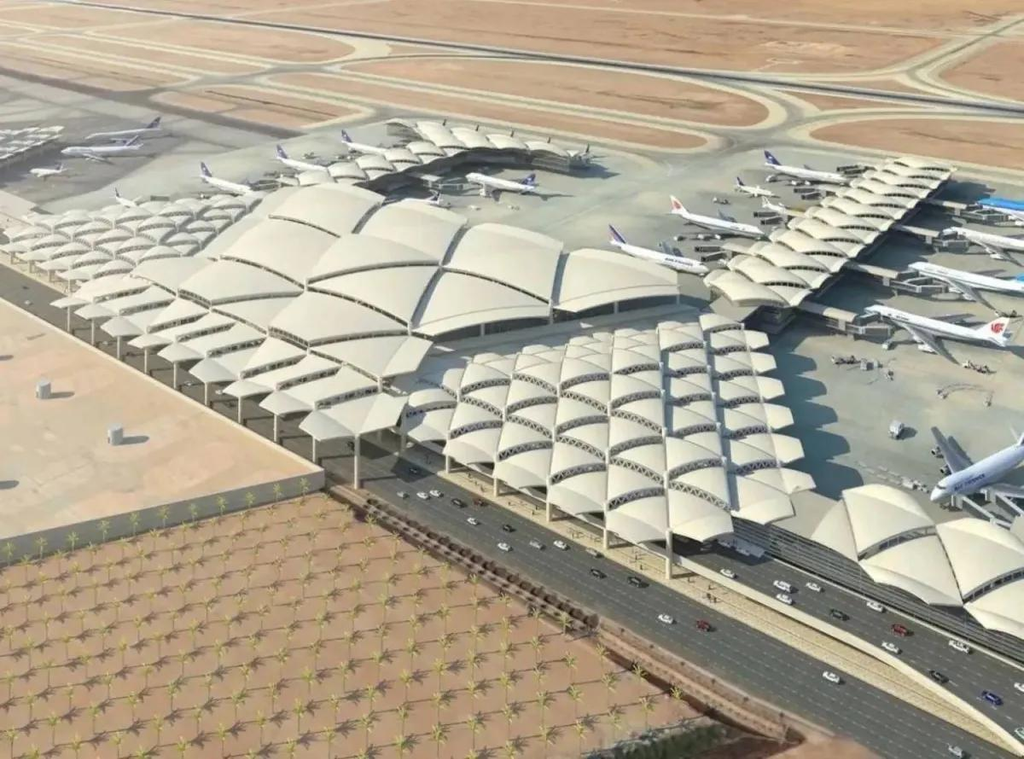
The attack struck a terminal complex housing domestic flights, specifically areas near gates in Terminals 3 and 4. Witnesses described an explosion with no prior warning from Saudi Arabia’s threat alert system. One passenger waiting at gate 403 said he saw the impact on nearby gate 401, watched people fall wounded, and joined the scramble as travellers fled. Ceiling sections collapsed near a departure gate. Property damage was still being assessed Sunday as operations remained suspended.
King Khalid International Airport, Saudi Arabia’s second-busiest and the primary gateway to a city of roughly eight million people, was closed through at least late Sunday. Flight-tracking data showed hundreds of cancellations and diversions—more than 600 flights affected in total—leaving stranded passengers outside metro stations and forcing airlines to scramble for alternative arrangements. The disruption came at a sensitive time for regional air travel and ahead of high-level diplomatic activity.
Saudi-led coalition forces immediately blamed Yemen’s Iran-backed Houthi movement. Coalition spokesman Major General Turki al-Malki called the strike a “cowardly terrorist attack” and a “full-fledged war crime” against a civilian facility. He vowed a “decisive” response. A diplomatic source confirmed the projectile was a missile fired around 3 p.m. local time. A senior Houthi official appeared to claim responsibility on social media, stating the group had “shut down Riyadh international airport.” The Houthis had already claimed earlier strikes on the same airport earlier in the week.
Saturday’s attack was the third on the airport in a matter of days. Previous strikes earlier in the week killed four people—including a Saudi pilot—and heavily damaged a commercial aircraft parked on the tarmac. The pattern of attacks forms part of a sharp escalation that began after a truce in Yemen’s long-running civil war unravelled in July. Since then, Houthi forces have launched an unprecedented wave of missile and drone strikes into Saudi territory, targeting airports, energy infrastructure, and other sites while the Saudi-backed Yemeni government has pressed a ground offensive.
The human toll and the choice of a major civilian airport have sharpened regional and international concern. The presence of an American among the dead prompted a statement from the U.S. Secretary of State condemning the attack. U.S. President Donald Trump said his administration was reviewing whether Washington should join Saudi strikes against the Houthis. The U.S. Embassy in Riyadh advised American citizens to avoid the airport and surrounding areas. Other governments issued similar cautions as hospitals in the capital activated emergency protocols and called up additional medical staff.
Analysts and regional officials warn that the strike exposes vulnerabilities in Saudi air defences and raises the risk of a wider confrontation. The Houthis have demonstrated improved range and accuracy with ballistic missiles and drones, capabilities widely attributed to Iranian technical support. Riyadh has invested heavily in multi-layered missile defence systems, yet the successive hits on a high-profile civilian target without successful interception have prompted questions about gaps in coverage and response times. A projectile was also reported near King Fahd International Airport in Dammam on the same day, underscoring the geographic spread of the threat.
The attack arrives against a backdrop of already elevated tensions across the Middle East. Iran’s long-standing support for the Houthis forms one strand of a proxy network that has repeatedly drawn in Saudi Arabia, the United Arab Emirates, and Western partners. Concurrent pressures—maritime insecurity in the Red Sea, competing regional alignments, and domestic economic priorities under Saudi Vision 2030—leave little room for prolonged disruption. Riyadh has sought to balance military deterrence with diplomatic outreach, including efforts to stabilise Yemen and reduce direct confrontation with Tehran. The latest casualties make that balancing act more difficult.
International reaction has been swift and largely condemnatory. Pakistan’s prime minister reiterated Islamabad’s commitment to Saudi security under existing defence arrangements. Other regional capitals expressed solidarity while privately assessing the implications for their own airspace and energy infrastructure. Aviation authorities worldwide issued alerts, and insurers are expected to adjust risk premiums for flights into and out of the kingdom. The temporary shutdown of a major hub also carries economic costs for tourism, pilgrimage travel, and commercial logistics at a moment when Saudi Arabia has been aggressively expanding its aviation sector.
Inside Yemen, the Houthi-run health ministry reported its own casualties from coalition airstrikes over recent weeks, claiming dozens of civilian deaths, including women and children. Independent verification of those figures remains difficult amid restricted access. The cycle of strike and counterstrike has already prolonged a conflict that has produced one of the world’s worst humanitarian crises. Saturday’s attack on a crowded civilian airport risks accelerating that cycle.
Saudi officials stressed that medical care was being provided to all the wounded and that damage assessments would determine when the airport could reopen. Airlines continued to rebook passengers and divert aircraft to alternative gateways. For ordinary travellers—pilgrims bound for Makkah, expatriate workers, business passengers, and families—the sudden violence transformed a routine airport terminal into a scene of chaos and loss.
The broader security implications extend beyond the immediate death toll. Successful penetration of air defences around the capital raises questions about the protection of other critical infrastructure, including oil facilities, desalination plants, and major urban centres. It also tests the credibility of collective security arrangements among Gulf states and their partners. If the Houthis can repeatedly strike deep inside Saudi territory with limited warning, the calculus for both deterrence and diplomacy shifts.
As Riyadh prepares its response, regional capitals and global powers are watching closely. A measured military reply risks being seen as insufficient; an expansive campaign risks drawing in additional actors and further destabilising an already fragile region. The attack has already grounded hundreds of flights, filled hospital wards, and claimed lives from multiple nationalities. It has also reopened uncomfortable questions about the durability of ceasefires, the reach of proxy forces, and the capacity of even well-resourced states to shield their civilian population from long-range projectiles.
For now, King Khalid International Airport remains closed, the wounded continue treatment, and families of the dead begin to mourn. The missile that struck a busy terminal on an ordinary Saturday afternoon has left more than physical damage. It has heightened a sense of vulnerability that stretches well beyond Saudi borders and will shape security calculations across the Middle East in the days and weeks ahead.