
Washington / Dubai / London — November 4, 2026
In a development that has injected fresh volatility into global energy markets and Middle East diplomacy, U.S. President Donald Trump has stated that the United States has no immediate plans to launch new military strikes against Iran, even as limited defensive operations continue and oil prices hover at elevated levels after sharp swings in recent days. Speaking in a telephone interview with the Financial Times on Tuesday, Trump described the current standoff as a “brilliant situation” in which Washington appears to be achieving its objectives, while emphasising that U.S. forces remain “locked and loaded” should circumstances demand further action.
The remarks come against the backdrop of an eight-month conflict that began with joint U.S.-Israeli strikes on Iranian targets in late February 2026. The war has disrupted shipping through the Strait of Hormuz, driven oil prices significantly higher than pre-conflict levels, contributed to inflationary pressures in the United States and elsewhere, and emerged as a major political liability for Republicans ahead of the November 3 midterm elections. Limited U.S. strikes on Iran’s Qeshm Island in the Strait of Hormuz on Monday, described by American officials as defensive actions targeting surface-to-air missiles used against U.S. assets, underscored the fragile nature of the de-escalation efforts even as mediation continues.
Trump’s comments signal a preference for continued pressure and diplomacy over immediate large-scale escalation following the midterms. “We seem to be getting everything we want,” he told the Financial Times. He downplayed the notion of an ongoing conventional war, noting that major U.S. operations—including strikes that he claimed had “wiped out” Iran’s nuclear potential—had not been followed by sustained combat for months. “We’re not really in a war… if you think about it, we haven’t really had a war with them in a long time, six months, maybe more,” Trump said. He added that negotiations regarding Iran’s remaining stockpile of enriched uranium were ongoing and that military options remained available if needed: “I’m ready, we’re ready. We’re locked and loaded if we need to go, but there may be no reason for it.”
The president’s stance appears calibrated both to domestic political realities and the complex dynamics of the conflict. High gasoline prices and broader inflation linked to the war have weighed on voters, contributing to expectations of Republican losses in the midterms. Trump had previously indicated he would not order major new strikes before the elections, a position that aligned with efforts to keep oil markets from spiking further in the final days of campaigning. At the same time, Israeli Prime Minister Benjamin Netanyahu has reportedly pressed for stronger action, and some U.S. officials have prepared contingency plans for post-election operations.
Limited Strikes and the Qeshm Island Operation
On Monday, U.S. forces conducted limited strikes on targets on Iran’s Qeshm Island in the Strait of Hormuz. American officials characterised the action as defensive, aimed at neutralising Iranian surface-to-air missile systems that had been used against U.S. assets. Iranian state media and witnesses reported explosions on the island and in nearby areas. U.S. officials stressed that the strikes did not signal a return to major combat operations and were kept relatively low-profile to avoid overstating their significance.
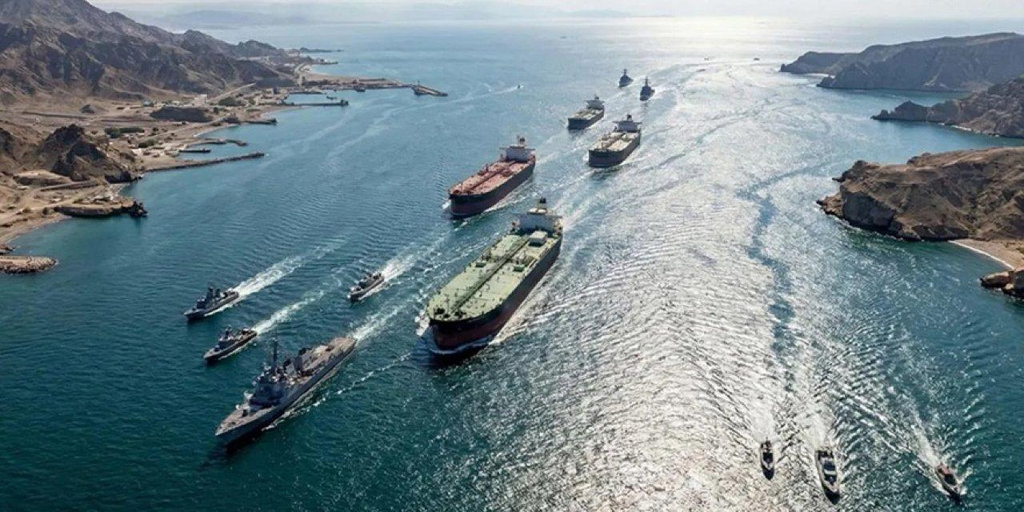
The operation occurred against a backdrop of heightened Iranian activity against commercial shipping. Iran has intensified attacks on vessels in and around the Strait of Hormuz in recent weeks, including claims of strikes on tankers and the reported use of mines. The waterway remains a critical chokepoint for global oil supplies, with roughly one-fifth of the world’s seaborne oil traditionally transiting the strait in peacetime. While flows have partially recovered from the sharpest early disruptions of the war, elevated insurance costs, longer shipping routes, military escorts, and persistent security risks continue to add a substantial premium to oil prices.
Iranian officials have responded defiantly. A senior Iranian official told Reuters that Tehran and Washington remain far from a deal to end the war, rejecting what were described as U.S. “excessive demands.” Iran’s parliament speaker Mohammad Bagher Qalibaf stated that Tehran had delivered a “strong and rational response” and that the ball was now in the American court. Iranian conditions for reopening the strait and advancing talks have reportedly included the lifting of oil sanctions, an end to the U.S. naval blockade, the unfreezing of Iranian assets, and guarantees against further attacks. Tehran has indicated that nuclear discussions could follow only after these economic and security demands are addressed.
Diplomacy Through Qatar and the Search for an Off-Ramp
Qatar has played a central mediating role. Qatari officials have shuttled between capitals in recent days, seeking to bridge gaps and prevent a post-midterm escalation. Qatar’s foreign ministry has confirmed that both sides remain engaged with mediation efforts and are reviewing proposals. Vice President JD Vance has publicly expressed cautious optimism, noting “a number of good conversations with the Iranians” and stating that both he and President Trump felt “pretty good about the prospects for potentially coming to a negotiated settlement.”
Progress remains elusive. Iranian responses to U.S. proposals have been deemed insufficient by Washington, while Tehran views American offers as failing to address core demands related to sanctions relief and sovereignty over the strait. The conflict has already exacted a heavy toll: significant damage to Iranian military and nuclear infrastructure from earlier U.S. and Israeli strikes, substantial costs to the U.S. budget (estimated in the tens of billions of dollars), disruption to global energy markets, and broader regional instability involving Iran-backed groups.
Trump has repeatedly framed the situation as one in which Iran is under severe economic pressure. He has claimed that the Islamic Republic is “crippled financially,” with shortages of fuel and growing domestic discontent. In recent comments, he has suggested that Iran wants a deal and that an agreement “could happen.” At the same time, he has left open the possibility of further military action, including potential strikes on remaining nuclear-related sites, if diplomacy falters.
Oil Markets: Sharp Swings and Persistent Risk Premium
Oil markets have reacted with pronounced volatility to the shifting signals from Washington and Tehran. On Monday, both Brent crude and West Texas Intermediate posted their sharpest one-day percentage declines in months—dropping more than 7%—as reports of diplomatic openings and Trump’s comments about Iran’s desire for a settlement lifted hopes that major new supply disruptions could be avoided. Brent fell toward the mid-$100s range, while WTI dropped below $100.
Those gains for consumers were partially reversed on Tuesday as news of the Qeshm Island strikes and Iranian statements that a deal remained distant reintroduced a risk premium. Prices rose more than $1 at points during the session before settling with mixed results depending on the exact close. By early Wednesday trading, Brent was fluctuating around the $104 level and WTI near $96–$97, still well above pre-war levels of roughly $70–$75 but below the peaks above $117 seen in late October when escalation fears intensified.
Analysts attribute the elevated price environment to several overlapping factors. Physical supply from the Gulf has proven more resilient than initially feared, with exports recovering toward or even exceeding pre-war averages in some recent periods thanks to alternative routing, naval protection, and market adaptations. However, inventories have tightened, freight and insurance costs remain high, and the market continues to price in the risk of sudden further disruption. Goldman Sachs and other banks have warned that prices could spike significantly higher—potentially toward $140 in extreme scenarios—if major infrastructure or additional export capacity is hit.
The war’s impact on oil has been a double-edged sword for the Trump administration. Higher energy prices have bolstered U.S. producers and generated geopolitical leverage, but they have also fueled inflation and consumer discontent at the pump, becoming a central campaign issue. Trump has at times celebrated falling prices when diplomacy appears to advance and at other times framed higher prices as a necessary cost of confronting Iran. The latest price action reflects the market’s struggle to parse mixed signals: limited strikes and continued Iranian attacks on shipping keep a floor under prices, while talk of deals and Trump’s reluctance to escalate immediately after the midterms cap the upside for now.
Broader Geopolitical and Economic Implications
The U.S.-Iran confrontation sits within a wider web of regional and global tensions. Israel remains a key partner in the campaign against Iranian capabilities, though Trump has recently signalled adjustments in military aid arrangements with Jerusalem. Iran-backed groups, including the Houthis in Yemen, have continued attacks on shipping and regional targets, complicating security for Gulf states. Russia and other actors have watched the conflict closely, with secondary effects on energy markets already strained by the ongoing war in Ukraine.
For India and other major oil-importing economies, the prolonged disruption has meant higher import bills, pressure on currencies and inflation, and the need to diversify suppliers and routes. Global growth forecasts have been revised to account for the energy shock, and central banks have faced difficult trade-offs between fighting inflation and supporting growth.
Domestically in the United States, the midterm results—emerging as this report is written—will shape the political constraints on further action. A Democratic-controlled Congress could limit funding or impose greater oversight on military operations, while a Republican hold would give Trump more latitude. Either outcome is likely to influence the pace and tone of diplomacy with Tehran.
Looking Ahead: Fragile Balance Between Force and Negotiation
As of early November 2026, the U.S.-Iran conflict remains in a tense holding pattern. Trump has ruled out immediate large-scale new strikes while keeping the military option firmly on the table. Limited defensive actions continue. Qatar-mediated talks persist without a breakthrough. Oil prices reflect both the partial recovery of physical supply and the persistent risk of renewed escalation.
The coming days and weeks will test whether the current balance can hold. Key variables include the final shape of the midterm results, the substance of any further Iranian or American proposals, the intensity of attacks on shipping, and decisions in Jerusalem and Tehran. For global markets, consumers, and governments, the central question remains whether the parties can find a durable off-ramp that reopens the Strait of Hormuz more fully, addresses nuclear concerns, and eases the economic pressures that have defined this conflict for the better part of a year.
For now, President Trump’s message is one of strategic patience mixed with readiness: no immediate new strikes, continued pressure, ongoing talks, and the clear signal that the United States retains the capacity and will to act if the current trajectory proves insufficient. Oil markets, and the world that depends on them, are watching closely.