

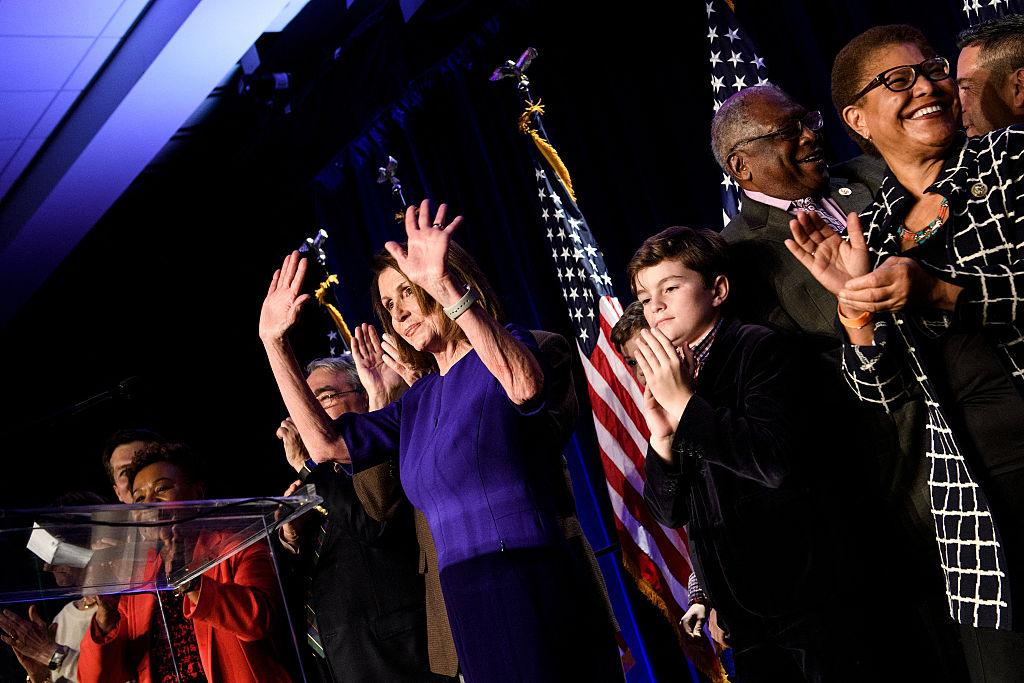
In a historic repudiation of President Donald Trump’s second term, Democrats seized control of both chambers of Congress in the November 3, 2026, midterm elections, flipping the Senate and House in a blue wave that reached deep into Republican strongholds. As of early counts on November 5, Democrats held a projected 54-44 edge in the Senate (a net gain of seven seats) and a substantial House majority after gains of roughly 25 to 30 seats or more, with some tallies showing Democrats approaching or exceeding 230 seats. Republicans failed to flip a single Democratic-held congressional seat, governorship, or major state legislative chamber in many early assessments.
The scale stunned observers. Democrats won Senate races in Texas, Kansas, Ohio, South Carolina, Iowa, Maine, and North Carolina—states Trump had carried, often by double digits, in 2024. Kansas elected its first Democratic senator since 1932. Texas sent a Democrat to the Senate for the first time since 1988 and flipped the governorship, with Gina Hinojosa defeating three-term Republican Greg Abbott. South Carolina produced another rare Democratic Senate win. House gains cut across rural districts, suburbs, and places Trump had won comfortably two years earlier. Democrats also captured multiple governorships, including in Georgia, Ohio, Iowa, and Nevada, securing a majority of the nation’s statehouses for the first time in years.
Voters delivered what multiple outlets described as a “blue tsunami” or the largest midterm popular-vote margin for Democrats in the House in decades. Turnout and shifts among Latinos, young voters, and suburbanites amplified the wave. Exit and voter polls pointed to deep dissatisfaction with the direction of the country, the economy, and Trump’s leadership.
Drivers of the Wave
The election functioned as a referendum on Trump’s second term. Approval ratings had slid, with some averages dipping into the mid-30s, after the launch of military action against Iran (begun with Israel around February 2026) and its economic fallout. Gas prices surged, inflation remained elevated, and costs for groceries and other essentials pinched households. A majority of voters in post-election surveys said Trump’s policies had worsened economic conditions. The Iran conflict, which Trump had once framed as limited, became linked in the public mind to higher energy costs and broader affordability struggles—the top issue for many.
Corruption and institutional trust ranked high. Many voters believed Trump prioritised personal or allied interests. Aggressive immigration enforcement, including actions by ICE that extended beyond the “hardened criminals” focus promised in 2024, contributed to a sharp swing among Latino voters, who had moved toward Trump in 2024 but reversed course. Trump’s decision to elevate loyalist candidates in key races—often over local Republican preferences—also backfired, as several of those nominees underperformed.
Republicans had hoped redistricting in several states would blunt Democratic gains in the House. Those efforts largely failed and, in some cases, created competitive districts that Democrats captured. The result was not merely a loss of the majority but a broad geographic and demographic repudiation.
Immediate Constraints on Trump’s Agenda
Democratic control of both chambers fundamentally alters the remainder of Trump’s presidency, which runs through January 2029. For the first two years, Republicans had shielded the administration and advanced or protected elements of its agenda. That shield is gone.
Legislative gridlock is the most immediate outcome. Trump retains the veto, and he has already signalled heavy reliance on it. In post-election comments, he posted images of a “VETO” hat, told interviewers he would reject “insane” bills, and framed the veto as one of the presidency’s strongest tools. Democrats lack the two-thirds majorities needed for easy overrides in both chambers. Senate Democrats will also fall short of the 60 votes typically required to break filibusters on most legislation. The result is likely a period of messaging bills from Democrats on health-care subsidies, Medicaid, tariffs, and the Iran war, many of which will die on Trump’s desk or stall.
Budget and debt-ceiling fights loom. Democrats can force negotiations and extract concessions, but Trump can still use shutdown threats or executive tools. On tariffs and certain foreign-policy moves, the administration retains significant unilateral authority, though congressional pushback, funding leverage, and oversight will complicate execution.
Oversight and Investigations
The more consequential shift may be investigatory power. Democrats will control House and Senate committees and the subpoena process. Incoming or expected chairs have already telegraphed aggressive oversight of the administration’s handling of the Iran war, tariff exemptions and related dealings, immigration enforcement practices, family business matters, and remaining files related to Jeffrey Epstein. House Oversight is expected to be particularly active; one prospective chair’s concise post-election message was “Lawyer up.”
Senate confirmation power flips. Any Supreme Court vacancy, Cabinet replacement, or major judicial nomination will require Democratic consent or substantial bipartisan support. This gives Democrats leverage over the long-term composition of the federal courts and the executive branch for the final two years.
Impeachment talk has surfaced in some Democratic circles, particularly around administration officials or the president himself, but practical and political hurdles remain high. A second Trump impeachment during his first term did not remove him; another attempt could prove polarising and distract from kitchen-table messaging. Still, the threat of sustained hearings and document demands is real and will consume White House bandwidth.
Foreign Policy and Executive Power
Trump retains broad commander-in-chief and executive authorities. Analysts expect him to lean more heavily on foreign policy and unilateral actions as domestic legislative avenues narrow—a classic lame-duck pattern. The Iran conflict remains unresolved and unpopular; Democrats will press for congressional authorisation, funding limits, or an end to hostilities. Tariffs face similar scrutiny. Allies and adversaries will watch for signs of a weakened president, potentially testing U.S. commitments or seeking advantage. At the same time, Trump’s remaining executive tools on immigration, regulation, and trade remain potent.
Political Realignment and 2028 Implications
The midterms raise structural questions for both parties. For Republicans, the results expose the costs of close alignment with Trump’s brand and personnel choices. Vice President JD Vance, long viewed as a leading 2028 contender, now faces the challenge of differentiating without fully rupturing with the base. More traditional or alternative Republican voices may enter the primary field. Whether the party can refresh its message while retaining Trump-era energy is an open question.
For Democrats, the victory expands the map. Competitive showings in Texas and other red states suggest demographic and economic openings, though sustaining those gains without Trump as a foil will be harder. The party must now govern in the minority of the executive branch and deliver tangible relief on costs, or risk voter disillusionment. Internal tensions on the left—over strategy, progressive priorities, and how aggressively to pursue investigations—are likely to surface ahead of 2028.
Trump’s own reaction mixed acceptance with deflection. He said he was “absolutely willing” to accept the results and expressed openness to working with Democrats on some issues, while also blaming candidates, the fact that he was not on the ballot, oil prices, and media coverage. He insisted the outcome was “not a hit on me” and highlighted what he described as strong economic and other achievements. The gap between that framing and the breadth of the losses will shape intra-party debates.
Looking Ahead
The new Congress is scheduled to convene in early January 2027. Until then, the current Republican majorities remain in place, giving Trump a brief window for additional executive actions or nominations. Once Democrats take the gavels, the dynamic shifts decisively toward oversight, negotiation under constraint, and veto politics.
American midterms have long served as a check on the party in power. The 2026 results stand out for their geographic reach into long-held Republican territory and the clarity of the public’s message on costs, conflict, and accountability. Trump retains the formal powers of the presidency and a committed base. What he no longer has is a compliant Congress. How he and the newly empowered Democratic majorities navigate the next two years—through confrontation, limited deals, or sustained institutional conflict—will define the closing chapter of his second term and set the stage for 2028.
The blue wave of 2026 did not end Trump’s presidency. It has, however, redrawn the balance of power in Washington and imposed real limits on what the final stretch of that presidency can achieve.