

In 2026, the automotive landscape presents a striking paradox. While the global average new vehicle transaction price hovers between $48,000 and $49,500 in developed markets like the United States, truly affordable new cars remain accessible for budget-conscious buyers. These vehicles prioritize practicality, efficiency, reliability, and essential safety features over luxury and excess. From subcompact crossovers in North America to microcars and emerging electric models in Asia and Latin America, affordable cars continue to provide millions with dependable mobility without financial strain.

This comprehensive guide examines the best affordable cars worldwide, their standout attributes, regional differences, key buying considerations, and the major trends shaping this vital segment.
The State of Affordable Mobility in 2026
Rising production costs, stricter emissions regulations, and the push for advanced technology have driven average new car prices upward. In the U.S., the average transaction price nears $49,000, making sub-$25,000 models rarer but still viable entry points. Globally, the situation varies widely: ultra-low-cost vehicles flourish in price-sensitive markets like India, while Chinese manufacturers are disrupting emerging economies with feature-packed, competitively priced EVs and traditional powertrains.
True affordability goes beyond the sticker price. It includes fuel or charging costs, maintenance, insurance, and resale value. The best options deliver strong total cost of ownership (TCO) by balancing these factors effectively.
Top Affordable Cars in North America (Under $25,000)
In the U.S. and Canada, the most accessible new cars typically range from $20,000 to $25,000, led by subcompact SUVs and compact sedans as traditional entry-level sedans become scarce.
1. 2026 Hyundai Venue Priced from around $20,550–$22,150 (including destination), the Venue remains one of America’s most affordable new vehicles. It offers a peppy 1.6L engine (121 hp), approximately 31 mpg combined, and a surprisingly roomy interior with 18.7–31.9 cubic feet of cargo space. Standard equipment includes an 8-inch touchscreen with wireless Apple CarPlay and Android Auto, forward collision avoidance, and Hyundai’s excellent warranty (5-year/60,000-mile basic, 10-year/100,000-mile powertrain). It’s an ideal choice for urban commuters and first-time buyers.
2. 2026 Chevrolet Trax Starting at roughly $21,700–$23,500, the Trax brings American-brand appeal with a lively 1.2L turbo engine (137 hp), solid build quality, and practical design. It achieves around 30 mpg combined, and higher trims add useful features while staying within budget.
3. 2026 Kia K4 Beginning near $23,535, this stylish compact sedan (successor to the Forte) stands out with modern design, a comfortable ride, strong value, and Kia’s class-leading 10-year/100,000-mile warranty. Efficient powertrains and upscale interior details make it a compelling option.
Other notable contenders include the Nissan Sentra (~$23,845), Hyundai Elantra (~$23,870), and Nissan Versa. For long-term ownership, the Toyota Corolla and Honda Civic hybrids are frequently recommended despite slightly higher starting prices.
Key Strengths: Standard advanced safety features (automatic emergency braking, lane-keeping assist), improving fuel economy (often 30+ mpg), and robust manufacturer warranties.
Ultra-Affordable Options in Emerging Markets
In developing regions, “affordable” often means under $10,000 USD equivalent.
India The Indian market excels at delivering practical, low-cost mobility:

- Maruti Suzuki S-Presso: From ~₹3.50 lakh (~$4,200 USD) – a versatile hatchback with excellent mileage.
- Maruti Suzuki Alto K10: Around ₹3.70 lakh – a trusted city car.
- Tata Tiago and Renault Kwid: Offer better safety and modern features in the ₹4–7 lakh range.
Micro and electric models like the Bajaj Qute and Vayve Eva push prices even lower. Maruti Suzuki dominates thanks to superior fuel efficiency, widespread service networks, and low running costs.
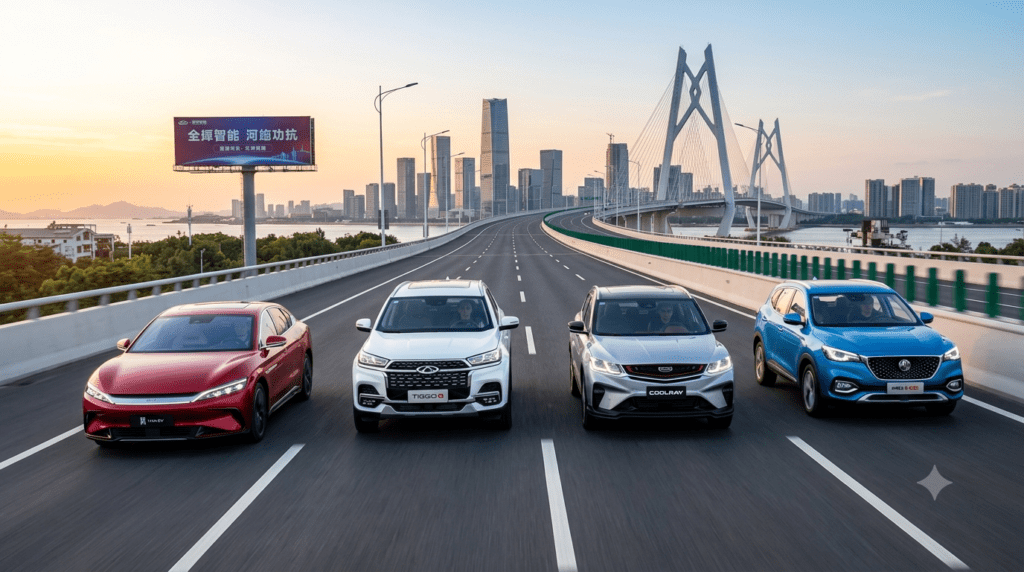
China and Global Exports China leads with aggressive pricing. Domestic micro-EVs like the Wuling Mini EV start under $5,000–$7,000, while models such as the BYD Seagull deliver impressive value. Chinese brands (BYD, Chery, Geely, MG) are exporting aggressively to Southeast Asia, Africa, Latin America, and beyond, offering feature-rich vehicles 20–50% cheaper than traditional competitors. Models like the BYD Dolphin and MG3 pack large touchscreens and ADAS features at disruptive prices.
Key Factors for Choosing an Affordable Car
- Fuel Efficiency and Powertrain Hybrids like the Toyota Corolla Hybrid and Honda Civic Hybrid excel with 40–50+ mpg and proven reliability. In EV-friendly regions, budget Chinese models help minimize long-term energy costs.
- Safety and Technology Modern entry-level cars now include driver aids once reserved for premium vehicles. Prioritize IIHS/NHTSA Top Safety Pick ratings and features like pedestrian detection.
- Reliability and Ownership Costs Toyota, Honda, Hyundai/Kia, and Maruti consistently rank high for longevity. Strong warranties, parts availability, and service networks are especially important in emerging markets.
- Practicality Subcompact crossovers like the Venue and Trax provide higher seating positions and greater versatility than traditional sedans.
- New vs. Used In expensive markets, a lightly used certified pre-owned vehicle from a reliable brand can sometimes offer superior value, though new cars provide full warranties and the latest safety technology.
Challenges and Trends
- Rising Costs and Regulation: Stricter emissions standards are increasing prices and pressuring the sub-$20,000 segment.
- EV Transition: Affordable EVs from China are accelerating adoption where infrastructure supports them.
- Chinese Disruption: Value-packed offerings from BYD, Chery, and others are forcing legacy automakers to respond with better pricing and features.
- Sustainability and Urbanization: Smaller, lighter vehicles reduce material use and suit crowded cities worldwide.
Real-World Ownership Insights
Owners of the Hyundai Venue and Kia models frequently praise their ease of driving, low operating costs, and modern features. In India, Maruti owners highlight exceptional fuel efficiency and widespread service support. Long-term data shows well-maintained Toyotas and Hondas routinely surpassing 200,000 miles with minimal issues.
Test drives are crucial—pay attention to comfort, visibility, and how well the car fits your daily routine.
Future Outlook
By the late 2020s, expect greater hybrid and EV integration in affordable segments, expanded global presence from Chinese brands, and gradual trickle-down of autonomous features. Advances in battery technology may make sub-$20,000 EVs more common, though economic and supply chain factors will continue to shape the market.
Conclusion: Smart Choices for Every Budget
In 2026, affordable cars demonstrate that reliable transportation remains within reach despite rising industry prices. In North America, the Hyundai Venue, Chevrolet Trax, and Kia K4 lead with practicality and strong value. In Asia and emerging markets, Maruti, Tata, BYD, and Chery models continue to democratize mobility.
Success comes from matching the vehicle to your specific needs, local conditions, and long-term finances. Focus on total value rather than the lowest price—research incentives, compare TCO, and read independent reviews. With careful selection, buyers worldwide can enjoy efficient, capable, and dependable transportation without breaking the bank.