


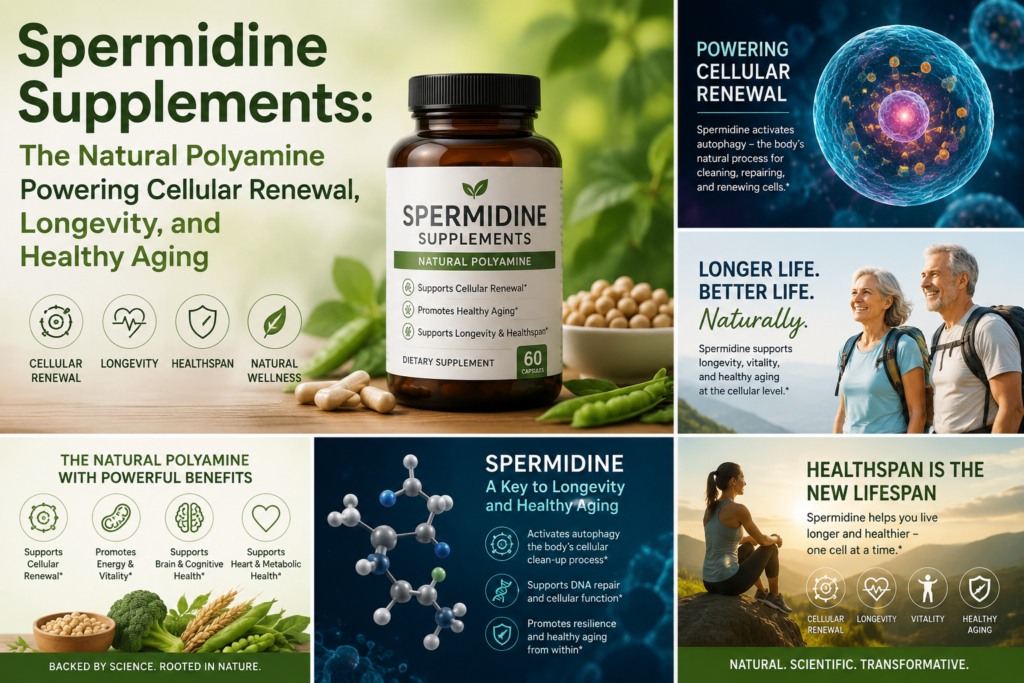
Spermidine Supplements: The Natural Polyamine Powering Cellular Renewal, Longevity, and Healthspan
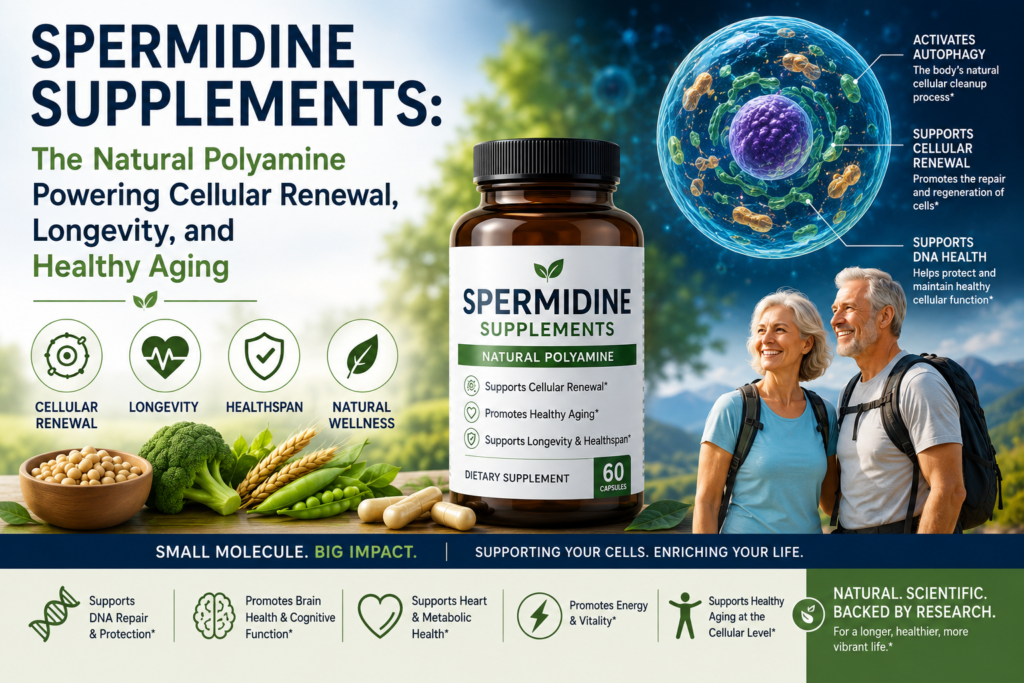
Spermidine supplements have surged in popularity as a promising tool for healthier ageing and enhanced vitality. These dietary products contain spermidine, a naturally occurring polyamine found in various foods and produced endogenously in human cells. Spermidine may promote healthy cell regeneration through autophagy—the body’s cellular “cleanup” process—support liver function, enhance memory and cognitive performance, and possibly protect against age-related diseases, including heart disease, dementia, and certain cancers.
Spermidine was first observed in the late 17th century by Antonie van Leeuwenhoek in human semen (hence the name), with its chemical structure and broader biological roles elucidated in the 20th century. Its modern renaissance as a supplement stems from research in the 2000s and 2010s linking it to autophagy and lifespan extension.
As of recent data, searches for “spermidine supplement” show strong interest with volumes around 18K monthly and significant growth, reflecting booming consumer curiosity in longevity science. This comprehensive article explores spermidine’s science, benefits, sources, supplementation strategies, safety, and more—drawing on peer-reviewed studies to provide a balanced, evidence-based overview.
What Is Spermidine? A Biochemical Primer
Spermidine (C₇H₁₉N₃) is a polycationic aliphatic polyamine essential for cellular function. It is synthesised from putrescine and serves as a precursor to spermine. In cells, it stabilises DNA, RNA, and proteins; regulates ion channels; and modulates gene expression.
Polyamines like spermidine are ubiquitous across life forms, from bacteria to humans. Endogenous levels decline with age, correlating with reduced cellular efficiency. Dietary intake and supplementation aim to restore these levels, mimicking the benefits of calorie restriction without the hardship.
Key Mechanisms of Action:
- Autophagy Induction: Spermidine inhibits histone acetyltransferases (HATs), leading to epigenetic changes that upregulate autophagy-related genes. Autophagy clears damaged organelles and proteins, preventing accumulation that drives ageing and disease. This is central to its longevity effects, observed across yeast, flies, worms, mice, and human cells.
- Hypusination of eIF5A: Spermidine enables the unique modification of eukaryotic translation initiation factor 5A, crucial for translating proteins involved in stress response and autophagy, especially during fasting.
- Anti-Inflammatory and Antioxidant Effects: It reduces oxidative stress, modulates inflammation, and supports mitochondrial health.
- Cardioprotection and Neuroprotection: Enhances mitophagy in heart cells and supports brain health via improved cellular cleanup.
These mechanisms position spermidine as a caloric restriction mimetic (CRM), reproducing many benefits of fasting or restricted diets.
Historical Context and Scientific Discovery
Spermidine’s story begins with microscopy in 1678. Its anti-ageing potential gained traction in 2009 when researchers showed it extends lifespan in model organisms via autophagy. Subsequent studies in mice demonstrated cardioprotection, reduced arterial stiffness, and improved cognitive outcomes. Human observational data, like from the Bruneck study, linked higher dietary spermidine to lower mortality and better cognition.
Recent trials (e.g., 2024 high-purity spermidine safety study) and fasting research further solidify its role. The 2023-2026 period saw explosive growth in supplements, fueled by podcasts, longevity influencers, and market projections showing the sector expanding at 8-15% CAGR, potentially reaching hundreds of millions in value.
Dietary Sources of Spermidine: Nature’s Pharmacy
The best way to obtain spermidine is through diet, as the body and gut microbiota also produce it. Rich sources include:
- Wheat Germ: 24-35 mg/100g — the highest common source. Sprinkle on yoghurt or smoothies (1-2 tbsp provides ~1-2.5 mg).
- Soy Products: Soybeans ~18 mg/100g; Natto (fermented) up to 20 mg/100g.
- Mushrooms (e.g., shiitake, king trumpet): Up to 16 mg/100g.
- Aged Cheeses: 4-20 mg/100g (e.g., cheddar, Gouda).
- Legumes (peas, beans): ~5-10 mg/100g.
- Nuts/Seeds (hazelnuts): Moderate levels.
- Others: Broccoli, green peppers, whole grains, citrus.
Typical Western diets provide 5-15 mg/day, but Mediterranean or plant-rich diets can deliver more. Fermentation boosts the content in some foods. To match supplemental doses via diet alone requires a consistent high intake of wheat germ or natto, making supplements convenient for many.
Health Benefits: What Does the Research Say?
1. Longevity and Cellular Health
Animal studies consistently show lifespan extension. Human data is promising but emerging: higher intake correlates with reduced all-cause mortality. Autophagy and reduced inflammation are key.
2. Cardiovascular Health
Spermidine promotes cardioprotective autophagy and mitophagy. Studies link it to lower blood pressure, reduced heart failure risk (~40% in some observational data), and better vascular function. It may reverse age-related cardiac decline.
3. Cognitive Function and Brain Health
Trials in older adults with subjective cognitive decline (e.g., 1.2 mg/day wheat germ extract for 3 months) showed memory improvements (Mnemonic Similarity Task). Other studies report benefits in mild dementia. It supports hippocampal volume and cortical thickness.
4. Liver Function and Metabolic Health
Supports autophagy in hepatocytes, potentially aiding detoxification and reducing fatty liver. Anti-inflammatory effects benefit metabolic syndrome.
5. Cancer Prevention Potential
Complex; autophagy can suppress early tumours but has dual roles. Observational data suggest protective effects, but more research is needed. Not a treatment.
6. Other Benefits: Immune modulation, hair growth (anecdotal and some in vitro), fertility support in aged models, and anti-arthritic effects via fasting synergy.
Spermidine Supplements: Types, Dosage, and Brands
Supplements come as wheat germ extracts (lower purity, ~1-3 mg spermidine per dose) or high-purity synthetic/fermented spermidine trihydrochloride (up to 99% pure, higher doses).
Common Dosages:
- Typical: 1-10 mg/day.
- Studied: 0.9-3.3 mg (extracts) for cognition; up to 40 mg high-purity for short-term safety.
Start low, take with meals. Cycle or use continuously based on goals.
Popular Options (as of 2026):
- High-purity like those from Double Wood, partiQlar, Omre, Purovitalis.
- Complexes with NMN, resveratrol, or liposomal forms for bioavailability.
- Gummies for convenience.
Choose third-party tested products. Purity matters—wheat germ may include other polyamines.
Safety, Side Effects, and Precautions
Spermidine is well-tolerated. Mouse studies up to high doses showed no toxicity. Human trials (1.2 mg for 3 months; 40 mg for 28 days) reported excellent safety, high compliance, and no significant changes in labs or adverse events.
Rare mild GI upset possible. Consult a doctor if pregnant, on medications (e.g., potential interactions with some antidepressants), or with advanced disease. Not a substitute for medical treatment.
How to Incorporate Spermidine: Practical Guide
- Diet-First: Add wheat germ, natto, mushrooms, and aged cheese.
- Supplement: Consistent daily use alongside a healthy lifestyle (exercise, sleep, balanced diet).
- Synergies: With fasting, exercise, or other longevity compounds.
- Monitoring: Track energy, cognition; advanced users may test biomarkers.
Lifestyle factors amplify effects—spermidine isn’t magic but a supportive tool.
The Future of Spermidine Research and Market
Ongoing trials explore dementia, heart disease, and immunity. Market growth is robust due to ageing populations and science-backed demand. Challenges include standardising doses and long-term human data.
Critics note some benefits are from extracts (multi-compound) vs. pure spermidine, and bioavailability varies. More RCTs needed.
Conclusion: A Promising Ally in Healthy Aging
Spermidine supplements offer an accessible way to support the fundamental process of cellular renewal. Backed by mechanistic insights and growing clinical evidence, they appeal to those prioritizing prevention and vitality. Combine with whole foods, exercise, and medical advice for best results. As research advances, spermidine may become a cornerstone of personalized longevity strategies.
=