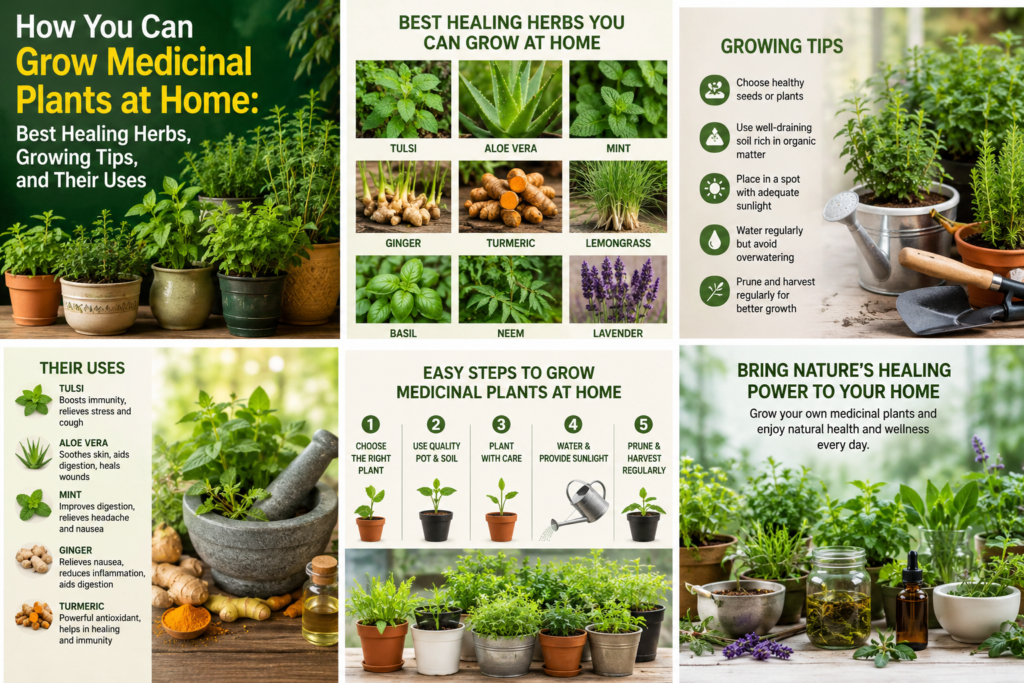
How You Can Grow Medicinal Plants at Home and Their Uses
Growing medicinal plants at home is a rewarding way to connect with nature, promote self-sufficiency, and support personal wellness. As people seek natural alternatives to conventional medicine for minor ailments, cultivating a home apothecary offers fresh, organic herbs right at your doorstep. This can reduce reliance on store-bought supplements and provide fresher plants with active compounds.
This guide covers garden planning, cultivation methods, harvesting, preparation, and the therapeutic uses of popular medicinal plants. Whether you have a backyard, balcony, containers, or a sunny windowsill, you can grow healing plants successfully. Expect to invest time in learning plant needs, but the rewards—in health, cost savings, and satisfaction—are substantial. Note: This article is for educational purposes. Always consult a qualified healthcare professional before using herbs medicinally, especially if pregnant, nursing, on medications, or managing serious conditions.
Benefits of Growing Medicinal Plants at Home
Homegrown medicinal plants offer numerous advantages:
- Freshness and Potency: Home-harvested herbs retain maximum essential oils, antioxidants, and bioactive compounds compared to dried commercial products that may lose efficacy over time.
- Organic Control: You avoid pesticides, chemical fertilisers, and contaminants common in some commercial sources.
- Cost-Effectiveness: Initial setup is modest, and perennials return year after year, saving money long-term.
- Sustainability and Biodiversity: Supports pollinators, improves soil health, and reduces your carbon footprint.
- Mental and Emotional Wellness: Gardening reduces stress, promotes mindfulness, and fosters a deeper connection to nature.
- Family Health and Education: Teaches children about plants, self-reliance, and natural remedies.
Many herbs double as culinary ingredients, enhancing meals while providing subtle health benefits.
Getting Started: Planning Your Medicinal Garden
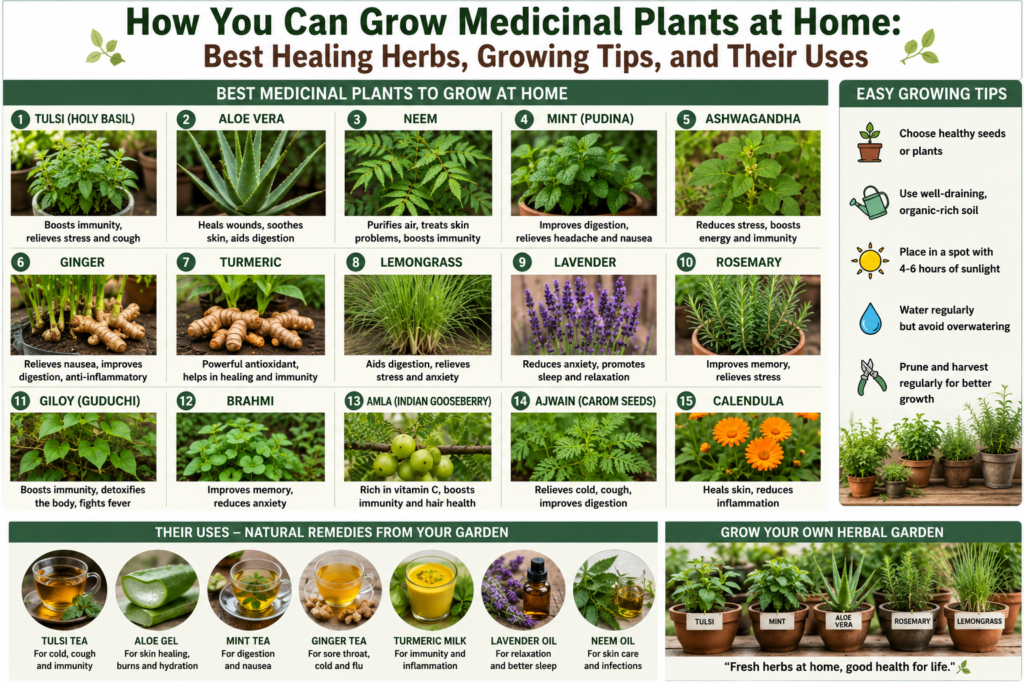
Assess Your Space and Climate:
- Evaluate sunlight (most herbs need 6+ hours daily), soil quality, and microclimates. Containers suit apartments or patios; raised beds or ground plots work for larger spaces.
- Consider USDA hardiness zones or local climate. Perennials like lavender thrive in Mediterranean-like conditions; tender plants like ginger prefer warmth.
Soil Preparation:
- Well-draining soil is critical to prevent root rot. Mix garden soil with compost, perlite, or sand. Herbs generally prefer slightly alkaline to neutral pH (6.0–7.5). Test and amend the soil accordingly.
Tools and Supplies:
- Seeds or starter plants (starters are easier for beginners).
- Pots with drainage holes, labels, pruning shears, and a watering can.
- Organic mulch, compost, and natural pest controls (neem oil, companion planting).
Beginner Tips:
- Start small with 3–5 easy plants tailored to your family’s common needs (e.g., digestion, immunity, stress).
- Group plants with similar needs (e.g., Mediterranean herbs together).
- Use companion planting: Calendula repels pests; mint in containers prevents spreading.
Common Mistakes to Avoid:
- Overwatering or poor drainage.
- Starting too many plants at once.
- Ignoring light requirements.
- Growing invasive species without containment.
- Starting from seed without proper conditions (many prefer transplants).
General Growing Guidelines
- Light: Full sun for most; partial shade for mint family or delicate leaves.
- Watering: Water at the base when the top inch of soil is dry. Avoid wetting foliage to prevent disease.
- Fertilising: Light feeders; use compost tea or organic fertiliser sparingly.
- Pests/Diseases: Promote airflow, use neem or insecticidal soap. Healthy plants resist issues better.
- Propagation: Seeds, cuttings, division. Many self-seed.
Now, let’s dive into specific plants. Each includes growing instructions, care, harvesting, and primary medicinal uses (supported by traditional knowledge and some modern research).
1. Calendula (Calendula officinalis)
Growing: Easy annual. Sow seeds directly after the last frost in full sun, well-drained soil. Space 12 inches apart. Deadhead flowers for continuous blooms. Thrives in poor soil.
Harvest: Pick flowers in full bloom in the morning.
Uses: Renowned for skin healing. Anti-inflammatory, antibacterial, antifungal. Make salves for wounds, burns, rashes, eczema, and dry skin. Tea for internal soothing (digestive inflammation). Often called “poor man’s saffron” for its colour in foods.
Word count note: Detailed sections like this expand with tips, recipes, and variations.
2. Chamomile (Matricaria chamomilla or Chamaemelum nobile)
Growing: German (annual) or Roman (perennial). Sow seeds shallowly in full sun, cool weather. Well-drained soil. Roman variety for ground cover.
Harvest: Flowers when fully open.
Uses: Classic calming herb. Tea promotes sleep, reduces anxiety, aids digestion, soothes stomach upset and colic (mild). Anti-inflammatory for skin (eye washes, baths). Mild antimicrobial.
3. Peppermint (Mentha × piperita)
Growing: Invasive perennial—grow in containers! Partial shade to full sun, moist, rich soil. Spreads via runners.
Harvest: Leaves before flowering.
Uses: Digestive powerhouse—relieves nausea, IBS, gas, bloating. Menthol clears sinuses and headaches (topical). Cooling tea for fevers. Antimicrobial.
Caution: Can cause heartburn in excess; not for infants.
4. Lemon Balm (Melissa officinalis)
Growing: Easy perennial. Full sun to partial shade, well-drained soil. Grows vigorously; cut back to control.
Harvest: Leaves anytime; best pre-flowering.
Uses: Calming, antiviral (cold sores, herpes). Reduces anxiety, improves sleep, aids digestion. Lemon-scented tea or tincture. Cognitive support.
5. Holy Basil / Tulsi (Ocimum tenuiflorum)
Growing: Tender perennial or annual in colder zones. Full sun, warm temperatures, rich, moist soil. Start indoors.
Harvest: Leaves and flowering tops.
Uses: Adaptogen for stress and immunity. Anti-inflammatory, antimicrobial. Supports respiratory health and blood sugar balance. Sacred in Ayurveda; tea or fresh leaves.
6. Echinacea (Echinacea purpurea)
Growing: Perennial. Full sun, well-drained soil. Sow seeds or transplants. Drought-tolerant once established. Harvest in year 2+.
Harvest: Roots (mature plants), leaves, flowers.
Uses: Immune booster for colds, flu, and infections. Anti-inflammatory. Tinctures are most potent.
7. Lavender (Lavandula spp.)
Growing: Mediterranean perennial. Full sun, very well-drained (gravelly) soil. Avoid overwatering. English varieties hardier.
Harvest: Flower spikes before fully open.
Uses: Calming for anxiety, insomnia (tea, sachets, essential oil). Antiseptic for skin and burns. Headache relief. Aromatherapy.
8. Aloe Vera
Growing: Succulent. Bright indirect light indoors or partial sun outdoors (warm climates). Sandy, well-draining soil. Low water—drought-tolerant.
Harvest: Mature outer leaves, cut at base.
Uses: Topical gel for burns, wounds, sunburn and skin irritation. Moisturising, healing. Limited internal use (laxative effects; consult a professional.
9. Turmeric (Curcuma longa)
Growing: Tropical perennial. Warmth, partial shade, consistently moist, rich soil. Grow from rhizomes indoors or in warm zones.
Harvest: Rhizomes when mature (dig carefully).
Uses: Potent anti-inflammatory (curcumin). Supports joint health, digestion, and immunity. Golden milk tea, pastes for wounds.
Note: Pair with black pepper for better absorption.
10. Ginger (Zingiber officinale)
Growing: Similar to turmeric. Warm, humid, partial shade, rich, moist soil. Grow from fresh organic rhizomes.
Harvest: Young for mild flavour; mature for potency.
Uses: Nausea (motion sickness, pregnancy), digestion, anti-inflammatory, immune support. Tea, fresh in food. Warming.
11. Rosemary (Salvia rosmarinus)
Growing: Evergreen shrub. Full sun, well-drained soil. Drought-tolerant once established. Cuttings easy.
Harvest: Leaves year-round.
Uses: Memory and focus (aromatherapy), antioxidant, digestive aid, antimicrobial. Hair growth rinses, culinary.
12. Thyme (Thymus vulgaris)
Growing: Low-growing perennial. Full sun, poor, well-drained soil. Drought-tolerant.
Harvest: Leaves before flowering.
Uses: Respiratory support (coughs, bronchitis—expectorant, antimicrobial). Antiseptic for wounds and oral health. Culinary.
Additional plants worth considering: Yarrow (wound healing, fever), Sage (sore throat, cognitive), Oregano (antimicrobial), Plantain (wound drawing), Garlic (immune).
Harvesting, Drying, and Storing
Harvest in the morning after dew dries, at peak potency (leaves pre-flower, flowers in bloom, roots in fall). Use clean tools.
Drying Methods:
- Air-dry: Hang small bundles upside down in a warm, dark, airy space (1–2 weeks).
- Screens or dehydrator: Low heat (<100°F/38°C) for delicate flowers.
- Test: Crumble easily, no moisture.
Storage: Airtight glass jars in a cool, dark place. Label with name and date. Leaves/flowers: 1–2 years; roots: 2–3 years.
Preparing Herbal Remedies at Home
- Teas/Infusions: Steep leaves/flowers 5–15 min.
- Decoctions: Simmer roots/barks 15–30 min.
- Tinctures: Alcohol or glycerite extraction (longer shelf life).
- Salves/Oils: Infuse in oil, add beeswax.
- Syrups, Baths, Poultices: Simple and effective.
Start with basic recipes and build an apothecary cabinet.
Safety, Legal, and Ethical Considerations
- Safety: Proper identification, dosage, interactions. Some herbs are contraindicated (e.g., during pregnancy). Start low, go slow. Fresh vs. dried potency differs.
- Legal: In many places, growing and personal use is fine, but avoid diagnosing/treating diseases without a license. Regulations vary by country for selling products.
- Sustainability: Source ethically; avoid overharvesting wild plants. Save seeds, propagate.
- Children/Pets: Many are safe in moderation; research specifics.
Consult resources like books by Rosemary Gladstar or local herbalists.
Troubleshooting and Advanced Tips
- Damping-off in seedlings: Improve airflow, avoid overwatering.
- Pests: Companion plants, manual removal.
- Indoor growing: Grow lights, humidity trays.
- Seasonal care: Mulch for winter protection.
Expand with companion gardening, permaculture principles, or vertical setups.
Conclusion
Growing medicinal plants at home transforms your space into a living pharmacy and sanctuary. From soothing chamomile tea to healing calendula salve, these plants offer accessible wellness. Start small, observe, learn, and enjoy the process. With patience and care, you’ll harvest not just remedies but a profound sense of empowerment and connection to the earth.
Embrace this ancient practice responsibly, and let your garden nurture you as you nurture it. For deeper dives, explore reputable herbal schools or texts. Happy growing!
===