[sources]
This Hotel in Ladakh is Built Around 300-Year-Old Trees and Withstands Temperatures as Low as -30°C
Stok, Ladakh — In the stark, high-altitude desert of Ladakh, where winter temperatures routinely plunge to -30°C and the landscape is defined by rugged mountains and sparse vegetation, a new luxury retreat is redefining sustainable hospitality. The Postcard in the Himalayan Willows, a five-suite boutique hotel, has been thoughtfully integrated into an existing orchard of nearly 300-year-old willow trees, blending centuries-old local building traditions with modern comfort.
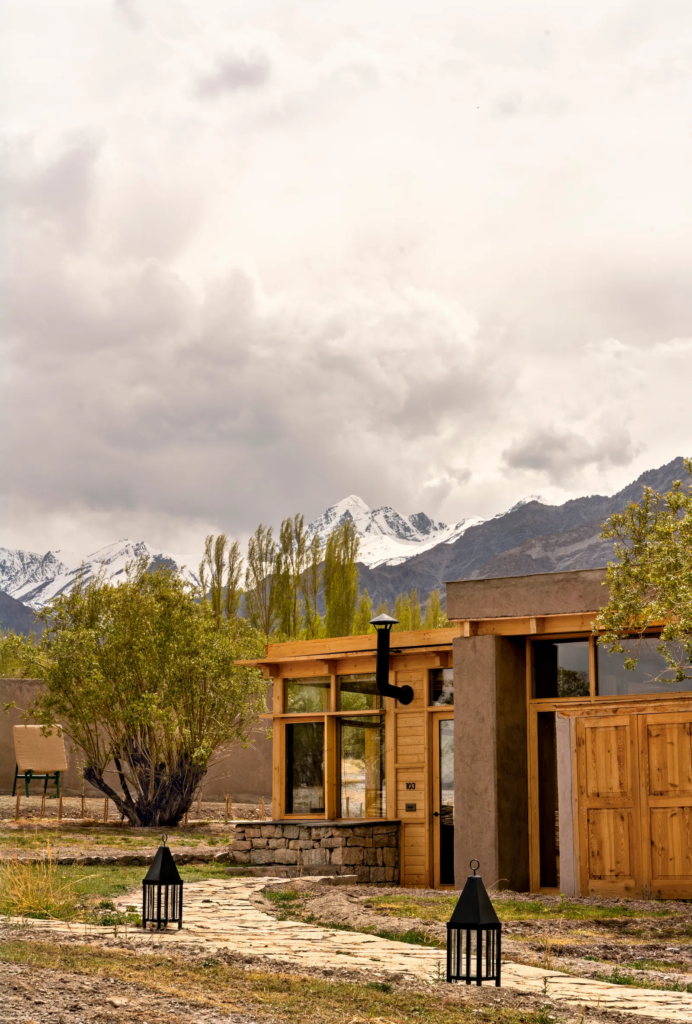
Nestled in Stok near Leh, the property emerges humbly from the landscape. Mud-block cottages with chimneys peek through the ancient trees, framed by snow-capped peaks of the Stok range and that signature piercing blue Ladakhi sky. The hotel represents a collaboration among The Postcard Hotel founder, Kapil Chopra; the royal family of Ladakh (including Jigmed Namgyal, heir to the erstwhile Namgyal dynasty); and the AD100 firm Alva Architects, led by Ashwin Alva.
Rooted in Tradition, Built for Extremes

The design draws heavily from Ladakh’s vernacular architecture. Thick adobe walls made from local mountain clay provide natural insulation, while poplar and willow timber add structural warmth and character. The project involved extensive research into traditional techniques, with collaboration from Nepali masons for stonework and local Ladakhi artisans for walls and plasterwork.
One of the standout engineering feats is the roof assembly. Inspired by traditional timber-and-mud roofs, it incorporates advanced insulation and waterproofing membranes that withstand the region’s brutal winters. Construction was completed in just 11 months — a remarkable timeline given Ladakh’s short building season and logistical challenges at high altitude.
“The land came together with the shared vision of the royal family… who has long been committed to showcasing Ladakh to the world in a thoughtful and culturally sensitive way,” said Kapil Chopra. The philosophy guiding the project is clear: the destination must always remain bigger than the hotel itself.
A Sanctuary in the High Desert
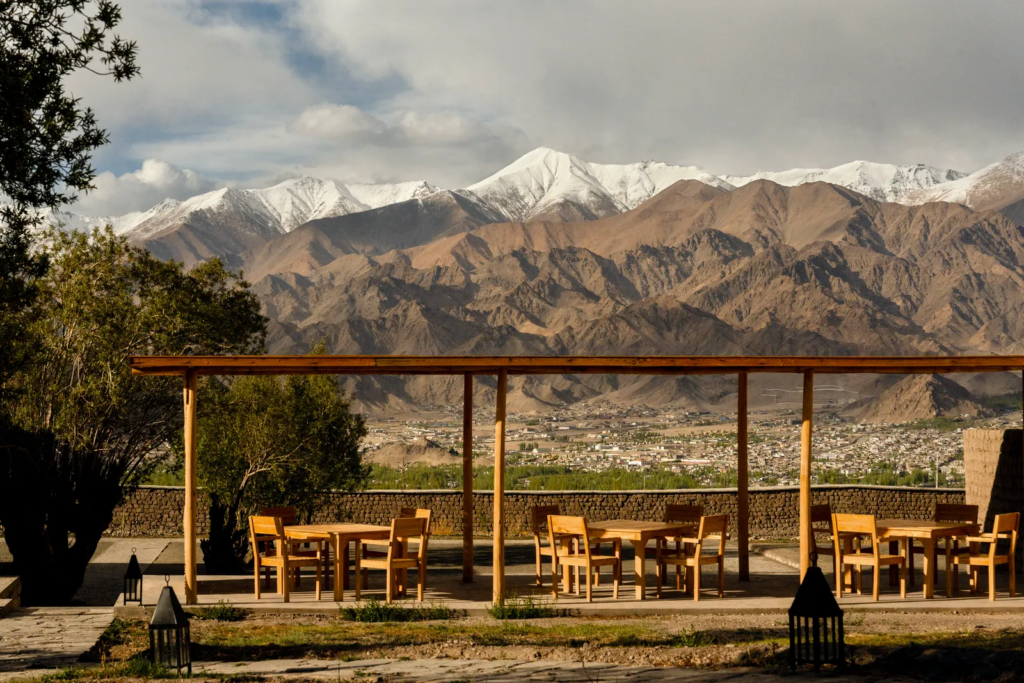
Guests step into sunrooms where the surrounding landscape sits at eye level, offering immersive views. Interiors feature markalak-plastered mud walls, exposed timber frames, and warm blond timber floors — creating cosy cocoons against the cold. The five suites emphasise simplicity, sustainability, and connection to nature rather than ostentatious luxury.
The hotel’s location in Stok places it close to cultural landmarks like Stok Palace, while remaining a peaceful base for exploring Ladakh’s monasteries, treks, and high-altitude lakes. It is among a select few properties in the region equipped to operate comfortably even in winter.
Sustainable Luxury in a Fragile Ecosystem
Building in Ladakh is no small feat. The region’s ecological sensitivity, remoteness, and extreme climate demand meticulous planning. Alva Architects focused on passive strategies, local materials, and time-tested methods to minimise environmental impact while delivering genuine comfort.
This approach not only preserves the 300-year-old willow trees that define the site but also honours the wisdom of Ladakhi builders who have thrived in one of the world’s harshest environments for centuries.
For travelers seeking an authentic yet refined experience in the Indian Himalayas, The Postcard in the Himalayan Willows offers more than just accommodation — it provides a deep, respectful immersion into Ladakh’s unique culture and awe-inspiring landscape. In a place where nature commands respect, this hotel stands as a quiet testament to harmonious design.
==