


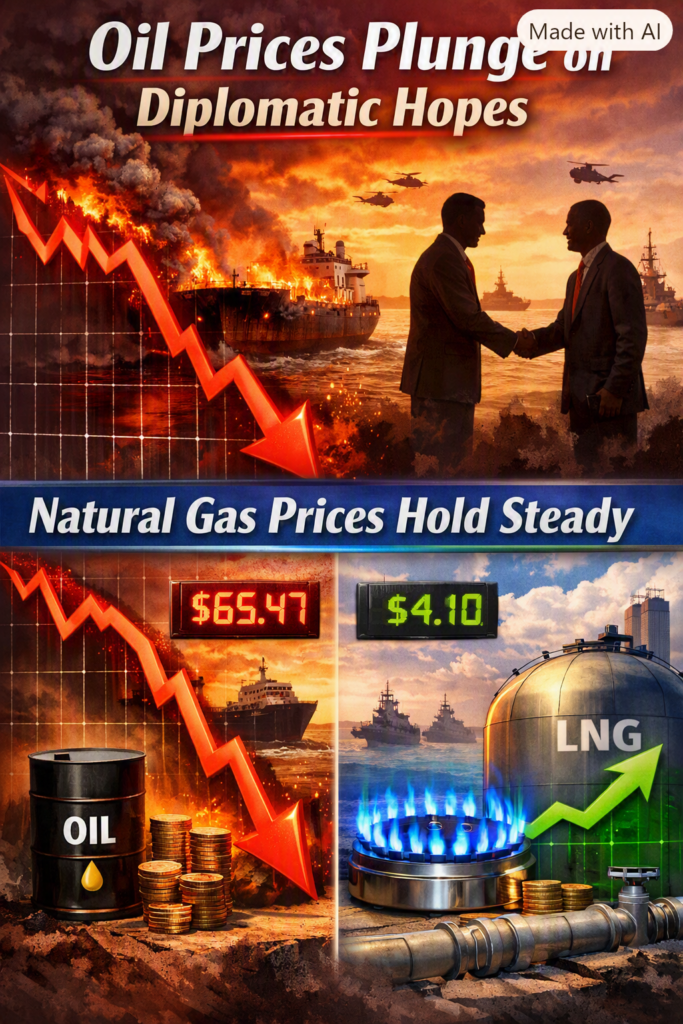
As of August 3, 2026, global energy commodity markets saw sharp downward pressure on crude oil prices, driven by signals of de-escalation in the ongoing U.S.-Iran conflict, while U.S. natural gas remained relatively stable at low levels. The moves reflect high geopolitical sensitivity in energy pricing, particularly around the Strait of Hormuz, a critical chokepoint for oil and LNG flows.
Crude Oil Markets: Sharp Reversal
Brent crude futures fell sharply, trading around $83.3–$83.6 per barrel (down roughly 5–7.5% on the day from prior levels near $90). U.S. West Texas Intermediate (WTI) declined to around $79.8–$80 per barrel (down about 5.5–6%). Refined products followed, with RBOB gasoline and heating oil also posting notable losses.
The primary catalyst was U.S. President Donald Trump’s decision to pause planned additional strikes on Iran. In a Truth Social post, Trump indicated that Iran and other Middle Eastern countries had requested time to finalise a deal involving the “Immediate, Complete, and Total” reopening of the Strait of Hormuz and an end to Iran’s nuclear program. This eased the geopolitical risk premium that had driven prices higher.
The drop follows a highly volatile period. Crude prices had surged more than 20% over the prior month amid renewed U.S.-Iran hostilities, tanker attacks near Oman and the Gulf, and reduced shipping traffic through Hormuz (which handles a significant share of global oil and LNG volumes). Earlier in 2026, prices spiked to well over $100 (with peaks reported near $118–$126 in some periods during acute disruptions). Shipping data indicated slowed Hormuz traffic and continued reports of vessel incidents, though some tankers continued to move in related waterways like Bab el-Mandeb.
OPEC+ added mild downward pressure by approving a production increase of around 188,000 barrels per day starting in September, completing the phased unwind of certain voluntary cuts. Market impact from the hike was described as limited so far.
Natural Gas and LNG
U.S. Henry Hub natural gas prices held near $2.76–$2.77 per MMBtu, showing only minor daily changes (slightly higher or near-flat). Strong domestic production, solid storage levels, and balanced demand have kept U.S. prices range-bound and relatively low compared with international benchmarks.
European TTF prices have been more elevated and volatile due to earlier Middle East LNG supply concerns (including impacts on Qatari exports). Recent readings placed TTF in the mid-to-upper €50s per MWh range (with some reports around €56–€59/MWh), reflecting a mix of prior spikes from Hormuz risks and subsequent softening. Asian spot LNG had also risen sharply in prior weeks during heightened tensions. U.S. LNG export growth continues to influence global balances.
Broader Context and Forecasts
The U.S. Energy Information Administration’s July 2026 Short-Term Energy Outlook projected Brent averaging about $82 per barrel for 2026 (revised lower from prior estimates) and $65 in 2027, citing expectations of rising supply and moderating inventory draws after earlier peaks. Henry Hub was seen averaging close to $3.67–$3.70/MMBtu in 2026 before easing. Global oil demand has faced headwinds in some regions (including softer Chinese consumption at times), while U.S. crude production remains robust near record levels.
Analysts and banks have repeatedly adjusted forecasts throughout 2026 in response to the conflict’s ebbs and flows—raising them during peak disruptions and dialling them back as supply recovery and diplomacy prospects improved. Risks of re-escalation or incomplete normalisation of Hormuz shipping remain key upside factors for prices; sustained de-escalation and production recovery point toward potential surplus pressures later in 2026 into 2027.
Market Implications
The oil sell-off provided some relief on inflation and fuel-cost concerns after earlier spikes that lifted retail gasoline and contributed to broader price pressures. Energy markets remain highly reactive to Middle East developments, with traders closely watching diplomatic progress, shipping volumes through Hormuz, OPEC+ compliance, and inventory data. Coal markets have at times benefited from gas-to-coal switching during elevated European and Asian gas prices, though recent oil/gas dynamics may alter that.
Overall, the August 3 session highlighted the dominance of geopolitical risk premiums in energy commodity pricing. While the immediate reaction favoured lower oil prices on hopes of reduced supply threats, sustained normalisation of flows and clearer demand signals will determine whether the decline holds or reverses. Markets continue to price a complex mix of recovery optimism and residual disruption risks.
==