
ORLANDO, Fla. — In the early hours of a quiet August weekend, the lights went out at four familiar storefronts across Central Florida. Gringos Locos, the 17-year-old Tex-Mex chain that had become a late-night institution for tacos, burritos, and its signature oversized “Double D” creations, abruptly shuttered every one of its locations. No press release. No social media farewell. No explanation from ownership. Just locked doors, darkened menus, and a wave of confusion that left customers, employees, and regulars searching for answers.
The closures, which took effect around August 1–2, 2026, ended operations at the chain’s four Orlando-area restaurants: the original Downtown location at 20 E. Washington Street, the SoDo spot at 517 E. Michigan Street, the Milk District restaurant at 2405/2406 E. Robinson Street, and the University of Central Florida (UCF) outpost at 4258 W. Plaza Drive in Knights Plaza. Founded in 2009, Gringos Locos had built its reputation on homemade salsas, marinades, sofrito, fresh-never-frozen meats, slow-roasted pork, and a menu heavy on nachos, tacos, and burritos. Its late-night hours—open until 3 a.m. daily—made it a reliable stop after bars, concerts, Magic games, and campus events.
By Monday morning, customers arriving for lunch found the restaurants dark. Employees reported receiving little to no advance notice. One worker who identified as staff told local reporters that management delivered a closing notice around July 31, indicating the locations would shut permanently once food ran out. Another account from the UCF location described company representatives visiting on Friday and stating the business was closing while it “navigates its finances.” Calls to the restaurants went to voicemail. The company website continued listing the four spots and advertising hours from 11 a.m. to 3 a.m., along with a loyalty program and online ordering options that no longer functioned.
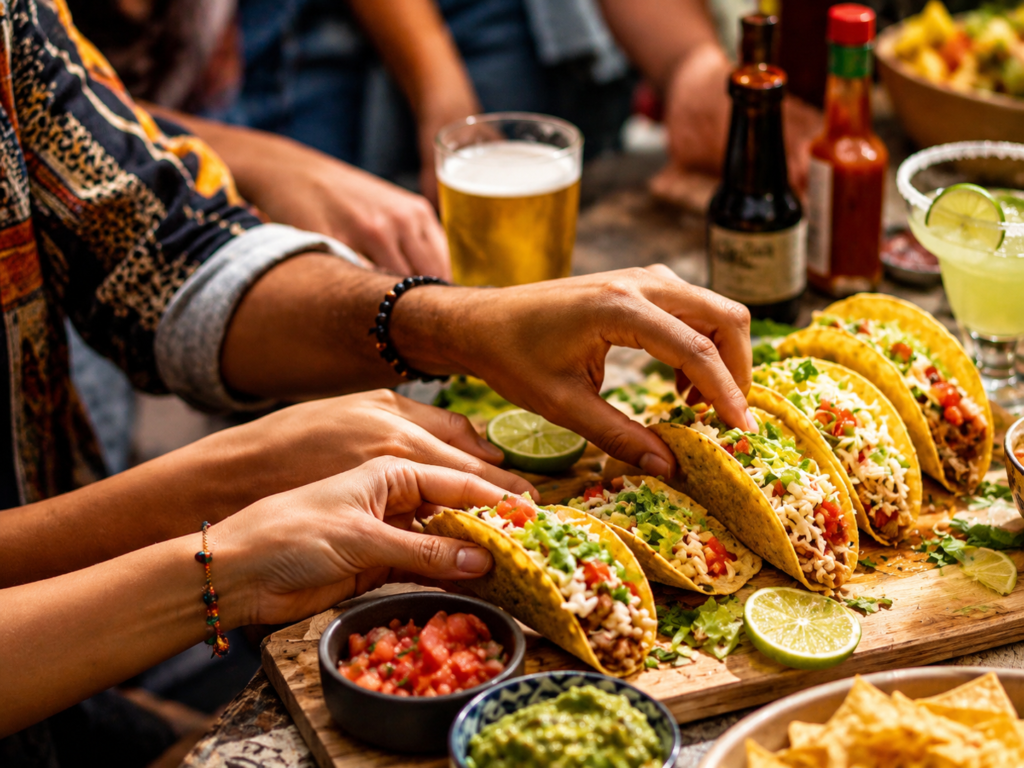
The silence from ownership has only deepened the frustration. Regulars took to social media and local forums to express disbelief and disappointment. Many recalled the chain’s early days as a single downtown taco shop that quickly earned a following for its bold flavours and generous portions. Over the years, it expanded carefully into the Milk District, SoDo, and the busy UCF campus, becoming woven into the fabric of Orlando’s nightlife and student culture. The “Double D”—a soft tortilla layered with queso and a fried hard-shell taco filled with chicken, beef, or pork—had become a local legend, a messy, satisfying ritual after long nights out.
For many, the abrupt end felt personal. “It was the place you ended the night,” one longtime customer said in local coverage. Lines had formed at some locations on the final Saturday as word spread, with diners seeking one last meal before the doors locked for good. Others voiced frustration over recent years of rising prices and, according to some accounts, declining consistency. Still, the loyalty remained. Gringos Locos had repeatedly won “Best Taco” honours in Orlando Weekly readers’ polls, and its happy hour deals—50% off alcohol, discounted burritos, free chips and salsa—kept a steady flow of afternoon and evening traffic.
A Chain Built on Local Roots
Gringos Locos opened its flagship on East Washington Street in 2009, at a time when Orlando’s downtown was evolving and late-night food options beyond fast-food chains were limited. The concept leaned into Tex-Mex comfort with an emphasis on freshness: beef never frozen, chicken cut in-house, pork roasted for hours. The branding was playful and approachable—“gringos locos,” or crazy gringos—signalling a fun, unpretentious vibe rather than fine-dining authenticity. It worked. The downtown location became a post-bar destination, then a reliable lunch and dinner spot, then a platform for expansion.
By the late 2010s, the chain had reached four units. The UCF location, opened around 2018, tapped into a large student population hungry for affordable, filling Mexican-American fare at all hours. The Milk District and SoDo spots extended the brand into growing neighbourhoods. Ownership appears to have included local operators with ties to other Orlando concepts; one report linked a principal to the launch of neighbouring taco spots. The business cultivated a loyalty program called VIG—Very Important Gringos—offering points toward discounts, and it maintained a simple, consistent menu that rewarded repeat visits.
For 17 years, the model held. Then, seemingly overnight, it did not. Employees described a final weekend of operations after the July 31 notice, with some locations serving until food stocks depleted. No public statement has addressed unpaid wages, severance, gift-card balances, or the fate of leases. Practical questions linger: What happens to staff who showed up expecting a paycheck? How will regulars with loyalty points or prepaid cards be compensated? Will the sites be re-leased quickly, or will vacant storefronts join the growing number of empty restaurant spaces in a challenging market?
Industry Headwinds Hit Hard
The Gringos Locos shutdown is not an isolated event. Mexican and Tex-Mex restaurant operators across the United States have faced a punishing combination of rising costs, shifting consumer habits, and intense competition. Food inflation, higher labour expenses, elevated rent, and insurance premiums have squeezed margins for years. Many chains that expanded aggressively in the 2010s found themselves over-leveraged when traffic patterns changed after the pandemic. Casual dining and fast-casual Mexican concepts, once reliable growth engines, have seen softer demand as diners trade down to cheaper options or stay home more often.
Recent years have delivered a steady drumbeat of bad news for the category. On the Border Mexican Grill & Cantina, a long-running national brand, filed for Chapter 11 bankruptcy in 2025, closed dozens of locations, was acquired, and later shuttered remaining company-owned restaurants before moving into liquidation proceedings. Tijuana Flats went through its own bankruptcy and store reductions. Other regional players—Z’Tejas, Abuelo’s, Salty Iguana, and various smaller groups—have closed locations or exited markets entirely. Even better-capitalised competitors have slowed expansion or pruned underperforming units.
Industry observers point to structural pressures. Labour remains tight and expensive in many markets. Ingredient costs for proteins, produce, and dairy have stayed elevated. Consumers, still adjusting to higher everyday prices, have become more selective about dining out. Delivery apps take a substantial cut of each order. Competition from national giants like Chipotle, as well as a proliferation of independent taquerias and food trucks, has fragmented the market. Late-night demand, once a reliable profit centre for places like Gringos Locos, has also softened in some cities as nightlife patterns evolve and more options appear.
Local Orlando factors may have compounded the strain. Downtown revitalisation, rising commercial rents, and changing foot traffic after years of post-pandemic recovery have challenged independent and small-chain operators. Student populations provide volume but can be price-sensitive. Reports of internal issues—disputes among owners, unpaid bills, maintenance problems such as broken air conditioning or plumbing, and customer complaints about price increases and quality—have circulated among former staff, though ownership has not confirmed or denied them. Without an official statement, these remain anecdotal.
Customers Left in the Dark
The human impact has been immediate. Employees who depended on the late shifts and tips from weekend crowds suddenly found themselves without work. One staffer publicly noted becoming unemployed after the July 31 notice. Regulars who treated Gringos Locos as a ritual—pre-game tacos before Magic games, post-concert fuel, study-break burritos near campus—expressed a sense of loss that went beyond the food. For some, it marked the disappearance of another independent voice in a landscape increasingly dominated by chains and national brands.
Social media filled with memories of specific dishes, favourite servers, and late-night stories. Others voiced practical concerns: unresolved gift cards, loyalty points that now appear worthless, and uncertainty about whether the closures are permanent or temporary. The company website’s continued listing of open locations and operating hours only added to the confusion. Local news outlets that attempted contact reported no responses from management.
In the broader Orlando restaurant scene, the vacuum is noticeable. Late-night Mexican options remain, but the particular combination of volume, price point, and atmosphere that Gringos Locos offered will be hard to replace overnight. Neighbourhoods that hosted the four locations now face empty commercial space at a time when filling storefronts is already difficult. Landlords, suppliers, and remaining staff face their own cascading effects.
A Familiar Pattern Across the Sector
Restaurant closures of this type have become distressingly common. Operators who survived the acute phase of the pandemic often emerged with thinner balance sheets and higher cost structures. Many small and mid-sized chains lack the capital reserves or franchising scale of larger competitors. When sales soften even modestly, the math becomes unforgiving: fixed costs for rent and labour continue while variable costs for food climb. Price increases intended to protect margins can drive customers away, creating a downward spiral.
Mexican-concept restaurants have been especially visible in the casualty lists, partly because the category expanded rapidly and partly because it faces stiff competition from both authentic independent spots and highly optimised national players. Some brands have responded by closing weaker units, renegotiating leases, or seeking new ownership. Others, like Gringos Locos, appear to have reached a point where continued operation was no longer viable and simply stopped.
Experts note that abrupt multi-location shutdowns without public explanation are particularly hard on employees and communities. Transparent communication, even when the news is bad, can ease transitions, allow for orderly wind-downs, and preserve some goodwill. The absence of that communication here has left a vacuum filled by speculation and secondhand accounts.
What Comes Next
As of early August 2026, the four Gringos Locos locations remain closed. No reopening plans have been announced. No bankruptcy filing or formal dissolution notice has surfaced in available reports. Ownership has stayed silent. The website continues to present an operational face that no longer matches reality.
For customers, the practical advice is straightforward: treat the restaurants as permanently closed until proven otherwise. Gift cards and loyalty balances may prove difficult to redeem. Former employees seeking final pay or information will likely need to pursue formal channels. The commercial real estate market will eventually absorb the spaces, though the timeline is uncertain.
The story of Gringos Locos is both specific and emblematic. A locally rooted chain that filled a genuine need—fresh, affordable, late-night Tex-Mex in a growing city—operated successfully for 17 years before the combination of cost pressures, possible internal challenges, and a tough operating environment proved decisive. Its disappearance removes one more independent option from Orlando’s dining landscape and adds another data point to the ongoing strain felt by restaurant operators nationwide.
Whether the company eventually issues a statement, seeks to restructure, or simply fades away remains to be seen. In the meantime, the locked doors, the unanswered questions, and the memories of Double D tacos after midnight stand as the current record. Customers who once counted on Gringos Locos for a reliable meal and a familiar atmosphere are left searching for answers that ownership has so far declined to provide. The industry pressures that contributed to this outcome show no sign of easing soon, suggesting that other operators may face similar reckonings in the months and years ahead.
In a sector defined by high failure rates and thin margins, the sudden end of a 17-year run serves as a reminder of how quickly even established local favourites can vanish when the economic currents shift. For Orlando diners, the loss is concrete: one fewer place open until 3 a.m., one fewer option for the kind of casual, satisfying Mexican-American food that had become part of the city’s late-night rhythm. For the broader restaurant industry, it is another signal that the post-pandemic recovery remains uneven and that cost structures built for a different era continue to challenge operators of every size.
The final chapter of Gringos Locos may yet include more details—financial filings, statements from principals, or new tenants in the former spaces. Until then, the narrative is incomplete, defined more by absence than by explanation. Customers keep searching. The company has yet to answer.
==