
New Delhi, August 18, 2026 — The 30th edition of the BWF World Championships roared to life at the Indira Gandhi Indoor Stadium in New Delhi on Monday, August 17, marking the return of badminton’s premier individual event to Indian soil after a 17-year absence. For seven days, until August 23, the world’s elite will battle across five disciplines — men’s and women’s singles, men’s and women’s doubles, and mixed doubles — for the sport’s most coveted non-Olympic crowns. Draw sizes stand at 64 for singles and 48 pairs for doubles, with matches contested under the best-of-three games to 21 points format.
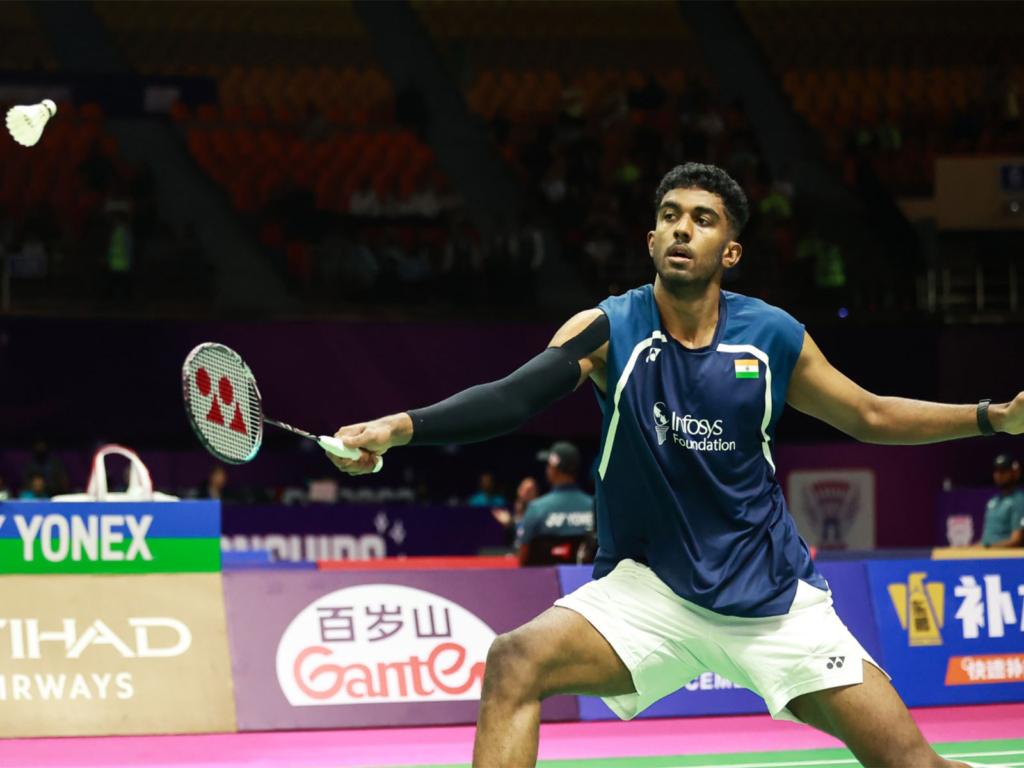
India’s homecoming has already delivered drama. On the opening day, all five Indian entries in action emerged victorious, crowning a flawless start for the hosts. The highlight was an extraordinary upset: 21-year-old Ayush Shetty, making his World Championships debut and ranked around world No. 22, defeated top seed, defending champion and world No. 1 Shi Yuqi of China 21-14, 13-21, 21-19 in a gripping three-game men’s singles Round of 64 encounter. Five-time World Championships medallist PV Sindhu began her campaign with a commanding 21-7, 21-11 victory over Ireland’s Sophia Noble. The women’s doubles pairs of Treesa Jolly/Gayatri Gopichand and Kavipriya Selvam/Simran Singhi advanced, as did the men’s doubles duo of Hariharan Amsakarunan and M.R. Arjun (their Irish opponents retired mid-match).
As Day 2 unfolds on Tuesday, August 18, attention turns to other key Indian names. Lakshya Sen, the 14th seed and 2021 bronze medallist, is scheduled to open against Austria’s Collins Filimon. The fifth-seeded men’s doubles pair of Satwiksairaj Rankireddy and Chirag Shetty, two-time World Championships bronze medallists, hold a first-round bye and will enter later. Mixed doubles pairs including Dhruv Kapila/Tanisha Crasto (seeded) and Rohan Kapoor/Ruthvika Shivani Gadde also feature in the Indian squad, which fields two entries in each of the five categories.
A Transformed Landscape: From Hyderabad 2009 to New Delhi 2026
Seventeen years ago, India hosted the World Championships for the first time in Hyderabad. The 2009 edition at the Gachibowli Indoor Stadium unfolded in a different era of Indian badminton. China dominated, claiming four of the five titles. Lin Dan completed a historic hat-trick of men’s singles world titles. India’s best performer was Saina Nehwal, who reached the quarterfinals. The nation left without a medal, still carrying only Prakash Padukone’s 1983 bronze as its solitary World Championships podium finish.
The intervening years have rewritten the narrative. Since Jwala Gutta and Ashwini Ponnappa’s breakthrough women’s doubles bronze in 2011, India has secured at least one medal at every subsequent edition — an unbroken streak spanning more than a decade and multiple disciplines. PV Sindhu’s 2019 gold in Basel remains the country’s only world title, but the medal tally has grown substantially: bronzes and silvers for Sindhu across multiple years, Saina Nehwal’s silver and bronze, B. Sai Praneeth’s bronze, Kidambi Srikanth’s silver, Lakshya Sen’s bronze, H.S. Prannoy’s bronze, and Satwik-Chirag’s bronzes in 2022 and 2025. By 2025, Indian shuttlers had collected around 15 World Championships medals in total.
Infrastructure, coaching systems, professional pathways and commercial support have matured. Pullela Gopichand’s academy and other centres have produced successive generations. India has produced world No. 1s in singles (Saina, Srikanth) and doubles (Satwik-Chirag). Olympic medals, Thomas Cup gold in 2022, Commonwealth and Asian Games success, and consistent Super Series/World Tour titles have elevated expectations. Hosting rights for 2026 effectively transferred after earlier adjustments involving the Sudirman Cup calendar. New Delhi’s Indira Gandhi Arena, refreshed after hosting the India Open earlier in the year, now stages the 30th edition under the organisation of the Badminton Association of India with BWF sanction.
The Opening Day Drama: Ayush Shetty’s Statement Victory
Few results on Day 1 matched the impact of Ayush Shetty’s win over Shi Yuqi. The tall, powerful Indian from Karnataka entered with a 0-3 head-to-head record against the Chinese star, including a lopsided loss in the Badminton Asia Championships final earlier in 2026. Playing in front of a partisan home crowd, Shetty attacked from the outset, using his height for steep smashes, sharp net play and court coverage. He took the first game 21-14. Shi responded to level at one game apiece. In the decider, Shetty built a substantial lead, only for the experienced Chinese to claw back and force the Indian to convert under pressure. Shetty held multiple match points, saw several slip away, then sealed the contest with composure.
The victory instantly became the talk of the tournament. It eliminated the defending champion in the opening round and announced Shetty as a genuine threat on the biggest stage. Coach and observers noted tactical adjustments, including effective use of lifts and changes of pace, alongside the intangible boost of home support. Shetty advances to the Round of 32 with momentum and a growing reputation as a giant-killer.
PV Sindhu: Chasing History on Home Soil
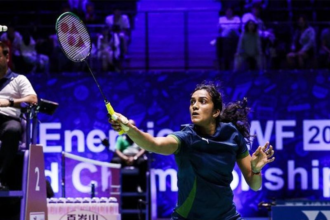
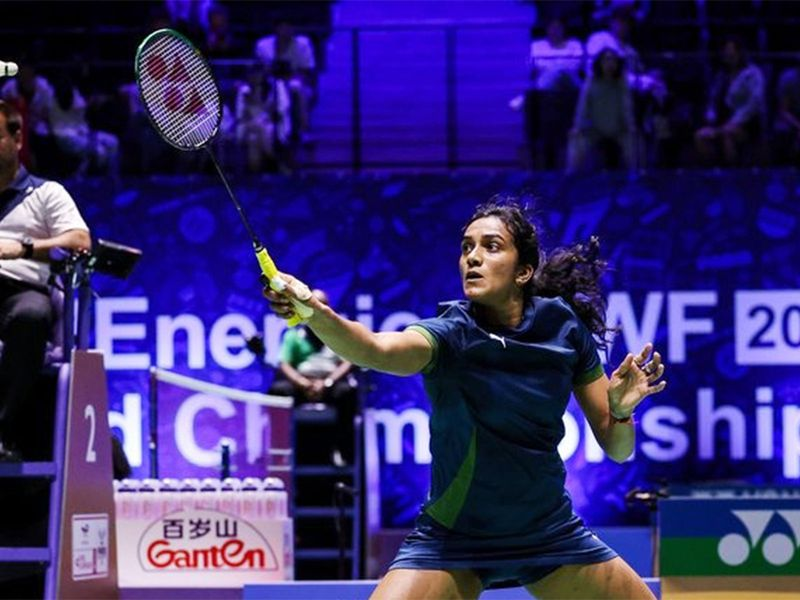
No Indian carries greater individual expectation than PV Sindhu. Seeded ninth, the two-time Olympic medallist (silver Rio 2016, bronze Tokyo 2020) owns five World Championships medals: bronzes in 2013 and 2014, silvers in 2017 and 2018, and gold in 2019. A sixth medal would make her the first player in the history of the championships to reach that mark, surpassing the five achieved by China’s Lin Dan (all golds in men’s singles) and Zhao Yunlei (across doubles disciplines). In women’s singles, she stands among the most decorated.
Sindhu’s path began comfortably against Sophia Noble. She controlled the match from the start, advancing in straight games in under half an hour. Her next assignment is against Canada’s Wen Yu Zhang in the Round of 32. Recent form offers encouragement: a Japan Open Super 750 title in July ended a title drought and restored confidence after several seasons of inconsistency at the highest level. Sindhu has spoken of the special nature of competing at home after 17 years and of remaining hungry for success. Experience, improved physical conditioning and sports science support form part of her preparation. Reaching the semifinals would guarantee at least bronze and etch a new record; deeper progress remains the goal.
Lakshya Sen: The Standard-Bearer in Men’s Singles
Lakshya Sen enters as India’s leading men’s singles hope and the 14th seed. The 2021 World Championships bronze medallist has a strong résumé: Commonwealth Games gold, Thomas Cup winner in 2022, All England finalist (including a recent run), Paris Olympics fourth place (India’s best Olympic result in the event), and multiple World Tour titles. At his best, Sen combines aggressive attacking play, athleticism and mental resilience. He opens against Austria’s Collins Filimon and will look to build confidence and navigate a competitive draw featuring the likes of Kunlavut Vitidsarn, Anders Antonsen, Kodai Naraoka and others.
Sen’s presence ensures India fields a realistic medal contender in men’s singles alongside the emerging force of Ayush Shetty. The home crowd is expected to provide a significant lift as the tournament progresses into the middle rounds.
Satwiksairaj Rankireddy and Chirag Shetty: Doubles Ambitions
India’s strongest medal prospects in the team sense often rest with Satwiksairaj Rankireddy and Chirag Shetty. Seeded fifth in men’s doubles, the pair are two-time World Championships bronze medallists (2022 and 2025). They became the first Indian men’s doubles pair to reach world No. 1, win a Super 1000 title, claim Asian Games gold, and capture the Asian Championships title after a long wait. Commonwealth Games gold, Thomas Cup contribution and a string of World Tour titles across categories define their career.
Satwik’s shoulder has been monitored, but both players have indicated fitness. They received a first-round bye and will enter at a later stage. Their aggressive style, power and tactical understanding make them perennial contenders. A home World Championships offers the chance to upgrade bronze to a higher colour or at least extend India’s doubles success story. Secondary pairs such as Hariharan Amsakarunan/M.R. Arjun already advanced on Day 1, while women’s doubles and mixed doubles entries add depth.
The Broader Field and Tournament Structure
The draws feature established stars and rising talents. In women’s singles, top seed An Se-young of South Korea leads a strong field that includes Akane Yamaguchi, Chinese players such as Wang Zhi Yi and Chen Yufei, and other medallists. Men’s singles lost its top seed early but retains depth. Doubles categories showcase top pairs from China, Korea, Indonesia, Malaysia, Japan and Europe.
The schedule is tightly structured. August 17 featured opening rounds in singles (Round of 64) and doubles (Round of 48). August 18 continues with remaining first-round action, further doubles, and the start of mixed doubles. August 19 is primarily the Round of 32 across events. Round of 16 follows on August 20, quarterfinals on August 21, semifinals on August 22, and finals on August 23 (starting around 13:00 IST). Matches are played across multiple courts early, consolidating as the field narrows. Broadcast in India is available on Star Sports networks with streaming on platforms such as JioHotstar; international audiences can follow via BWF channels and related outlets.
Venue, Atmosphere and Stakes
The Indira Gandhi Indoor Stadium has been prepared to host high-level international badminton. Capacity crowds, passionate support and the novelty of a home Worlds create an electric atmosphere. For Indian players, the combination of familiarity, support and pressure is unique. For visiting athletes, the challenge includes adapting to conditions, crowd noise and the intensity of a major championship.
Ranking points, prestige and the psychological boost of a World Championships medal make every match high-stakes. India has not hosted since 2009; the opportunity to perform in front of home fans after years of consistent medal production raises the bar. A medal of any colour would extend the remarkable streak. Multiple medals or a gold would represent a landmark statement.
Looking Ahead
As the tournament enters its second day, the focus remains on progression. Sindhu aims to navigate her side of the draw. Sen and Shetty seek to capitalise on early momentum or solid openings. Satwik-Chirag prepare for their entry. Supporting Indian pairs look to cause further upsets or reach deeper rounds. International contenders will respond, knowing early exits by favourites open pathways.
The 2026 BWF World Championships in New Delhi is more than a week of elite competition. It is a celebration of how far Indian badminton has travelled since Hyderabad 2009 — from hopeful hosts to genuine medal contenders with depth across disciplines. Ayush Shetty’s opening-night heroics provided the perfect spark. The coming days will determine whether that energy translates into lasting success for the hosts and which players emerge as the new world champions.
With six days of action still ahead, the Indira Gandhi Indoor Stadium stands ready for more drama, more upsets, and the crowning of five new world champions on August 23. Indian fans, players and the badminton community worldwide will be watching closely.