August 24, 2026
In the humid late-summer days of 2026, the world finds itself suspended between fragile ceasefires and the persistent hum of military readiness, between the promise of technological transformation and the grinding reality of disrupted energy flows, strained supply chains, and elevated inflation. The central story of this period is that major geopolitical shocks are testing the post-Cold War economic order. Six months after the outbreak of major hostilities involving Iran, the United States, and Israel in late February, the global economy continues to absorb successive shocks while geopolitical tensions radiate outward from the Persian Gulf, Eastern Europe, and the Indo-Pacific. What began as a regional confrontation has evolved into a structural test of interconnected trade routes, energy chokepoints, and financial systems already strained by earlier tariff escalations and industrial policy shifts.
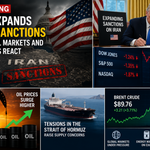
The defining event of the year remains the conflict that erupted in the Middle East at the end of February 2026. Attacks on energy infrastructure across the Persian Gulf and the effective, if intermittent, closure of the Strait of Hormuz—the world’s most critical energy artery—cut crude oil flows by more than 10 million barrels per day at the peak, equivalent to roughly 13 per cent of normal global supply. Brent crude surged as high as $120 per barrel in the initial weeks before settling into a volatile range that, even after partial reopenings and diplomatic efforts, has left prices substantially higher than pre-conflict levels. By mid-August, markets continued to price in a persistent risk premium, with oil hovering near multi-week highs amid renewed warnings of economic measures and incomplete restoration of shipping traffic.
The economic consequences have been uneven yet pervasive. Global growth forecasts for 2026 have been revised downward across major institutions, reflecting the strain of overlapping geopolitical and energy shocks. The International Monetary Fund, Organisation for Economic Co-operation and Development, and private-sector analysts now project world output expanding in the range of 2.4 to 3.0 per cent for the year, a meaningful deceleration from the stronger pace recorded in 2024–25. Europe has borne a particularly heavy burden. Heavily dependent on imported energy and with limited domestic production, the euro area experienced a quarterly contraction in early 2026 and faces full-year growth estimates as low as 0.5 to 0.8 per cent in some forecasts. Purchasing power has eroded under higher energy and input costs, while investment remains fragile. Asia presents a more mixed picture: China has demonstrated notable resilience, supported by strong exports and domestic demand in technology sectors, with growth estimates near 4.7 to 5 per cent, even as higher oil prices and weaker external demand from energy-importing partners create headwinds. The United States has so far avoided recession, buoyed by robust consumer spending in certain segments and massive capital expenditure tied to artificial intelligence and data-centre infrastructure—announcements exceeding $700 billion in some tallies—yet faces its own pressures from elevated bond yields, fiscal concerns, and the residual effects of earlier trade measures.
Inflation has reasserted itself as a central policy challenge. Global headline measures jumped by half a percentage point or more in the immediate aftermath of the Hormuz disruption, with secondary effects visible in plastics, fertilisers, and a range of industrial inputs. Several economies have seen central banks pause or reverse earlier easing cycles. The European Central Bank raised rates in response to energy-driven pressures, while other institutions weigh the trade-off between supporting softening growth and preventing the de-anchoring of inflation expectations. Bond markets have reflected the tension: yields on longer-dated government securities in the United States, United Kingdom, Japan, and parts of Europe climbed to levels not seen in years, or even decades, driven by a combination of inflation concerns, heavy issuance needs, and competition for capital from the AI investment boom. U.S. national debt crossed symbolic thresholds near $40 trillion, amplifying debates over fiscal sustainability and the potential for higher borrowing costs to constrain future policy options.
Trade and supply-chain dynamics have shifted in parallel. The earlier wave of tariff measures in 2025 already accelerated fragmentation; the 2026 energy shock compounded the effect by raising shipping costs, lengthening transit times, and prompting firms to seek alternative routes and suppliers. The Panama Canal and other arteries have faced elevated fees and congestion, while the temporary immobilisation of vessels in the Gulf created cascading delays. World trade volume growth is projected to slow markedly. Geoeconomic confrontation—tariffs, investment restrictions, and industrial policies aimed at security of supply—now ranks among the top risks identified by business and policy leaders. Estimates of the annual cost of fragmentation run into the hundreds of billions of dollars, with the potential for far larger losses under more severe scenarios of decoupling. Emerging markets outside the major blocs face disproportionate exposure, as higher energy and financing costs intersect with weaker demand from traditional export destinations.
Yet the picture is not uniformly bleak. The same period has witnessed continued enthusiasm for artificial intelligence as a potential productivity driver. Large technology firms have committed extraordinary capital to compute infrastructure, supporting U.S. growth and equity market resilience even as traditional industrial sectors struggle. Financial markets, after an initial sharp correction of roughly 9 per cent in global equities in the first weeks of the conflict, recovered much of the lost ground as hopes for de-escalation and the AI narrative reasserted themselves. Risk appetite has proved more durable than in previous geopolitical episodes of comparable energy impact. Still, analysts caution that valuations increasingly rest on forward-looking assumptions about both technological returns and a durable reduction in geopolitical risk premiums.
Geopolitically, the Middle East remains the primary theatre of active hostilities and the source of the most immediate systemic economic risk. The June memorandum of understanding between the United States and Iran, intended to freeze fighting, reopen the Strait, and open a path to negotiations on nuclear and sanctions issues, has proven fragile. Periodic exchanges of strikes, targeting of shipping, and threats of further escalation have kept markets on edge. Spillover has drawn in neighbouring states: infrastructure and vessels in Gulf countries have been affected; Lebanon has seen renewed Israeli operations; Yemen’s Houthi forces have re-engaged; and incidents have reached as far as Mediterranean ports linked to the Suez Canal. The broader “axis” dynamics and counter-coalitions continue to shape regional alignments, while the humanitarian and displacement costs accumulate. Diplomatic efforts persist, yet the absence of a fully durable settlement leaves open the possibility of renewed full-scale disruption to energy flows.
In Europe, the war in Ukraine grinds on into its fifth year. Frontline fighting continues, with both sides employing long-range strikes against infrastructure and economic targets. Drone warfare has intensified the attritional character of the conflict. Western support for Ukraine remains substantial, while Russia continues to receive material from partners. The conflict’s earlier disruption of food and energy markets has been overlaid by the newer Middle East shock, compounding inflationary pressures and security concerns across the continent. Transatlantic relations, already tested by trade frictions and debates over burden-sharing, face additional strain from divergent approaches to both the European and Middle Eastern theatres. Talk of NATO adaptation and European strategic autonomy continues, even as practical military and economic interdependence remains high.
In Asia, tensions around Taiwan and the South China Sea persist without erupting into open conflict. Chinese military activity near Taiwan—aircraft sorties, coast-guard encounters, and maritime operations—remains elevated. Regional states and external powers issue periodic statements of concern. Trade and investment flows continue, yet the overlay of technology restrictions, supply-chain diversification efforts, and security hedging has altered commercial patterns. India and several Southeast Asian economies have sought to position themselves as beneficiaries of diversification, attracting investment in manufacturing and critical minerals. Meanwhile, the Arctic has drawn increased attention as an alternative route and resource frontier, with China exploring northern shipping possibilities in the context of southern chokepoint risks.
Across these theatres, the common thread is the weaponisation or vulnerability of economic interconnections. Energy infrastructure, shipping lanes, financial sanctions, export controls, and critical-mineral supply chains have become instruments or targets of statecraft. Central banks and finance ministries find themselves navigating a more fragmented landscape in which traditional policy transmission mechanisms are complicated by geopolitical risk. Stock exchanges in New York, London, Frankfurt, Tokyo, and Shanghai display the dual signals of AI optimism and energy-driven caution. Currency markets reflect relative growth differentials and safe-haven flows. Shipping containers sit longer in ports or take circuitous routes; oil tankers face higher insurance premiums and delayed clearances; factories adjust production schedules around input availability and cost.
The human and societal dimensions, though less immediately visible in financial data, are no less consequential. Higher energy and food prices weigh disproportionately on lower-income households and import-dependent developing economies. Industrial sectors intensive in energy or logistics face margin compression. Governments confront the twin pressures of supporting domestic constituencies and managing elevated debt-service costs. Multilateral institutions—already under strain from earlier erosions of cooperation—struggle to coordinate responses to a crisis that is simultaneously energy, trade, financial, and security in character. The World Economic Forum’s risk assessments place geoeconomic confrontation and state-based armed conflict at the forefront of concerns for both the near and medium term.
Looking ahead from late August 2026, the range of possible outcomes remains wide. A durable de-escalation in the Middle East that fully restores Hormuz traffic and reduces the risk premium on energy could deliver a meaningful disinflationary impulse and support a recovery in growth, particularly in Europe and other energy-importing regions. Conversely, a prolonged or intensified disruption would keep oil prices elevated, raise the probability of broader shortages of refined products and petrochemical feedstocks, and increase the chance that several major economies tip into stagnation or mild recession. The trajectory of AI-related investment will continue to shape equity markets and U.S. growth, yet questions about the sustainability of the capital expenditure boom and the ultimate productivity payoff persist. Fiscal pressures in high-debt economies will constrain the room for stimulus should growth disappoint further. Trade policy remains a live variable, with the potential for additional measures or negotiated stabilisations.
In this environment, the old assumptions of steadily deepening globalisation and predictable policy coordination no longer hold with the same force. Firms and governments are adapting—stockpiling critical inputs, diversifying suppliers, accelerating energy-transition investments where feasible, and building greater redundancy into logistics. Financial markets price volatility more permanently into risk models. Central banks emphasise the need to keep inflation expectations anchored even as they monitor growth. Diplomats shuttle between capitals seeking off-ramps that have so far proven temporary.
The image of the global economy in mid-2026 is therefore one of resilience under strain. It has absorbed successive shocks—tariff wars, a major energy-supply disruption, and ongoing regional conflicts—without collapsing into a synchronised global recession. Equity markets have recovered from their initial panic. Technological investment continues at scale. Yet the cumulative cost in higher prices, slower growth, disrupted trade, and elevated uncertainty is real and measurable. The Strait of Hormuz may partially reopen, ceasefires may hold for weeks or months, and AI capital expenditure may sustain certain sectors, but the deeper structural shift toward a more contested, fragmented, and security-conscious international economic order appears set to endure.
As policymakers, corporate leaders, and citizens navigate the remaining months of 2026, the central questions are whether diplomacy can convert fragile pauses into lasting arrangements, whether energy markets can rebalance without further major shocks, and whether the productivity promise of new technologies can offset the drag from geopolitical friction. The answers will shape not only the trajectory of growth and inflation in the near term but the character of the global system for years to come. In a world where distant silhouettes of military assets on the horizon coincide with flickering financial screens and stacked shipping containers in congested ports, the sense of urgency is palpable. The crisis is neither purely economic nor purely geopolitical; it is the interaction of the two that defines the present moment and the uncertain path ahead.
[The report synthesises publicly reported developments, institutional forecasts, and market observations current as of late August 2026.]