
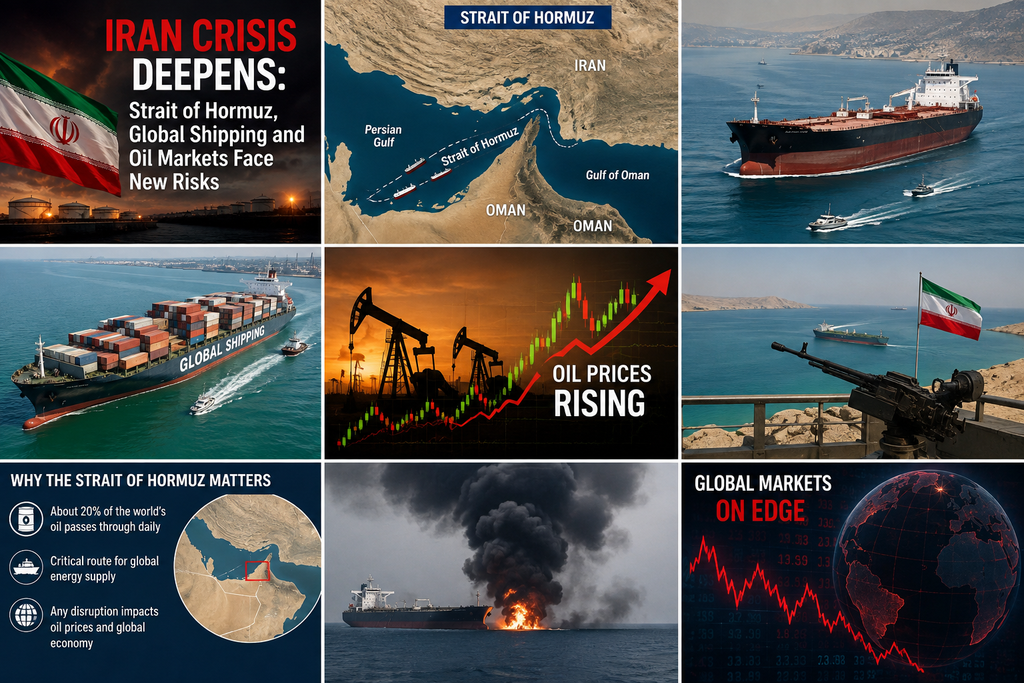
DUBAI /LONDON / WASHINGTON — Six months after the outbreak of the United States-Israel war with Iran, the Strait of Hormuz remains a focal point of geopolitical tension, economic disruption and diplomatic manoeuvring. What began in late February 2026 as targeted strikes on Iranian military, nuclear and ballistic missile infrastructure has evolved into a protracted conflict that has severely constrained one of the world’s most critical energy chokepoints. Before the fighting, the narrow waterway between Iran and Oman carried roughly 20 per cent of global oil and liquefied natural gas shipments. Today, commercial traffic is a fraction of pre-war levels, insurance costs have soared, seafarers remain stranded by the thousands, and oil markets continue to price in persistent risk even as intermittent mediation efforts seek pathways to restore navigation.
As of late August 2026, mediators including Qatar and Oman are pressing Iran to formalise conditions for reopening the strait, while the United States maintains that international shipping lanes are clear of mines and operational. Tehran, for its part, continues to assert control over transit, blacklists vessels it deems non-compliant, and ties any durable reopening to the lifting of American blockades, sanctions relief and other political demands. The result is a fragile, contested status quo in which limited “shadow fleet” and facilitated movements keep some barrels moving, yet the overall volume of oil, gas and commodity flows through the Persian Gulf remains deeply suppressed. Global markets are responding with elevated and volatile prices, higher freight rates, rerouting of vessels around longer and costlier alternatives, and growing concern that prolonged disruption could accelerate structural shifts in energy demand and supply chains.
Origins of the Conflict and the Initial Closure
The current crisis traces back to the night of February 28, 2026, when U.S. and Israeli forces launched coordinated strikes against targets inside Iran. Washington and Jerusalem framed the operation as a necessary response to Iran’s nuclear program, missile capabilities and regional proxy activities. Iranian forces retaliated with missile and drone attacks on neighbouring Gulf states and shipping, and Tehran quickly moved to restrict access to the Strait of Hormuz. Iranian authorities warned vessels against transit without authorisation, and the Islamic Revolutionary Guard Corps (IRGC) was reported to have laid mines in parts of the waterway.
Pre-war daily transit volumes through the strait averaged around 95 to 130 vessels, depending on the data series consulted. Commodity carrier traffic in particular supported the export of crude oil, refined products, LNG and fertilisers from Gulf producers. Within days of the Iranian restrictions and the subsequent U.S. naval measures, those numbers collapsed. Analyses of maritime tracking data showed averages falling to roughly 10 transits per day in the early months, and in some periods even lower. Direct crude exports moving via the strait dropped sharply; estimates placed Gulf crude shipments well below half of previous levels at various points in the crisis.
The human dimension was immediate. Hundreds of vessels became stranded inside the Gulf, and the International Maritime Organisation and other bodies later reported approximately 6,000 seafarers remaining in the region months later, with evacuation plans repeatedly interrupted by security incidents. Several crew members were reported killed in attacks on vessels during the conflict.
Insurance markets reacted swiftly. War-risk premiums for transits through the area multiplied dramatically—reports cited multiples of 40 times normal rates in some assessments—effectively pricing many commercial operators out of the route even when physical passage remained theoretically possible. Major container lines announced rerouting strategies, adding significant voyage times and costs for Asia-Europe and Asia-Gulf trades.
The June Memorandum and Fragile Recovery
A temporary diplomatic opening arrived in mid-June 2026. Mediation involving Pakistan and Qatar produced a memorandum of understanding between the United States and Iran. The document established a framework for a ceasefire and set initial terms intended to restore shipping through the Strait of Hormuz over a subsequent negotiation period. Traffic responded. Daily commodity-related transits rose, at times exceeding 50 or 60 vessels and briefly climbing higher on individual days. Maritime data providers recorded multi-day totals that, while still far below pre-war norms, represented the strongest recovery of the conflict to that point. Some Iranian crude began moving toward Asian markets again, and volumes of oil held in floating storage inside the Gulf declined from elevated levels.
Optimism proved short-lived. By late June, incidents including a drone strike on a container ship near the Omani coast and subsequent exchanges of fire between Iranian and U.S. forces undermined confidence. Iran insisted that vessels must coordinate with its authorities and use approved routes, including portions under Iranian jurisdiction. The United States and Gulf partners emphasised freedom of navigation under international law and rejected any Iranian right to impose tolls or unilateral control. The IRGC issued warnings and enforcement actions against vessels using the southern corridor along the Omani coast. Traffic that had been recovering began to stall again.
In early July, the memorandum effectively collapsed. President Donald Trump declared the agreement over amid renewed Iranian attacks and U.S. retaliatory strikes. The United States reimposed or reinforced its naval blockade of Iranian ports. Commodity transits fell back toward single-digit or low-double-digit daily averages. “Dark” movements—vessels operating with Automatic Identification System (AIS) transponders switched off or signals jammed—became a larger share of the limited traffic that continued. Ship-to-ship transfers outside the strait emerged as a workaround for Gulf producers seeking to move cargoes without full exposure to Iranian enforcement.
Current Situation in Late August 2026
As the conflict marked its six-month anniversary in late August, the Strait of Hormuz remained contested rather than fully closed or fully open. U.S. Central Command asserted that American forces had cleared sea mines previously laid by the IRGC from international shipping lanes and that momentum was building toward normalised transit. Admiral Brad Cooper stated that internationally recognised routes were free of Iranian mines. At the same time, maritime information centres continued to warn of residual risks from drifting or uncharted mines and of navigation interference.
Iran pursued a parallel track. Senior officials, including Mohsen Rezaei of the Supreme National Security Council, indicated that Tehran was preparing a formal list of conditions for restoring normal traffic after requests from mediators. Qatari Prime Minister and Foreign Minister Sheikh Mohammed bin Abdulrahman Al Thani visited Tehran and publicly underscored the importance of respecting freedom of navigation in accordance with international law. Iranian statements linked any reopening to the end of the U.S. blockade, compensation, sanctions relief and broader political understandings. Talks with Oman focused on a possible temporary navigational corridor, with discussions reported on the sharing of the waterway and associated revenues. Iranian sources later clarified that no final agreement had been reached, though IRGC spokesmen claimed progress on territorial and revenue shares.
Practical enforcement continued on both sides. Iran added dozens of tankers to a blacklist for alleged violations of its transit rules, prompting some operators to avoid those vessels. Incidents persisted: a Kuwaiti-flagged crude tanker, Al Salam II, was struck while transiting eastbound in late August, sustaining a hole above the waterline and a fire that the crew extinguished. Attribution remained contested in some cases, but the pattern of drone and projectile attacks on commercial shipping reinforced the elevated risk environment.
Limited traffic continued through a combination of U.S.-facilitated passages, dark AIS movements, and vessels accepting Iranian coordination. Pre-war averages of more than 100 vessels per day had given way to figures often below 20, and in some recent daily counts as low as a handful of commodity carriers. Shadow-fleet techniques and ship-to-ship transfers allowed partial continuity of oil and product flows, but the overall reduction in Gulf crude and LNG exports remained substantial—estimates of disrupted volumes ran into several million barrels per day relative to baseline.
Impact on Global Shipping
The shipping industry has absorbed one of its most significant chokepoint disruptions in decades. Container lines that previously relied on Gulf feeder services or direct calls have rerouted via longer paths, raising costs and transit times. Tanker markets have seen extreme volatility in rates. Earnings on key crude routes spiked to levels approaching or exceeding $600,000 per day in some reports as available tonnage tightened and risk premiums soared. War-risk insurance became a dominant cost factor, and many owners simply declined Hormuz business.
Stranded vessels and crews represent an ongoing humanitarian and commercial problem. Evacuation efforts coordinated through the International Maritime Organisation have faced repeated interruptions. Port congestion inside the Gulf, limited availability of safe berths, and uncertainty over departure windows have compounded operational difficulties. The use of AIS dark operations and alternative corridors has improved some commercial flexibility but has also reduced transparency for authorities, insurers and charterers attempting to manage risk.
Secondary effects have appeared in related trades. Fertiliser and other dry bulk movements that previously used the strait have faced similar constraints. The Red Sea and Bab el-Mandeb have remained additional sources of risk, with Houthi-related threats periodically raising the prospect of a broader disruption to east-west shipping.
Oil and Energy Market Consequences
Oil markets have priced the Hormuz risk throughout the conflict. Brent crude, the global benchmark, jumped sharply in the immediate aftermath of the February strikes and subsequent Iranian restrictions. Prices later moderated during the June memorandum period before rising again with the July re-escalation. By late August, Brent was trading in a range roughly between the mid-$80s and low-$90s per barrel on different days, still well above pre-crisis expectations embedded in futures markets months earlier. West Texas Intermediate followed a similar pattern.
The physical disruption has been material. Gulf crude exports moving through the strait fell dramatically; some analyses placed direct strait volumes at a small fraction of pre-war averages. Overall Middle East crude and condensate outages relative to the February 2026 baseline have been estimated in the multi-million-barrels-per-day range for extended periods. LNG supply from Qatar and other regional producers has also been constrained, with structural impacts at key facilities contributing to tighter global gas balances.
Importers have borne higher costs. One assessment calculated that fossil-fuel importers paid hundreds of billions of dollars more for seaborne crude, products and LNG over the first six months of the crisis than pre-strike futures markets had anticipated. Demand responses have appeared: higher prices have contributed to demand destruction in some consuming regions, with global oil demand estimates revised lower for parts of 2026. At the same time, the persistence of elevated prices has supported production responses outside the Gulf and encouraged efficiency and substitution measures.
Market participants continue to monitor inventory draws, floating storage levels, and the pace of any recovery in Hormuz transit as key variables. Spare capacity elsewhere in OPEC+ has provided only partial offsets, in part because much of that capacity itself relies on the same waterway for export. Longer-term, analysts have begun discussing the possibility of more permanent demand destruction or accelerated energy-transition investments if the disruption stretches into 2027.
Diplomatic Tracks and Competing Narratives
Diplomacy has proceeded on multiple, often contradictory tracks. Qatar, Oman and Pakistan have played prominent mediating roles. The Qatari engagement in late August focused explicitly on freedom of navigation and Iranian conditions for reopening. Omani discussions centred on a practical corridor arrangement that could share jurisdiction and revenues. Iranian officials have publicly linked any durable solution to a package of U.S. concessions, including the end of the port blockade, unfreezing of assets, and guarantees against further military action.
Washington has shifted emphasis toward economic pressure. In mid-to-late August, the Trump administration announced an intensified sanctions campaign described in some statements as an “Economic D-Day” or “Operation Economic Outcast,” targeting Iranian oil, shipping, finance and related sectors, including elements of the shadow fleet. Officials indicated that secondary pressure on entities doing business with Iran, including potentially Chinese banks, remained under consideration. At the same time, U.S. military statements stressed the clearance of mines and the availability of international lanes, seeking to reassure shippers and undercut Iranian claims of effective control.
Gulf Arab states have largely aligned with the principle of unrestricted navigation while seeking to limit spillover attacks on their own territory and infrastructure. Joint statements with the United States have rejected Iranian tolls or unilateral management schemes. Iran has warned Gulf partners against siding with Washington and has conducted intermittent strikes that have kept regional air defences active.
The original war aims have evolved. Early focus on Iran’s nuclear and missile programs and leadership targets has been joined by the practical necessity of restoring Hormuz traffic. Iranian resilience under sanctions and limited military pressure has complicated calculations on both sides. Regime-change aspirations voiced in some quarters have not translated into a clear pathway, while Tehran’s ability to impose costs through the strait has given it residual leverage even after significant losses.
Broader Geopolitical and Economic Ripples
Beyond immediate energy markets, the crisis has strained regional alliances, tested the capacity of international maritime law, and highlighted the vulnerability of concentrated chokepoints. Asian importers heavily dependent on Gulf crude and LNG have faced higher landed costs and supply uncertainty. European consumers have experienced elevated fuel prices, with knock-on effects for inflation and industrial competitiveness. Shipping companies and commodity traders have rewritten risk models and contingency plans.
The conflict has also intersected with other theatres. Houthi activity in the Red Sea has periodically threatened to expand the maritime disruption. Iranian proxies and partners have faced varying degrees of pressure and opportunity. Great-power dynamics, particularly U.S.-China interactions over Iranian trade and sanctions compliance, have added another layer of complexity.
Analysts differ on the medium-term outlook. Optimistic scenarios envision a negotiated corridor arrangement, verified mine clearance, and a phased return of commercial traffic under international monitoring. Pessimistic scenarios foresee continued low-level attrition, periodic escalations, and a “new normal” of reduced and riskier Hormuz volumes that forces permanent adjustments in global energy logistics. Extended conflict baselines published by some commodity research firms project multi-million-barrel-per-day outages persisting into late 2026 or beyond, with full recovery delayed into 2027.
Outlook and Remaining Uncertainties
As of the end of August 2026, the central uncertainties remain the content and durability of any Iranian conditions for reopening, the willingness of the United States to calibrate military and economic pressure against diplomatic openings, and the capacity of commercial operators to navigate a high-risk environment. Mediators continue to shuttle between capitals. Military forces on both sides maintain readiness. Markets watch daily transit counts, incident reports and official statements for signals of improvement or deterioration.
The Strait of Hormuz has long been recognised as a strategic vulnerability. The events of 2026 have demonstrated that vulnerability in real time, with measurable costs to shipping efficiency, energy affordability and regional stability. Whether the current diplomatic intensifications produce a workable framework for safer, higher-volume transit, or whether the crisis settles into a prolonged contest of attrition and partial workarounds, will shape energy markets and geopolitical alignments well beyond the immediate horizon. For now, the risks to global shipping and oil markets remain elevated, the human costs for stranded crews continue, and the search for a sustainable arrangement that restores freedom of navigation while addressing the underlying conflict grinds forward under the shadow of further potential escalation.