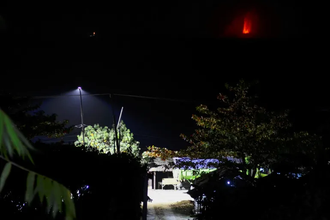


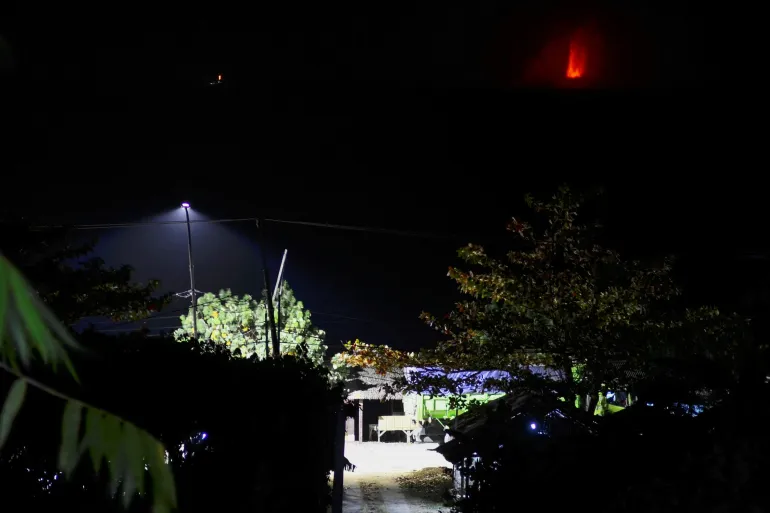
Jakarta, September 7, 2026 — Indonesia’s volatile Anak Krakatau volcano, the restless “Child of Krakatau” rising from the waters of the Sunda Strait between Java and Sumatra, unleashed a powerful series of eruptions beginning late on September 4, 2026, sending towering plumes of volcanic ash high into the atmosphere and triggering widespread disruption across western Indonesia. By Sunday, September 6, the crisis had grounded hundreds of flights, forced the temporary closure of multiple major airports including the nation’s busiest hub in Jakarta, left tens of thousands of passengers stranded, shuttered schools, halted fishing operations, and blanketed communities with fine ash that caused eye irritation and respiratory discomfort for residents across five provinces.
The eruption, marked by continuous lava fountaining, rumbling detonations, and ash columns reaching as high as 50,000 feet (approximately 15 kilometres), has once again highlighted the precarious position of this young volcano on the Pacific Ring of Fire. While authorities confirmed no immediate tsunami risk and reported no casualties or large-scale evacuations, the economic and social fallout has been significant, with aviation authorities scrambling to manage the chaos and public health officials distributing masks and issuing protective guidelines.
The Onset of the Eruption Cycle

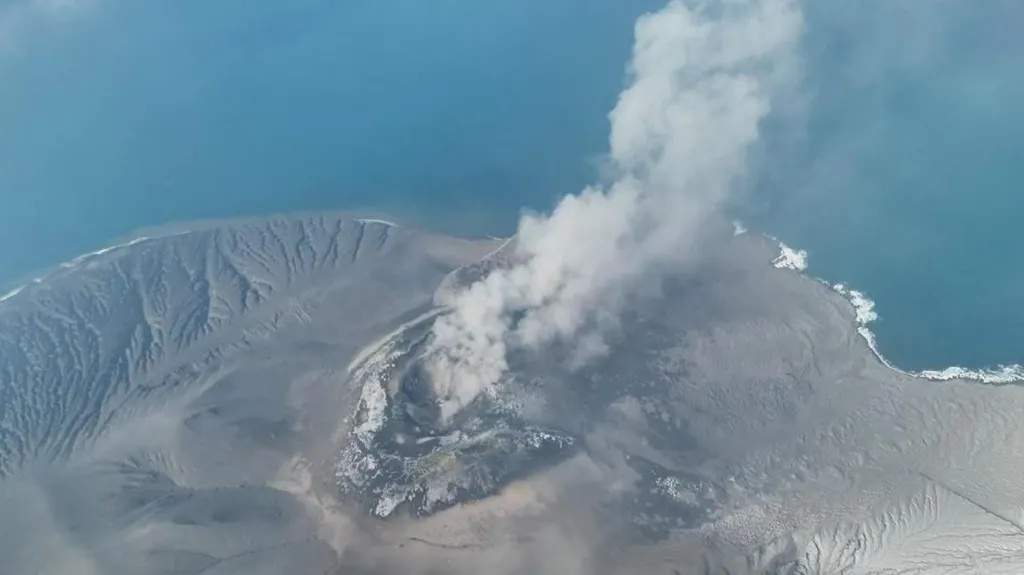
Anak Krakatau had already shown elevated activity earlier in 2026, with an eruptive phase beginning around July 2. The latest intensification began on the evening of Friday, September 4, around 11:00–11:07 p.m. local time (WIB). Continuous eruptions featuring lava fountains, explosive detonations, and roaring sounds persisted through much of September 5. Seismic stations recorded sustained activity, with amplitudes reaching notable levels and durations extending for hours at a stretch. Visual observations from the Pasauran observation post in Banten Province described glowing red lava jets and ash emissions, though exact column heights were sometimes obscured by weather or the intensity of the activity itself.
By the early hours of Sunday, September 6, the continuous phase had largely subsided around 12:04 a.m., only for discrete eruptions to resume. One notable event at 3:53 a.m. lasted about 30 seconds with a maximum seismic amplitude of 46 millimetres. Further activity followed later in the day and into the evening, including a 44-second eruption around 8:23 p.m. with an amplitude of 58 mm. Indonesia’s Geological Agency (Badan Geologi) and the Centre for Volcanology and Geological Hazard Mitigation (PVMBG) maintained the volcano at Alert Level III (Siaga, or “Standby”), the second-highest on the country’s four-tier scale. A strict 3-kilometre exclusion zone around the active crater remained in force, with officials warning against any approach by residents, tourists, or fishermen due to risks of ballistic projectiles, lava flows, heavy ashfall, and gas emissions.
Satellite imagery from Himawari-9, combined with data from the Darwin Volcanic Ash Advisory Centre (VAAC) in Australia and PVMBG monitoring, revealed two distinct ash clusters. One plume rose to approximately 20,000 feet (6,000 meters) and drifted northeast to south, affecting parts of DKI Jakarta, Banten, West Java, and surrounding waters. A higher plume reached up to 50,000 feet (15 kilometres) and moved southwest to northwest, impacting Banten, Lampung, Bengkulu, the southern Sunda Strait, and portions of the Indian Ocean west of Sumatra. Ash was confirmed to have spread across five provinces: Banten, West Java, DKI Jakarta, Lampung, and Bengkulu.
Aviation Chaos: Hundreds of Flights Grounded
The most immediate and visible impact struck Indonesia’s aviation sector. Volcanic ash poses a severe threat to aircraft engines, as the microscopic glass particles can melt and solidify inside turbines, potentially causing catastrophic failure. Authorities moved swiftly once ash was detected near major flight paths and runways.
Soekarno-Hatta International Airport (CGK), Jakarta’s primary gateway and one of Southeast Asia’s busiest hubs, suspended operations multiple times on September 6. Initial closures began in the early morning (around 5:30 a.m.), with extensions lasting until 9:30 a.m., later 1:30 p.m., and in some reports further into the evening or until midnight as conditions were reassessed. Airport operator Angkasa Pura (now under InJourney) and the Ministry of Transportation reported that hundreds of flights were affected. Early figures cited around 209 flights and more than 22,000 passengers impacted at Soekarno-Hatta alone. Subsequent updates raised the numbers significantly: one count put 301 flights affected (including 58 international services), while broader tallies across multiple airports reached 467 flights or even higher, with estimates of 150,000 to 170,000 passengers disrupted by evening as eight airports faced closures or restrictions.
Halim Perdanakusuma Airport in Jakarta, Radin Inten II International Airport in Lampung, and several others—including facilities in West Java, West Sumatra, and West Kalimantan—also suspended or adjusted operations. Airspace closures coordinated by AirNav Indonesia compounded the problem. International carriers responded rapidly. Singapore Airlines cancelled multiple flights to and from Jakarta, with updates indicating up to 19 affected services at one point, alongside its low-cost arm Scoot cancelling around a dozen. AirAsia, Garuda Indonesia, TransNusa, and others issued advisories, cancellations, delays, and rescheduling. Routes to Singapore, Kuala Lumpur, Hong Kong, Sydney, Seoul, Doha, and Amsterdam were among those hit. Even Bali’s I Gusti Ngurah Rai International Airport saw more than a dozen cancellations or adjustments linked to the ash cloud and disrupted connections through Jakarta.
Passengers described scenes of frustration and uncertainty in terminals. Boards filled with cancellations; people queued for refunds, rebooking, or baggage retrieval. Airport authorities provided food, refreshments, and, in coordination with airlines, transport or hotel arrangements for some stranded travellers. One passenger, a 58-year-old businessman named Suhardi, was reported attempting to reach a connecting flight to Samarinda after an earlier cancellation, illustrating the cascading disruptions to domestic and international itineraries. Transport Minister Dudy Purwagandhi monitored the situation closely, urging airlines to consider diversions where possible and extending support measures. By late Sunday, some operations began gradual recovery as ash dispersed, but the full normalisation of schedules was expected to take days.
Ground-Level Impacts: Schools, Fishing, and Daily Life
Beyond the skies, the ashfall disrupted ordinary life in affected regions. In parts of Banten, Lampung, and even reaching into Greater Jakarta (including reports from Bogor and Depok), residents woke to fine layers of volcanic dust coating homes, vehicles, and streets. Many described the sensation of grit in the eyes, throat irritation, and a gritty film on surfaces. Local media quoted residents in coastal Banten and Lampung South reporting eye pain, especially when outdoors without protection, and a noticeable black or grey dust accumulation.
Schools in impacted areas cancelled outdoor activities or shifted to online learning. Students and teachers reported eye irritation, prompting authorities to authorise temporary remote classes to minimise exposure. Fishermen along the Sunda Strait and nearby coasts suspended trips, citing poor visibility, eye discomfort, and the general hazard of operating near an active volcano. Markets and outdoor vendors faced reduced activity as people limited time outside.
Public health guidance was clear and consistent. Officials from the National Disaster Management Agency (BNPB), health ministries, and local governments advised wearing masks (N95 or equivalent preferred for fine particles), eye protection, limiting outdoor exposure, covering water sources to prevent contamination, and careful driving due to reduced visibility and slippery ash-covered roads. Vulnerable groups—children, the elderly, and those with asthma or chronic respiratory conditions—were urged to take extra precautions, as volcanic ash can trigger coughing, shortness of breath, sore throat, and skin or eye irritation. Prolonged exposure carries risks of more serious respiratory issues. Provincial authorities in Banten distributed thousands of masks, while environmental teams from the Ministry of Environment began measuring air and seawater quality in Banten and Lampung.
President Prabowo Subianto issued a public call for calm and vigilance, particularly for residents of Jakarta, Banten, Lampung, and Sunda Strait areas. He directed relevant agencies—including BNPB, BMKG, the military, police, and ministries of health and transport—to maintain close monitoring and instructed the public to respect the 3-kilometre danger zone and follow official guidance. Banten Governor Andra Soni reinforced that the current eruptions did not pose a tsunami threat, noting the volcano’s reduced height and morphology compared to the catastrophic 2018 sector collapse.
Historical Context and Ongoing Risks
Anak Krakatau’s current episode must be viewed against its dramatic history. Born from the caldera left by the cataclysmic 1883 Krakatau eruption—which killed more than 36,000 people, mostly through tsunamis, and produced global climatic effects—the island first emerged above water in 1927–1928. It has grown through successive eruptions, periodically collapsing and rebuilding. The most recent major disaster occurred on December 22, 2018, when a large sector of the southwestern flank collapsed into the sea during an eruptive phase, generating a tsunami that claimed over 430 lives, injured thousands, and displaced tens of thousands along the coasts of Java and Sumatra. That event reduced the volcano’s height dramatically (from around 338 meters to much lower elevations; current estimates place it near 157 meters).
Since then, Anak Krakatau has continued intermittent activity, including cycles in 2023 and the July 2026 onset leading into the present crisis. Experts emphasise that while the current lava-fountain style activity and ash emissions are significant for aviation and local air quality, the absence of major flank instability or large underwater collapse reduces immediate tsunami concerns. Nevertheless, PVMBG and Geological Agency officials stress that dynamics remain high even when seismic signals weaken temporarily, and renewed intensification cannot be ruled out. Continuous monitoring via seismic networks, visual observations, satellite thermal and ash tracking, and gas measurements continues around the clock.
Sulfur dioxide (SO2) emissions accompanying the magmatic activity have also drawn attention. Gas plumes can travel with the wind and, at elevated concentrations, contribute to respiratory irritation. Authorities have downplayed panic over social-media claims of widespread toxic gas clouds while acknowledging that SO2 can be detectable downwind in Banten, Greater Jakarta, or Lampung under certain conditions.
Economic Ripples and Recovery Outlook
The aviation disruption alone carries substantial economic costs. Soekarno-Hatta handles tens of millions of passengers annually; even a single day of major cancellations affects tourism, business travel, cargo, and connecting itineraries across the archipelago and internationally. Airlines face refund and rebooking expenses, while hotels near airports saw mixed impacts—some demand from stranded passengers, reduced arrivals overall. Fishing communities lost daily income, and any prolonged ashfall could affect agriculture through crop coating or soil impacts, though early assessments suggested relatively light deposition in most populated areas.
Local economies in tourism-dependent coastal zones of Banten and Lampung, already cautious after past events, experienced further hesitation. Yet daily commerce in cities such as Bandar Lampung largely continued, with residents adapting by staying indoors more and using protective gear. Environmental recovery teams stand ready to assess coastal ecosystems and water quality once activity stabilises.
As of September 7, monitoring continues intensively. Ash dispersion depends heavily on prevailing winds, and further discrete eruptions remain possible while the volcano stays at Level III. Airports have begun phased reopenings where conditions allow, with rigorous runway inspections for ash accumulation. Airlines are working through backlogs. Residents are advised to stay informed via official channels—MAGMA Indonesia, BMKG, BNPB, and local governments—rather than unverified social media.
A Nation Accustomed to the Ring of Fire
Indonesia hosts more than 120 active volcanoes and sits squarely on the Ring of Fire, where tectonic forces generate frequent seismic and volcanic events. Communities have developed resilience through experience, early-warning systems, and institutional coordination. The 2026 Anak Krakatau episode, while disruptive and visually dramatic, has so far been managed without loss of life—a testament to improved monitoring since the 2018 tragedy. Yet it serves as a stark reminder of the living landscape that shapes daily life for millions.
Scientists will continue studying the eruptive products, deformation, and gas chemistry to better understand the magma system feeding Anak Krakatau. For ordinary Indonesians in the affected provinces, the priority remains practical: protect eyes and lungs, respect exclusion zones, check flight status carefully, and wait for the ash to clear and the skies to reopen. The “Child of Krakatau” has spoken again; the nation is listening and adapting, as it has for generations.
(This report synthesises official statements from PVMBG, Badan Geologi, BMKG, BNPB, airport operators, the Ministry of Transportation, and contemporaneous international and domestic news coverage as of early September 2026. Conditions remain dynamic; readers should consult official sources for the latest updates.)