New Delhi, September 10, 2026 — As the world watches oil prices breach the $100-a-barrel threshold and a grinding conflict involving Iran enters its seventh month, leaders of the expanded BRICS bloc are converging on New Delhi for a summit that could redefine the contours of global power. Prime Minister Narendra Modi will host Chinese President Xi Jinping and Russian President Vladimir Putin, among others, at Bharat Mandapam on September 12 and 13 for the 18th BRICS Summit. The gathering comes at a moment of acute geopolitical strain: a U.S.- and Israel-led campaign against Iran has fractured Middle Eastern alignments, driven energy markets into turmoil, and tested the unity of a grouping that now claims nearly half the world’s population and roughly 40 per cent of global GDP.
The timing is deliberate and fraught. India assumed the BRICS chairmanship on January 1, 2026, under the theme “Building for Resilience, Innovation, Cooperation and Sustainability.” What began as a year of technical working groups, ministerial meetings across more than 25 Indian cities, and quiet diplomacy has culminated in a high-stakes leaders’ summit against the backdrop of war and an energy shock. Xi Jinping’s confirmed attendance marks his first visit to India in seven years. Putin’s presence continues a pattern of close engagement with New Delhi. Iranian President Masoud Pezeshkian will also be present, as will leaders from South Africa, Egypt, Ethiopia, Indonesia, Saudi Arabia, the United Arab Emirates and other partners. The optics alone — Modi, Xi and Putin sharing a stage while Iran, a full BRICS member since 2024, remains under sustained military pressure — carry symbolic weight that extends far beyond the formal agenda.
A Summit Under Pressure
The formal programme begins on the afternoon of September 12 with a closed-door session among the 11 full member states focused on “Inclusive Global Governance and Strengthening Multilateralism.” Leaders will then tour the Bharat Innovates Exhibition, pose for the traditional family photograph, plant trees, and attend a gala dinner hosted by Modi. On September 13, the circle widens to include partner countries and outreach invitees for a broader session on resilience, innovation, cooperation and sustainability, culminating in the release of the New Delhi Declaration.
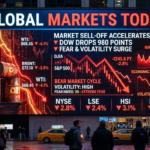
Behind the carefully choreographed schedule lies a more turbulent reality. The conflict that began with U.S. and Israeli strikes on Iranian targets more than six months ago has expanded into a multi-front contest involving proxies, shipping lanes and energy infrastructure. Recent days have seen Iranian claims of attacks on vessels near the Strait of Hormuz, U.S. responses against Iranian tankers and coastal assets, Houthi operations against Saudi targets, and rising insurance costs for commercial shipping. Brent crude has traded above $100, with WTI futures also crossing the psychological barrier. European central bankers have cited the war as a driver of renewed inflationary pressure. Supply-chain managers from Asia to Europe are recalculating risk premiums for energy, fertilisers and critical minerals.
Within BRICS, the war has exposed fault lines. Iran is a member. Saudi Arabia and the United Arab Emirates — both now full members or closely associated partners — have condemned certain Iranian-linked actions and maintain complex relationships with Washington. Egypt and others sit uncomfortably between competing pressures. India, as chair, has sought to keep the focus on economic cooperation, development finance and institutional reform while carefully managing bilateral sensitivities. Officials in New Delhi emphasise that BRICS is not a military alliance and that the summit’s purpose remains practical cooperation among emerging economies. Yet no serious observer believes the Middle East crisis can be entirely quarantined from the discussions.
The Return of Great-Power Diplomacy in New Delhi
Xi Jinping’s decision to attend is being read in multiple capitals as a signal of Beijing’s continued investment in BRICS as a vehicle for Global South coordination and as a platform for managing its relationship with India. The two Asian giants have spent years stabilising their border after the 2020 clash in eastern Ladakh. Trade has continued to grow even as strategic mistrust persists. A face-to-face meeting between Modi and Xi on the margins of the summit would be closely watched for any language on border management, economic rebalancing or coordination on third-country issues. Chinese diplomats have framed the visit as acceptance of India’s invitation and recognition of the importance of an expanded BRICS.
Putin’s presence underscores the depth of the Russia-India partnership. Despite Western sanctions and the ongoing war in Ukraine, bilateral trade, defence cooperation and energy ties have remained robust. Putin’s visit follows an earlier bilateral engagement in late 2025 and conversations on the sidelines of the Shanghai Cooperation Organisation summit in Bishkek. For Moscow, BRICS offers a diplomatic counterweight and a forum in which its isolation from Western institutions is less complete. For New Delhi, hosting Putin while maintaining its own strategic autonomy and growing relationships with the United States, Europe and Japan remains a delicate balancing act that Indian officials insist is consistent with a multipolar worldview.
The presence of Pezeshkian adds another layer of complexity. Iran joined BRICS in the 2024 expansion wave that also brought in Egypt, Ethiopia, the UAE and later Indonesia and Saudi Arabia. Tehran views membership as validation of its standing among major non-Western economies and as a potential hedge against isolation. Whether the New Delhi Declaration will contain language on the conflict, sovereignty, or the need for de-escalation remains one of the summit’s most sensitive open questions. Indian diplomats have worked to craft formulations that avoid alienating any member while still acknowledging the broader climate of insecurity.
Energy Shock and Economic Stakes
Oil at $100 is not merely a market data point; it is a stress test for growth models across the Global South. For energy importers such as India, China, South Africa and several partner countries, sustained high prices threaten fiscal balances, inflation targets and industrial competitiveness. For producers — Russia, Saudi Arabia, the UAE, Iran and others — the windfall is tempered by the risk of demand destruction, accelerated energy transition policies in consuming nations, and the long-term reputational and security costs of prolonged conflict.
BRICS has long discussed local-currency trade settlement, alternatives to the dollar-dominated financial system, and mechanisms to cushion members against external shocks. The New Development Bank, the Contingent Reserve Arrangement and various payment initiatives have made incremental progress. The current crisis is likely to accelerate those conversations. Indian officials have highlighted resilience in supply chains, food and energy security, and digital public infrastructure as priority areas under the 2026 chairmanship. Expect language in the final declaration on coordinated responses to energy volatility, investment in renewable capacity, critical minerals cooperation, and the development of alternative payment rails.
Yet consensus will not be automatic. Members have divergent interests on sanctions, energy pricing, and the pace of de-dollarisation. Some prefer gradualism and continued engagement with Western markets; others advocate more rapid diversification. The summit’s success will be measured less by rhetorical ambition than by whether concrete working groups and pilot projects emerge with timelines and resources attached.
Institutional Ambition Versus Geopolitical Reality
BRICS has grown from an investment-bank acronym into a formal grouping that now spans Latin America, Africa, the Middle East, Eurasia and Southeast Asia. Its collective demographic and economic weight is undeniable. Supporters argue that the expansion has given the Global South a more coherent voice on issues of development finance, climate justice, technology transfer and reform of international financial institutions. Critics contend that the larger membership has made consensus harder and that geopolitical divergences risk turning BRICS into a talking shop rather than a decisive actor.
India’s chairmanship has tried to thread this needle by emphasising practical, people-centric deliverables: cooperation on startups and MSMEs, digital public infrastructure, agricultural resilience, disaster management, and health systems. More than 350 meetings have been held during the year. The Bharat Innovates Exhibition scheduled during the summit is designed to showcase technological solutions that members can adapt. Whether these technical tracks can generate enough positive momentum to offset the gravitational pull of the Iran war and great-power competition remains an open question.
The New Delhi Declaration will be scrutinised line by line. Will it call for an immediate ceasefire or simply urge restraint and dialogue? Will it reaffirm the centrality of the United Nations Charter or place greater emphasis on multipolarity and the need to reform the Security Council? Will it contain specific commitments on local-currency trade, energy cooperation or technology sharing? Drafting has already involved intense negotiation. The final text is expected to reflect India’s preference for balanced, non-confrontational language that preserves unity while acknowledging the gravity of the moment.
What It Means for the World
The summit’s significance extends well beyond the BRICS membership list. For the United States and its allies, the gathering offers a real-time indicator of how far the non-Western world is prepared to coordinate in response to Western policy choices. A tightly unified BRICS position critical of the Iran campaign would complicate diplomatic efforts and energy market management. A carefully worded, lowest-common-denominator declaration would signal that the bloc’s internal differences still limit its capacity for collective action.
For energy markets, any signal of coordinated producer-consumer dialogue or accelerated investment in alternative supply routes could influence price expectations. For the Global South, the summit is a test of whether institutions built outside the traditional Western-led order can deliver tangible resilience against shocks originating in conflicts involving major powers.
India’s role is particularly consequential. As both a BRICS founder and a country that has carefully cultivated ties across geopolitical divides, New Delhi is attempting to demonstrate that it can host a major multilateral event while managing simultaneous relationships with Washington, Moscow, Beijing and Middle Eastern capitals. Success would reinforce India’s claim to be a leading voice of the Global South and a net security provider in the Indo-Pacific. Failure to manage the optics or the substance could expose the limits of strategic autonomy when great-power rivalry intensifies.
The human and economic costs of the Iran conflict continue to mount. Shipping insurance rates have spiked. Fertiliser and food-price pressures are being felt in vulnerable economies. Inflation is re-emerging as a policy challenge in Europe and elsewhere. Against this backdrop, the images of Modi, Xi and Putin meeting in New Delhi will be interpreted through multiple lenses: as evidence of a shifting multipolar order, as a pragmatic effort to keep economic cooperation alive amid political storms, or as a reminder that the institutions of the post-Cold War era are under strain.
Whatever language ultimately appears in the New Delhi Declaration, the summit itself is already a statement. An expanded BRICS is meeting at the highest level while one of its members is under sustained military pressure and global energy markets are in turmoil. The conversations that take place in the closed sessions, the bilateral pull-asides, and the drafting rooms will shape not only the immediate diplomatic weather but also the longer-term architecture of cooperation among the world’s major emerging economies.
As leaders prepare to arrive, New Delhi has been transformed into a high-security zone. Traffic restrictions, school closures in parts of the capital, and an elaborate security perimeter around Bharat Mandapam reflect the scale of the event. For two days, the world’s attention will focus on whether a grouping that represents almost half of humanity can find enough common ground to speak with a coherent voice at a moment of profound global stress.
The answer will not be found solely in the final communiqué. It will be measured in the practical follow-up — whether working groups on energy security, payment systems and supply-chain resilience produce results that outlast the news cycle, whether bilateral relationships between key members improve or deteriorate, and whether the expanded BRICS can continue to grow in influence without fracturing under the weight of its members’ divergent strategic priorities.
In an era of overlapping crises — from energy shocks to geopolitical realignment — the New Delhi summit is both a stress test and an opportunity. The world will be watching closely to see which aspect prevails.