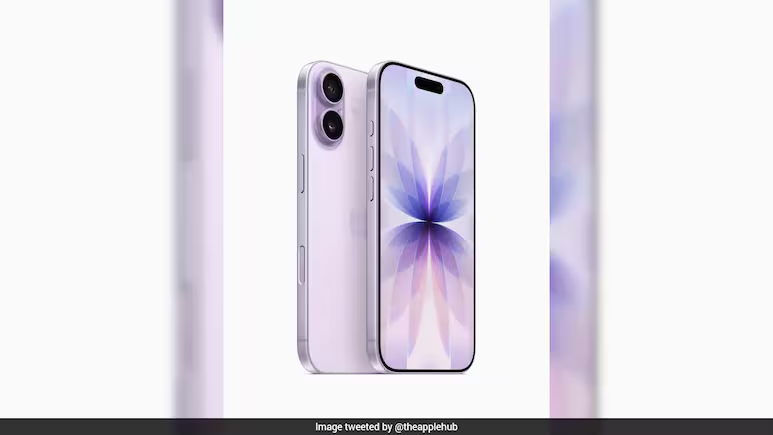
Cupertino, California — September 9, 2026 — In a landmark event that marked the first product keynote under new Apple CEO John Ternus, the company today introduced the iPhone 18 Pro, iPhone 18 Pro Max, and its long-awaited first foldable smartphone, the iPhone Duo. The “Surprise and Shine” event, held at Apple Park, delivered significant upgrades across cameras, performance, battery life, and form factors, while notably omitting a standard non-Pro iPhone 18 from the lineup. That model is expected to arrive in spring 2027, continuing a recent pattern of separating volume models from the premium September launch.
The absence of a base iPhone 18 underscores Apple’s strategy of focusing its fall event on high-end devices that command premium pricing and showcase the latest silicon, imaging, and software innovations. Ternus, who succeeded Tim Cook earlier this month, led the presentation with characteristic emphasis on craftsmanship, AI integration via the upgraded Siri, and durability. Other announcements included the Apple Watch Series 12, Apple Watch Ultra 4, and AirPods 5, but the phones dominated the narrative.
The Headline Act: iPhone Duo — Apple’s First Foldable
After years of rumours, development, and competitive pressure from Samsung’s Galaxy Z Fold series and Google’s Pixel Fold, Apple entered the foldable market with the iPhone Duo. It adopts a book-style “passport” form factor: compact when closed, expansive when opened. The outer cover display measures 5.4 inches (Super Retina XDR OLED with ProMotion up to 120 Hz, Always-On, peak brightness up to 3,000 nits), delivering a usable smartphone experience roughly 90 per cent of the screen area of the iPhone 18 Pro in a pocketable package. Unfolded, a 7.6-inch inner Super Retina XDR display with nano-texture glass minimises glare and provides the largest canvas ever on an iPhone — comparable in size to an iPad mini for multitasking, media, and productivity. Both screens share the same aspect ratio for seamless content scaling.
The design prioritises thinness and durability. Unfolded, the Duo is Apple’s thinnest iPhone yet at approximately 5.2 mm; folded, it measures about 11.3 mm thick. It weighs 254 grams and uses grade-5 titanium for the frame and hinge, paired with Ceramic Shield 2 on the outer glass and Ceramic Shield on the back. It carries an IP68 rating for dust and water resistance. A precision hinge delivers a smooth open-and-close feel, and the device supports Apple Pencil (coming later this year). Authentication relies on a side-mounted Touch ID fingerprint sensor rather than Face ID in the traditional sense, though Dynamic Island remains present on the displays.
Power comes from the same A20 Pro chip found in the Pro models — a 2 nm process design with a 6-core CPU (2 performance/super cores + 4 efficiency cores), 7-core GPU with Neural Accelerators, dual 16-core Neural Engines, and hardware-accelerated ray tracing. It includes 12 GB of RAM and storage options from 256 GB to 2 TB. Dual batteries deliver strong endurance: up to 31 hours of video playback on the inner display, up to 44 hours on the outer display, or around 24 hours of mixed use. Charging supports fast wired (up to 50 per cent in about 20 minutes with a high-wattage adapter) and MagSafe/Qi2 wireless.
The camera system is a dual 48 MP Fusion setup (main + ultrawide) on the rear, with a 12 MP Centre Stage front camera and an under-display camera for the inner screen. Software features unique to the foldable include Split View multitasking enhancements in iOS 27, Smart Take auto-capture, Duo Preview, and new FaceTime experiences. Colours are limited to Star White and Night Sky. Pre-orders open October 16, with availability beginning October 23 in more than 70 countries and regions.
iPhone 18 Pro and iPhone 18 Pro Max: Camera and Performance Focus

The conventional flagships received substantial refinements rather than radical redesigns. The iPhone 18 Pro features a 6.3-inch Super Retina XDR OLED display (ProMotion, Always-On, up to 3,000 nits peak), while the Pro Max steps up to 6.9 inches. Both use a smaller Dynamic Island than previous generations and Ceramic Shield protection. Colours include Deep Black, Silver, Glacier (light blue), and Burgundy.
At the heart is the A20 Pro chip on TSMC’s 2 nm process, delivering meaningful gains in efficiency and AI performance. Apple highlighted vapour-chamber cooling for sustained high workloads and claimed the GPU is up to 40 per cent faster in certain scenarios than the prior generation. Both models ship with 12 GB of RAM and storage from 256 GB to a new 2 TB top tier.
Battery life sees notable improvements. The iPhone 18 Pro offers up to 36 hours of video playback; the Pro Max reaches up to 45 hours — described as the longest in any iPhone. Fast charging reaches 50 per cent in about 15 minutes on the Pro with a compatible high-wattage adapter. MagSafe and Qi2 wireless charging are supported.
The standout hardware upgrade is the camera system. Both Pro models feature a triple 48 MP Fusion array: a main camera with true variable aperture (mechanical blades allowing settings such as ƒ/1.48 to ƒ/4.0 for greater control over light and depth of field), a 48 MP ultrawide, and a 48 MP tetraprism/periscope telephoto offering 4x optical zoom (with higher digital/hybrid reach). This marks the first time an iPhone main camera has offered physical aperture control, enabling better low-light performance and more creative depth-of-field options without relying solely on computational photography. Additional features include advanced Pro controls in the Camera app, improved video capabilities (including higher-frame-rate ProRes and spatial options), and AI-enhanced tools powered by the dual Neural Engines and on-device Apple Intelligence. The front camera is an 18 MP unit with Centre Stage support.
Pre-orders for the Pro models open September 12, with availability starting September 18 in the initial wave of markets.
Global Pricing Overview, Including India
Apple continues its tiered global pricing strategy, with the United States generally offering the lowest starting prices (pre-tax) and markets such as India reflecting higher import duties, taxes, and localisation costs.
United States (starting prices, 256 GB base):
- iPhone 18 Pro: $1,199
- iPhone 18 Pro Max: $1,299
- iPhone Duo: $1,999 (rising to $3,199 for 2 TB)
Higher storage steps up in $200–$400 increments typically.
United Kingdom:
- iPhone 18 Pro: £1,199
- iPhone 18 Pro Max: £1,299
- iPhone Duo: £1,999
Europe (example Germany/Ireland-range figures):
- iPhone 18 Pro: from €1,449 / €1,489
- iPhone 18 Pro Max: from €1,599 / €1,639
- iPhone Duo: from €2,299
China:
- iPhone 18 Pro: CNY 9,999
- iPhone 18 Pro Max: CNY 10,999
- iPhone Duo: CNY 15,999
Japan:
- iPhone 18 Pro: ¥219,800
- iPhone 18 Pro Max: ¥239,800
- iPhone Duo: ¥364,800
UAE/Dubai:
- iPhone 18 Pro: AED 5,099
- iPhone 18 Pro Max: AED 5,499
- iPhone Duo: AED 8,499 (approximate based on reported figures)
India (official starting prices for 256 GB):
- iPhone 18 Pro: ₹1,64,900 (512 GB ₹1,89,900; 1 TB ₹2,39,900; 2 TB ₹3,14,900)
- iPhone 18 Pro Max: ₹1,79,900 (512 GB ₹2,04,900; 1 TB ₹2,54,900; 2 TB ₹3,29,900)
- iPhone Duo: ₹2,99,900 (512 GB ₹3,24,900; 1 TB ₹3,74,900; 2 TB ₹4,49,900)
Indian pricing reflects a substantial premium over U.S. equivalents — roughly ₹50,000+ more for the base Pro models after currency conversion — driven by duties, GST, and market factors. Pre-order and availability dates align with global schedules for the Pro models (September 12/18) and Duo (October 16/23).
Other markets such as Australia, Canada, Singapore, and South Korea fall between the U.S. and higher-tax jurisdictions in converted terms. Turkey and certain Latin American markets often rank among the most expensive.
Broader Context and Implications
The decision to skip a standard iPhone 18 this fall allows Apple to concentrate engineering and marketing resources on differentiation: the variable-aperture camera system as a genuine photographic leap, the 2 nm A20 Pro for sustained AI and graphics performance, and the Duo as a true “one more thing” that expands the iPhone’s role into tablet-like productivity without abandoning the pocketable phone paradigm. Software continuity via iOS 27 and Apple Intelligence (with a more capable, context-aware Siri supporting hundreds of thousands of apps) ties the lineup together.
Battery claims, titanium durability, and the nano-texture display treatment address common foldable criticisms around longevity and outdoor visibility. At the same time, the Duo’s $1,999 starting price positions it as a premium niche device rather than a mass-market disruptor, similar to early foldable strategies from competitors.
For consumers, the Pro models deliver iterative but meaningful upgrades that will appeal to photography enthusiasts and power users, while the Duo targets those seeking a single device that replaces both phone and compact tablet. The missing base model may disappoint price-sensitive buyers who typically upgrade annually, potentially boosting demand for remaining iPhone 17 inventory or accelerating interest in the spring 2027 release.
Availability begins imminently for the Pro phones, with the foldable following a month later. Trade-in programs, carrier financing, and Apple’s Upgrade options will help offset the elevated price points. As always, actual street pricing, promotions, and regional tax variations will influence final consumer cost.
This launch signals Apple’s confidence in premium hardware as the engine of growth and its willingness to experiment with form factors after perfecting the underlying display, hinge, and silicon technologies. Whether the Duo becomes a mainstream success or a high-end speciality product will be watched closely in the coming quarters, but for now it represents the most significant change to the iPhone’s physical identity since the original all-screen redesign. The Pro lineup, meanwhile, reinforces Apple’s camera and efficiency leadership in the conventional smartphone category.
With pre-orders opening soon and devices shipping within weeks, the 2026 iPhone generation is poised to set a new benchmark for both traditional and foldable flagships — even without a standard model in the initial wave.