
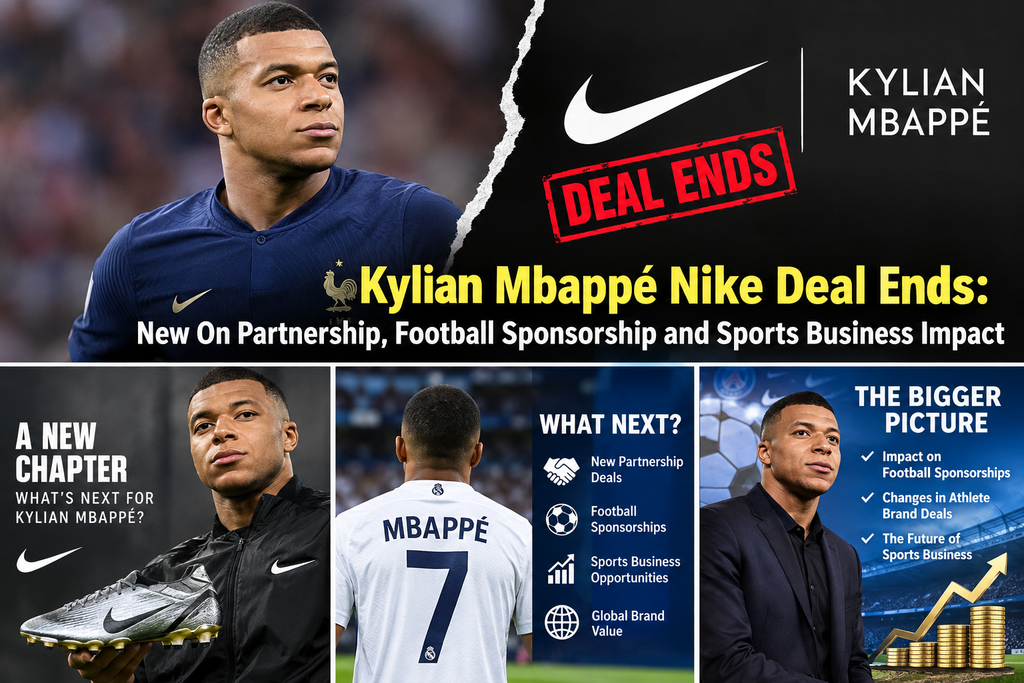
The announcement on September 18, 2026, marks one of the most significant sponsorship shifts in recent football and sports business history.
Mbappé, the Real Madrid forward and France captain, had been associated with Nike since 2006, when he was roughly eight or nine years old. The relationship spanned his entire professional career: youth development, the 2018 World Cup win with France, his time at Paris Saint-Germain, the high-profile move to Real Madrid, and his role as a central face of Nike Football marketing, including signature Mercurial boots. Nike had leaned heavily on him as a global ambassador in the later stages of Cristiano Ronaldo’s peak endorsement era. His personal contract expired at the end of July 2026. According to reports citing sources familiar with the matter, Nike elected not to renew, choosing to allocate endorsement resources elsewhere after benefiting from his prime years. Nike issued a statement expressing pride in their shared achievements and wishing him success in the next phase of his career.
On, the Zurich-based company founded in 2010 and best known for premium running shoes (with later expansion into tennis), announced Mbappé as a global ambassador who will sit “at the heart” of its football journey. He will collaborate directly with product teams on the development and testing of future football footwear and apparel, including use of On’s Lightspray robotic manufacturing technology. The partnership extends beyond the pitch into broader movement, performance, and contemporary design. On also named Thierry Henry, the 1998 World Cup winner and former Arsenal, Barcelona, and France star, as its Director of Football; Henry had been working quietly in the role since late 2025 and played a part in recruiting Mbappé. The brand plans to launch its first football boots in 2027, though Mbappé could appear in On products on the pitch sooner. He is also expected to feature in On boots in the EA Sports FC 2027 video game. On has additionally extended its relationship with Swiss international and Barcelona player Sydney Schertenleib in the women’s game.
Financial terms were not publicly disclosed. Multiple reports confirm the structure includes both cash and equity components, making Mbappé a shareholder. French outlet L’Équipe has described the partnership as lasting ten years. This mirrors the model used with Roger Federer, who left Nike late in his career, invested in On, and helped elevate the brand’s profile in tennis. On’s U.S.-listed shares rose as much as 5% in premarket trading on the news before settling near flat; Nike shares showed little immediate reaction.
Mbappé framed the decision in personal and creative terms. In statements and social media posts, he described football as leading him to “one of the biggest changes in my life” and said he was now “surrounded by innovators who dream of the same things I do.” He emphasised the chance to build something new, contribute his experience to product development, pursue innovation, and remain true to the joy of the game: “We have a shared dream, and this is only the beginning.” He later posted a longer message thanking Nike for twenty years of accompaniment—from the child in Bondy through the French national team and World Cup—highlighting pride in seeing signature boots worn by millions of children.
On founder and co-CEO David Allemann positioned the move as a deliberate challenge to the status quo: football does not need another brand doing more of the same; it needs new ideas and a challenge to what is possible. The ambition is to bring On’s approach to the pitch, pavement, and runway, connecting elite performance with the culture around the game.
Broader Context in Football Sponsorship
The football boot and apparel market has long been dominated by a handful of giants—primarily Nike, Adidas, and Puma—with secondary players such as New Balance and others competing for share. National-team kit deals and high-profile individual athlete contracts remain central to brand visibility, especially around major tournaments. At the 2026 World Cup, Adidas, Nike, and Puma still outfitted the large majority of teams. Athlete endorsement deals serve dual purposes: performance credibility (players actually wear and help develop the product) and cultural reach (global marketing campaigns, social media, youth aspiration, and lifestyle crossover).
Mbappé’s departure adds to recent high-profile shifts. Spain’s Lamine Yamal left Nike for Adidas. Nike retains significant assets, including an extended kit-supply agreement with the French national team through 2033-34 (meaning Mbappé will still wear Nike kits for international matches) and players such as Erling Haaland. It has also secured the German national team kit deal from 2027 and continues to invest in other categories and athletes. Nevertheless, the loss of a player of Mbappé’s stature—World Cup winner, all-time World Cup goalscorer in some counts referenced around the 2026 tournament, Real Madrid star, and one of the most marketable athletes globally—represents a tangible setback in football marketing narrative and youth influence.
On’s strategy follows a familiar pattern for ambitious challenger brands: establish credibility in one performance category (running), expand adjacently (tennis via Federer), then make a high-visibility leap into the largest and most culturally resonant sport (football) by securing a marquee athlete and experienced insider (Henry). Equity participation aligns the athlete’s long-term interests with the company’s growth, a model that has worked for Federer and increasingly appeals to top athletes seeking ownership upside rather than pure cash fees. For Mbappé, already involved in club ownership (Caen) and other investments, the equity component fits a broader portfolio approach that prioritises fewer, higher-quality, strategically coherent partnerships.
Sports Business and Market Impact
The deal arrives amid a challenging period for Nike. The company has faced sales pressure, particularly in key markets such as China, stock declines, and questions about product innovation and cultural relevance under new leadership. High-profile athlete losses amplify perceptions of vulnerability even if the absolute financial impact of any single endorsement is limited relative to Nike’s overall scale. Challenger brands such as On have grown by focusing on full-price, premium positioning, technological differentiation (CloudTec, Lightspray), and selective athlete partnerships rather than pure volume or discount-driven retail.
For On, the risks are equally clear. Football is expensive and competitive to enter. Performance credibility cannot be purchased overnight; boots must deliver on the pitch for elite athletes and then translate into retail sales among amateur players and lifestyle consumers. Distribution, marketing spend, club and federation relationships, and sustained product iteration will determine whether the Mbappé partnership becomes a lasting commercial success or primarily a brand-awareness play. Analysts have noted that the move signals that On may need to invest more heavily to sustain growth as it expands categories. The Americas already account for more than half of On’s revenue; success in football could support further geographic and category expansion, but execution will be scrutinised.
The sponsorship landscape continues to evolve. Traditional pure-endorsement cash deals increasingly coexist with equity stakes, product co-creation roles, longer multi-year commitments, and lifestyle/fashion crossovers. Athletes of Mbappé’s generation and earning power often seek partnerships that offer creative input, ownership upside, and alignment with personal values or long-term brand building rather than the highest short-term fee alone. Brands, in turn, use star athletes not only for sales lift but for signalling innovation, attracting younger consumers, and differentiating in crowded categories.
Mbappé’s move also highlights the growing role of former players in commercial strategy. Henry’s appointment as Director of Football provides On with credibility, networks, and insight into athlete needs and the culture of the game. Similar roles or advisory positions have appeared across sports as brands seek authentic rather than purely transactional relationships.
In the short term, the announcement generates substantial media and social attention, elevates On’s visibility among football fans who previously associated the brand mainly with running or tennis, and forces competitors to respond in marketing and product narratives. Longer term, success will depend on product performance, retail execution, and whether On can convert Mbappé’s star power and co-creation involvement into sustained market share in a category still dominated by established players.
Mbappé remains under contract with Real Madrid and continues to captain France. He will wear Nike kits for Les Bleus while representing On in personal footwear and broader ambassadorial activities. The first On football boots are expected in 2027, giving the partnership a multi-year runway for product development, testing, marketing campaigns, and market entry.
This transition closes a chapter that began when Mbappé was a child in Bondy and opens a new one in which one of football’s defining players of his generation helps a relatively young Swiss brand attempt to reshape part of the sportswear landscape. Whether it ultimately shifts meaningful commercial share or primarily redefines brand perception, the deal underscores the continuing power of elite athletes as both performers and strategic partners in the global sports business.