

As September 2026 draws to a close, the world is confronting a stark new chapter in the climate crisis. Extreme weather events have intensified across continents, flood risks have escalated in high mountain regions and low-lying areas alike, and the human and economic toll continues to mount. From the catastrophic glacier-triggered floods that devastated Nepal and parts of Tibet in late August to prolonged heatwaves that claimed tens of thousands of lives in Europe, the year has underscored how rapidly warming is reshaping weather patterns and amplifying hazards that communities once considered rare.
Scientists, international agencies and national governments have documented a cascade of impacts. Attribution studies have linked many of these disasters directly to human-caused greenhouse gas emissions. The World Meteorological Organization (WMO), the Intergovernmental Panel on Climate Change (IPCC) process and independent research groups have warned that the planet is operating outside historical norms, with consequences that will persist for generations. This report surveys the major developments of 2026, examines the science of rising flood risks, and assesses the broader implications for societies already struggling to adapt.
A Year of Compound Extremes
The first nine months of 2026 delivered a relentless sequence of extremes. Europe experienced one of its most severe heatwave seasons on record, with temperatures repeatedly pushing past 40°C across southern and central regions. Preliminary estimates placed the death toll from heat-related causes in the tens of thousands, making the European heatwaves the deadliest weather event of the year so far. Wildfires raced through dry forests in Spain, France, Greece and Portugal, while drought stressed water supplies and agriculture. Northern Europe, by contrast, faced intense rainfall and flooding in several river basins.
In Asia, the monsoon season combined with residual effects of earlier tropical cyclones produced widespread inundation. South and Southeast Asia recorded hundreds of flood-related deaths in 2025 that carried over into recovery efforts in early 2026, and new events continued to strike vulnerable populations. Africa saw repeated flooding in West and Central regions, including consecutive years of major inundation in Nigeria and the Democratic Republic of the Congo, while parts of East Africa grappled with drought that affected millions.
North America recorded both extreme heat and localized flash floods. The contiguous United States endured its hottest summer on record in some analyses, with climate change contributing dozens of additional “risky heat” days for tens of millions of people. Flash flooding in the Southwest and parts of the Rockies claimed lives and damaged infrastructure. Elsewhere, strong El Niño conditions, confirmed by the WMO in early September as firmly established and likely to intensify into a very strong event lasting into 2027, raised the prospect of further disruptions to rainfall patterns worldwide.
Ocean temperatures also set records. Global average sea surface temperatures reached new highs in August, and the Earth’s energy imbalance remained elevated, with the ocean absorbing the bulk of excess heat. Glacier mass loss continued across all major mountain ranges for another consecutive year, and sea levels kept rising, compounding coastal flood risks.
These events did not occur in isolation. Researchers have increasingly documented “compound” hazards—heat followed by flash flooding, drought followed rapidly by extreme rainfall, or wildfire seasons overlapping with intense storms. A 2026 study examining rapid transitions between drought and flood in China found that the interval between such extremes is shrinking as temperatures rise, increasing the vulnerability of low-income populations. Similar patterns appear in Europe and parts of North America, where heatwaves are frequently followed by heavy rainfall that overwhelms saturated or drought-hardened soils.
The Nepal–Tibet Disaster: A Watershed Moment for Mountain Flood Risks
The most dramatic illustration of escalating flood risk arrived on 26 August 2026. A massive section of rock and glacier—estimated at roughly 200,000 square metres—collapsed from Langtang Lirung mountain on the Nepal–China border. The avalanche of ice, rock and debris plunged more than a kilometre into the valley below, generating a powerful flood wave that raced downstream at speeds exceeding 100 miles per hour. Communities along multiple river valleys were inundated with little or no warning.
Official tallies placed the combined death toll from Nepal and Tibet above 1,400, with more than 6,600 people still listed as missing weeks later. Entire villages were erased, bridges and roads destroyed, and hydropower projects critically damaged. Reconstruction costs in Nepal alone were estimated at nearly $4.8 billion. Hundreds of foreign nationals, including trekkers and pilgrims, were among the missing.
Within days, scientists from the World Weather Attribution group and other research teams began analysing the event. Their findings, released in mid-September, concluded that climate change played a “very strong” role. Regional warming of approximately 2°C since pre-industrial times—and even higher anomalies in the weeks preceding the collapse—had raised the freezing threshold in the high Himalayas by about 100 metres per decade. Permafrost that once stabilised steep slopes had thawed, and glaciers had receded, removing structural support from rock faces. July and August 2026 were the warmest on record in the immediate area, with temperatures reaching 5°C above the long-term average in the critical days before the failure.
Experts emphasised that the disaster was not a simple “extreme weather event” but a compound geohazard cascade. Warming destabilised the cryosphere; the resulting rock-ice avalanche generated an extreme flood. Local adaptation measures, they noted, had clear limits against a failure of this magnitude. “No amount of local adaptation can fully shield vulnerable people downstream from this scale of destruction,” one lead researcher stated.
The Nepal–Tibet floods immediately triggered regional alarms. Scientists and policymakers pointed to the thousands of glacial lakes and unstable slopes across the Hindu Kush Himalaya, a region spanning eight countries and home to tens of millions of people. In India alone, nearly 200 glacial lakes were classified as high risk and more than 50 as very high risk. Previous events—the 2021 Chamoli disaster in Uttarakhand and the 2023 Sikkim glacial lake outburst—had already demonstrated the growing frequency of such hazards. Calls intensified for cross-border monitoring networks, shared early-warning systems, and coordinated evacuation planning.
Broader Patterns of Flood Risk
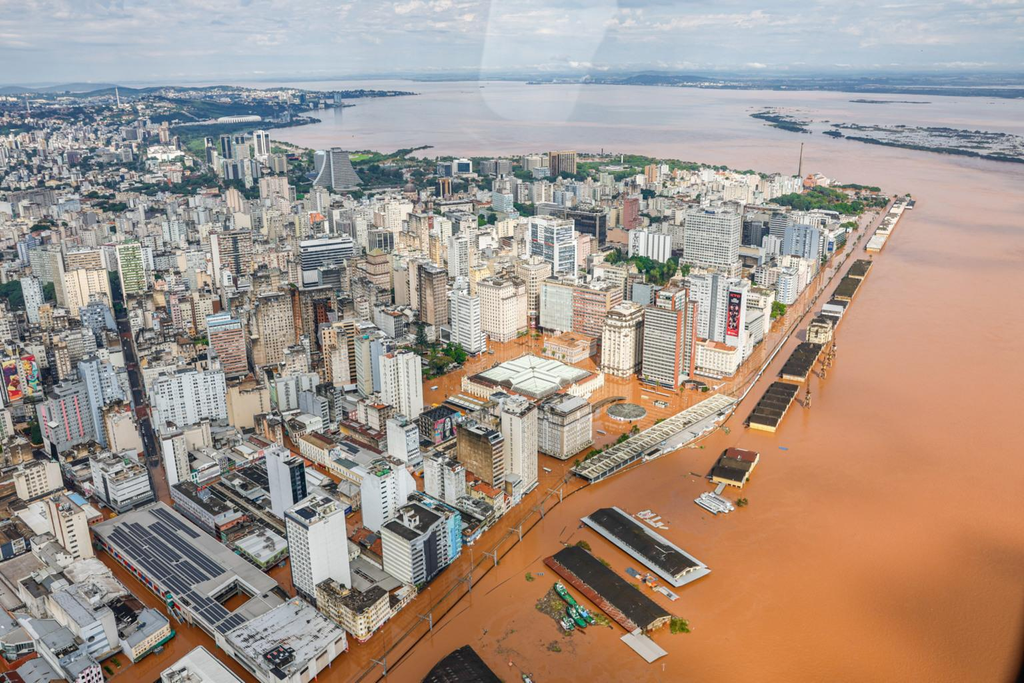
Flooding remains one of the most widespread and costly climate impacts. The Global Climate Risk Index 2026, published by Germanwatch in mid-September, documented the long-term toll. Between 1995 and 2024, more than 9,700 extreme weather events caused over 832,000 deaths and more than $4.5 trillion in inflation-adjusted economic losses. Floods accounted for nearly half of all people affected, while storms drove the largest share of economic damage. Heatwaves and storms each caused roughly one-third of fatalities.
The Index ranked Dominica, Myanmar and Honduras as the most affected countries over the three-decade period. In the single year 2024, St. Vincent and the Grenadines, Grenada and Chad topped the list. The report stressed that climate change is transforming both rare extreme events and recurring hazards into a “new normal.”
Scientific literature in 2026 reinforced these observations. One study published in Nature Communications found that anthropogenic climate change is accelerating the onset of global flood timing by an average of 0.43 days for every 0.5°C of warming. At 1.5°C of warming, more than half of global land area is projected to experience flood-timing shifts greater than seven days. Countries with large populations, including China, India and the United States, face heightened exposure.
In the United States, research showed that climate change is supercharging rainfall from tropical cyclones and stalled systems, contributing to deadly inland flooding. In Europe, economic losses from weather and climate extremes between 1980 and 2024 exceeded €800 billion, with floods among the costliest hazards. London’s Climate Resilience Review, finalised in 2026, warned that the city must prepare for more frequent and severe flooding alongside heatwaves, noting that climate impacts often cascade through critical infrastructure.
WMO’s State of Global Water Resources assessment for 2025, released in September 2026, painted a picture of a hydrological cycle under stress. 2025 ranked among the driest years for river discharge in more than three decades. The past seven years had seen the fewest rivers with “normal” flows since 1991. Water storage on land had declined over the previous decade. Asia and Africa together accounted for at least half of all recorded water-related extreme events and more than 80 percent of associated deaths over five years. Glacier loss continued for a fourth consecutive year across all major regions.
The Science of a Warming World
Underlying these events is a clear physical reality: the planet continues to warm. WMO’s State of the Global Climate 2025 report confirmed that 2015–2025 constituted the hottest 11-year period on record. 2025 itself ranked as the second or third warmest year, approximately 1.43°C above the 1850–1900 pre-industrial average. Earth’s energy imbalance reached a new high, with the ocean absorbing the equivalent of about 18 times annual human energy use each year for the past two decades.
By early September 2026, multiple analyses indicated that the world had temporarily or permanently breached the 1.5°C threshold relative to pre-industrial levels—the aspirational limit of the Paris Agreement. UN Secretary-General António Guterres and UNEP reports stressed that every additional fraction of a degree intensifies risks to human health, food security, water supplies, ecosystems and economies. Small island developing states and low-lying coastal cities face existential threats from sea-level rise, while mountain communities confront cascading cryosphere hazards.
Attribution science has matured rapidly. For the Nepal–Tibet event, researchers quantified the role of fossil-fuel-driven warming in destabilising permafrost and ice. Similar studies have linked European heatwaves, intensified rainfall in tropical cyclones, and prolonged wildfire seasons to anthropogenic climate change. The consensus is no longer whether climate change influences extremes, but how much and how quickly those influences are growing.
Human and Economic Costs
The human cost is measured in lives lost, livelihoods destroyed and communities displaced. Heatwaves remain the deadliest form of extreme weather in many regions, particularly for the elderly, outdoor workers and those without access to cooling. Floods destroy homes, infrastructure and agricultural land, often in areas already facing poverty or conflict. In Nepal, the August disaster left tens of thousands homeless and interrupted critical hydropower generation. In Africa, consecutive years of flooding have strained already limited resources. In the Caribbean and Pacific, individual storms have inflicted losses equivalent to large percentages of national GDP.
Economic losses accumulate year after year. Storms alone accounted for the majority of direct economic damage in the long-term Climate Risk Index. Insurance coverage remains incomplete; the European Commission announced plans in September 2026 for a climate insurance alliance after a summer of extreme weather, noting that only about a quarter of climate-related losses are currently insured. Uninsured losses fall hardest on households, small businesses and public budgets in developing countries.
Displacement is rising. Floods and storms continue to drive both sudden and protracted movements of people, with particularly severe consequences in fragile regions. Recovery is rarely complete before the next event arrives, creating cycles of vulnerability.
Adaptation, Limits and the Path Forward
Governments and international institutions have responded with a mix of emergency aid, policy announcements and long-term planning. Nepal has sought support from the UN’s Fund for Responding to Loss and Damage. European leaders have promised heatwave early-warning systems, water resilience plans and improved insurance mechanisms. Mountain countries are exploring better monitoring of glacial lakes and slopes. The WMO continues to push its Early Warnings for All initiative, recognising that many of the hardest-hit regions still lack adequate observation networks and forecasting capacity.
Yet scientists repeatedly stress the limits of adaptation. Local measures cannot fully protect against compound geohazards of the scale seen in the Himalayas or against the increasing intensity of heat and rainfall extremes. Mitigation—rapid reductions in greenhouse gas emissions—remains essential to limit further warming. UNEP and WMO reports in 2026 emphasised the need to slash methane pollution, protect forests and oceans, and accelerate the phase-out of fossil fuels while strengthening resilience.
El Niño’s expected intensification into 2027 adds urgency. Forecasts indicate elevated risks of floods in some regions and drought in others, layered on top of the underlying warming trend. Water managers face a particular challenge: traditional planning based on historical “normal” conditions is becoming less reliable as river flows and precipitation patterns shift.
Looking Ahead
As 2026 progresses, the evidence is unambiguous. Extreme weather is no longer a distant projection; it is the lived reality of communities from the high Himalayas to European cities, African river basins and North American floodplains. Flood risks are rising not only in absolute terms but in complexity, as warming interacts with geology, hydrology and human settlement patterns. The growing impact of climate change is measured in lost lives, damaged economies and strained social systems.
The scientific community has delivered clear warnings and increasingly precise attribution. International agencies have documented the trends. The question that remains is whether the political and economic response will match the scale and speed of the changes already underway. Every fraction of a degree of avoided warming will save lives and reduce suffering. Every investment in early warning, resilient infrastructure and equitable adaptation will lessen the damage that can no longer be fully prevented. The events of 2026 have made the stakes unmistakable.