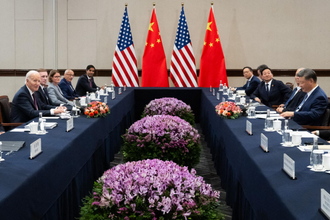


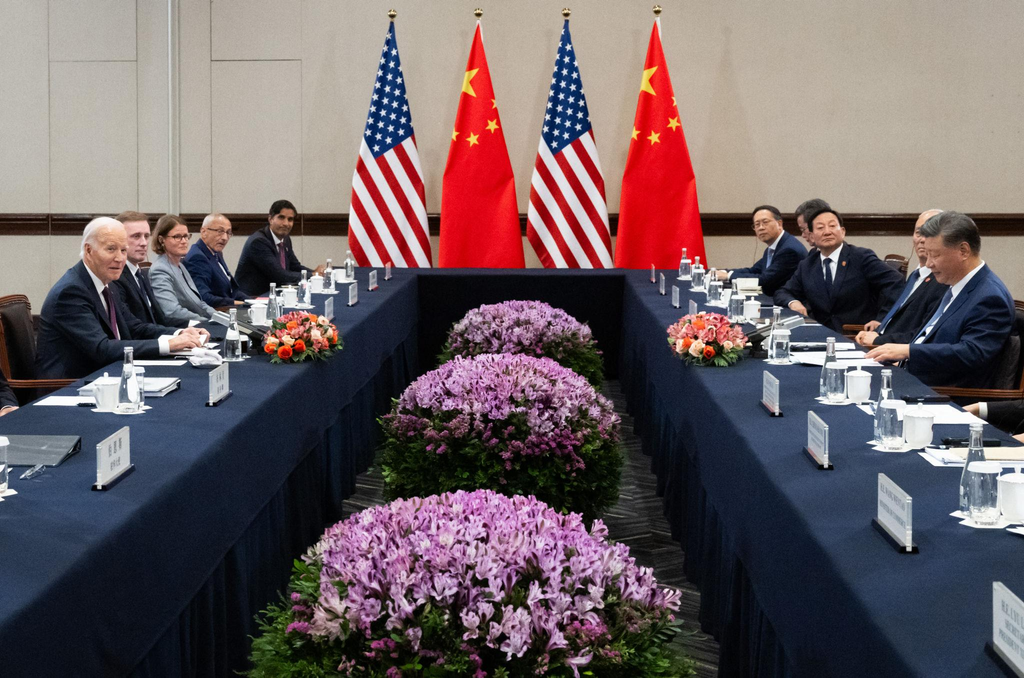
As of September 21, 2026, the world’s two largest economies stand at a pivotal moment. Chinese President Xi Jinping is scheduled to arrive in Washington this week for a state visit culminating in a bilateral meeting with US President Donald Trump on September 24 at the White House, followed by a state dinner. This encounter marks the reciprocal leg of the leaders’ diplomacy that began with Trump’s visit to Beijing in mid-May 2026—the first by a US president in nearly a decade. The talks occur against the backdrop of a fragile trade truce due to expire in November, intensifying competition and tentative cooperation in artificial intelligence, persistent strategic frictions over Taiwan and critical minerals, and markets that remain highly sensitive to any signal of escalation or de-escalation between Washington and Beijing.
The relationship has shifted dramatically from the sharp tariff escalations of 2025. After Trump’s return to office, reciprocal tariffs climbed as high as 145 per cent on certain Chinese goods and 125 per cent on US goods, threatening major disruptions to global supply chains. A meeting in Busan, South Korea, in late October 2025 produced a one-year truce that suspended many of the most punitive measures, including aspects of US export controls and Chinese rare-earth restrictions. That arrangement, due to lapse around November 10, 2026, now forms the central economic deliverable expected from the Washington summit. Both sides have tempered public expectations of a grand bargain, emphasising instead the value of sustained high-level contact and incremental mechanisms to manage differences.
Preparatory talks in New York on September 20 between US Treasury Secretary Scott Bessent, US Trade Representative Jamieson Greer, and Chinese Vice Premier He Lifeng lasted roughly eight hours and produced concrete progress on two fronts. Officials announced the operationalisation of a bilateral Board of Trade—first floated during the May Beijing summit—to identify non-sensitive goods that could benefit from tariff carve-outs or reductions. Reports indicate discussions around a framework covering approximately $30 billion in products from each side, potentially including Chinese consumer and lower-tech goods alongside US agricultural, energy, and medical products. The same meeting advanced plans for a formal US-China AI dialogue, including a proposed notification mechanism for incidents with national-security implications. Bessent described the engagement as “very successful,” while Chinese counterparts characterised the atmosphere as constructive. These steps are intended to provide “ballast” for the relationship and set the stage for leaders to endorse or expand them.
The Path to the September Summit
The current détente rests on a series of leader-level interactions. After the Busan truce, Trump visited Beijing in May 2026. The two sides agreed to pursue a “constructive China-U.S. relationship of strategic stability,” established Boards of Trade and Investment to institutionalise discussions on non-security-related commerce and capital flows, and announced Chinese commitments to purchase US agricultural products (cited in the range of $10–17 billion annually) and Boeing aircraft (around 200 planes). China also restored market access for certain US poultry and beef products. Taiwan featured prominently: Xi issued a clear warning that mishandling the issue could lead to collision or conflict, while emphasising it as China’s internal affair. Trump later characterised the talks positively and formally invited Xi to Washington for September 24.
Subsequent months saw uneven implementation. The Boards remained largely conceptual until the New York talks. Additional US tariffs imposed in July 2026 on goods from multiple partners, including China, over forced-labour concerns, and Chinese actions on rare-earth-related entities, tested the truce’s resilience. Trump’s public rhetoric toward Xi has softened markedly compared with his first term and early second-term campaign language; he has repeatedly described the Chinese leader as a “great gentleman” with whom the United States maintains a good relationship despite competition. Beijing, for its part, has pursued a dual approach of firmness on core interests and pragmatic engagement to buy time for domestic economic fortification and technological self-reliance.
Allies and observers have noted the optics of the red-carpet treatment. Trump has prepared ceremonial elements, including a helipad on the White House South Lawn, while Chinese state media frames the visit as recognition of China’s growing comprehensive national strength. A delegation of Chinese business leaders is expected to accompany Xi, some potentially seeking greater market access or relief from US regulatory scrutiny. Tech executives, including leaders from Nvidia, OpenAI, Qualcomm, and Apple, are reported to be among those invited to the state dinner, underscoring the prominence of technology and AI on the agenda.
Trade Talks: Truce Extension and Structural Frictions
Trade remains the most tangible arena. China’s export machine has continued to expand despite US tariff pressure. Global trade surplus figures are on track to exceed $1 trillion for a second consecutive year, and more than half of the roughly 6,500 product categories China sells to the United States have grown in 2026 compared with the prior year. Efforts to curb low-value parcels from platforms such as Shein and Temu have had limited broader impact. Beijing seeks an extension of the truce to maintain export momentum while it addresses domestic challenges, including property-sector weakness and soft domestic demand. Washington prioritises measurable purchases of US goods, continued rare-earth and critical-mineral flows, and limits on Chinese practices viewed as distortive.
The Board of Trade mechanism aims to create a protected channel for non-strategic commerce, reducing the risk that every bilateral friction immediately spills into across-the-board tariffs. Analysts caution that the scale remains modest relative to overall bilateral trade volumes, yet the institutionalisation itself represents a shift from pure crisis management toward managed coexistence. Rare earths continue to loom large. China holds dominant refining capacity; earlier suspensions of export controls formed part of the 2025 truce. US officials have sought reliable supply for manufacturing while resisting any broad rollback of technology export controls in exchange. No comprehensive resolution of chip or advanced-technology restrictions is anticipated at the summit.
Agricultural and aircraft deals announced in May provide political deliverables for both sides. US farmers and aerospace workers stand to benefit if purchase commitments materialise and are sustained. Chinese commitments also serve domestic messaging about securing access to key US markets and technology inputs where possible. Broader structural issues—industrial policy, subsidies, intellectual-property practices, and reciprocal market access—remain largely unaddressed and are unlikely to be resolved in a single summit.
AI Cooperation Amid Intense Rivalry
Artificial intelligence has emerged as a new and urgent focus. Both countries lead global development of large models and related infrastructure, yet share concerns about catastrophic misuse, particularly by non-state actors, and about AI systems that could threaten critical infrastructure. The New York talks produced an agreement to establish a US-China AI dialogue aimed at common understanding of goals and threats, with a US proposal for a notification system covering incidents that rise to national-security significance. Bessent has emphasised transparency and preventing advanced models from falling into malign hands. Chinese officials have engaged constructively while maintaining that China will not accept asymmetric constraints that lock in US technological leadership.
The presence of major AI and semiconductor executives at summit-related events signals the private sector’s stake. Competition remains fierce: US export controls on advanced chips and manufacturing equipment continue, while Chinese firms advance open-weight models that some American companies find attractive for cost reasons. Cooperation is therefore narrowly scoped—safety protocols, incident notification, and dialogue—rather than joint development or technology sharing. Some US lawmakers have called for international agreements prohibiting recursive self-improving AI and safeguards against biological or nuclear misuse, but no such binding framework is expected immediately. The dialogue itself is viewed as a confidence-building measure that could reduce the risk of AI-related incidents escalating geopolitical tensions.
Strategic and Political Dimensions
Taiwan remains the most sensitive political issue. Xi’s May warning that mishandling could produce an “extremely dangerous situation” set a clear marker. US policy continues to emphasise deterrence and support for Taiwan’s self-defence capacity while avoiding formal recognition of independence. Any perception that Taiwan is treated as a bargaining chip in economic negotiations would alarm regional allies. Other topics likely to surface include the Middle East (particularly energy flows through the Strait of Hormuz and Iran-related issues), Ukraine, the Korean Peninsula, fentanyl precursor chemicals, and people-to-people exchanges. Military-to-military communication channels and law-enforcement cooperation have seen limited restoration.
Domestically, both leaders face constraints. Trump contends with approval-rating pressures and the need to demonstrate economic wins for American workers and farmers. Xi prioritises regime stability, technological self-sufficiency, and managing China’s export-driven growth model amid external headwinds. The personal chemistry between the two leaders—transactional, pragmatic, and marked by mutual expressions of respect—has become an independent variable that both sides leverage to stabilise the broader relationship.
Global Market Impact
Financial markets have treated the evolving US-China relationship as a primary risk factor since the 2018–2019 trade war. The 2025 escalation produced volatility in equities, currencies, commodities, and supply-chain-sensitive sectors. The subsequent truce and leader diplomacy have supported a relative calm. Equity indices in both countries and globally have responded positively to signs of engagement; a visible extension of the trade truce or endorsement of the Board of Trade and AI dialogue would likely reinforce risk-on sentiment. Conversely, any public breakdown, new tariff announcements, or sharp rhetoric on Taiwan could trigger rapid sell-offs in technology, industrials, and emerging-market assets.
Critical minerals and rare-earth prices remain sensitive to policy signals. Reliable Chinese supply supports US and allied manufacturing of electronics, defence systems, and clean-energy technologies; disruptions raise input costs and accelerate diversification efforts. Agricultural commodity markets watch Chinese purchase commitments closely. Boeing and aerospace equities react to aircraft order news. Broader global growth forecasts incorporate assumptions about US-China trade volumes; sustained détente supports higher projected trade and investment flows, while renewed decoupling raises inflation risks and lowers potential output in interdependent economies.
Supply-chain reconfiguration continues regardless of summit outcomes. Companies have diversified production toward Southeast Asia, Mexico, India, and other locations, a process accelerated by tariffs, export controls, and geopolitical risk. A managed relationship may slow the pace of full decoupling but is unlikely to reverse it. Currency markets monitor any signals on exchange-rate policy or capital flows; the Board of Investment, if activated, could eventually influence bilateral investment screening and facilitation.
Allies and third parties are watching closely. European, Japanese, South Korean, and Australian policymakers seek reassurance that US-China engagement does not come at the expense of their security interests or create discriminatory trade arrangements. Developing economies dependent on Chinese demand or US market access face secondary effects from any major shift in the bilateral balance.
Outlook and Unresolved Tensions
The September 24 meeting is widely expected to produce limited, tangible deliverables rather than a transformative agreement: endorsement or expansion of the AI dialogue and Board of Trade, a signal of intent to extend the trade truce beyond November, reaffirmation of agricultural and aircraft purchase frameworks, and continued high-level communication. Further meetings are already calendared—on the sidelines of APEC in Shenzhen in November and the G20 in Miami in December—providing additional opportunities for calibration.
Fundamental strategic rivalry endures. Competition over technology leadership, military capabilities in the Indo-Pacific, influence in the Global South, and normative questions about governance models will persist. The “constructive strategic stability” framework represents an attempt to place a floor under the relationship and prevent unmanaged escalation, not to resolve underlying differences. Success will be measured less by the absence of friction than by the capacity of both systems to manage friction without catastrophic disruption to global prosperity and security.
As Xi’s plane prepares to depart for Washington and markets price the range of possible outcomes, the central question is whether personal diplomacy and incremental institutional mechanisms can sustain a workable equilibrium. History suggests periods of relative calm between the United States and China have often proved temporary. The current effort, grounded in mutual recognition of interdependence and the high costs of open confrontation, offers the best near-term prospect for stability that the relationship has seen in years. Whether that stability proves durable will depend on implementation after the cameras leave the White House, on domestic political incentives in both capitals, and on the unpredictable evolution of technology and geopolitics in the years ahead.
The stakes extend far beyond bilateral trade balances or diplomatic protocol. Global growth, technological progress, supply-chain resilience, and the risk of great-power conflict all hinge, in significant measure, on how Washington and Beijing choose to navigate their rivalry. The Trump–Xi meeting of September 2026 will not settle these questions, but it will help determine whether the two powers continue to manage their differences through dialogue or slide back toward the sharper confrontations of the recent past.