
NEW DELHI / DUBAI / LONDON — September 22, 2026
Seven months after the United States and Israel opened what Washington called “major combat operations” against Iran, the Middle East remains a multi-front war with no settled endgame. Oil markets, Gulf export infrastructure and India’s energy security are still being priced off that uncertainty. On Monday, Brent crude slipped to its lowest level in more than a week, near $102 a barrel, as traders weighed a faint diplomatic window around the United Nations General Assembly against fresh Houthi strikes on Saudi targets and a still-constrained Strait of Hormuz.
The conflict that began on February 28 has already killed Iran’s long-time supreme leader, Ayatollah Ali Khamenei, in a strike on a Tehran bunker, installed his son Mojtaba as successor, drawn Yemen’s Houthis back into open war with Riyadh, kept Hezbollah and Israel fighting along a shattered Lebanese frontier, and left Gaza and the West Bank in a grinding, lower-intensity violence. It has also produced the largest oil-supply shock of the modern era: at its peak, analysts estimate more than 10 million barrels a day of Middle East crude and products were taken off normal routes. Prices have not stayed at the $120-plus spikes of the first weeks, but they have not returned to the mid-$60s world that existed on the eve of the war either.
For India, which still imports close to 85–90 per cent of its crude and a large share of its LNG and LPG from or through the Gulf, the story is no longer only about the headline Brent number. It is about landed costs, cancelled Saudi term cargoes, rising Russian premiums, thinner inventories and the political cost of any further retail fuel increase.
A war that will not close
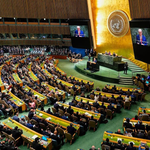
The February campaign was intended, in the Trump administration’s telling, as a decisive blow against Iran’s nuclear and missile infrastructure and the regional network of militias Tehran had built over four decades. It did not produce a short war. A two-week ceasefire in April, Pakistani-hosted talks, Swiss and Doha contacts, and a preliminary understanding in June all failed to hold. By early July, the United States was striking again after attacks on shipping in the Strait of Hormuz; Iran answered in kind. Through September, IRGC statements still demand a region “free of” American and Israeli military presence, while President Trump has publicly floated both “wiping Iran out” and a possible meeting with Iranian President Masoud Pezeshkian on the margins of the UN gathering in New York.
That duality — escalation rhetoric and a thin diplomatic calendar — is what oil traders are trading this week.
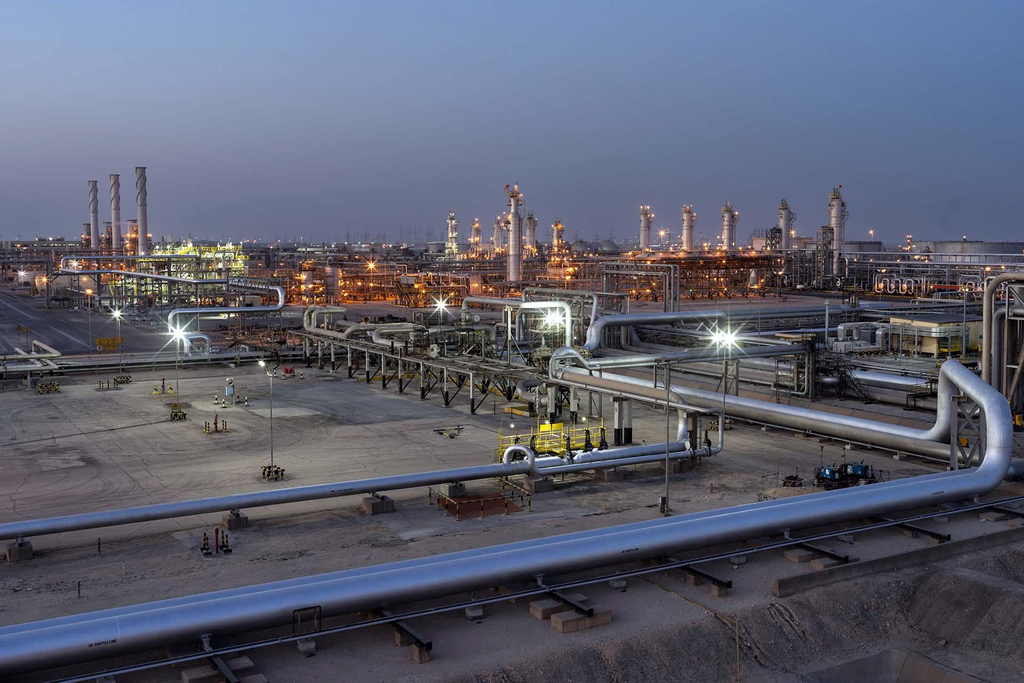
The war has also spilt sideways. Iran-backed Houthis, long a Red Sea threat to shipping, have renewed a land-and-missile campaign against Saudi Arabia. Over the weekend they claimed strikes on “sensitive” sites in Riyadh and an Aramco facility at Yanbu. This Red Sea export hub became Riyadh’s main workaround after Hormuz traffic collapsed. Saudi officials said a ballistic missile was intercepted en route to the capital, the first such attempt on Riyadh in this phase of the fighting. The East-West pipeline, which can move up to about five million barrels a day from eastern fields to Yanbu, was shut as a precaution after earlier drone damage. Oil briefly punched toward $109 a barrel on that news.
Gulf Arab governments, which have absorbed Iranian missile and drone fire on their own soil and watched insurance markets price their waters as a war zone, are now publicly urging a “reset.” The United Arab Emirates has called for a “new mindset”; Qatar has floated a regional security framework. Those statements sit uneasily beside a proposed $24 billion U.S. F-35 sale to Saudi Arabia and British offers of aerial refuelling support to Riyadh. President Trump, after Saudi Crown Prince Mohammed bin Salman pressed for U.S. action against the Houthis, called off planned American strikes at the last minute, according to reporting that described bombs already being loaded. Washington still needs Saudi cooperation in the Iran campaign; Riyadh is paying a steep price for a war it did not start.
Lebanon, Gaza and the West Bank remain active, if secondary, theatres. Israel holds a large security zone in southern Lebanon and says it will not withdraw until Hezbollah is disarmed. Hamas still stages attacks in Gaza. West Bank raids follow settler and militant violence. None of these fronts moves oil prices by themselves. Together they keep the region on a war footing and make any Hormuz or Red Sea de-escalation harder to lock in.
How oil prices have actually moved
The market’s path since February has been a sequence of spikes, partial recoveries and a stubborn risk premium.
Brent jumped immediately when fighting began, from the low $70s into the high $70s within days, then far higher as Iran asserted a de facto closure of the Strait of Hormuz — the waterway that in peacetime carried roughly a fifth of seaborne oil and a similar share of LNG. Early in the war Brent tested levels near $120. It later eased when a mid-year diplomatic track appeared possible and when bypass pipelines and non-Gulf producers filled part of the gap. It has spent most of late summer and early autumn above $90 and has repeatedly recrossed $100.
As of Monday morning in Asia, November Brent was around $102, down about 1.7 per cent on the session; WTI October, expiring Tuesday, was near $98. Those prints were the weakest since September 10. The dip reflected two things: hope that UN week produces at least a talking process, and evidence that Saudi loadings have recovered somewhat after the pipeline shock. Aramco has increased shipments through Hormuz even as Yanbu flows were cut, and September Saudi exports have been running a little above four million barrels a day after an August collapse to about 2.4 million — a multi-year low. JPMorgan estimated that total Middle East oil flows over a recent 10-day window still averaged 17.1 million barrels a day, only 6.1 million below the 2025 average — “surprisingly strong,” the bank said, given the East-West outage.
That resilience is why prices have not exploded to the $150–200 scenarios that circulated in March. It is also why analysts are uneasy. JPMorgan this month said it no longer had a clear baseline for the “endgame.” The bank put September fair value near $90; Brent was then trading near $106. Using a rule of thumb that every million barrels a day of extra lost supply adds about $4 to the price, that $16 premium implied the market was still pricing another four million barrels a day of potential loss on top of the roughly 10 million already disrupted. Global inventories of crude and products have drawn by an estimated 555 million barrels since the war began — large, but only about a third of what some models had expected — because demand itself has run more than four million barrels a day below year-ago levels. The market has balanced on demand destruction as much as on stock draws. That is not a comfortable equilibrium heading into the Northern Hemisphere winter, when diesel demand typically rises. U.S. diesel has already set record highs near $6.30 a gallon.
PVM and others have warned that buffers — inventories, spare capacity outside the Gulf, and the political willingness of consumers to pay — are thinner than they were in the spring. If Hormuz flows stall again, or if the Red Sea workaround is hit harder, $120 Brent is back on the table. If a genuine ceasefire reopened the strait and pipelines, models still show a path back toward $50–70 over time. Neither path is the base case this week. The base case is a messy, partial, militarised transit regime and prices that oscillate in the high double digits and low triple digits.
The geography of Gulf supply risk
Three chokepoints now matter at once.
The Strait of Hormuz remains the core risk. Pre-war throughput was on the order of 20 million barrels a day of oil plus a large LNG stream from Qatar. After Iran declared the strait effectively closed and attacked or threatened shipping, traffic collapsed. U.S. naval escorts have at times shepherded a trickle of tankers along the Omani coast. Iran has at other times asserted a “transit regime” and claimed attacks on non-compliant vessels. Flows have swung violently: from a few million barrels a day in the worst months, to brief recoveries above 8–11 million, then back down. Cumulative lost exports through the waterway run into the billions of barrels. Insurance remains scarce or punitive. Seafarers are reluctant. Dark shipping and ship-to-ship transfers have proliferated in the Gulf of Oman.
The East-West pipeline and Yanbu were supposed to be Saudi Arabia’s answer. The line moves crude west to the Red Sea, bypassing Hormuz. When Houthi drones and missiles hit energy infrastructure and the pipeline was closed, that answer disappeared overnight. Yanbu itself has been a target. The Red Sea route then collides with the third chokepoint.
Bab el-Mandeb, at the southern entrance to the Red Sea, has carried extra Saudi barrels precisely because Hormuz was blocked. Houthi control of parts of Yemen and a declared hostility to Saudi shipping make that extra volume a concentrated risk. A serious, sustained disruption there would hit a system that has already used its main reroute.
Bypass capacity is not zero. The UAE’s Habshan–Fujairah pipeline can move about 1.8 million barrels a day to the Gulf of Oman, and Abu Dhabi has used storage and alternative liftings to keep exports far closer to pre-war levels than most of its neighbours. Iraq, Kuwait and others have experimented with Omani-coast corridors. Non-Gulf producers — the United States, Brazil, Kazakhstan, Venezuela, Nigeria — have added a cumulative few million barrels a day. None of that reconstructs a 20-million-barrel Hormuz. McKinsey has noted that the peak combined oil-and-gas supply hit from the strait’s disruption, about 14 per cent of global supply, exceeded the relative scale of the 1970s oil shocks. The system has been more resilient than the scariest March memos. Resilience is not the same as spare capacity.
India’s exposure: barrels, bills and politics
India’s problem is structural. It is the world’s third-largest oil importer. West Asia still supplies a large minority of its crude and the majority of its LNG and LPG. When Hormuz seized up in March, Gulf arrivals to India collapsed. Kpler data show Gulf crude into India falling to 1.03 million barrels a day in June — the lowest in a series going back to 2017, and below even the Covid-era trough. That slump has begun to reverse. Arrivals recovered to 1.18 million barrels a day in August and about 1.52 million so far in September, with the UAE, Iraq and Kuwait leading the rebound. Sellers have absorbed more transit risk, using ship-to-ship transfers near Sohar and Fujairah. That recovery is one reason prices eased on Monday.
The rebound is incomplete and expensive. Saudi Aramco, which had accounted for roughly 9 per cent of India’s crude since the war began, told Indian refiners that term supplies were suspended until further notice after the East-West pipeline attack. Those barrels will be replaced, but not at the old price. Landed costs for Indian refiners have been quoted in the $135–140 a barrel range when Brent was $105–109, and prompt cargoes have cleared even higher. Murban premiums into India have been reported as high as $15 a barrel over Dated Brent on a landed basis. Russian Urals, which had been India’s workhorse discounted grade and at times around 40 per cent of the slate, is no longer cheap: premiums of $8–9 a barrel to Brent for October–November delivery have been discussed, versus $1–2 during the brief summer thaw. ESPO has commanded still fatter premia.
The Indian basket — the official import-cost benchmark — jumped to a five-month high above $131 a barrel mid-month and a September month-to-date average near $112, up about a quarter from August. Crude inventories have tightened; one Kpler snapshot put stocks near 93.5 million barrels, the lowest since May. August import volumes were already down more than 11 per cent month on month.
New Delhi has managed the shock better than a simple 90-per-cent-import-dependence chart would suggest. Russia’s share of crude rose even as Gulf barrels vanished. The UAE, Venezuela, Oman and Brazil filled the holes. Retail petrol and diesel were held for months; state oil-marketing companies absorbed under-recoveries that at one point were estimated around ₹30,000 crore a month when crude was above $100. In May, for the first time in four years, pump prices rose by ₹3 a litre. Another increase would be politically costly, with inflation already sensitive to energy and food. The current account, the rupee and the subsidy bill all move with the Indian basket. Aviation, chemicals, fertilisers (via LNG and imported gas for urea) and freight are the next transmission belts. CRISIL and others have flagged that 40–50 per cent of India’s crude and 50–60 per cent of its LNG normally move through Hormuz; a long closure is not a paper risk. It is the last seven months.
A further complication sits in Washington: a U.S. legislative push that would give the president tariff authority against buyers of Russian oil. Indian refiners are already shopping in a tight physical market. A credible threat to Russian barrels would force another rotation — West Africa, the U.S. Gulf, Latin America — at wartime freight and insurance.
What “today” actually means
As of September 22, the honest description of the oil market is this: supply from the Gulf is impaired but not collapsed; prices are high but not in a 1973-style spiral; diplomacy has a calendar but not a deal; and India has diversified enough to keep refineries running, at a cost that is showing up in the import bill and will show up in inflation if the disruption lasts through winter.
The diplomatic test this week is modest. A Trump–Pezeshkian encounter, even a cold one, would knock several dollars off the risk premium. A Houthi strike that hits a loaded VLCC or a major Aramco processing unit would put them back on. Iran’s negotiators have, according to Tehran, sent conditions for reopening Hormuz through mediators. Those conditions have not been published in a form the market can underwrite.
For Gulf producers, the strategic problem is dual. They need the United States as a security partner against Iran and the Houthis, and they need Iran not to treat their export infrastructure as a second front. Hence the public language of “reset”, even as they buy more American weapons.
For India, the strategic problem is older than this war: an economy that has grown faster than its domestic oil and gas production. The 2026 shock has accelerated a search that was already under way — more Russian and Atlantic Basin crude, more strategic stocks, more political tolerance for occasional pump-price pain, more interest in long-term Gulf relationships that include investment and not only spot cargoes. None of that removes the next missile from the price of diesel in Kanpur.
Oil at $100 is not an emergency by the standards of March. It is also not normal. Normal was a Hormuz that no one had to think about every morning. That waterway is still a battlefield with a shipping lane painted on it. Until that changes, Gulf supply risk remains the swing factor in the global oil balance — and India remains one of the largest economies sitting on the wrong side of that swing.