

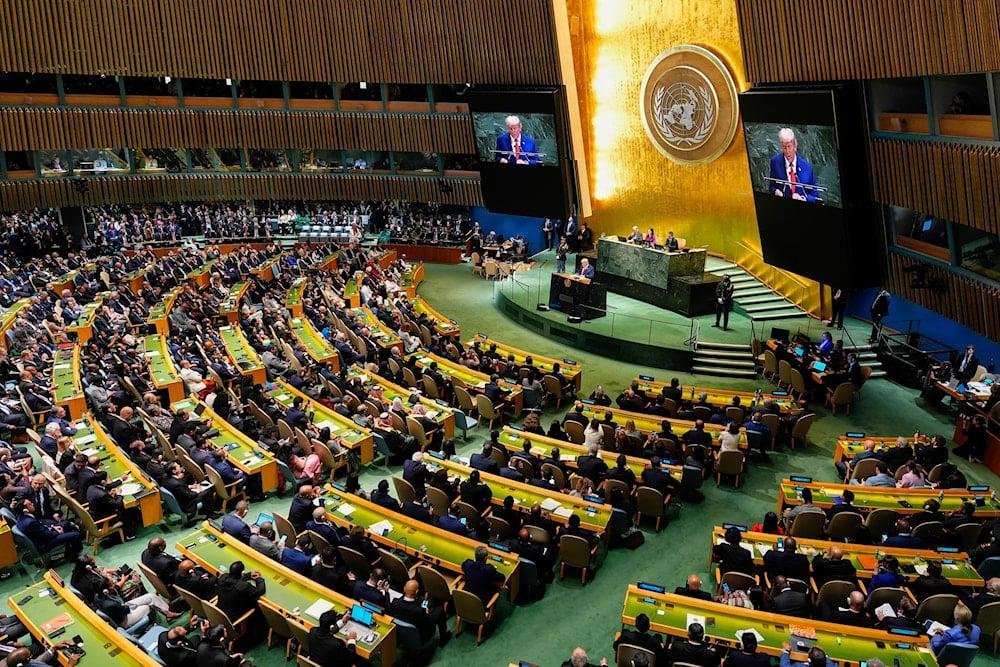
New York, 22 September 2026 — Under the soaring dome of the United Nations General Assembly Hall, world leaders gathered this week for the high-level segment of the 81st session amid a global landscape marked by grinding conflicts, accelerating technological disruption, intensifying climate impacts and eroding trust in multilateral institutions. The theme chosen by the President of the General Assembly — “Rebuilding Trust, Managing Risk, Securing the Future” — framed four days of speeches, closed-door meetings and side events that repeatedly returned to the interlocking crises of war, artificial intelligence, climate change and collective security.
Secretary-General António Guterres opened the general debate with a stark assessment. “We are living through a period of cascading risks,” he told the assembled heads of state and government. “Wars that refuse to end. Technologies that outpace our capacity to govern them. A climate system that is already punishing the poorest first. And a security architecture designed for a different century that is buckling under the weight of multipolar competition.” The Secretary-General’s speech, delivered on the first morning, set a tone of urgency tempered by institutional caution. He called for “practical, enforceable steps rather than rhetorical flourishes,” a phrase that would be repeated, sometimes sceptically, by subsequent speakers.
Prolonged Conflicts and the Search for Political Horizons
The most immediate and emotionally charged discussions centred on ongoing wars. The conflict in Ukraine, now in its fifth year, remained the dominant European security issue. Ukrainian President Volodymyr Zelenskyy addressed the Assembly on the second day, describing the human and material costs of the prolonged war and reiterating Kyiv’s insistence on a just peace based on territorial integrity. “We do not seek endless war,” he said. “We seek an end that does not reward aggression and that provides credible security guarantees.” Zelenskyy used the platform to press for continued military and financial support while signalling openness to serious negotiations under international auspices, provided core principles were respected.
Russian Foreign Minister Sergey Lavrov, speaking later the same day, rejected what he termed “selective interpretations of international law” and argued that Western policies had prolonged the conflict. He framed Russia’s position in terms of legitimate security concerns and multipolarity, calling for a new European security architecture that takes account of what Moscow describes as changed geopolitical realities. The exchange illustrated the depth of the diplomatic impasse: both sides spoke the language of peace while remaining far apart on the substance of any settlement.
In the Middle East, the aftershocks of earlier escalations continued to shape debate. Several Arab and Muslim-majority states pressed for renewed momentum on a two-state solution and concrete steps to address humanitarian conditions in Gaza and the West Bank. Israeli representatives emphasised security threats and the need for demilitarisation guarantees. The United States, under its current administration, reiterated support for diplomatic pathways while underscoring its commitments to regional partners. A series of side meetings involving the European Union, Gulf states and the Quartet attempted to identify modest confidence-building measures, though few observers expected breakthroughs during the week itself.
Elsewhere, conflicts in Sudan, parts of the Sahel, Myanmar and eastern Democratic Republic of the Congo received less airtime in the main hall but featured prominently in ministerial meetings and civil-society side events. African Union representatives stressed that protracted violence on the continent continues to generate displacement, food insecurity and openings for extremist groups, arguing that the international response remains under-resourced relative to needs. The overall picture painted by conflict-related interventions was one of attrition: wars that neither side can decisively win, that impose mounting costs on civilians, and that resist easy diplomatic solutions in a polarised Security Council.
Artificial Intelligence: From Promise to Existential Risk Management
If war dominated the emotional register of the Assembly, artificial intelligence dominated the forward-looking agenda. The rapid diffusion of advanced AI systems since 2023 has forced governments to confront dual-use capabilities, labour-market disruption, information integrity and the theoretical possibility of loss of control over highly capable systems. The 2026 General Assembly featured the most sustained high-level discussion of AI governance yet held at the United Nations.
The United States and a coalition of partners presented an updated “responsible AI” framework emphasising safety evaluations, transparency reporting for frontier models, and export controls on certain advanced chips and model weights. Chinese representatives outlined their own regulatory approach, stressing national sovereignty over data and algorithms while signalling willingness to engage in technical dialogues on safety standards. European leaders highlighted the implementation of the EU AI Act and argued for binding international norms on high-risk applications, particularly in military and critical-infrastructure domains.
A notable intervention came from the Prime Minister of Singapore, who warned against a purely competitive framing. “If major powers treat AI primarily as a domain of strategic rivalry, we risk recreating the dynamics of the nuclear age without the stabilising mechanisms that eventually emerged,” the leader said. “We need shared technical standards for model evaluation, incident reporting protocols, and agreed red lines on autonomous weapons systems that can select and engage targets without meaningful human control.”
The Secretary-General’s AI Advisory Body, which delivered its final report earlier in the year, recommended the creation of a new international scientific panel on AI risks modelled loosely on the Intergovernmental Panel on Climate Change, alongside a global AI safety institute network. Several governments announced national contributions to such efforts. Civil-society organisations and leading AI researchers, speaking at side events, pressed for stronger independent auditing requirements and restrictions on open-sourcing of the most capable models until robust safeguards are demonstrated. Critics from the Global South cautioned that overly restrictive regimes could entrench technological dependence and limit access to beneficial applications in health, agriculture and education.
The debate revealed both convergence and deep disagreement. Almost all speakers acknowledged that advanced AI systems present novel risks that national regulation alone cannot fully manage. Disagreement centred on the relative weight of safety versus speed of innovation, the role of export controls, the appropriate degree of international institutionalisation, and whether military applications should be subject to specific prohibitions or merely transparency measures. A draft resolution on AI for sustainable development was expected to pass with broad support; more contentious language on lethal autonomous weapons remained under negotiation in the First Committee.
Climate Change: Implementation Gaps and Adaptation Imperatives
Climate change formed the third major pillar of the week’s discussions. With global average temperatures having already exceeded 1.5°C above pre-industrial levels for extended periods in recent years, and with extreme weather events intensifying, the focus shifted decisively from long-term targets to near-term implementation and adaptation finance.
The President of the Maldives delivered one of the most pointed interventions, noting that low-lying island states face existential threats within the lifetimes of current leaders. “We are past the point of abstract commitments,” the leader stated. “We need accelerated emissions reductions from the largest emitters, scaled-up adaptation finance that reaches the most vulnerable, and loss-and-damage mechanisms that function at the speed of the crises we face.” Similar messages came from representatives of African, Pacific and Caribbean states, who highlighted the gap between pledged climate finance and actual disbursements, as well as the rising costs of disaster response.
Major emitters presented their updated nationally determined contributions and domestic policy packages. China emphasised its renewable energy deployment figures and its role in global clean-technology supply chains while defending its development rights. The United States highlighted recent clean-energy investment legislation and international climate finance contributions. The European Union pointed to its emissions trading system and border-adjustment mechanisms. India and Brazil stressed the principle of common but differentiated responsibilities and the need for technology transfer on favourable terms.
A recurring theme was the inadequacy of current adaptation funding relative to assessed needs. The Adaptation Fund and the Loss and Damage Fund received new pledges, though several developing-country representatives characterised the sums as insufficient. Private-sector participation was widely encouraged, with several announcements of blended-finance vehicles aimed at resilient infrastructure. Scientific briefings organised on the margins of the Assembly underscored that residual risks — even under ambitious mitigation scenarios — will require significant investment in early-warning systems, climate-resilient agriculture and planned relocation in some regions.
The climate discussions illustrated a familiar tension: broad rhetorical consensus on the severity of the problem coexists with persistent differences over the distribution of effort and finance. The forthcoming COP31 was repeatedly invoked as the next critical milestone for translating Assembly-level statements into operational outcomes.
Global Security Architecture Under Strain
Underlying the specific crises of war, AI, and climate was a broader conversation about the health of the international security system. The Security Council’s repeated inability to act decisively on major conflicts has fueled calls for reform. The “Pact for the Future,” adopted in 2024, contained language on Security Council expansion and working methods; implementation, however, has been slow. Several African and Latin American leaders used their speeches to press for permanent representation reflecting contemporary geopolitical realities. Proposals for additional permanent seats or longer-term elected seats circulated in closed meetings, but consensus remained elusive.
Nuclear risk featured in multiple interventions. The New START treaty’s uncertain future, the modernisation of nuclear arsenals by several states, and the absence of structured strategic dialogue between major powers were cited as sources of concern. The Secretary-General reiterated his call for a return to arms-control negotiations and confidence-building measures. Middle-power states, including Japan, Australia and several European countries, emphasised the importance of reinforcing the non-proliferation regime and addressing regional nuclear challenges.
Cybersecurity and information integrity emerged as cross-cutting issues. Several leaders described state-sponsored cyber operations and the weaponisation of information as threats to democratic processes and critical infrastructure. Proposals for norms of responsible state behaviour in cyberspace, building on earlier General Assembly work, received renewed attention. The intersection of cyber tools with AI capabilities added a further layer of complexity.
Food security, debt distress in developing economies, and the health of the multilateral trading system also received attention, particularly from Global South representatives. The cumulative effect of overlapping crises — conflict, climate shocks, higher interest rates and supply-chain disruptions — has constrained fiscal space in many countries, limiting their capacity to invest in resilience. Calls for reform of the international financial architecture, including greater voice for developing countries in the governance of the International Monetary Fund and World Bank, were repeated with notable frequency.
Institutional Strain and the Question of Effectiveness
Beyond the substantive agenda, the 2026 General Assembly served as a barometer of confidence in the United Nations itself. Attendance by heads of state and government remained high, indicating that the institution retains unique convening power. Yet many speeches contained pointed critiques of bureaucratic inefficiency, selective application of principles, and the gap between mandates and resources. The Secretary-General acknowledged these concerns, pointing to ongoing reforms in management, peacekeeping and humanitarian coordination while arguing that member states ultimately determine the organization’s effectiveness through their political will and financial contributions.
Civil-society participation, though constrained by security and logistical factors, remained vibrant in side events. Youth representatives, indigenous leaders, scientists and private-sector figures contributed perspectives that often cut across official positions. A recurring civil-society message was the need for greater accountability mechanisms — whether in the form of independent AI safety assessments, transparent climate-finance tracking, or more robust human-rights monitoring in conflict zones.
Looking Ahead
As the high-level segment concluded, the practical outcomes remained modest relative to the scale of the challenges described. A series of resolutions on AI, climate finance and conflict prevention moved forward in various stages of negotiation. Bilateral and minilateral meetings on the margins produced incremental steps on specific dossiers. The deeper questions — whether major powers can establish workable rules for AI competition, whether climate finance can be scaled at the necessary speed, whether political horizons can be found for protracted wars, and whether the security architecture can adapt to multipolar realities — were left largely unresolved.
The 2026 General Assembly will be remembered less for dramatic breakthroughs than for the clarity with which it diagnosed the interlocking nature of contemporary risks. War, technological disruption, climate impacts and institutional fragility do not exist in isolation; each amplifies the others. The speeches delivered this week demonstrated that leaders understand the diagnosis. Whether the political systems they represent can generate the sustained cooperation required to address it remains the central test for the years ahead.
In the corridors of the Secretariat Building and the side streets of Turtle Bay, diplomats, journalists and activists offered a range of assessments. Some saw the week as evidence that multilateralism retains residual vitality even under strain. Others viewed it as further confirmation that the post-1945 order is struggling to adapt to a more contested and technologically fluid environment. The truth, as so often at the United Nations, likely lies in the uneasy space between those poles: an institution still indispensable for certain forms of collective action, yet increasingly insufficient on its own to manage the risks that define the mid-2020s.
The Assembly will continue its work in the committees over the coming months. The real measure of this year’s high-level segment will be found not in the eloquence of the speeches but in the concrete follow-through — or its absence — on the commitments that were made and the warnings that were issued under the green marble of the General Assembly Hall.