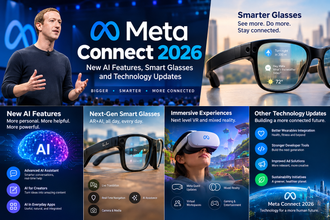


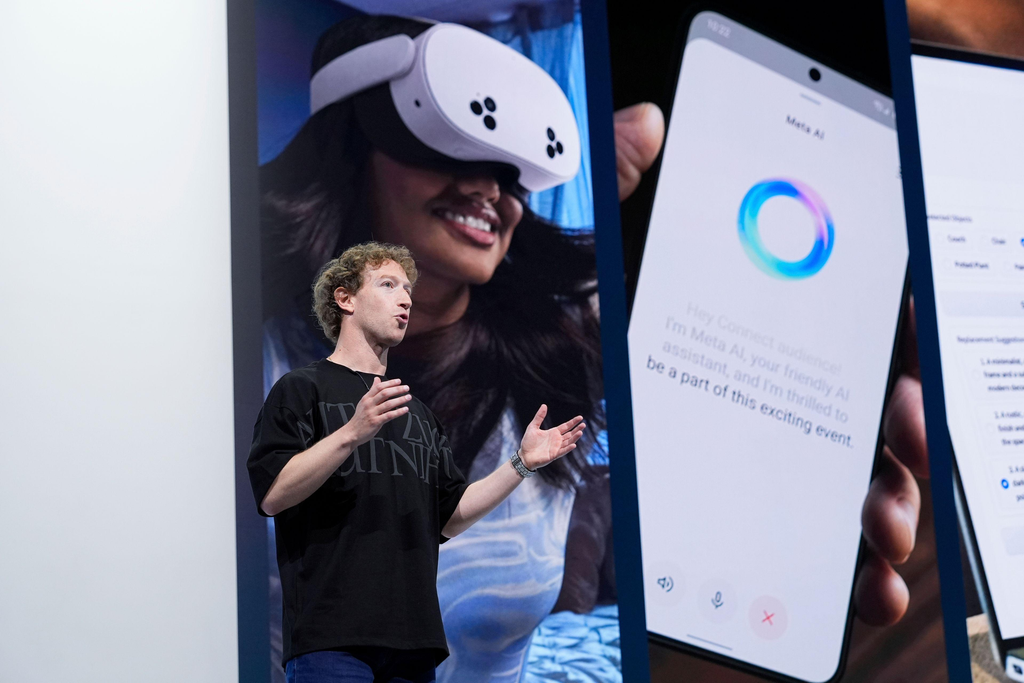
MENLO PARK, California — Meta Platforms is set to host its annual Meta Connect conference on September 23 and 24, 2026, a two-day livestream event focused on breakthroughs in artificial intelligence, AI-powered smart glasses, and virtual and mixed reality technologies. The keynote, delivered by founder and CEO Mark Zuckerberg at 4:00 p.m. Pacific Time on Wednesday, will outline how the company is “building a future for everyone.” A Developer State of the Union follows on Thursday at 10:00 a.m. PT, alongside on-demand technical sessions covering SDKs, build paths for VR and AI glasses, and tools spanning Unity, Unreal, WebXR, Android, and the Spatial SDK.
The event arrives at a pivotal moment for Meta. Smart glasses have emerged as one of the fastest-growing consumer electronics categories, with the company and its partner EssilorLuxottica reporting strong sales momentum. At the same time, privacy concerns surrounding camera-equipped devices have intensified, prompting scrutiny, venue bans, and public debate. Meta has positioned Connect 2026 around AI technologies first, followed by AI glasses and VR, signalling a continued strategic pivot toward wearable computing and personal AI agents rather than pure metaverse hardware.
This year’s gathering is the first major Connect since the launch of Muse, Meta’s personal AI agent, and the rollout of Muse Spark models from Meta Superintelligence Labs. It also follows the introduction of Meta’s own-branded $299 glasses line earlier in 2026 and successive generations of Ray-Ban and Oakley Meta models. Expectations centre on camera-free smart glasses, deeper Muse integration, previews of next-generation mixed-reality hardware, and expanded developer tools.
The Privacy Pivot: Camera-Free Smart Glasses
The most closely watched hardware announcement is expected to be a new line of camera-free smart glasses, internally codenamed Luna. Reports indicate the devices will feature six built-in microphones for interaction with Meta AI and the Muse agent, open-ear speakers directed toward the wearer’s ears, and a quick-action button on the temple to summon the assistant. By removing the outward-facing camera, Meta can use slimmer temple arms, bringing the form factor closer to conventional eyewear. Two styles, referred to internally as Clubmaster and Burbank, are anticipated, with potential shipments targeted for October 2026.
The move addresses a growing backlash. Camera-equipped Meta glasses have faced criticism for enabling discreet recording, earning nicknames such as “pervert glasses” in some coverage. Certain restaurants, pubs, theatres, and even courtrooms have restricted or banned their use. Detection apps have proliferated, and Meta has responded with firmware updates intended to disable cameras when indicator lights are obstructed, though workarounds have been demonstrated. Removing the camera eliminates the primary visual privacy vector while preserving audio-based AI interactions—directions, queries, translations, and agent tasks—without requiring users to pull out a phone.
Analysts note trade-offs. Photo and video capture rank among the most popular features of existing models. Camera-free glasses may appeal to privacy-conscious buyers or those seeking a more discreet everyday wearable, but they risk reducing perceived utility for content creators and casual users who value hands-free capture. Pricing remains unconfirmed; competitive camera-free alternatives start in the mid-to-high hundreds of dollars, and Meta’s distribution muscle and existing ecosystem could position Luna as a mainstream option if priced accessibly.
Beyond Luna, updates to the broader glasses portfolio are anticipated. Ray-Ban Meta Gen 3 rumours point to improved battery life, enhanced AI capabilities, and refined designs building on the Gen 2 models that offered up to eight hours of mixed use and 3K video. Oakley Meta performance-oriented frames and the company’s own Meta Glasses line (Adventurer, Fury, and collaborations) are also candidates for software or hardware refreshes. Meta’s first display-equipped glasses, the Ray-Ban Display with Neural Band wristband control launched at Connect 2025, demonstrated full-colour lens overlays for navigation, translations, and notifications; further software maturity and broader availability are logical next steps.
AI at the Centre: Muse and Personal Superintelligence
Artificial intelligence forms the connective tissue of Meta’s 2026 vision. In early September, Meta launched Muse, described as a personal AI agent that goes beyond answering questions to performing tasks on a user’s behalf. Running in a dedicated Secure VM with its own browser, Muse can send emails, book travel, manage calendars, fill forms, make purchases via integrated payment systems, and coordinate multi-step projects. Users customise the agent’s name and avatar, control access levels, and interact via iOS, Android, the web, and soon AI glasses. A free tier covers most everyday use, with paid Power and Maximum plans unlocking higher usage limits.
Muse is powered by Muse Spark models developed under Meta Superintelligence Labs. These models emphasise multimodal understanding, agentic tool use, and efficiency techniques such as thought compression. Earlier in 2026, Meta released Muse Image and previewed Muse Video generation capabilities. Integration with glasses is a key expected theme at Connect: wearers could invoke Muse for contextual help based on audio (and, on camera models, visual) input, receive proactive suggestions, and execute real-world tasks hands-free. Live translation has already expanded to additional languages including Japanese, Mandarin, Hindi, and Korean, with further multimodal and offline improvements likely.
Zuckerberg has framed personal AI agents as a path toward “personal superintelligence”—systems that learn individual goals, maintain long-term memory of preferences and relationships, and act continuously to improve users’ lives across health, finances, relationships, and productivity. Muse’s architecture isolates untrusted web data while allowing controlled access to connected services (email, calendars, music, dining, shopping, and more). Connect is expected to detail deeper glasses support, additional connectors for third-party developers, and progress on more capable underlying models. Developer sessions already list multimodal development with Muse Spark and tools for extending mobile experiences to AI glasses via the Wearables Device Access Toolkit.
Privacy and trust remain central challenges. Granting an agent access to email, payments, and personal data requires significant user confidence. Meta emphasises user control, secure isolation, and transparent design, yet the company’s history with social media data practices invites scepticism. Safety features, usage limits for minors, and clear disclosure of when the agent is acting will be scrutinised.
Mixed Reality Horizon: Project Phoenix and Codec Avatars
While glasses dominate the narrative, Meta continues investing in immersive computing. Project Phoenix, a slim mixed-reality headset, has generated substantial pre-event buzz through firmware leaks showing a glasses-like form factor with nose pads, temple sensors, and a tethered compute puck. Reports describe an ultralight design (under 110 grams on the face in some accounts) aimed at productivity, media consumption, and social experiences rather than high-end gaming. Expected features include high-resolution micro-OLED displays, controller-free interaction via hand and eye tracking, and open periphery for better awareness of the physical environment. A commercial launch is widely expected in the first half of 2027, making Connect more likely a formal preview or live demonstration than a product release.
Particular intrigue surrounds a reported hologram-like calling demo. Sources indicate Zuckerberg and CTO Andrew Bosworth may demonstrate full-body photorealistic Codec Avatar calls on Phoenix hardware during the keynote—eleven years after Meta’s early research into the technology. Such a demonstration would showcase advances in real-time photorealistic avatars, spatial audio, and low-latency communication, positioning Phoenix as a social and productivity device capable of virtual workspaces, large virtual screens, and shared experiences. Developer sessions on controller-free interaction align with this direction.
Horizon OS and the broader platform continue evolving. Prior Connects introduced improved engines, generative AI tools for world-building, monetisation features such as season passes, and expanded Android app support via the Spatial SDK. This year, sessions emphasise multiple build paths so developers can leverage existing skills in Unity, Unreal, web technologies, or native Android without learning entirely new stacks. AI-powered development tools, simulation environments for testing, and expanded sensor access for glasses apps are expected to lower barriers and accelerate content creation.
The metaverse itself has been reframed. Horizon Worlds faced challenges and reduced emphasis; the focus has shifted toward practical social presence, AI-augmented experiences, and hardware that bridges everyday wearables with more immersive sessions. Discord integration and streaming hubs on Quest devices illustrate a more pragmatic entertainment and communication strategy.
Developer Ecosystem and Platform Strategy
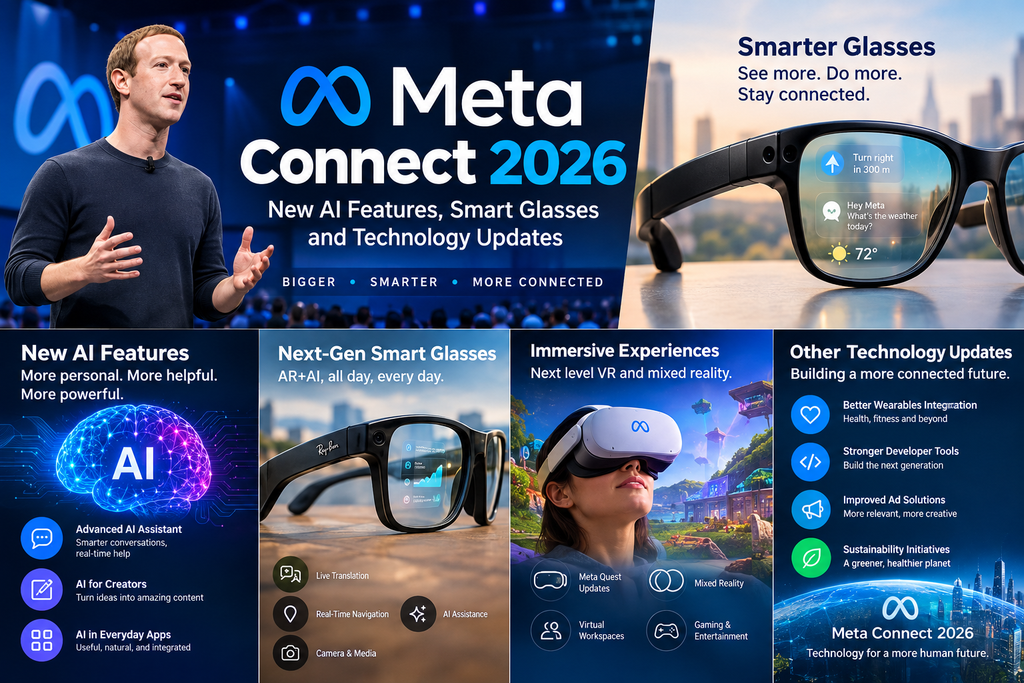
Thursday’s programming underscores Meta’s recognition that hardware success depends on software and creators. The Developer State of the Union will detail how new technologies unlock opportunities. Sessions cover SDK updates for game engines, building Android apps for VR, web apps for Ray-Ban Display glasses, and pathways that let developers choose the right abstraction level for their goals. Simulation tools and AI assistance aim to speed iteration and reduce testing friction on physical hardware.
By opening sensor access (vision and audio where available) through toolkits, Meta hopes to seed a richer ecosystem of hands-free mobile extensions and spatial experiences. The Wearables Device Access Toolkit, first highlighted previously, is expected to expand, allowing third-party apps to leverage the unique first-person perspective and always-available audio of glasses. For VR, performance optimisations, larger multiplayer capacities, and generative tools for rapid prototyping remain priorities.
This dual strategy—consumer-facing AI glasses and agents paired with developer-friendly platforms—positions Meta to capture both end-user mindshare and the creative talent needed to sustain an ecosystem. Success metrics will include not only unit sales of glasses but retention, daily active use of Muse, and the volume and quality of third-party experiences.
Competitive Landscape and Broader Implications
Meta operates in a competitive field. Apple’s spatial computing efforts, Google’s AR explorations, Snap’s Spectacles, and specialised mixed-reality glasses from companies such as Xreal and Viture all pursue overlapping visions of wearable and immersive interfaces. Meta’s advantages include early volume in AI glasses, deep distribution through EssilorLuxottica retail channels, integration across its social family of apps, and substantial AI research investment. Challenges include regulatory scrutiny of data practices, the need to continuously improve battery life and form factor, and the difficulty of making AI agents reliably useful without becoming intrusive or error-prone.
Market analysts see smart glasses as a multi-billion-dollar category with room for both camera and camera-free variants. Privacy-conscious designs may expand the addressable audience, particularly in professional, educational, or regulated environments. Meanwhile, continuous software updates—already a hallmark of Meta’s glasses strategy—can extend the life and capability of existing devices, reducing pressure for annual hardware refreshes.
For society, the spread of always-available personal AI and ambient wearables raises questions about attention, social norms, consent around audio capture, and dependency on corporate platforms for everyday cognition. Meta’s emphasis on user control and secure architectures attempts to address some of these issues, yet the practical reality will be tested as Muse and Luna-style devices reach wider audiences.
Looking Ahead
As the keynote approaches, the central narrative of Meta Connect 2026 is clear: the company is betting that the next computing platform is not a single device but a continuum of AI-powered wearables, agents, and occasional immersive sessions, all tightly integrated. Camera-free glasses represent a pragmatic response to privacy realities. Muse embodies the shift from reactive chatbots to proactive personal agents. Project Phoenix and Codec Avatar demos keep the longer-term immersive vision alive without demanding immediate mass adoption of bulky headsets.
Whether the announcements deliver tangible progress or primarily set the stage for 2027 products will become evident during the livestream. What is already evident is Meta’s determination to lead in the category it helped popularise. For developers, the expanded toolkits and multimodal AI capabilities offer new creative surface area. For consumers, the promise is technology that feels less like a gadget and more like an extension of everyday capability—provided the company can maintain trust while scaling ambition.
The two-day event will stream free worldwide, with translations available in multiple languages. Attendees and remote viewers alike will watch for concrete product details, pricing, availability windows, and demonstrations that move beyond slides into lived experience. In an industry defined by rapid iteration, Meta Connect 2026 is both a product showcase and a statement of strategic direction: AI first, wearables as the primary interface, and a measured path toward more immersive computing.
The coming days will reveal how fully the company has translated research and rumours into shipping or near-shipping technology. For now, the stage is set in Menlo Park for what Meta hopes will be another defining chapter in the evolution of personal computing.