

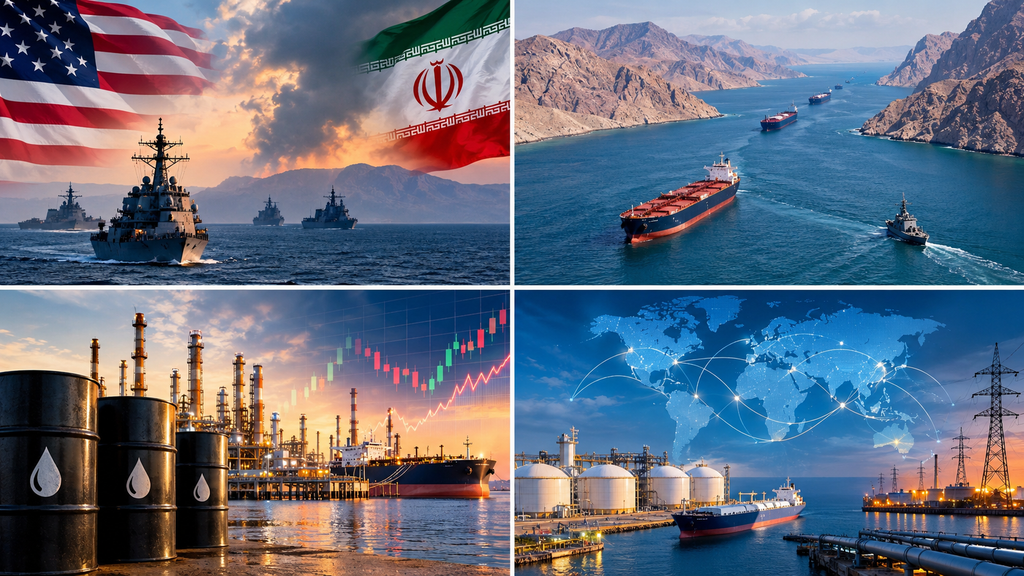
As of late September 2026, the prolonged confrontation between the United States and Iran continues to centre on control of the Strait of Hormuz, the world’s most critical energy chokepoint. Nearly seven months after the conflict erupted with U.S. and Israeli strikes on Iranian targets in late February, the narrow waterway linking the Persian Gulf to the Gulf of Oman and Arabian Sea remains a flashpoint of military exchanges, diplomatic manoeuvring, and severe disruptions to global oil and gas flows. Recent signals of potential diplomacy at the United Nations General Assembly in New York have offered a fragile glimmer of hope, yet attacks on shipping, mutual threats, and constrained tanker traffic underscore how deeply the standoff has reshaped energy markets and heightened concerns over supply security worldwide.
The Strait of Hormuz, at its narrowest point only about 21 miles wide with shipping lanes roughly two miles wide in each direction, has long served as the primary exit route for the vast majority of oil and liquefied natural gas (LNG) produced in the Persian Gulf. Prior to the war, approximately 20 million barrels per day of crude oil, condensate, and petroleum products—roughly one-fifth of global petroleum liquids consumption—transited the strait daily, along with a substantial share of global LNG exports, predominantly from Qatar. Asian markets, including China, India, Japan, and South Korea, absorbed the overwhelming majority of these volumes, making the waterway indispensable to the energy security of the world’s fastest-growing economies. Saudi Arabia, Iraq, Kuwait, the United Arab Emirates, and Iran itself all depended heavily on Hormuz for exports, with limited pipeline alternatives capable of fully compensating for a prolonged disruption.
When hostilities began on February 28, 2026, Iran responded by threatening and attacking commercial vessels with drones, missiles, and small boats, effectively closing or severely restricting the strait. Insurance premiums soared or became unavailable, seafarers refused passage, and traffic collapsed. The United States imposed a naval blockade on Iranian ports, further squeezing Tehran’s oil exports. An interim memorandum of understanding reached in June briefly raised hopes of de-escalation and a controlled reopening, stipulating safe passage for commercial vessels without fees for a 60-day period. That understanding rapidly frayed. Disputes over routing—Iran insisting vessels transit through Iranian-designated channels under its coordination, while the U.S. and partners favoured safer southern routes along the Omani coast—led to renewed attacks. Iranian forces targeted ships deemed non-compliant; the U.S. responded with strikes on Iranian coastal military infrastructure, drone and missile sites, and other assets intended to degrade Tehran’s ability to threaten shipping.
Throughout the summer and into September, the pattern repeated: tit-for-tat strikes, temporary lulls, and incomplete recoveries in traffic. U.S. Central Command conducted waves of operations aimed at IRGC naval and missile capabilities near the strait. Iran retaliated against U.S. assets and partners in Bahrain, Jordan, Kuwait, Oman, and elsewhere, while continuing to assert authority over the waterway. Tanker attacks persisted into mid-to-late September, with reports of projectiles striking vessels, fires, and occasional casualties among crew. Shipping data showed commodity vessel transits fluctuating dramatically—sometimes dropping to single digits or low teens per day, far below the pre-war average of more than 100 large commercial ships daily. At points, U.S. escorts helped push higher volumes through, with officials claiming wartime highs of oil flows on certain days. Independent trackers, however, consistently recorded averages well below historical norms, with significant volumes still relying on alternative pipelines or remaining bottled up.
Oil prices have mirrored this volatility. Brent crude, the international benchmark, has hovered near or above $100 per barrel in recent weeks, reflecting a substantial risk premium for Hormuz disruption. After earlier spikes and partial retreats during ceasefire windows, prices climbed again amid renewed tanker incidents and Houthi-linked attacks on alternative routes, including Saudi Arabia’s East-West pipeline to the Red Sea. As of September 22–23, Brent traded around the $100–$101 range, with WTI similarly elevated. Analysts noted that markets were pricing in not only current shortfalls—estimated by some at several million barrels per day relative to pre-war Gulf flows—but also the possibility of further escalation. Gasoline and diesel prices in the United States and elsewhere have remained elevated relative to pre-conflict levels, contributing to inflationary pressures and political sensitivity, particularly with U.S. midterm elections approaching.
Global energy supply concerns extend beyond immediate price spikes. The disruption ranks among the largest supply shocks in modern oil market history. Spare production capacity elsewhere has proven insufficient to fully offset the loss of Gulf volumes. The International Energy Agency and other bodies have monitored inventory draws, strategic releases, and demand destruction as mechanisms to balance the market. Asian refiners have faced higher freight costs, with tanker rates from the Middle East Gulf to Asia climbing dramatically at times, adding tens of dollars per barrel to delivered costs. Qatar’s LNG exports, critical for power generation and industry in Asia and Europe, have also been constrained. Secondary effects include elevated prices for petrochemicals, fertilisers, and other commodities that transit the Gulf, with ripple impacts on agriculture, manufacturing, and broader inflation.
Saudi Arabia and the UAE have maximised use of bypass pipelines—the East-West line to Yanbu and the Habshan-Fujairah route—yet these cannot fully replace Hormuz capacity. Saudi efforts to boost Hormuz shipments in recent weeks, even as the East-West pipeline faced interruptions attributed to Iranian-aligned actors, illustrate the constrained options. Iran itself has seen its exports sharply curtailed by the U.S. blockade, forcing greater reliance on a shadow fleet and limited approved passages, while losing a key revenue stream. The conflict has also spilt into related theatres: Houthi activity in the Red Sea and Bab al-Mandeb has complicated alternative routes, raising the spectre of multi-chokepoint pressure on global shipping.
Diplomacy remains the primary path out of the impasse, yet profound differences persist. Iran views control or significant influence over the strait as strategic leverage and has resisted returning to a pure pre-war status quo of unfettered international navigation. U.S. officials have insisted the waterway is an international passage that must remain open without tolls or Iranian veto over routes, while continuing military pressure and the port blockade to compel compliance. Nuclear issues, sanctions relief, asset unfreezing, and the broader regional security architecture further complicate any comprehensive settlement. An interim deal collapsed amid mutual accusations of violations; subsequent mediation efforts involving Qatar, Pakistan, Oman, and others have produced intermittent technical talks but no lasting breakthrough.
As of September 22–23, 2026, attention has focused on the UN General Assembly, where both U.S. President Donald Trump and Iranian President Masoud Pezeshkian are present. Trump has publicly indicated openness to talks while reiterating threats of severe consequences if Iran fails to reach an agreement, including options ranging from intensified military action to economic pressure. Iranian officials have floated the possibility of reopening the Strait of Hormuz within days if the United States eases military pressure and lifts the blockade on Iranian ports. One senior Iranian source described the UN gathering as a “golden opportunity” for diplomacy, with Tehran’s delegation empowered to revive negotiations. Counter-statements from Iranian hardliners and the Revolutionary Guards, however, have warned against escalation and insisted on firm conditions. Mediators continue quiet work, but no face-to-face presidential meeting has been confirmed, and public rhetoric on both sides remains confrontational.
The human and economic costs of prolonged tension are mounting. Seafarers face heightened risks; shipping companies grapple with insurance and routing dilemmas; Gulf economies suffer from reduced export revenues and elevated security expenditures; and importing nations confront higher energy bills that feed into consumer prices and industrial costs. In the United States, elevated fuel prices have political resonance. In Asia, the disruption has tested energy security strategies and accelerated interest in diversification, strategic stockpiles, and alternative suppliers. Longer-term, the crisis may spur greater investment in pipeline infrastructure, floating storage, and non-Gulf sources, though the fundamental geography of Gulf reserves ensures Hormuz will retain outsized importance for years.
Military dynamics continue to evolve. U.S. forces have demonstrated the ability to strike Iranian capabilities supporting attacks on shipping and to escort commercial traffic. Iran has retained the capacity to harass vessels, launch retaliatory strikes on regional bases, and threaten wider escalation, including through proxies. Both sides appear reluctant to return to the intensity of earlier phases of the war, preferring calibrated actions that impose costs without full-scale escalation. Yet each incident—whether a projectile striking a tanker or a new wave of airstrikes—raises the risk of miscalculation. Mine-clearing operations, surveillance, and route management efforts by the U.S. and partners have improved conditions at times, only for renewed Iranian assertions of authority to reverse gains.
Energy market analysts differ on the trajectory. Some see the current elevated price level as incorporating a durable risk premium for an extended “muddle-through” conflict, with Brent potentially settling in the high $80s to low $100s if flows remain constrained but not fully halted. Others warn that a major escalation closing the strait more completely could push prices significantly higher, while a durable diplomatic resolution could trigger a sharp decline as bottled-up supply returns and risk premia evaporate. Inventory levels, OPEC+ decisions, non-OPEC production growth, and demand trends in China and elsewhere will interact with the geopolitical overlay. The International Energy Agency and national strategic petroleum reserves have provided buffers, but sustained high prices risk demand destruction and broader economic slowdown.
Looking ahead, the coming days and weeks around the UN session will be closely watched for concrete diplomatic movement. A limited understanding that stabilises shipping, reduces immediate military pressure, and creates space for further talks could ease market tensions and restore more normal flows. Failure to make progress risks another cycle of attacks, further traffic declines, and renewed price spikes. Broader questions of Iran’s nuclear program, regional influence, and the future security architecture of the Gulf remain unresolved and will likely require sustained engagement beyond any short-term Hormuz arrangement.
The Strait of Hormuz crisis of 2026 has starkly illustrated the vulnerability of the global energy system to geopolitical conflict at a single maritime chokepoint. It has forced governments, companies, and markets to confront the limits of diversification and the enduring centrality of Middle Eastern hydrocarbons. While alternative pipelines, strategic stocks, and demand responses have mitigated the worst outcomes, they have not eliminated the pain of higher prices, supply uncertainty, and elevated risk. As U.S.–Iran tensions continue to play out in the waters between Iran and Oman, the world watches closely: the stability of one of the planet’s most vital energy arteries hangs in the balance, with consequences that extend far beyond the region to economies and households across the globe.
The situation remains fluid. Shipping data, oil price movements, official statements from Washington and Tehran, and mediator reports will continue to provide the clearest real-time indicators of whether de-escalation or further confrontation lies ahead. For now, the combination of military posturing, incomplete traffic recovery, and prices near $100 a barrel ensures that global energy supply concerns stay firmly at the forefront of international attention. Any breakthrough at the United Nations or through back-channel diplomacy would represent a significant step toward restoring predictability to a market that has operated under a heavy cloud of geopolitical risk for most of 2026. Until then, the Strait of Hormuz remains both a critical artery and a potential pressure point capable of sending shocks through the global energy system.