
Aichi-Nagoya, Japan – October 1, 2026
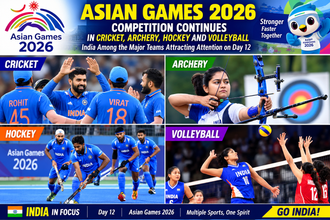
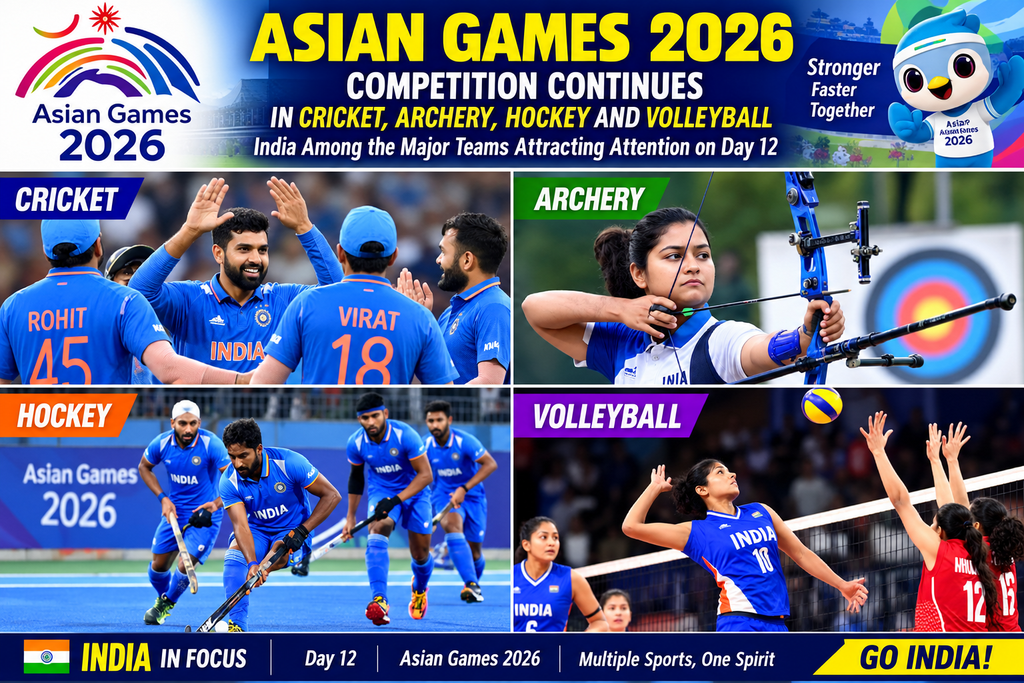
Competition intensified on Day 12 of the 20th Asian Games in Aichi-Nagoya as India’s athletes took centre stage across multiple high-profile disciplines. With the multi-sport extravaganza, running from September 19 to October 4, entering its decisive phase, the focus fell squarely on cricket, archery, hockey and volleyball. India, one of the major teams drawing widespread attention, delivered a commanding performance in the men’s cricket semifinal while navigating tough challenges against arch-rivals Pakistan in volleyball and hockey. Compound archery continued to yield medals, underscoring the depth of the Indian contingent at these Games hosted for the third time by Japan after Tokyo 1958 and Hiroshima 1994.
The day began early for Indian competitors, with action unfolding across venues in Aichi Prefecture and beyond. More than 10,000 athletes from over 45 nations and regions are competing in 43 sports and nearly 470 events, many of which also serve as pathways to the Los Angeles 2028 Olympics. India’s large contingent has already amassed a strong medal tally heading into the final stretch, and Day 12 offered further opportunities amid packed schedules in individual and team events.
Cricket: India Crush Sri Lanka to Reach Final
At Korogi Athletic Park (also referred to as Korogi Sports Park) in Nisshin, the Indian men’s cricket team produced a clinical all-round display to thrash Sri Lanka by 124 runs in the second T20 semifinal and book a place in the gold-medal match. Defending champions India posted 169 for 7 after being sent in to bat on a pitch offering significant turn. Opener Vaibhav Sooryavanshi provided a brisk start with 38 off 21 balls, while Ishan Kishan anchored the innings with an unbeaten 80 off 46 deliveries, featuring four boundaries and five sixes. Contributions from Shreyas Iyer (13) and others helped India reach a competitive total despite regular wickets.
Sri Lanka’s chase never materialised. Jasprit Bumrah struck twice in his opening over, removing Sineth Jayawardena and Sohan de Livera for ducks. A run-out and further strikes from Axar Patel (2/8) and Abhishek Sharma (2/2) reduced the islanders to 18 for 5 early. Nuwanidu Fernando’s 15 was the only score in double figures as Sri Lanka collapsed to 45 all out in just 9.5 overs. Washington Sundar also claimed a wicket in the rout. India will now face Pakistan in the final on October 3, setting up a highly anticipated clash between the two sides. Pakistan had advanced earlier by defeating Bangladesh in a rain-affected semifinal. The result reinforces India’s status as favourites to retain the title they won in Hangzhou three years earlier, where they also dominated the continental stage.
The T20 format has brought cricket firmly into the Asian Games spotlight, with matches drawing significant viewership across the region. India’s path through the knockouts has been impressive, and the final against Pakistan promises high drama given the historic rivalry that extends beyond the boundary.
Volleyball: Pakistan Sweep India in Straight Sets
In a morning clash at Okazaki Chuo Sogo Park Gymnasium, India’s men’s volleyball team saw its unbeaten run end in the quarterfinals as Pakistan delivered a dominant 3-0 victory (25-19, 25-23, 25-18). The match lasted approximately 1 hour and 22 minutes and marked Pakistan’s second consecutive Asian Games win over India in the discipline. Murad Khan led the scoring with 22 points for the winners, supported by Usman Faryad Ali (nine points), Mohammad Hamad (eight) and others. India’s Ashwal Rai finished as the top scorer with nine points, while Jerome Vinith, Joel Benjamin Jebaraj and Chirag Yadav contributed eight each.
India had topped Pool C with straight-set wins over Vietnam and Hong Kong China, followed by a hard-fought 3-2 comeback victory against Qatar. Pakistan, who finished second in their pool after wins over Kazakhstan and Uzbekistan and a loss to hosts Japan, controlled the net and capitalised on Indian errors, particularly in the second set where India led 19-16 before losing momentum. The defeat ends India’s hopes of a podium finish; their last men’s volleyball medal at the Asian Games was a bronze in Seoul in 1986, following earlier silver in 1962 and bronze in 1958. Pakistan advanced to the semifinals, aiming for their first medal in the event since 1962.
The rivalry matchup attracted considerable attention, highlighting the competitive intensity between the two nations across multiple sports on the same day.
Hockey: High-Stakes Semifinal Against Pakistan
At Gifu Prefectural Green Stadium in Kakamigahara, the Indian men’s hockey team, defending champions from Hangzhou, prepared for a blockbuster semifinal against Pakistan scheduled for 1:00 pm IST. India entered the knockout stage in dominant form, topping Pool A with five wins from five matches and a remarkable goal difference of +45. Their campaign included a 10-0 thrashing of Bangladesh in the final group game, where captain Harmanpreet Singh scored a hat-trick amid challenging wet conditions. Other victories came against Indonesia, Sri Lanka, Japan and South Korea.
Pakistan advanced from Pool B, setting up the classic rivalry encounter. India have enjoyed a strong recent record against their neighbours, including victories in the FIH Pro League and World Cup earlier in the cycle. A win would place India in the gold-medal match on October 3, with Olympic qualification implications for Los Angeles 2028 also on the line in the broader hockey programme. The other semifinal featured Malaysia against South Korea. The India-Pakistan hockey contest remains one of the most followed rivalries in Asian sport, drawing packed crowds and intense media coverage whenever the sides meet at major events.
Women’s hockey had already seen India progress to the final with a 2-0 victory over South Korea on the previous day, adding to the national team’s strong showing in the discipline.
Archery: Bronze for Ganesh as Compound Events Conclude
Compound archery provided further success for India at Okazaki Chuo Sogo Park Multipurpose Square. Ganesh Mani Ratnam Thirumuru claimed the men’s individual bronze medal by defeating Vietnam’s Cong Duc Dang 149-144. This marked his second medal of the Games following the team successes earlier in the competition. On the previous day (September 30), India had swept the compound team events, with the women’s team (including Chikitha Taniparthi, Prithika Pradeep and Jyothi Surekha Vennam) equalling a world-record score to beat China, and the mixed team of Chikitha and Sahil Jadhav prevailing in a shoot-off against South Korea.
In the women’s individual quarterfinals on Day 12, Chikitha Taniparthi narrowly lost 143-144 to Indonesia’s Nurisa Dian Ashrifah, ending her solo campaign. The compound programme concluded with India collecting three golds and a bronze overall in the discipline—solid, if short of the complete sweep achieved in Hangzhou. Recurve events continue in the coming days, offering additional medal prospects for the Indian archers who have long been a reliable source of podium finishes at the Asian Games.
Broader Context and Other Action
Day 12 featured a packed Indian schedule beyond the headline sports. In sailing, Manu Francis and Prince Kurisinkal Noble secured silver in the men’s skiff, India’s first medal in the discipline at these Games. The women’s squash team earned bronze after a 1-2 semifinal loss to Hong Kong China. Wrestling saw Nitesh advance to the Greco-Roman 97kg final after a strong semifinal win, while Mansi Ahlawat reached the bronze-medal bout in women’s 62kg. Sepaktakraw’s men’s quadrant team confirmed a medal by progressing from the group stage with wins over Vietnam and Myanmar. Other disciplines including shooting, track cycling, judo, tennis and rugby sevens also saw Indian participation, with mixed results that added to the overall competitive narrative.
India’s medal tally continued to grow steadily, building on strong performances in kabaddi, shooting, athletics relays and other events earlier in the Games. The contingent of over 500 athletes has shown consistency across team and individual sports, reflecting years of targeted preparation and increased investment in Olympic and Asian Games pathways.
As the Asian Games move toward their final days, the spotlight remains on India as a major force. The cricket final against Pakistan on October 3, the ongoing hockey campaign, continued archery and wrestling medal chances, and classification matches in volleyball will keep Indian fans engaged. Hosts Japan, China, South Korea and other traditional powers continue their own strong campaigns, but India’s visibility across cricket, the enduring hockey rivalry, volleyball drama and precision sports like archery has made Day 12 particularly compelling.
The Aichi-Nagoya Games, themed around unity under the motto “Imagine One Asia,” have showcased high-quality competition in both traditional and newer disciplines such as esports and mixed martial arts. With venues spread across Aichi and neighbouring prefectures, logistics have been demanding, yet the focus on athletic excellence remains clear. For India, the combination of dominant cricket form, competitive team sports and individual medal contributions on Day 12 reinforces their status among the leading nations. Fans across the continent will be watching closely as the remaining medal events unfold and the final podium positions take shape before the closing ceremony on October 4.