
TAIPEI / WASHINGTON / BEIJING — October 2026
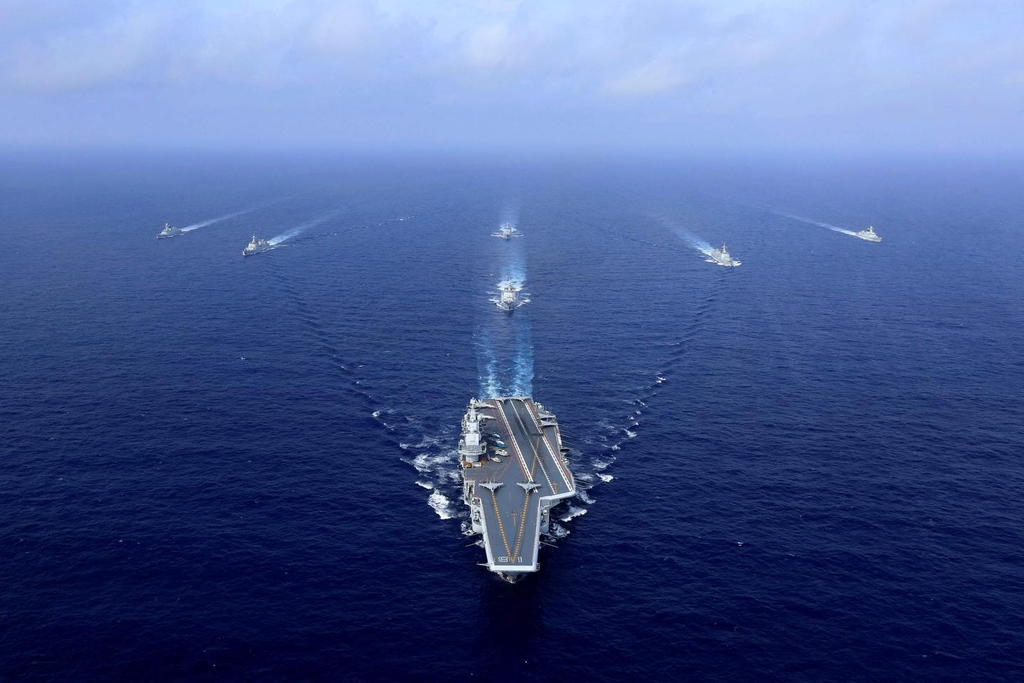
In the waters and skies surrounding Taiwan, the People’s Liberation Army continues a near-daily campaign of pressure that has become the defining feature of cross-strait relations. Taiwan’s Ministry of National Defence recorded 255 PLA aerial sorties in September 2026, with 181 entering the island’s air defence identification zone—a 47 per cent increase from the previous month, though still below the peak levels of 2025. Joint combat readiness patrols, including flights by H-6K bombers, and a sustained presence of Chinese naval and coast guard vessels, particularly east of the island, underscore Beijing’s determination to normalise its operations around what it claims as sovereign territory.
This activity occurs against the backdrop of Taiwan President Lai Ching-te’s National Day address on October 10, in which he declared that Taiwan “cherishes peace but will not give up its freedom” and framed increased defence spending as a means to deter war rather than provoke it. Beijing responded with sharp condemnation, accusing Lai of “ulterior motives” and separatist intent, while Chinese maritime authorities announced live-fire drills along the mainland coast. The United States, for its part, has described Chinese maritime actions off Taiwan’s east coast as “deeply destabilising,” highlighting the first known appearance of Chinese maritime militia vessels in those waters earlier in the year.
These developments form part of a broader pattern of grey-zone coercion that has intensified since mid-2026. Chinese coast guard and government vessels have maintained rotating patrols east of Taiwan since June, a shift from traditional concentration on the western approaches. Analysts interpret this as preparation for potential maritime quarantine or blockade scenarios that could isolate Taiwan without an immediate full-scale invasion. Cumulative government-vessel incursions into restricted waters around Kinmen, Dongsha, and other outlying areas reached dozens by September. At the same time, PLA activity briefly eased around the period of Xi Jinping’s state visit to Washington, illustrating the interplay between military signalling and high-level diplomacy.
The Taiwan question remains the most dangerous flashpoint in the Indo-Pacific. China regards unification—by force if necessary—as a core national interest and historic mission under Xi Jinping. Taiwan, a vibrant democracy of 23 million people with advanced semiconductor industries critical to global supply chains, rejects Beijing’s claims and insists on its right to self-determination. The United States maintains a policy of strategic ambiguity, providing defensive arms under the Taiwan Relations Act while officially adhering to a one-China framework that does not recognise Taiwan as a sovereign state. This delicate balance has grown more precarious as China’s military modernisation accelerates and as regional alliances deepen in response.
Historical and Strategic Context
Cross-strait tensions have deep roots. After the Chinese Civil War, the Republic of China government retreated to Taiwan in 1949. Beijing has never renounced the use of force to achieve “reunification.” Under Xi, the timeline has sharpened: the Taiwan issue “should not be passed down from generation to generation.” The PLA has undergone one of the largest peacetime military buildups in modern history, prioritising amphibious assault, anti-access/area-denial capabilities, precision strike, and naval power projection tailored to a Taiwan contingency.
Grey-zone tactics—actions below the threshold of open conflict—have become Beijing’s preferred instrument. These include frequent ADIZ incursions, coast guard patrols framed as “law enforcement,” cyber operations, economic coercion, and information campaigns. The goal, as some Taiwanese commanders have described it, resembles an “anaconda strategy”: gradual constriction that raises the costs of resistance and tests the resolve of Taiwan and its potential supporters without triggering a decisive military response.
Recent years have seen escalation in both intensity and geographic scope. Large-scale exercises in late 2025, including “Justice Mission 2025,” simulated blockades of major ports and operations east of the island—the direction from which U.S. or allied reinforcements would likely arrive. Live-fire zones, rocket launches into the strait, and coordinated air-naval-missile drills have become more frequent. By 2026, the pattern has settled into sustained pressure rather than episodic crises, with PLA aircraft and vessels operating around Taiwan on an almost continuous basis.
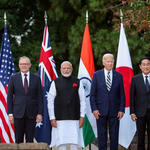
The Indo-Pacific security architecture has evolved in parallel. The Quadrilateral Security Dialogue (Quad) involving the United States, Japan, Australia, and India has expanded cooperation on maritime domain awareness, technology, and infrastructure. AUKUS, the trilateral partnership between Australia, the United Kingdom, and the United States, is advancing Australia’s acquisition of nuclear-powered submarines, a capability that could eventually contribute to undersea deterrence in the Western Pacific. Japan has revised its security posture, increasing defence spending and deepening interoperability with U.S. forces. The Philippines has expanded access for U.S. forces under the Enhanced Defence Cooperation Agreement. These developments aim to complicate Chinese calculations and raise the potential costs of aggression.
Strategic Scenarios
Analysts outline several plausible pathways for the coming years, ranging from continued coercion to high-intensity conflict. Probabilities remain contested, but consensus has shifted away from an imminent large-scale invasion toward more graduated forms of pressure, particularly in the near term through 2028.
Scenario 1: Sustained Gray-Zone Attrition and Quarantine Creep
This is widely viewed as the most probable near-term trajectory. China continues and intensifies coast guard and militia operations east and around Taiwan, normalising a persistent presence. Over time, these activities could evolve into a de facto quarantine: selective interdiction of shipping under the guise of customs or law-enforcement enforcement, disruption of undersea cables, and economic isolation measures. Taiwan’s critical supply lines—particularly energy imports and semiconductor exports—would face rising risk. The aim would be to impose cumulative costs, erode public morale, and create conditions for political concessions without crossing into open warfare. Assessments in late 2026 assign this pathway a substantial probability, with the institutionalisation of quarantine mechanisms potentially advancing before the end of 2027.
Scenario 2: Maritime Blockade or Quarantine Declaration
A more escalatory step would involve a formal announcement of a quarantine or limited blockade, backed by PLA Navy and air assets. Commercial shipping would face diversion or inspection; air traffic could be restricted. China might frame the action as a response to “separatist” provocations or external interference. Success would depend on whether Taiwan, the United States, and partners attempt to break the blockade. A failed break could demonstrate Chinese control; a successful one risks rapid escalation. Historical analogies to the Berlin Blockade or more recent maritime interdictions inform planning, but the dense commercial traffic of the Taiwan Strait and the global economic stakes raise unique complications.
Scenario 3: Limited Kinetic Action Against Outlying Islands
Seizure or isolation of Kinmen, Matsu, or Pratas (Dongsha) islands could serve as a probe of resolve. These territories lie closer to the mainland and are more vulnerable. A limited operation might be presented as a police action to “restore order,” testing whether Washington and regional partners treat it as casus belli. Escalation risks remain high if Taiwan responds forcefully or if U.S. forces become involved.
Scenario 4: Full-Scale Invasion
A major amphibious and airborne assault remains the ultimate contingency in U.S. and Taiwanese planning—the “pacing scenario” for American force design. It would require massive logistics, suppression of Taiwanese defences, and efforts to deter or defeat U.S. intervention. Most current assessments judge a large-scale invasion before 2028 as increasingly unlikely, citing incomplete PLA readiness, economic costs, and the risk of prolonged attrition. Yet the capability continues to mature, and political timelines—linked to Xi’s leadership horizon or Taiwan’s electoral cycles—could alter calculations.
Scenario 5: Accidental Escalation or Miscalculation
Daily interactions between PLA, Taiwanese, and third-party forces create constant risk of collision, misidentification, or localised confrontation that spirals. Close encounters, cyber incidents, or incidents involving fishing vessels or coast guard ships could ignite a crisis neither side fully intended. High-level diplomacy, including the Trump-Xi summits of 2026, has sought to manage this risk, but military activity continues regardless.
Longer-term scenarios through 2049 contemplate outcomes ranging from coerced political settlement under sustained pressure to protracted conflict that redraws the regional balance of power. In one trajectory, China achieves effective control of the strait and adjacent waters with limited fighting; in another, a botched invasion draws the United States and allies into a war of attrition along the first island chain; in a third, U.S. retrenchment allows Chinese primacy to expand.
Policy Responses
Deterrence and resilience form the core of responses by Taiwan, the United States, and partners.
Taiwan has accelerated defence reforms under the “Overall Defence Concept,” emphasising asymmetric capabilities: mobile anti-ship and anti-air missiles, sea mines, unmanned systems, and hardened infrastructure designed to make invasion prohibitively costly. President Lai has stressed whole-of-society resilience, including civilian training, energy stockpiles, and critical infrastructure protection. Defence spending has risen, and Taipei continues to seek advanced U.S. systems, including F-16V fighters, while developing indigenous capabilities. Public messaging emphasises that stronger defences enable dialogue from a position of strength rather than subordination.
The United States continues arms sales and training support while debating the optimal mix of clarity and ambiguity. Some strategists argue for ending strategic ambiguity in favour of clearer commitments; others caution that excessive clarity could provoke Beijing or constrain diplomatic flexibility. Force posture adjustments—dispersed basing, prepositioned munitions, long-range strike, and undersea capabilities—aim to complicate Chinese planning. Economic tools, including potential preemptive sanctions coordinated with Japan and Australia, feature in contingency planning. Technology controls on advanced semiconductors and dual-use items remain central to broader competition.
Allies and partners play expanding roles. Japan’s proximity and host-nation support for U.S. forces make it indispensable in any Taiwan contingency; Tokyo has publicly linked its own security to the status of the strait. The Philippines’ geographic position offers potential staging areas. Australia’s AUKUS submarines, once operational, could contribute to sea denial. India, while more distant and focused on its own border concerns with China, participates in Quad maritime initiatives that enhance domain awareness. South Korea faces competing pressures from North Korea but maintains alliance ties with Washington. Coordinated sanctions, intelligence sharing, and contingency planning among these actors are viewed as essential to effective deterrence.
Diplomatic channels remain active. High-level U.S.-China meetings have addressed Taiwan as a core issue, with Beijing insisting it is an internal matter and warning against external interference. Taiwan has welcomed dialogue aimed at reducing the risk of war while rejecting any framework that subordinates its future to Beijing’s terms. Regional forums and Track 1.5 dialogues seek crisis-management mechanisms, hotlines, and rules of the road to reduce miscalculation risks.
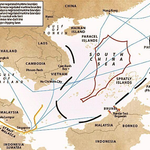
Economic interdependence complicates pure military logic. Taiwan’s semiconductor industry underpins global technology supply chains; disruption would impose severe costs on China, the United States, Europe, and Asia alike. Energy security, shipping lanes through the South China Sea and Taiwan Strait, and financial linkages create mutual vulnerabilities that both constrain and incentivise careful management.
Outlook and Implications
As of mid-October 2026, the Taiwan Strait remains tense but short of open crisis. PLA activity continues, grey-zone pressure east of the island has become routine, and political rhetoric on both sides of the strait is sharp. The United States and China manage competition through summits even as military preparations advance. Taiwan invests in resilience and deterrence while seeking to maintain international space.
The central strategic challenge is maintaining credible deterrence without triggering the very conflict it seeks to prevent. Over-deterrence risks Chinese perceptions of a closing window of opportunity; under-deterrence risks emboldening coercion. Effective policy requires synchronised military readiness, economic resilience, alliance cohesion, and calibrated diplomacy. It also requires clear-eyed recognition that the status quo is not static: China’s capabilities and political will continue to evolve, as do those of Taiwan and its partners.
The Indo-Pacific’s security architecture is being reshaped by these dynamics. Success or failure in managing the Taiwan question will influence the broader contest over maritime order, technological leadership, and the rules governing the use of force. For now, the region watches the daily sorties, the rotating patrols, the speeches, and the summits—aware that the next phase of this long-running tension could arrive through gradual erosion rather than sudden explosion, or through an incident neither capital fully controls.
The stakes—human, economic, and strategic—extend far beyond the strait itself. Stability in the Taiwan Strait underpins the prosperity and security of the wider Indo-Pacific. Preserving it will demand sustained attention, realistic assessments of risk, and policies that raise the costs of aggression while keeping pathways for peaceful management open.