

In the shifting geopolitical landscape of the mid-2020s, the Indo-Pacific has solidified its position as the world’s economic and strategic centre of gravity. Accounting for a dominant share of global manufacturing, trade, and technological innovation, the region’s supply chains underpin everything from consumer electronics and electric vehicles to advanced semiconductors, renewable energy systems, and defence platforms. Yet the vulnerabilities exposed by the COVID-19 pandemic, successive waves of export controls, and intensifying great-power competition have forced a fundamental rethinking of how these chains are organised. Efficiency and lowest-cost sourcing, long the guiding principles of globalisation, have given way to a new priority: economic security. Governments across the Indo-Pacific and their partners are now deploying strategic trade policies aimed at diversification, resilience, and reduced dependence on single-source suppliers—most notably China.
This transformation is not abstract. In October 2026, the United States and its Indo-Pacific Economic Framework (IPEF) partners announced the substantial conclusion of negotiations on a landmark Supply Chain Agreement. The deal, involving Australia, Brunei, Fiji, India, Indonesia, Japan, the Republic of Korea, Malaysia, New Zealand, the Philippines, Singapore, Thailand, and Vietnam, seeks to make regional supply chains more resilient and competitive. It establishes an IPEF Supply Chain Council to develop sector-specific action plans and an IPEF Supply Chain Crisis Response Network to serve as an emergency communications channel during disruptions. Partners will coordinate on workforce development, investment promotion, monitoring of vulnerabilities, and rapid crisis response. The agreement reflects a broader consensus that supply chain security is no longer a secondary commercial concern but a core element of national and regional strategy.
The drivers of this shift are well documented. China’s dominance in critical nodes of global production has created structural dependencies that many governments now view as unacceptable risks. Beijing controls the majority of rare earth processing, a large share of lithium refining, and substantial portions of semiconductor materials, solar modules, and battery components. When China has restricted exports of rare earths, gallium, germanium, or graphite in response to geopolitical friction, downstream industries in Japan, South Korea, the United States, and Europe have felt immediate pressure. Parallel U.S. export controls on advanced semiconductors and manufacturing equipment have further fragmented technology supply chains. The result is a world in which trade policy, industrial policy, and national security have become tightly interwoven.
The Indo-Pacific Economic Framework and Multilateral Responses
IPEF, launched in 2022, was conceived as a flexible alternative to traditional free-trade agreements. Unlike the Comprehensive and Progressive Agreement for Trans-Pacific Partnership (CPTPP) or the Regional Comprehensive Economic Partnership (RCEP), IPEF does not focus primarily on tariff reduction. Instead, its four pillars—Trade, Supply Chains, Clean Economy, and Fair Economy—emphasise standards, resilience, sustainability, and anti-corruption measures. The Supply Chain Agreement represents one of its most concrete achievements. By creating institutional mechanisms for early warning, coordinated investment, and crisis management, it aims to identify bottlenecks before they cascade into widespread shortages.
Implementation has progressed unevenly. Several members have accepted the agreement, with entry-into-force dates staggered through 2024 and beyond. Indonesia’s acceptance in late 2024, for example, left only a few partners still completing domestic processes. Technical assistance, private-sector engagement, and capacity-building activities are already underway to encourage investment in critical sectors, physical and digital infrastructure, and workforce training. Critics note that the absence of market-access commitments limits the commercial incentives for businesses to reconfigure supply chains. Supporters counter that the framework’s value lies precisely in its focus on security and coordination rather than pure liberalisation.
Complementing IPEF is the Quadrilateral Security Dialogue, or Quad—comprising the United States, Japan, Australia, and India. In 2025 and 2026, the Quad elevated critical minerals to a central pillar of cooperation. Foreign ministers launched the Quad Critical Minerals Initiative and later formalised a framework under which partners intend to mobilise up to $20 billion in public and private capital for mining, processing, and recycling projects. The initiative prioritises projects with a “Quad nexus”—those located in partner countries, operated by companies headquartered in those countries, or supplying Quad markets. Financing tools include export credit agencies, development finance institutions, guarantees, loans, equity participation, insurance, and offtake agreements.
Australia brings significant upstream resources, including lithium and rare earths. Japan contributes advanced processing expertise and long experience in diversifying away from Chinese supplies after the 2010 rare-earth dispute. India is expanding domestic mining and processing under its National Critical Mineral Mission and has approved schemes for rare-earth permanent magnets. The United States is investing in domestic capacity through the CHIPS and Science Act and related programs while pursuing strategic stockpiles such as Project Vault. Together, these efforts seek to create alternative midstream and downstream capacity that can reduce the leverage currently held by concentrated Chinese refining.
South Korea has pursued parallel national measures. In October 2026, Seoul announced plans to expand its list of economic security items from 327 to 340, focusing on semiconductors, renewable energy, and aerospace. About 100 items will receive intensive management, supported by strategic stockpiling, import diversification, and public investment. A government fund has already provided substantial financing for supply-chain projects, with additional budget allocations planned for overseas production bases and stockpiles of critical materials such as automotive-grade urea.
Sectoral Priorities: Semiconductors, Critical Minerals, and Beyond
Semiconductors illustrate both the urgency and the complexity of supply-chain security. The industry’s extreme concentration—design in the United States, advanced manufacturing in Taiwan and South Korea, equipment from a handful of specialised firms, and materials often routed through China—creates multiple single points of failure. U.S. policy has combined domestic incentives under the CHIPS Act with export controls and efforts to expand trusted allied capacity. Reports from industry associations emphasise the need for domestic capacity in materials and equipment, strategic inventories, tariff relief for specialised inputs from allies, and the development of economic corridors in partner countries such as the Philippines.
Critical minerals occupy an even more foundational position. Rare earths, lithium, cobalt, nickel, graphite, and a growing list of other elements are essential for electric vehicles, wind turbines, defence systems, and electronics. China’s near-monopoly on processing has prompted coordinated responses. The Minerals Security Partnership, Quad initiatives, and bilateral agreements (such as U.S.-Australia critical minerals arrangements) aim to accelerate non-Chinese projects. Challenges remain formidable: environmental and social standards raise costs, permitting timelines are long, processing technology is concentrated, and private capital is often reluctant without price supports or offtake guarantees. China’s own April 2026 regulations on industrial and supply-chain security, establishing key sector lists, risk monitoring, reserves, and countermeasures against foreign extraterritorial measures, signal that Beijing will actively defend its position.
Other sectors are also under scrutiny. Pharmaceuticals, active pharmaceutical ingredients, medical devices, energy components, and even textiles have featured in resilience strategies. The U.S. Trade Representative’s 2025 policy papers on supply-chain resilience outlined frameworks emphasising sustainability, security, diversity, and transparency, while exploring rules of origin, responses to non-market practices, and sectoral agreements.
Strategic Trade Policy Tools
The policy toolkit has expanded beyond traditional trade agreements. “Friend-shoring” and “ally-shoring” encourage companies to locate production in politically aligned jurisdictions. Near-shoring and regionalisation seek geographic proximity to reduce logistics risks. Governments are using investment screening, outbound investment restrictions, export controls, and preferential procurement to shape private decisions. Stockpiling of critical materials, strategic reserves, and crisis-response networks provide buffers against short-term shocks. Industrial policies—subsidies, tax incentives, and public-private partnerships—aim to rebuild domestic or allied manufacturing capacity.
These measures carry trade-offs. Higher costs of diversification can raise prices for consumers and slow the energy transition if clean-technology inputs become more expensive. Fragmentation risks creating parallel ecosystems that reduce overall efficiency and innovation spillovers. Developing economies in Southeast Asia and the Pacific face particular dilemmas: they benefit from investment inflows as firms diversify away from China, yet they risk being caught between competing regulatory regimes or subjected to secondary sanctions and tariffs. ASEAN’s traditional strategy of openness and centrality is under pressure as unilateral tariffs, export controls, and investment screening proliferate.
China’s response has been multifaceted. In addition to its own supply-chain security regulations, Beijing has accelerated domestic capacity in advanced industries, pursued dual-circulation strategies to reduce external dependence while maintaining leverage over others, and used diplomatic and commercial tools to deepen ties with resource-rich countries in the Global South. Export controls on critical minerals have been calibrated to signal costs without fully severing trade.
Regional Dynamics and Future Outlook
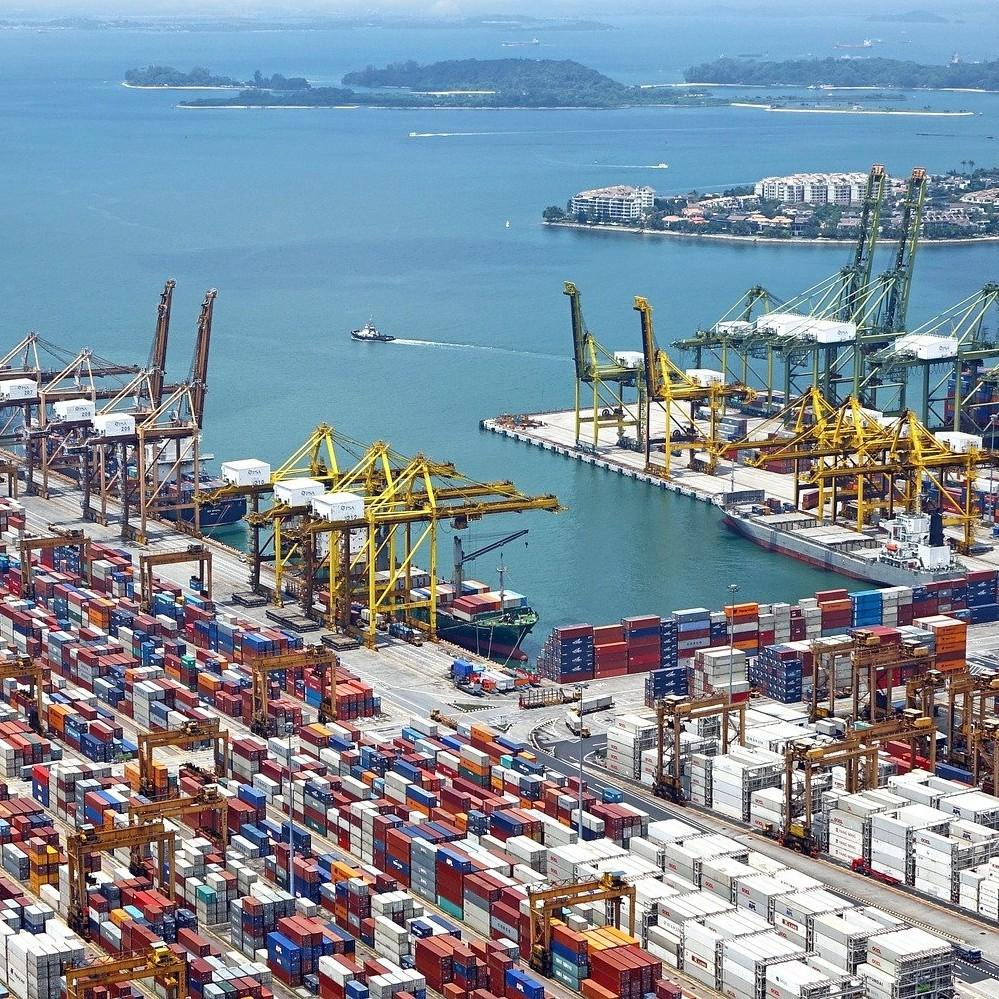
Southeast Asia occupies a pivotal position. Countries such as Vietnam, Malaysia, Indonesia, Thailand, and the Philippines have attracted substantial foreign direct investment in electronics, semiconductors, and assembly as companies implement “China+1” strategies. Indonesia’s development of strategic trade management frameworks for dual-use goods reflects efforts to balance technology imports with non-proliferation commitments and bilateral agreements. The Strait of Malacca remains a critical chokepoint for energy and trade flows, underscoring the linkage between maritime security and economic resilience.
India’s role continues to grow. As a Quad partner, a major market, and an increasingly capable manufacturing base, New Delhi is positioning itself as both a destination for diversified production and a contributor to critical-minerals processing. Its participation in IPEF and bilateral technology and minerals agreements with the United States, Japan, and Australia reflects a pragmatic approach to economic security that avoids exclusive alignment while reducing concentrated risks.
Looking ahead, several trends appear likely. Coordination among like-minded partners will deepen through existing frameworks and new minilateral arrangements. Investment in midstream processing and recycling will receive greater attention, as upstream mining alone does not solve dependence on Chinese refining. Data sharing, common standards for critical minerals, and joint stockpiling or offtake arrangements could improve collective resilience. At the same time, the risk of economic decoupling hardening into competing blocs remains real. Pure efficiency-driven globalisation has proven fragile; pure security-driven fragmentation risks higher costs and slower growth.
The substantial conclusion of the IPEF Supply Chain Agreement in October 2026, the Quad’s $20 billion critical-minerals commitment, national economic-security lists, and China’s reciprocal regulatory measures all point to the same reality: supply chains in the Indo-Pacific are being reconfigured under the logic of economic security. Strategic trade policy is no longer an occasional tool but a permanent feature of the regional order. Success will depend on whether governments can translate frameworks into bankable projects, maintain sufficient openness to preserve innovation and growth, and manage the inevitable tensions between resilience and efficiency. The stakes—technological leadership, industrial competitiveness, and the stability of the rules-based economic order—could hardly be higher.
The Indo-Pacific’s supply chains will not return to their pre-pandemic configuration. The question is whether the emerging architecture can deliver genuine resilience without sacrificing the prosperity that open trade has long generated. The policies being negotiated and implemented in 2025 and 2026 will shape the answer for decades to come.