
New Delhi, October 21, 2026 — Brent crude oil hovered near five-month highs above $110 a barrel on Wednesday as escalating tensions in the Middle East, including Houthi attacks on Saudi energy infrastructure and repeated strikes on vessels near the Strait of Hormuz, reignited fears of prolonged supply disruptions. For India, the world’s third-largest oil importer and a nation that meets nearly 88–90 per cent of its crude needs from overseas, the surge threatens higher import bills, elevated inflation risks, pressure on the current account, and potential strains on fiscal balances and growth.
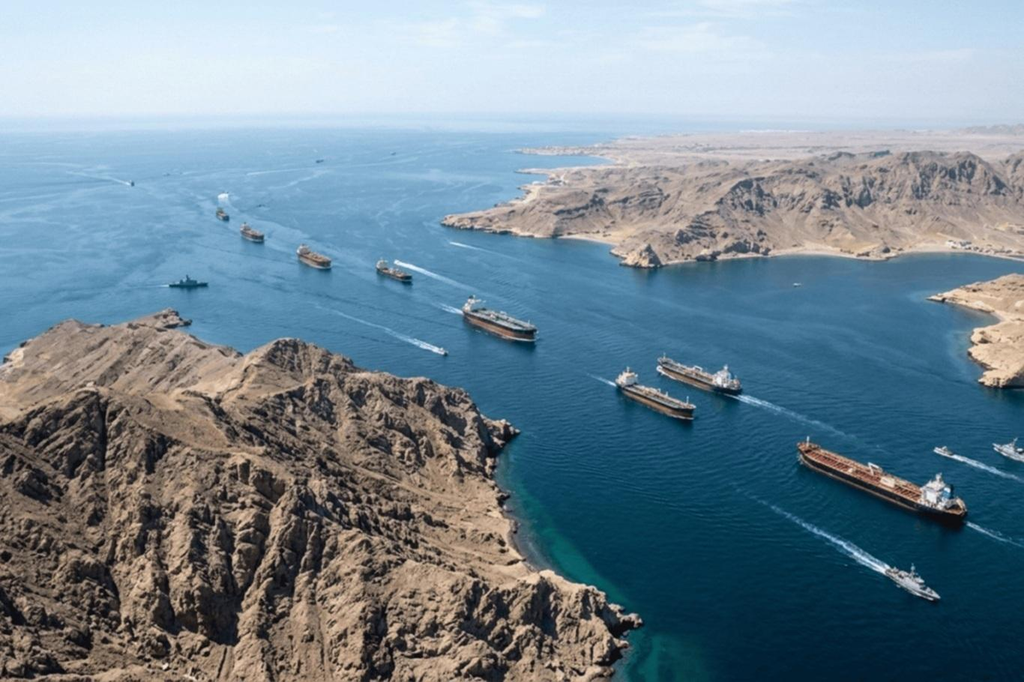
Oil markets have been unsettled for months by the lingering US-Iran confrontation, which has disrupted flows through the critical Strait of Hormuz—a waterway that previously carried about a fifth of global oil and gas supplies. Recent developments have sharpened the risk premium. Iran-aligned Houthis claimed attacks on Saudi Aramco facilities in Yanbu and the Shaybah oilfield, as well as airports in Riyadh and Abha. At least 18 vessel attacks were recorded over two weeks, with analysts noting that targeting has expanded beyond Hormuz into the Gulf of Oman, jeopardising loadings and ship-to-ship transfers. A supertanker reportedly caught fire after striking a sea mine south of the strait. Iranian officials have downplayed prospects for quick diplomatic progress with Washington, keeping markets on edge. The International Energy Agency has warned that energy markets are unlikely to normalise in 2027, with the possibility of further overlapping crises in the region.
By mid-Wednesday, Brent futures had gained more than $2 at points to trade around $110.85, while US West Texas Intermediate approached $100. Prices had earlier touched five- and six-month peaks before partial pullbacks on mediation talk reports that quickly faded. Goldman Sachs has flagged scenarios in which intensified attacks could push prices toward $120, while a return to normal flows might ease them toward $80. For energy-importing economies, the message is clear: elevated prices are likely to persist in the near term.
India’s heavy dependence and soaring import costs
India’s vulnerability is structural. Domestic crude production has been declining for years, while consumption of petroleum products has risen steadily. Import dependence stands at roughly 88 per cent on a consumption basis in the first half of fiscal 2026-27, with some estimates placing it above 90 per cent in recent full-year figures. The country now sources crude from more than 40 nations—up from 27 in earlier years—as part of a deliberate diversification strategy. Russia has remained the single largest supplier in recent months, accounting for around 35 per cent of imports in September, followed by Iraq, Saudi Arabia, the UAE and Kuwait. Together, these five supplied about 70 per cent. Nearly 70 per cent of imports reportedly arrive via routes outside Hormuz, offering some insulation from the most acute shipping risks, yet global price volatility still transmits directly into India’s costs.
The price impact is already visible in official data. India’s crude oil import bill rose 46.4 per cent to $90.6 billion in April–September 2026 from $61.9 billion a year earlier, even as volumes increased only marginally to 122.7 million tonnes. In September alone, the bill jumped 47 per cent to $15.4 billion, with the Indian crude basket averaging $116.09 a barrel—sharply higher than $69.61 a year earlier. The net oil and gas import bill climbed about 35–40 per cent in the half-year period. Petroleum now accounts for a larger share of merchandise imports, around 22–23 per cent. Every sustained $10 rise in average crude prices is estimated to add roughly $12–13 billion to the net oil import bill and widen the current account deficit by about 0.3 percentage points of GDP.
Transmission channels: inflation, current account and the rupee
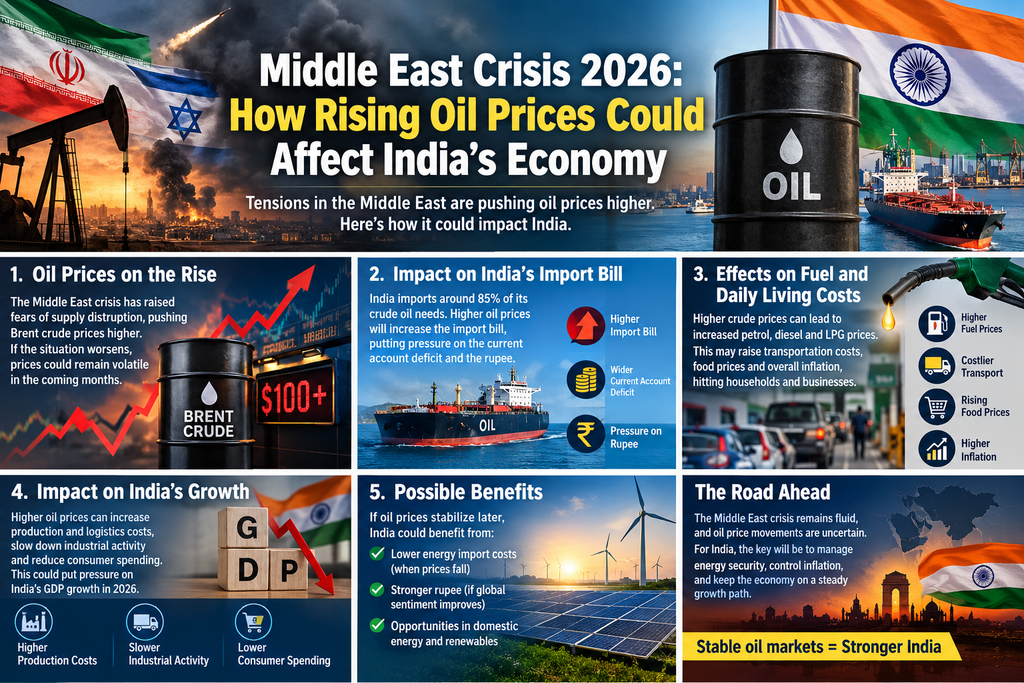
Higher crude costs feed into the economy through multiple channels. Retail fuel prices have been partially shielded so far through under-recoveries borne by oil marketing companies and government support, limiting the immediate hit to household budgets. Yet the absorption capacity is finite. Under-recoveries on diesel, petrol and LPG cylinders have mounted, and any delayed pass-through risks building inflationary pressures later. Wholesale price indices have already shown sharp increases in fuel and power components. Goods transport services inflation has run high even without full retail pass-through, as logistics firms absorb and gradually transmit costs. Analysts note that a full pass-through of recent rises could add significantly to headline consumer inflation, which has already moved higher in recent months.
The current account faces direct pressure. Strong services exports and robust remittance inflows—many of which originate in the Gulf—have provided an important cushion. World Bank estimates suggest the combined rise in services exports and remittances could exceed $50 billion year-on-year, helping offset much of the additional $55–75 billion oil and commodity import burden. Foreign exchange reserves remain comfortable at around $675 billion. Nevertheless, projections for the current account deficit in FY27 range from about 1 per cent to nearly 2 per cent of GDP under prolonged high-price scenarios, compared with lower levels in the previous year. A wider deficit increases demand for dollars and can weigh on the rupee, adding a secondary inflationary impulse through imported goods.
Growth and fiscal implications
Growth has so far proved resilient. The International Monetary Fund has projected Indian growth at around 7.4 per cent for 2026 and 7 per cent for 2027 on a calendar-year basis, supported by domestic demand and services. Private consumption remains a key driver. Yet sustained high oil prices act as a tax on real incomes and corporate margins. HDFC Bank estimates that every sustained 10 per cent rise in oil prices could shave 20–25 basis points off GDP growth. In a base case with lower oil prices, growth was seen near 7.2 per cent for FY27; higher averages near $90 or above would trim that outlook and push inflation toward 5–5.5 per cent.
Fiscal accounts are also exposed. The government has supported oil marketing companies to keep retail prices relatively stable, including substantial earlier transfers. Continued under-recoveries or the need for further support would strain the fiscal deficit at a time when the finance ministry has already flagged higher crude prices as a risk to both the deficit and the current account. Subsidy burdens on LPG and other products add to the pressure. While India’s overall fiscal position has improved in recent years, a prolonged energy shock could reintroduce trade-offs between growth support, inflation management and deficit targets.
Buffers, policy responses and diversification
India is better positioned than in past oil shocks. Diversified sourcing across 43 countries, a growing share of non-Hormuz routes, and the ability to ramp up purchases from Russia and other suppliers have reduced single-point exposure. Strong IT and business-services exports, resilient remittances, and substantial foreign-exchange reserves provide external buffers that were thinner in earlier decades. Domestic refining capacity remains a relative strength, allowing India to process imported crude and export some petroleum products, though product exports have faced volume pressure amid global disruptions.
Policy responses have focused on price stabilisation for consumers, strategic stock management, and continued diversification. The government has urged refiners to optimise inventories and has explored additional sources. Longer-term measures include efforts to expand domestic exploration, accelerate renewable energy capacity, improve energy efficiency, and build larger strategic petroleum reserves—currently viewed as relatively thin compared with some peers. Analysts and reports from institutions such as EY have repeatedly called for thicker buffers and reduced import dependence over time.
Outlook: resilience tested by duration
The critical variable is duration. A short-lived spike that resolves with de-escalation or successful mediation would produce manageable one-off costs. A multi-quarter or multi-year elevation of prices near or above $100–110 would compound the hit to the import bill, inflation trajectory, current account and growth. The IEA’s caution that 2027 is unlikely to bring normalisation underscores the risk of a longer adjustment period. Overlapping pressures from the Russia-Ukraine conflict and other supply constraints could keep the risk premium embedded in prices.
For Indian households, the near-term effects appear mainly in higher logistics and manufacturing costs rather than immediate sharp rises at the pump. For industry, input costs for chemicals, fertilisers, transport and power-intensive sectors are rising. For policymakers, the task is to balance consumer protection against fiscal sustainability while accelerating the structural shift toward cleaner energy and greater self-reliance. India’s services-led growth model and external buffers offer meaningful protection, yet the scale of oil dependence means that prolonged Middle East instability will continue to register as a material macroeconomic risk. As Brent trades near multi-month highs and diplomatic signals remain mixed, the coming months will test how effectively those buffers absorb the shock.