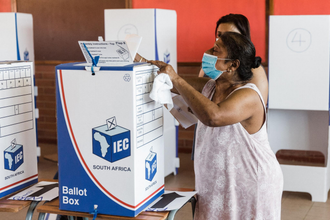

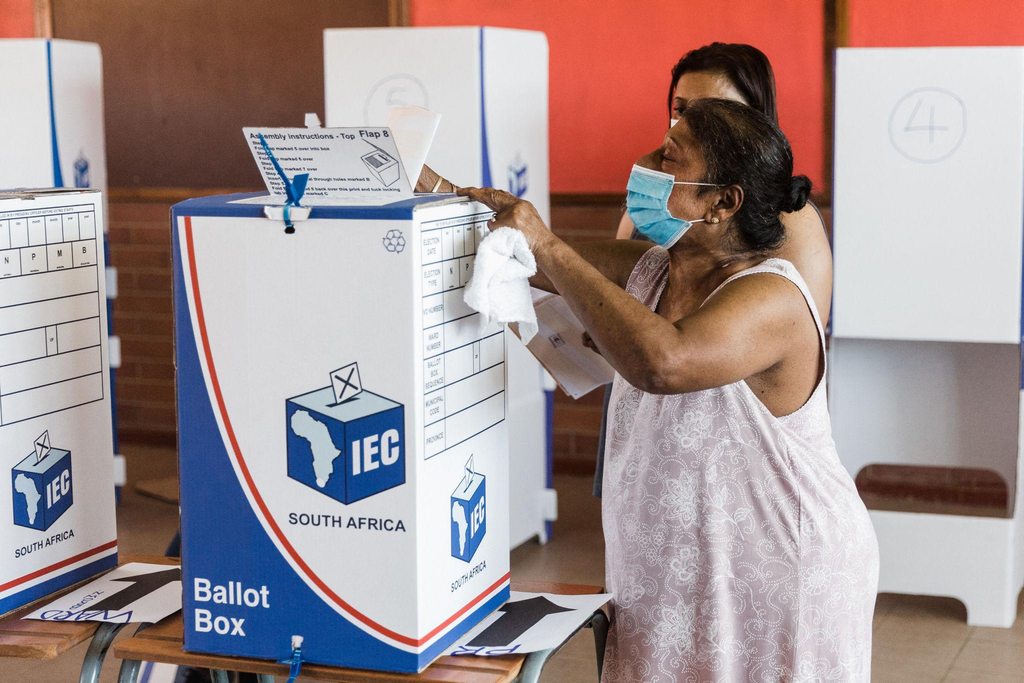
JOHANNESBURG — South Africans queued outside polling stations from early morning on Wednesday, November 4, 2026, to cast ballots in the country’s local government elections, a contest widely viewed as a critical test of the African National Congress’s (ANC) eroding grip on power more than three decades after it led the nation out of apartheid.
Polls opened at 7 a.m. local time and were scheduled to close at 9 p.m., with Wednesday declared a public holiday to encourage participation. A record approximately 29.2 million people were registered to vote at 23,696 voting stations nationwide. The Electoral Commission of South Africa (IEC) reported that more than 1.4 million special votes had already been cast on Monday and Tuesday, part of a record 2.6 million special-vote applications approved — a sharp increase from the previous local elections in 2021.
Voters are electing councillors for the country’s eight metropolitan municipalities, 44 district councils and 205 local councils. Those councils will then select mayors. An unprecedented 136,790 candidates — including independents — are contesting 10,526 council seats, reflecting both the fragmentation of South African politics and intense competition at the municipal level.
The elections come two years after the ANC lost its parliamentary majority for the first time since 1994 in the 2024 national and provincial elections. That result forced the party into a Government of National Unity with the Democratic Alliance (DA) and smaller parties, while Cyril Ramaphosa remained president. Today’s local polls are the first held under that coalition arrangement and are seen as an early indicator of voter sentiment ahead of the next national elections due by 2029.
A Liberation Movement Under Pressure
The ANC, the party of Nelson Mandela that once commanded overwhelming majorities, has watched its support steadily decline. It fell below 50 per cent in the 2021 municipal elections for the first time and recorded about 40 per cent in the 2024 national vote. Pre-election surveys suggest its support could drop further, potentially below 40 per cent and into the mid-30s.
An Ipsos Khayabus Pulse of the People survey released ahead of the elections found no party commanding majority support nationally. Among registered voters who selected a party on a simulated ballot, the ANC attracted around 30 per cent, followed closely by the DA at 28 per cent. The uMkhonto weSizwe (MK) Party, associated with former president Jacob Zuma, stood at about 12 per cent, with the Economic Freedom Fighters (EFF) on roughly 10 per cent. Smaller parties including ActionSA, the Inkatha Freedom Party and the Patriotic Alliance trailed further behind.
President Cyril Ramaphosa has acknowledged the depth of public frustration. In his weekly newsletter, he noted that “municipal failures have contributed to declining public trust and confidence in democratic governance.” Service delivery — or the lack of it — dominates the campaign conversation. Residents across cities and townships complain of intermittent water supply, unreliable electricity, crumbling roads, poor waste management and inadequate public safety. High unemployment and persistent concerns about corruption and crime have further eroded confidence in ANC-led municipalities.
In Johannesburg, South Africa’s commercial capital and largest metropolitan prize, the stakes are particularly high. The city has seen multiple mayoral changes since the last local elections and is currently governed by a fragile ANC-led coalition. The DA has fielded former party leader Helen Zille as its mayoral candidate. Zille, known for a high-profile campaign that included dramatic stunts highlighting infrastructure failures, is projected by some polls to win the largest share of votes in the metro but still fall short of an outright majority, setting the stage for complex coalition negotiations.
Similar hung councils are widely expected in other major metros including Tshwane (Pretoria), Ekurhuleni, eThekwini (Durban) and Nelson Mandela Bay. Analysts predict that coalition governments, already a feature of many municipalities since 2021, will become even more widespread. These arrangements have sometimes delivered instability rather than improved services, with frequent shifts in alliances and leadership.
Fragmentation and New Contenders
The political landscape is more crowded than ever. Hundreds of parties — reports cite more than 500 or even 600 registered entities — are contesting seats, alongside hundreds of independent candidates. This proliferation reflects both genuine local grievances and opportunistic attempts to capitalise on dissatisfaction with the major players.
The MK Party, which emerged strongly in the 2024 national elections, particularly in KwaZulu-Natal, is aiming to expand its municipal footprint. The EFF continues to mobilise around radical economic transformation messaging. ActionSA and other newer formations are competing for the protest vote in urban centres. In many wards, independent candidates are also presenting themselves as alternatives to party machines accused of patronage and inefficiency.
Security has been a concern throughout the campaign. Police recorded 20 murders involving political representatives, party members or supporters during the election period, with a number of arrests made. Authorities stepped up deployments ahead of voting day, and the IEC emphasised that campaigning is prohibited within the boundaries of voting stations.
Logistics, Access and Turnout Questions
The IEC has described itself as fully prepared. Approximately 188,000 electoral officials were deployed. Voters must cast ballots only at the station where they are registered and must present a valid identity document — a smart ID card, green barcoded ID book or temporary identity certificate. The Commission partnered with major digital platforms to counter disinformation and conducted audits of its results system after technical issues in the previous national election.
Special voting was designed to accommodate those unable to attend on election day due to work, illness, disability or age. The surge in applications was attributed in part to greater awareness and logistical improvements. Home visits formed a significant portion of the special-vote process.
Turnout remains a critical variable. Only about 65 per cent of eligible adults (roughly 44.9 million people aged 18 and over) are registered. Past local elections have seen lower participation than national ones. If turnout mirrors 2021 levels, fewer than 13 million voters might participate; higher engagement closer to 2024 national figures could push the number above 16 million. Analysts note that many South Africans express alienation, with nearly half of eligible voters in one survey saying no party represents their views.
Broader Implications
These elections will not change the national government. They will, however, reshape the day-to-day governance of cities and towns that deliver the most visible public services. Outcomes will also influence the balance of power within the national Government of National Unity and set the tone for the longer road to 2029.
For the ANC, a further significant drop in support would intensify internal debates about strategy, leadership and the party’s ability to reconnect with voters who once saw it as the natural vehicle of liberation. For the DA, gains in metros would strengthen its claim to be the primary alternative and test its capacity to govern in coalition environments. For the MK Party and EFF, the results will measure whether their 2024 national performances can be translated into sustained local presence.
Coalition politics is no longer an exception; it is rapidly becoming the norm. The quality of those coalitions — whether they prioritise service delivery or dissolve into endless renegotiation — will determine whether voters’ frustration produces better governance or deeper disillusionment.
As queues formed under the early November sun in informal settlements, townships and suburban streets, the central question remained practical rather than ideological: which parties and candidates can restore reliable water, electricity, safety and basic dignity in communities long neglected. The ballots cast on November 4 will begin to answer that question, even if final results are only expected later in the week, and the real test of governance will unfold over the next five years.
The liberation movement that once seemed unassailable now faces a fragmented electorate and a political system that rewards neither nostalgia nor ideology alone. Service delivery, competence and accountability have become the decisive currencies of South African local democracy. How voters choose to spend those currencies on this election day will shape the country’s municipal landscape — and test the resilience of its democracy — for years to come.