

Madrid, November 4, 2026 — Spanish Transport Minister Óscar Puente announced his resignation on Tuesday, November 3, six days after a high-speed train collision near the town of Urda in Castilla-La Mancha that killed 69 people and injured around 200 others. The crash, which occurred on the Madrid-Seville line on October 28, marked the second major rail disaster in Spain in under a year and has plunged the country’s high-speed rail network into a profound crisis of public confidence.
Puente made the announcement at the end of a lengthy appearance before lawmakers in Congress, where he had faced intense questioning over the disaster and outlined new safety measures. “A transport minister in a country like Spain cannot remain in office after two accidents of this seriousness in less than a year,” he said, referring also to a January crash on the same line in Adamuz, Andalusia, that killed 46 people. He added that he was withdrawing his name from the candidate lists for the early general elections scheduled for November 29.
The minister stated that he had decided to resign in the first minutes after learning of the October 28 tragedy but remained in post to coordinate the initial emergency response, begin investigations, and put in place immediate compensation and safety steps. Prime Minister Pedro Sánchez praised Puente’s decision, describing it as an act of “dignity” taken of his own accord and out of respect for the victims. Sánchez noted that Puente had “faced up to the situation, provided answers and solutions, and then stepped aside.”
The October 28 Collision
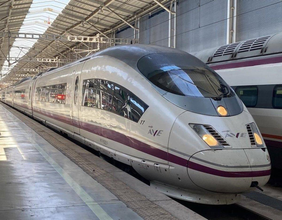
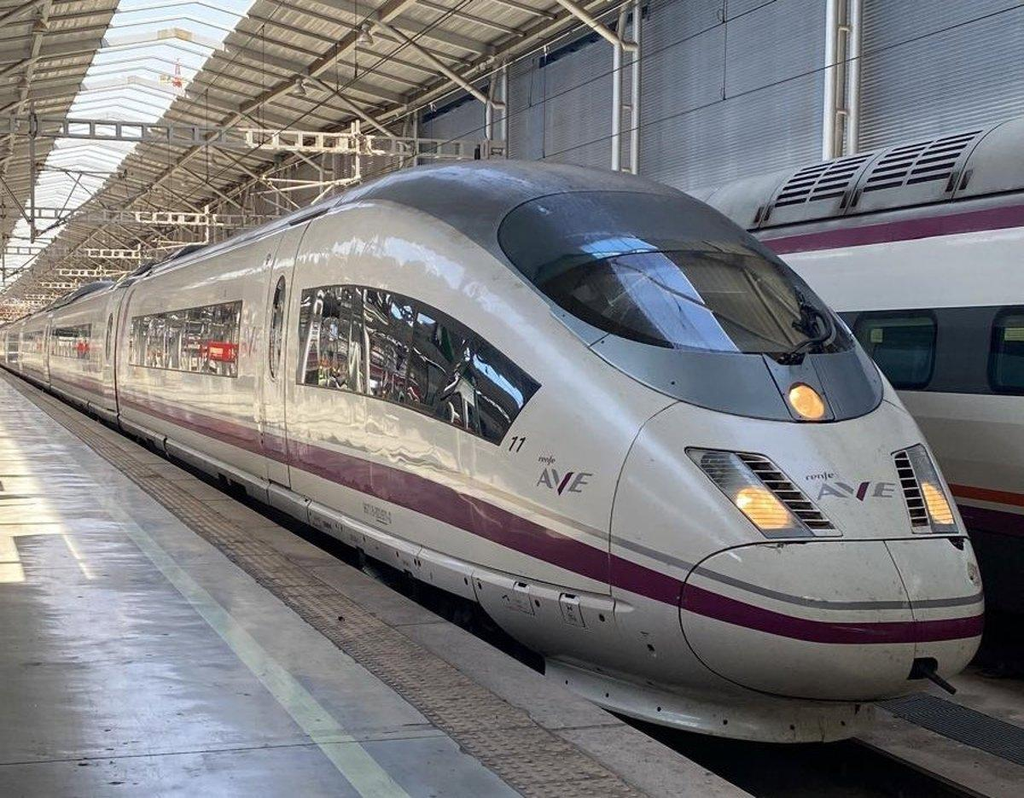
The disaster unfolded on a stretch of the Madrid-Seville high-speed line near Urda, roughly 130 kilometres south of Madrid. A Renfe-operated high-speed train carrying 397 passengers slammed into the rear of a stationary Iryo train that had 147 passengers on board. The impact occurred at significant speed after an automatic signalling and safety system failure had brought trains to a halt along a section of track measuring approximately 63 kilometres (or about 39 miles in some reports).
Central controllers in Madrid assumed manual control following the system failure. Despite a red signal and knowledge that the Iryo train remained stationary, the Renfe service was authorised to proceed under a backup system known as Lateral Signalling Block. Leaked audio recordings of conversations between drivers and controllers, published in Spanish media, have intensified scrutiny of the decision-making process. In the recordings, a controller can be heard instructing the Renfe driver to continue at normal speed, while the Iryo driver reported that the train would not allow control of the security system and remained stopped.
Several carriages left the tracks, with some tumbling down an embankment. Rescue operations involved heavy lifting equipment to reach trapped passengers. Of the 69 people killed, 54 were Spanish nationals. Others included four US citizens, two Australians, two Japanese nationals, and individuals from Canada, France, Czechia, Portugal, Argentina, Mexico, and Tunisia. No minors were among the dead. Dozens of the injured remained in hospital days later.
The crash ranks among Europe’s worst rail disasters in recent decades and is Spain’s deadliest since the 2013 Santiago de Compostela accident.
The January Precedent
The October tragedy came less than ten months after a high-speed collision in Adamuz, Andalusia, in January 2026. That incident, also on the Madrid-Seville corridor, killed 46 people when two trains collided. Investigations into the earlier crash were still ongoing at the time of the second disaster. Together, the two accidents claimed 115 lives and shattered the reputation of Spain’s high-speed network, long promoted as a national success story and the second-largest in the world after China’s.
Spain pioneered high-speed rail in Europe with the opening of the Madrid-Seville AVE line in 1992. For decades, the system enjoyed a strong safety record. Liberalisation of the market in 2021 allowed private operators such as Iryo to compete with state-owned Renfe, increasing passenger numbers and frequency. Critics argue that investment in maintenance, signalling upgrades, and staff working conditions has not kept pace with the growth in traffic.
Political Fallout and Public Outrage
Puente’s position came under immediate pressure after the October 28 crash. The main opposition People’s Party (PP) and the far-right Vox party demanded his resignation, as did some of the government’s parliamentary allies and rail unions. Protesters gathered outside the Transport Ministry, and unions criticised the minister for appearing to place primary responsibility on a single control-centre operator.
Puente had initially resisted calls to step down. In a press conference days after the crash, he insisted that his duty was to resolve the problems rather than discuss his own position, and that the “easy thing” would have been to leave. By Tuesday, however, the political and moral pressure had become untenable. His resignation removes a high-profile figure from Sánchez’s government just three weeks before snap elections called amid other political difficulties, including corruption scandals and local election setbacks.
The rail disasters have overshadowed the election campaign. Opinion polls already showed Sánchez’s Socialists trailing, and the loss of public trust in a flagship infrastructure network is widely viewed as a further blow.
Safety Measures and Compensation
Before announcing his resignation, Puente detailed a package of immediate and longer-term safety reforms. Services on the Madrid-Seville line have been reduced while the Railway Safety Agency reviews systems. The government has committed to accelerating the delayed full implementation of the European Rail Traffic Management System (ERTMS), a modern standardised signalling platform.
Additional measures include new software for control centres that issues automatic alerts for anomalies, and an artificial-intelligence agent designed to monitor conversations between drivers and controllers and reduce the risk of human error. Puente said Spain would be the first country to deploy such an AI safety mechanism. In cases where the automatic system is down, a second operator will be required to confirm any decision to allow a train to proceed. Working conditions for control-centre staff, including rest periods and fatigue monitoring, are also to be reformed.
An aid package of €30 million has been allocated for victims and families. Bereaved relatives are to receive €72,121 in direct aid plus an equal amount in advance compensation.
Broader Questions for Spain’s Rail Network
The twin disasters have raised deeper questions about the resilience of Spain’s high-speed system. Unions, including the train drivers’ organisation Semaf, have pointed to deteriorating working conditions and the continued reliance on “degraded” or backup systems. They have called strikes in November. Safety experts and opposition politicians argue that rapid expansion and market liberalisation outstripped investment in technology, training, and maintenance.
Spain’s high-speed network remains a source of national pride and an important economic asset, carrying millions of passengers annually and connecting major cities at speeds exceeding 300 km/h. Restoring public confidence will be a central challenge for Puente’s successor and for whichever government emerges after the November 29 elections.
Investigations into both the October and January crashes continue. Judicial authorities, the Railway Safety Agency, and technical experts are examining the precise sequence of technical failures, human decisions, and systemic shortcomings. The leaked audio recordings are expected to feature prominently.
For the families of the 115 people killed in the two disasters and the hundreds injured, the ministerial resignation offers a measure of political accountability but little consolation. Many have called for thorough, independent inquiries and structural reforms rather than symbolic gestures. As Spain prepares for elections against the backdrop of these tragedies, the future of its once-celebrated high-speed rail system hangs in the balance.
The government has vowed to press ahead with safety upgrades regardless of the political transition. Whether those measures will be sufficient to prevent further loss of life and rebuild trust remains the defining question facing Spanish transport policy in the months ahead.