

New Delhi / London | November 5, 2026
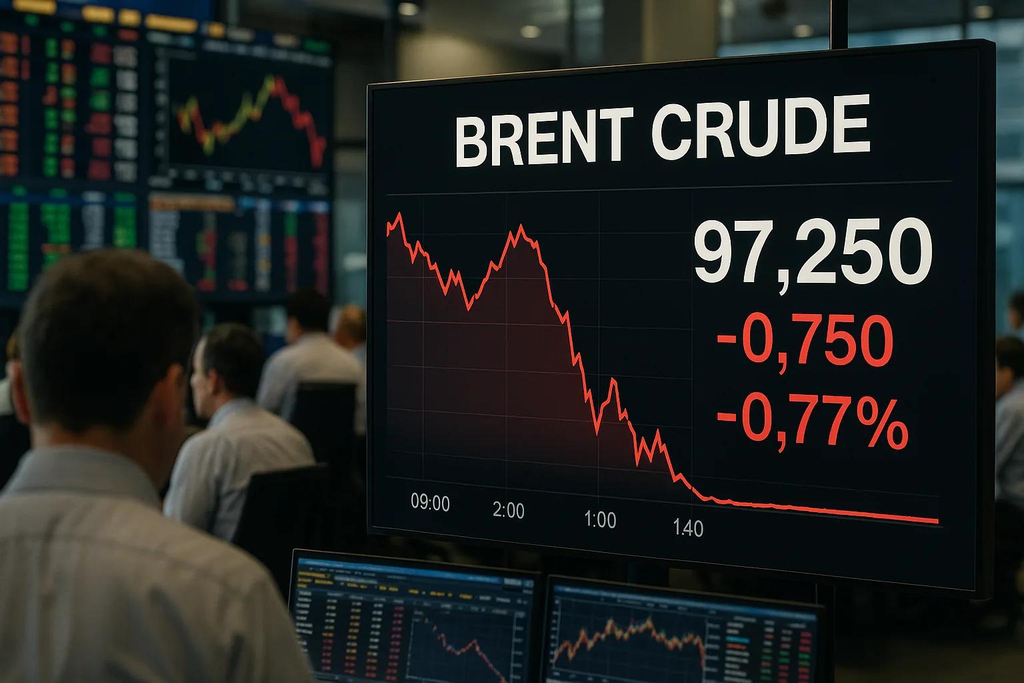
Brent crude oil, the global benchmark, has tumbled below the psychologically important $100-a-barrel mark, trading in the mid-$90s range in early November 2026 after one of the sharpest weekly declines in recent months. Prices that hovered near $117–$120 in late October plummeted as markets priced in reduced geopolitical risk following the US midterm elections. The drop offers meaningful relief to oil-importing economies, particularly India, while reshaping the outlook for inflation, currencies, fiscal balances, and equity markets worldwide.
As of November 5, Brent was fluctuating around $93–$96 per barrel after a single-session plunge of nearly 9% that took it below $95, its lowest levels in roughly two months. West Texas Intermediate (WTI) similarly retreated toward the high $80s. The benchmark had climbed sharply earlier in 2026 amid Middle East tensions, including disruptions linked to the US-Iran conflict and concerns over the Strait of Hormuz, pushing prices well above $110 and at times higher. The recent correction erased a substantial portion of those gains in a matter of days.
Drivers Behind the Sharp Decline
The primary catalyst has been shifting expectations around US-Iran tensions. Results from the US midterm elections, which delivered gains for Democrats and setbacks for Republicans, have raised hopes that the bargaining dynamics in any potential peace or de-escalation talks could change. Analysts, including those at Nomura, noted that Iran may become more willing to negotiate under the new political landscape. Reduced risk of prolonged supply disruptions or further escalation has stripped away much of the geopolitical premium that had been embedded in prices.
Supporting factors include signs of recovering crude exports from the Persian Gulf and persistent concerns about global demand. The International Energy Agency and other forecasters had already highlighted weakness in oil consumption driven by high fuel prices, economic headwinds in parts of the world, and demand destruction in certain markets. While physical balances remained tight earlier due to regional disruptions, the rapid reassessment of supply risks has dominated trading. Markets are now more focused on the possibility of additional barrels becoming available if diplomatic progress materialises.
Volatility remains elevated. Oil prices in 2026 have swung in wide ranges—from lows near $60 early in the year to peaks above $118—reflecting the interplay of geopolitics, inventory draws, and shifting demand forecasts. The latest move underscores how quickly sentiment can reverse when political signals shift.
Immediate Implications for India
India stands among the biggest beneficiaries. The country relies on imports for roughly 90% of its crude oil needs, making it highly sensitive to international price swings. A sustained decline directly shrinks the import bill, eases pressure on the current account deficit (CAD), supports the rupee, and reduces inflationary risks.
Every $1 drop in the average crude price is estimated to reduce India’s annual oil import bill by around ₹18,000 crore. With prices having fallen significantly from recent peaks, the cumulative savings for the current fiscal year could be substantial if the softer trend holds. Data from earlier in the year showed the crude import bill already elevated—rising sharply in percentage terms amid higher prices—making the recent correction particularly timely.
Lower oil prices reduce the dollar demand from oil marketing companies (OMCs) and refiners, which helps the rupee. The currency has shown resilience and even strengthened in response, trading near levels that ease some of the earlier pressure. A stronger or more stable rupee further dampens imported inflation. For the Reserve Bank of India, the development provides breathing room ahead of policy decisions. Markets have scaled back expectations of aggressive rate hikes, though food inflation and the need to maintain positive real rates still keep a measured path in focus.
Domestic fuel prices at the pump have remained largely unchanged for months in many markets, with oil marketing companies absorbing losses or managing margins. Softer crude should improve their under-recovery positions and potentially create space for future price adjustments or reduced fiscal support. Corporate earnings in oil-sensitive and broader consumption-driven sectors stand to benefit from lower input costs and improved consumer purchasing power.
Equity markets have responded positively. Falling crude is viewed as a clear macroeconomic positive that can improve the earnings outlook for many listed companies and encourage foreign investor interest. Analysts have linked softer oil to better prospects for the Nifty and broader market recovery, provided the decline proves durable.
India has actively diversified its crude sourcing amid earlier disruptions, expanding suppliers beyond traditional Middle East volumes and maintaining purchases from Russia and other origins, including increased volumes from places such as the UAE and Venezuela in certain periods. This flexibility, combined with strategic reserves and high refining utilisation, has helped avoid shortages even when global logistics were strained. Lower prices now reinforce that resilience by improving affordability.
Broader Effects on the Global Economy
For the global economy, cheaper oil acts as a mild stimulus for net importers. Lower energy costs feed through to transportation, manufacturing, and household budgets, supporting consumption and helping central banks in their fight against inflation. Countries in Asia, Europe, and other import-dependent regions stand to see reduced pressure on trade balances and somewhat easier monetary policy paths than would otherwise have been the case.
Oil-exporting nations and companies face the opposite dynamic. Reduced revenues can constrain fiscal space in producer economies and pressure energy-sector profitability and investment plans. OPEC+ producers and independent producers will watch whether the price correction stabilises or continues, influencing future production decisions. If de-escalation in the Middle East allows more supply to reach markets while demand remains soft, the downside risk to prices could persist.
Inflation trajectories should moderate. Energy has been a major contributor to price pressures in many economies during the elevated phase of 2026. A meaningful and sustained drop in crude and refined product prices would ease headline inflation, potentially allowing some central banks greater flexibility. However, the pass-through is not instantaneous, and other factors—food prices, services inflation, and wage dynamics—will continue to shape overall inflation outcomes.
Demand-side effects are mixed. While lower prices can eventually stimulate consumption, the recent period of high prices and economic uncertainty has already caused some demand destruction. Forecasts of softer global oil demand growth in 2026 reflect these headwinds. A more stable, lower price environment could support a gradual recovery in consumption later, particularly if geopolitical risks continue to recede.
Risks and the Outlook Ahead
The decline is not without caveats. Geopolitical risks have not disappeared entirely. Any setback in diplomatic efforts, renewed escalation, or unexpected supply outages could quickly reverse the price drop. Inventory levels in key regions remain a watchpoint; earlier draws left stocks relatively tight in some areas. Global growth uncertainties and the path of major economies will also influence the balance.
For India specifically, the benefits are clearest if prices settle into a lower range rather than rebounding sharply. Sustained levels closer to $90 or below would deliver larger cumulative savings on the import bill, stronger support for the CAD and rupee, and more meaningful relief on inflation and corporate costs. Conversely, a return toward previous highs would reintroduce the familiar pressures on macros and policy.
Analysts differ on the medium-term floor. Some see scope for prices to test lower levels if supply recovers meaningfully and demand stays soft; others emphasise that underlying physical tightness and the need for investment in future production provide a floor. The evolution of US-Iran dynamics, Russian supply flows, Chinese demand, and OPEC+ policy will be decisive.
A Welcome Window of Relief
The fall of Brent crude below $100 marks a significant shift in the energy market narrative of 2026. After months in which high prices complicated macroeconomic management for importers, the recent correction provides a window of relief. For India—the world’s third-largest oil consumer and a heavily import-dependent economy—the implications span the current account, currency, inflation, fiscal arithmetic, corporate profitability, and market sentiment.
Globally, lower oil prices function as a redistributive force, easing burdens on consumers and importers while challenging producers. Whether the move proves durable will depend on diplomacy, supply responses, and the strength of demand recovery. For now, markets and policymakers in oil-importing nations are treating the development as a clear positive, watching closely to see if the softer price environment can be sustained.
The coming weeks will test whether post-election hopes translate into lasting de-escalation and whether the physical market can absorb any additional supply without further sharp swings. In the interim, the decline offers India and other major importers a valuable respite in an otherwise complex global energy landscape.