
Global equity markets delivered a striking divergence on November 4–5, 2026, as broad stock indexes climbed on reduced political uncertainty and a sharp drop in oil prices, even as segments of the technology sector—particularly semiconductors and artificial intelligence infrastructure plays—came under sustained pressure. The contrast highlighted a clear rotation underway: investors embraced risk assets outside the most expensive corners of the AI trade while reassessing the pace and regulatory risks surrounding the multi-trillion-dollar data-centre buildout that has dominated markets for much of the year.
In the United States, Wednesday’s session produced one of the strongest performances in months. The Dow Jones Industrial Average surged approximately 1,569 to 1,575 points, or about 3 per cent, to close near 53,356–53,362—its best single-day gain since April 2025. The S&P 500 advanced roughly 1.58 per cent to around 7,688–7,689, while the Nasdaq Composite rose about 1.44 per cent to approximately 25,736. The Russell 2000 of smaller companies also participated, gaining around 1.5–1.6 per cent. Nine of the eleven primary S&P 500 sectors finished higher, led by consumer discretionary (up more than 4 per cent) and financials. Energy stocks were the clear laggard, declining nearly 5 per cent as crude prices collapsed.
The catalyst was the decisive Democratic victory in the U.S. midterm elections. Democrats secured control of both the House and Senate, ending unified Republican control of Washington under President Donald Trump. Markets interpreted the outcome as reducing the risk of abrupt policy swings while raising the likelihood of legislative gridlock. Historically, equities have tended to perform well in the months following midterms regardless of the winner; this time the clarity itself removed a major source of uncertainty that had hung over trading in the preceding sessions.
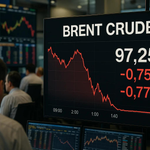
Compounding the positive sentiment was a dramatic decline in oil prices. Brent crude and West Texas Intermediate futures fell 8–9 per cent overnight, with WTI settling near $88 per barrel and Brent dropping below $100 and later trading in the mid-$90s or lower. The plunge followed comments linking the election results to pressure for de-escalation in the conflict with Iran and hopes that the Strait of Hormuz could see restored flows. Lower energy costs ease inflationary pressures, support consumer spending, and improve margins for airlines, retailers, and other energy-sensitive industries—exactly the sectors that led the advance. Treasury yields also eased, providing an additional tailwind for equities.
Yet the technology sector told a more complicated story. Large-cap “hyperscalers”—Microsoft, Amazon, Alphabet, Meta Platforms, and Apple—posted strong gains, in some cases adding tens or hundreds of billions of dollars in market value. Amazon jumped as much as 7–8 per cent, Apple approached or hit record highs with gains near 7 per cent, and Microsoft advanced several percentage points. Investors reasoned that tighter scrutiny of new data-centre construction would favour the incumbents that already possess substantial capacity and scale. Slower industry-wide capital expenditure could also relieve pressure on free cash flows that have turned negative at several firms amid the AI infrastructure race. Collectively, the five companies were on track to add more than $750 billion in market capitalisation if the moves held.
In contrast, pure-play semiconductors, data-centre developers, and certain AI infrastructure names faced heavy selling. The Philadelphia Semiconductor Index declined, Nvidia slipped, and smaller data-centre and “neocloud” operators suffered steeper losses—some double-digit. Fears centred on Democratic opposition to the rapid proliferation of power- and water-intensive data centres, particularly after wins in states such as Texas that host major projects. Local community backlash over electricity costs, environmental impact, and noise has already been growing; a friendlier regulatory environment for restrictions could slow the breakneck pace of AI-related investment that has powered the sector for two years.
This split within technology extended globally on Thursday. In Asia, markets bifurcated sharply. South Korea’s Kospi index slumped 4–5 per cent or more, at times triggering trading halts, as Samsung Electronics and SK Hynix fell 5–9 per cent on concerns that slower U.S. data-centre expansion would hit memory and logic chip demand. Japan’s Nikkei 225 declined about 1.5–1.8 per cent even though a majority of its constituents rose; heavyweight chip-equipment makers such as Advantest, Lasertec, and Tokyo Electron dropped 9–15 per cent, dragging the index lower. SoftBank also suffered. Taiwan’s market similarly weakened.
China and Hong Kong moved in the opposite direction. The Shanghai Composite rose more than 2 per cent in the prior session and held gains, while the Hang Seng advanced 1.6–3 per cent and the Hang Seng Tech Index surged over 5 per cent. Alibaba, Tencent, and Baidu each gained roughly 5–6 per cent. Investors appeared to rotate into Chinese technology names on expectations that constrained overseas chip supply and potential U.S. regulatory friction could boost domestic alternatives. India’s markets also opened strongly, with the Sensex and Nifty rising more than 1.5–2 per cent in early trade, helped by the global risk-on tone, lower oil (beneficial for a major importer), and strength in financials and autos.
European equities participated in the broader advance. The Stoxx Europe 600 climbed toward two-month highs with gains around 1.8 per cent in the wake of the U.S. results, supported by banks, luxury names, and renewables. Mining and energy shares were softer, consistent with the oil price drop. Overall, the regional picture reinforced a global rotation away from the most crowded AI and semiconductor trades toward cyclicals, financials, consumer stocks, and select emerging-market technology.
Several structural factors explain why broader stocks could rise while technology faced pressure. First, the AI trade had become highly concentrated and expensive. After years of extraordinary gains, any sign that the infrastructure buildout might slow—whether from regulation, power constraints, or questions about return on capital—prompted profit-taking in the most leveraged names. Second, lower oil prices and expectations of political moderation improved the outlook for the non-tech majority of the market. Consumer discretionary and financial stocks benefited from the prospect of steadier growth and potentially less aggressive monetary tightening. Third, the midterm outcome itself reduced tail risks of extreme policy moves while introducing the possibility of checks on rapid AI expansion, a development markets priced as net positive for incumbents and net negative for pure growth stories dependent on unchecked capacity growth.
Analysts noted that the hyperscalers’ resilience partly reflected their dual identity: they are both the primary funders of the AI buildout and the companies best positioned if that buildout moderates. Existing data-centre footprints become more valuable in a capacity-constrained world, and reduced capital intensity can restore free-cash-flow generation that investors had begun to question after recent earnings reports. Smaller players and specialised semiconductor equipment firms lack the same buffers.
Looking ahead, markets will watch several variables closely. The durability of the oil-price decline depends on actual progress toward de-escalation in the Middle East. Any renewed escalation could reverse the energy tailwind. On the regulatory front, the extent to which newly empowered Democrats pursue concrete limits on data-centre permitting and energy use will determine how long the pressure on AI infrastructure stocks persists. Earnings from remaining technology heavyweights, including Nvidia later in the month, will provide fresh data on demand trends. Finally, the Federal Reserve’s path remains relevant; lower energy prices and reduced policy uncertainty could ease the case for further tightening, supporting valuations across equities.
For now, the message from global markets is one of selective risk appetite. Investors are willing to own stocks—particularly those tied to consumption, financial intermediation, and established technology platforms—but they are no longer treating every AI-adjacent company as a one-way bet. The rotation underway is a classic late-cycle response to stretched valuations and shifting political realities. Whether it marks a healthy broadening of the bull market or the beginning of a more sustained correction in the AI complex will depend on how quickly the regulatory and geopolitical uncertainties resolve in the weeks ahead.
The simultaneous rise in major indexes and pressure on technology shares therefore reflects not contradiction but discrimination. Markets are rewarding reduced uncertainty and lower energy costs while demanding greater clarity on the sustainability and political acceptability of the AI infrastructure boom that has defined the past two years of equity performance. In that sense, November 5, 2026, offered a clear illustration of a market learning to differentiate within the very sector that has driven so much of its recent gains.