


Bitcoin and Ethereum Price Today, November 6, 2026: Latest Cryptocurrency Market Trends, Global Market Outlook and Investor Sentiment
The global cryptocurrency market is experiencing another period of uncertainty on November 6, 2026, as Bitcoin (BTC) and Ethereum (ETH), the world’s two leading cryptocurrencies, face renewed selling pressure following a volatile week of trading.
After recovering from recent lows amid improving investor sentiment following the United States midterm elections, major digital assets are once again showing signs of weakness. The latest Indian market snapshot indicates that Bitcoin and Ethereum have both registered significant declines, highlighting the fragile nature of the ongoing cryptocurrency recovery.
According to the latest available price information published by The Economic Times at approximately 1:34 a.m. on November 6, Bitcoin was trading at around ₹72,00,744, down 4.56% over the reported 24-hour period. Ethereum was trading at approximately ₹2,13,094, registering a decline of 6.16%. ET Markets
The latest movement comes after a recovery in which Bitcoin moved back above the psychologically important $80,000 level and Ethereum approached $2,400. The rebound followed changing political expectations in the United States, a recovery in global financial markets and substantial liquidations of bearish cryptocurrency positions.
However, the latest price weakness suggests that investors are still cautious about committing fresh capital to digital assets.
For cryptocurrency investors, traders and market observers, the central question is whether Bitcoin and Ethereum can establish a sustainable recovery or whether the market is preparing for another correction.
The answer will depend on several important factors, including institutional investment, spot Bitcoin and Ethereum exchange-traded fund (ETF) flows, US Federal Reserve policy, global economic conditions, regulatory developments and overall investor demand.
1. Bitcoin price today: BTC struggles to maintain its recovery


Bitcoin continues to dominate the cryptocurrency market, accounting for a substantial share of the total value of digital assets. Its price movements frequently influence the direction of other cryptocurrencies, including Ethereum, XRP, Solana and several smaller digital tokens.
The latest market developments indicate that Bitcoin is facing a challenging trading environment.
The cryptocurrency experienced considerable volatility during the first week of November. Before the latest decline, BTC had recovered from levels below $76,000 and moved above $80,000.
On November 5, Bitcoin was reported trading around $80,361 during the recovery, gaining approximately 2.63% over 24 hours. The improvement was accompanied by a broader increase in cryptocurrency market capitalisation. The Economic Times
However, the Indian price snapshot available early on November 6 showed a 4.56% daily decline, demonstrating how quickly sentiment can change in the digital asset market.
Why is Bitcoin experiencing volatility?
Several factors are influencing Bitcoin’s latest price movements.
1. Institutional investment and ETF activity
Institutional investors have become increasingly important participants in the Bitcoin market.
The introduction and expansion of spot Bitcoin ETFs have created additional opportunities for traditional financial institutions, asset managers and individual investors to obtain exposure to Bitcoin through regulated investment products.
However, ETF flows can also create selling pressure.
Recent reports indicated that US-listed spot Bitcoin ETFs experienced approximately $515 million in outflows during October and a further similar amount in the first two trading days of November. This weakened the immediate outlook for institutional demand. CoinDesk
Investors are therefore monitoring daily ETF flows to determine whether large financial institutions are returning to the market or reducing their cryptocurrency exposure.
2. US political developments
The United States remains one of the most influential markets for global cryptocurrency trading.
The November 2026 midterm election results have contributed to market volatility. Political uncertainty initially encouraged investors to reduce exposure to risk-sensitive assets.
As election results became clearer, cryptocurrency markets experienced a recovery.
Bitcoin moved higher as traders reassessed the political outlook and broader financial market conditions.
Nevertheless, political developments alone cannot guarantee a sustained Bitcoin rally.
Investors will also examine future legislative decisions, regulatory policies and the direction of the US government’s approach towards digital assets.
3. Interest rate expectations
The US Federal Reserve’s monetary policy remains another important factor.
When interest rates remain high, investors may prefer comparatively lower-risk assets that provide predictable returns.
When expectations shift towards lower interest rates, some investors become more willing to purchase risk-sensitive assets such as Bitcoin.
Recent market commentary has highlighted uncertainty surrounding the Federal Reserve’s December policy decision. This uncertainty could influence cryptocurrency investment flows in the coming weeks. tmgm-apac.com
4. Profit booking and leveraged trading
Bitcoin is also influenced by traders using borrowed money to increase their market exposure.
When prices rise rapidly, leveraged traders may increase bullish positions. However, sudden declines can trigger automatic liquidations.
These liquidations sometimes accelerate price movements because exchanges close positions when traders fail to maintain the required margin.
Consequently, Bitcoin can experience sharp movements even when there is no major change in its long-term fundamentals.
2. Ethereum price today: ETH faces stronger selling pressure

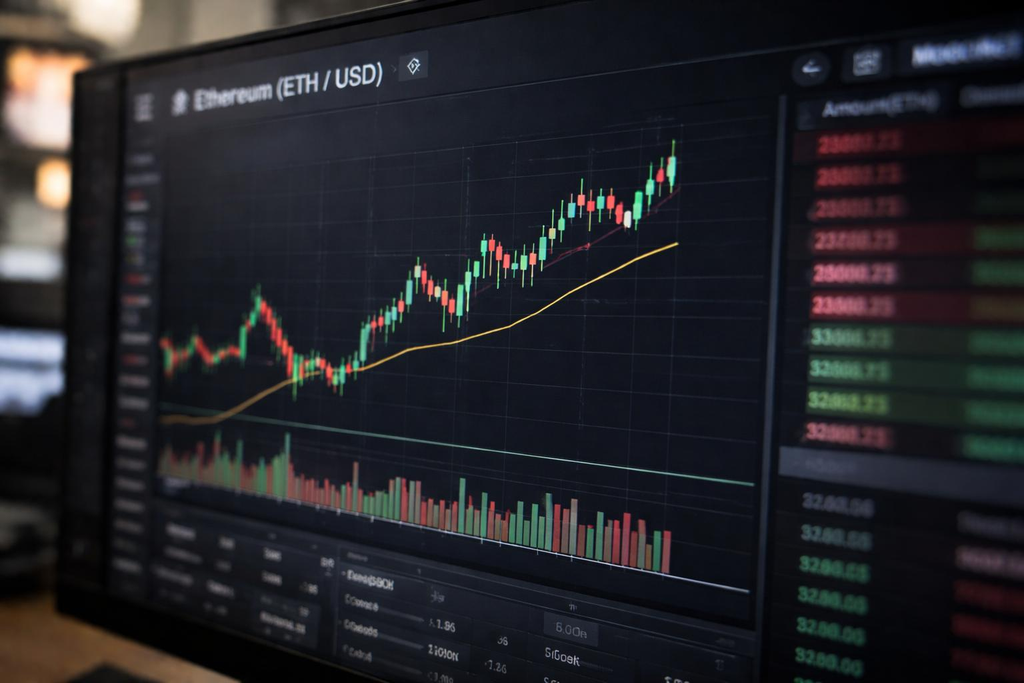

Ethereum is the second-largest cryptocurrency by market capitalisation and remains one of the most important platforms in the digital asset ecosystem.
Unlike Bitcoin, which is primarily recognised as a decentralised digital monetary asset, Ethereum provides infrastructure for smart contracts, decentralised applications, decentralised finance and tokenised digital assets.
The latest price movement shows that Ethereum is experiencing comparatively stronger selling pressure than Bitcoin.
According to the Indian cryptocurrency price snapshot published early on November 6, Ethereum was trading at approximately ₹2,13,094, down 6.16% over 24 hours. ET Markets
This decline follows a recovery during which Ethereum moved above $2,400.
On November 5, market reporting placed Ethereum near $2,417, with a 24-hour gain of approximately 4.24%. The Economic Times
The latest correction demonstrates that the recovery remains vulnerable to changing investor sentiment.
What is influencing Ethereum’s price?
Several developments are affecting Ethereum’s market performance.
Ethereum ETF investment flows
Spot Ethereum ETFs have created an additional investment channel for institutional and traditional financial market participants.
However, ETF flows have recently been inconsistent.
Reports on November 5 indicated that Ethereum spot ETFs recorded approximately $53 million in inflows on Wednesday, ending a seven-day period of outflows. tmgm-apac.com
This development offered some encouragement to investors.
Nevertheless, one day of positive inflows does not establish a sustained institutional buying trend.
Investors will need to monitor whether these inflows continue over several trading sessions.
Decentralised finance expansion
Ethereum remains an important foundation for decentralised finance, commonly known as DeFi.
DeFi applications allow users to access financial services through blockchain-based smart contracts.
These services include:
- Decentralised cryptocurrency exchanges.
- Digital lending and borrowing.
- Liquidity provision.
- Stablecoin transactions.
- Tokenised financial assets.
- Blockchain-based financial applications.
Growing usage of these services can strengthen the demand for Ethereum’s ecosystem.
However, network activity does not automatically translate into higher ETH prices. Investors must also consider transaction economics, competition, token supply and the amount of value captured by the Ethereum network.
Competition from other blockchain networks
Ethereum faces competition from several blockchain platforms, including Solana and other networks designed to provide faster transactions and lower costs.
Competition encourages innovation but can also affect Ethereum’s market share.
Developers and users increasingly compare transaction fees, processing capacity, security, decentralisation and network reliability before selecting blockchain platforms.
Ethereum’s ability to maintain its position will depend on technological improvements and continued developer participation.
3. Bitcoin vs Ethereum: Which cryptocurrency is performing better?
Bitcoin and Ethereum are often compared because they dominate cryptocurrency discussions and attract significant institutional and retail investment.
However, their underlying purposes are different.
| Feature | Bitcoin (BTC) | Ethereum (ETH) |
|---|---|---|
| Main purpose | Digital monetary asset | Smart-contract blockchain |
| Maximum supply | 21 million BTC | No fixed maximum supply |
| Network | Bitcoin blockchain | Ethereum blockchain |
| Main use | Value transfer and store-of-value proposition | Smart contracts and decentralised applications |
| Institutional exposure | Spot Bitcoin ETFs | Spot Ethereum ETFs |
| Major risks | Volatility, regulation and market demand | Volatility, competition and network economics |
Bitcoin is often considered a digital alternative asset because of its limited maximum supply.
Ethereum, meanwhile, is closely connected to the development of blockchain applications and decentralised financial infrastructure.
Which cryptocurrency is more attractive to investors?
There is no universal answer.
Investors interested in Bitcoin generally focus on its limited supply, market dominance, institutional acceptance and potential long-term role as a digital store of value.
Investors interested in Ethereum often examine its technological ecosystem, decentralised applications, smart-contract activity and potential demand for blockchain-based services.
Both assets carry substantial risks.
A cryptocurrency’s historical performance cannot guarantee future returns, and investors should avoid making decisions based only on short-term price movements.
4. Global cryptocurrency market capitalisation and trading activity
The total cryptocurrency market capitalisation is an important indicator of the health of the digital asset industry.
It represents the combined market value of cryptocurrencies and helps investors understand whether capital is entering or leaving the broader market.
During the November 5 recovery, global cryptocurrency market capitalisation increased approximately 2.32% to $2.69 trillion, according to reporting by The Economic Times. The Economic Times
The recovery was supported by improving sentiment, short-position liquidations and gains across several major digital assets.
However, the market remains sensitive to changes in global financial conditions.
Important cryptocurrencies investors are watching
Apart from Bitcoin and Ethereum, several digital assets continue to attract attention.
BNB: BNB is associated with the BNB Chain ecosystem and is used for transactions and other blockchain-related activities.
XRP: XRP is widely followed because of its association with cross-border payment infrastructure and developments involving Ripple.
Solana (SOL): Solana has attracted developers and users through its high-throughput blockchain infrastructure and decentralised application ecosystem.
Tether (USDT): USDT is a widely used stablecoin designed to maintain a value close to the US dollar.
USD Coin (USDC): USDC is another major dollar-linked stablecoin used in cryptocurrency transactions and financial applications.
These cryptocurrencies have different purposes, supply mechanisms and risk profiles. They should not be treated as interchangeable investments.
5. US midterm elections and their impact on cryptocurrency prices
Balance of Power: 2026 Midterms Predictions & Odds | Polymarket
Political developments in the United States have become an important part of the cryptocurrency market narrative.
The November 2026 midterm elections attracted considerable attention from financial markets because the outcome could influence economic policy, financial regulation and legislative priorities.
Cryptocurrency investors have been particularly interested in the future direction of US digital asset regulation.
The initial uncertainty surrounding the election contributed to volatile trading.
As results became clearer, Bitcoin and Ethereum experienced a recovery.
Market reports on November 5 indicated that the rebound was accompanied by improved risk appetite across financial markets, a decline in oil prices and changes in Treasury yields. The Economic Times
However, political developments can produce both positive and negative consequences for cryptocurrencies.
A supportive regulatory framework could encourage institutional participation and improve market confidence.
On the other hand, regulatory uncertainty, disagreements over financial legislation or stricter oversight could discourage some investors.
What should cryptocurrency investors watch?
Investors should monitor:
- Future US cryptocurrency legislation.
- Regulatory treatment of digital asset exchanges.
- Rules governing stablecoins.
- Institutional participation in cryptocurrency markets.
- Policies affecting cryptocurrency taxation.
- Government oversight of digital asset trading platforms.
The long-term impact of the election will depend on actual policy decisions rather than campaign statements alone.
6. Bitcoin and Ethereum ETF flows: Why institutional money matters
Institutional participation has transformed the cryptocurrency market over recent years.
Previously, cryptocurrency trading was dominated by retail participants, specialist exchanges and technology-focused investors.
The development of spot cryptocurrency ETFs has made digital asset exposure more accessible to traditional investment markets.
Large asset managers, financial advisers and institutional investors can now obtain exposure through investment products rather than directly purchasing and storing cryptocurrency.
However, institutional demand is not always consistent.
Bitcoin ETF outlook
Recent reports have highlighted substantial Bitcoin ETF outflows during October and early November.
The withdrawal of institutional capital created concerns about the sustainability of Bitcoin’s recovery. CoinDesk
However, ETF flows can change rapidly.
A return to sustained positive inflows could strengthen market confidence, particularly if accompanied by rising trading volumes and improving spot demand.
Ethereum ETF outlook
Ethereum’s ETF market has also experienced fluctuations.
The reported $53 million in inflows on November 4 was an encouraging development following a week of outflows. tmgm-apac.com
Investors should distinguish between short-term inflows and a sustained institutional investment trend.
A few positive trading sessions do not necessarily indicate that the market has entered a new bullish cycle.
7. Cryptocurrency market technical outlook: Important Bitcoin and Ethereum price levels
Technical analysis is frequently used by cryptocurrency traders to identify possible support and resistance levels.
Support refers to a price area where buying interest may emerge, while resistance refers to an area where selling pressure may increase.
These levels are not guaranteed price barriers. They are reference points that traders use to evaluate market behaviour.
Bitcoin technical outlook
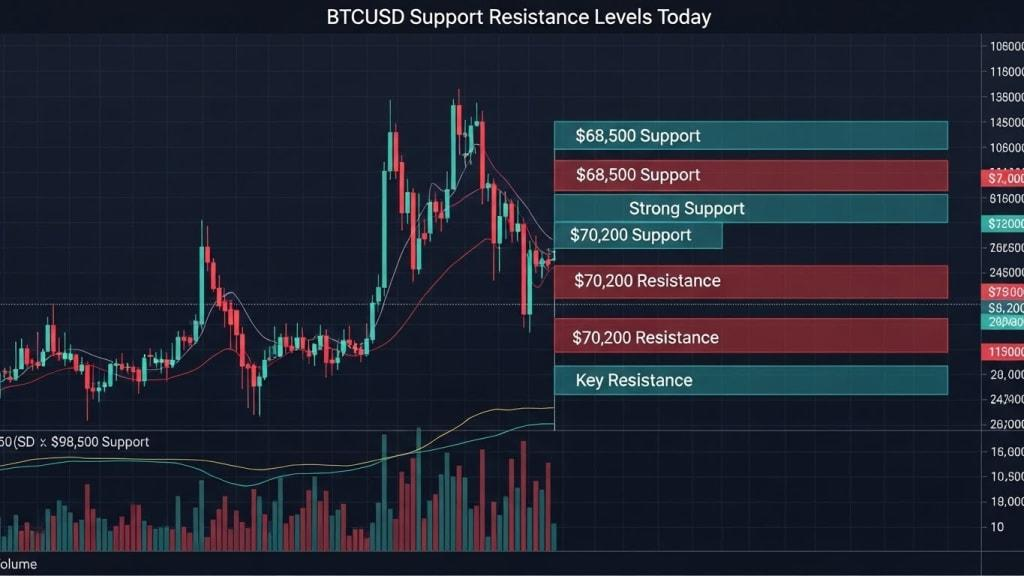
Recent technical analysis published by Reuters identified several important Bitcoin price levels.
BTCUSD Support Resistance Levels Today: Critical Bitcoin Chart Zones to Monitor | Trader
| Bitcoin price level | Market significance |
|---|---|
| $75,000 | Important psychological and technical support area |
| $73,188 | Reported 200-day moving average |
| $81,319 | Reported 30-day moving average and recovery reference |
| $84,800 | Previous October high area |
| $90,000 | Potential upside reference if recovery strengthens |
Reuters reported on November 4 that Bitcoin had fallen more than 40% from its peak during the year. Its analysis identified $75,001 as a potential downside reference, with the 200-day moving average near $73,188 providing another important level. A sustained move above the 30-day moving average near $81,319 could improve the technical outlook. Reuters
Bullish scenario: If Bitcoin attracts fresh institutional and retail demand, it could attempt to recover the $80,000–$81,000 area and subsequently challenge higher resistance levels.
Bearish scenario: If selling pressure continues and Bitcoin loses the $75,000 support area, traders may watch the lower technical levels identified in market analysis.
These are illustrative technical scenarios, not guaranteed price targets.
Ethereum technical outlook

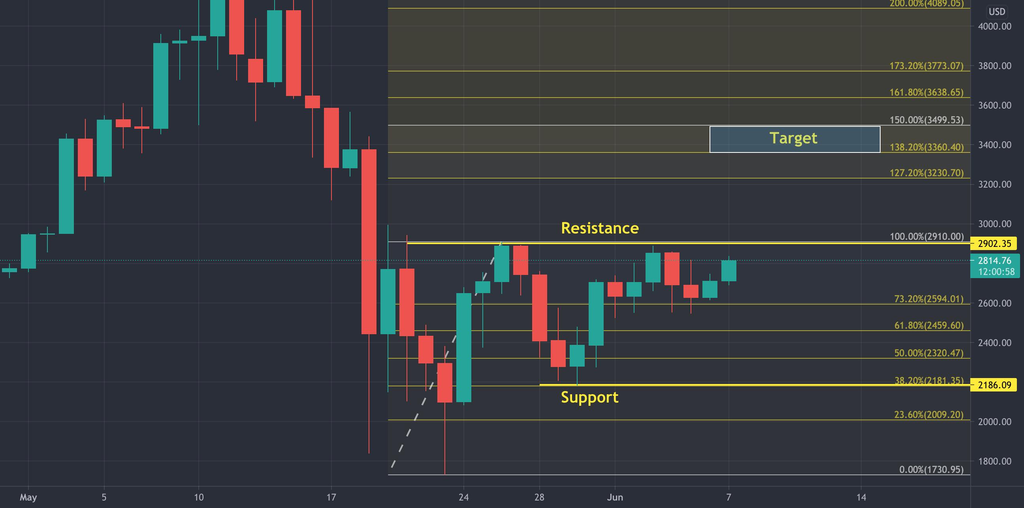
D1 Testing Resistance for KRAKEN:ETHUSD by CryptoTaiwan — TradingView
Ethereum’s recent recovery has also attracted attention from technical analysts.
Market commentary published on November 5 placed Ethereum around $2,423 and identified the following reference levels:
| Ethereum price level | Market significance |
|---|---|
| $2,211 | Lower support reference |
| $2,316 | Reported 200-day EMA |
| $2,354 | Reported 100-day EMA |
| $2,411 | Reported 50-day EMA |
| $2,463 | Immediate resistance reference |
| $2,490 | Additional resistance reference |
| $2,600 | Potential upside reference |
The analysis indicated that Ethereum’s moving averages were providing a supportive technical structure, although the price was facing resistance around $2,463–$2,490. tmgm-apac.com
A sustained move above resistance could improve short-term sentiment.
However, a breakdown below important moving averages could increase selling pressure.
It is important to remember that technical indicators are based on historical market data and cannot predict future cryptocurrency prices with certainty.
8. Global economic conditions and their influence on cryptocurrency prices
Cryptocurrencies are increasingly influenced by developments in traditional financial markets.
Bitcoin and Ethereum are traded globally and respond to changes in investor confidence, liquidity, interest rates, inflation expectations and geopolitical uncertainty.
Several macroeconomic developments deserve attention in November 2026.
Federal Reserve monetary policy
The US Federal Reserve plays an important role in determining global financial conditions.
Its decisions regarding interest rates can influence the attractiveness of different asset classes.
If interest rates remain elevated, investors may prefer relatively safer financial instruments.
If monetary policy becomes more accommodative, demand for risk-sensitive investments could improve.
However, lower interest rates do not automatically result in cryptocurrency price increases. Market expectations, economic growth and liquidity conditions also matter.
Inflation and the US dollar
Inflation remains an important consideration for investors.
Higher inflation can create uncertainty regarding future interest rates.
A stronger US dollar may also influence international cryptocurrency demand because Bitcoin and many major digital assets are commonly priced in dollars.
Investors should therefore monitor inflation releases, employment data, economic growth figures and Federal Reserve announcements.
Geopolitical developments
International conflicts, trade tensions, energy-market disruptions and political instability can affect global investment sentiment.
During periods of uncertainty, some investors reduce exposure to volatile assets.
Others view Bitcoin as an alternative financial asset.
Nevertheless, Bitcoin has not consistently behaved like a traditional safe-haven investment. Its price can decline sharply during periods of global financial stress.
9. Cryptocurrency regulations in India: What investors should know

RBI Annual Report: RBI Expands Digital Rupee Pilots, Begins Tokenised Certificate Of Deposit Trial
India is one of the important markets for cryptocurrency adoption, with retail investors, technology professionals and digital asset enthusiasts participating in the industry.
However, cryptocurrency investments in India operate within a tax and compliance framework that investors must understand.
Cryptocurrency and other qualifying virtual digital asset transactions are subject to provisions of the Indian Income-tax Act.
Taxation of cryptocurrency in India
Under Section 115BBH of the Income-tax Act, income from the transfer of virtual digital assets is generally taxed at 30%, plus applicable surcharge and cess.
The law also restricts the deduction of expenditure and the setting off of losses from one virtual digital asset transaction against income from another.
Additionally, Section 194S provides for tax deduction at source at 1% on qualifying consideration paid for the transfer of virtual digital assets, subject to applicable thresholds and conditions.
Investors should understand that taxation can apply even when they trade through cryptocurrency exchanges.
The exact tax treatment depends on the transaction, applicable law and individual circumstances.
Important precautions for Indian cryptocurrency investors
Before purchasing Bitcoin, Ethereum or other digital assets, investors should:
- Understand the applicable cryptocurrency taxation rules.
- Maintain records of purchases, sales and transfers.
- Check the regulatory and compliance status of their chosen exchange.
- Use strong passwords and two-factor authentication.
- Avoid sharing private keys or wallet recovery phrases.
- Understand the risks associated with cryptocurrency wallets.
- Keep documentation of deposits and withdrawals.
- Consult a qualified tax professional when necessary.
Is cryptocurrency legal in India?
India’s tax treatment of virtual digital assets does not mean that cryptocurrencies are government-issued legal tender.
Investors should distinguish between taxation, regulatory compliance and legal-tender status.
Bitcoin and Ethereum are not substitutes for the Indian rupee, and their values are not guaranteed by the Indian government or the Reserve Bank of India.
Investors should check current official government and regulatory guidance before making financial decisions.
10. Cryptocurrency security risks: Exchange hacks, scams and investor protection


Why Crypto Cybersecurity Should Be Every Investor’s Concern in 2026
One of the biggest challenges facing the cryptocurrency industry is security.
Unlike conventional bank deposits, cryptocurrency holdings may not have equivalent consumer protections or recovery mechanisms.
If an investor loses access to a wallet or transfers cryptocurrency to a fraudulent address, recovering the funds may be extremely difficult.
Recent developments have again highlighted the risks associated with cryptocurrency exchanges and digital asset custody.
A November 5 market report discussed a major security incident involving approximately $6.3 billion in assets, which contributed to concerns about the safety of funds held on centralised exchanges. tmgm-apac.com
Such incidents demonstrate why security must remain a priority.
Common cryptocurrency investment scams
Investors should be alert to the following:
1. Fake investment platforms: Fraudulent websites promise unusually high and guaranteed returns.
2. Phishing attacks: Criminals create fake exchange websites and messages to steal passwords and private information.
3. Fake cryptocurrency giveaways: Scammers ask users to transfer digital assets in exchange for promised rewards.
4. Pump-and-dump schemes: Groups artificially increase token prices before selling their holdings at inflated valuations.
5. Fake trading experts: Fraudsters contact investors through social media and messaging applications, promising insider information or guaranteed profits.
6. Wallet theft: Malicious applications and compromised devices can expose cryptocurrency wallet credentials.
Investors should never assume that a platform is safe simply because it has a professional-looking website or a large social media following.
11. Bitcoin and Ethereum investor outlook for the remainder of November 2026
The outlook for Bitcoin and Ethereum remains uncertain.
The market has demonstrated that positive political developments and improving global financial sentiment can support short-term recoveries.
At the same time, ETF outflows, leveraged trading and macroeconomic uncertainty can quickly reverse those gains.
The coming weeks will be important in determining whether the latest correction represents a temporary setback or the beginning of another prolonged period of weakness.
Bitcoin investor outlook
Bitcoin’s future performance will largely depend on whether it can attract consistent buying interest.
Important indicators include:
- Sustained positive spot ETF flows.
- Increasing spot-market trading volumes.
- Improving institutional participation.
- Stability in the US dollar and global financial markets.
- Stronger demand from long-term holders.
- The ability to maintain important technical support levels.
If these factors improve together, Bitcoin could experience a more sustainable recovery.
However, continued institutional withdrawals and weak demand could increase the risk of additional declines.
Ethereum investor outlook
Ethereum’s outlook depends on both cryptocurrency market sentiment and the performance of its blockchain ecosystem.
Investors will be monitoring:
- Ethereum ETF inflows and outflows.
- Growth in decentralised finance.
- Stablecoin activity on the Ethereum network.
- Blockchain transaction demand.
- Network upgrades and scalability improvements.
- Competition from alternative blockchain networks.
A stronger combination of network adoption and institutional investment could improve Ethereum’s long-term prospects.
Nevertheless, competition and market volatility remain important risks.
12. Short-term versus long-term cryptocurrency investment strategy
Different investors approach cryptocurrency markets with different objectives.
Short-term traders generally focus on price movements, market momentum, technical indicators and trading volumes.
Long-term investors may focus more on blockchain adoption, institutional acceptance, network development and the broader role of digital assets in the financial system.
Short-term traders
Short-term cryptocurrency traders should pay attention to:
- Daily price movements.
- Support and resistance levels.
- Trading volumes.
- Futures open interest.
- Liquidation data.
- ETF flows.
- Major economic announcements.
Trading based on sudden price movements without risk management can result in substantial losses.
Long-term investors
Long-term investors should consider:
- Whether they understand the underlying cryptocurrency.
- The potential risks of the asset.
- Their investment time horizon.
- Their ability to tolerate large price declines.
- The security of their holdings.
- The regulatory and tax environment.
Investors should avoid borrowing money to purchase volatile cryptocurrencies or investing funds needed for essential expenses.
A disciplined approach is generally more appropriate than attempting to predict every short-term market movement.
13. Five major factors that could determine the next cryptocurrency market direction
The direction of Bitcoin and Ethereum during the remainder of November could depend on five major developments.
First Bitcoin Futures ETF To Trade On NYSE Debuts On The Exchange
1. Institutional investment
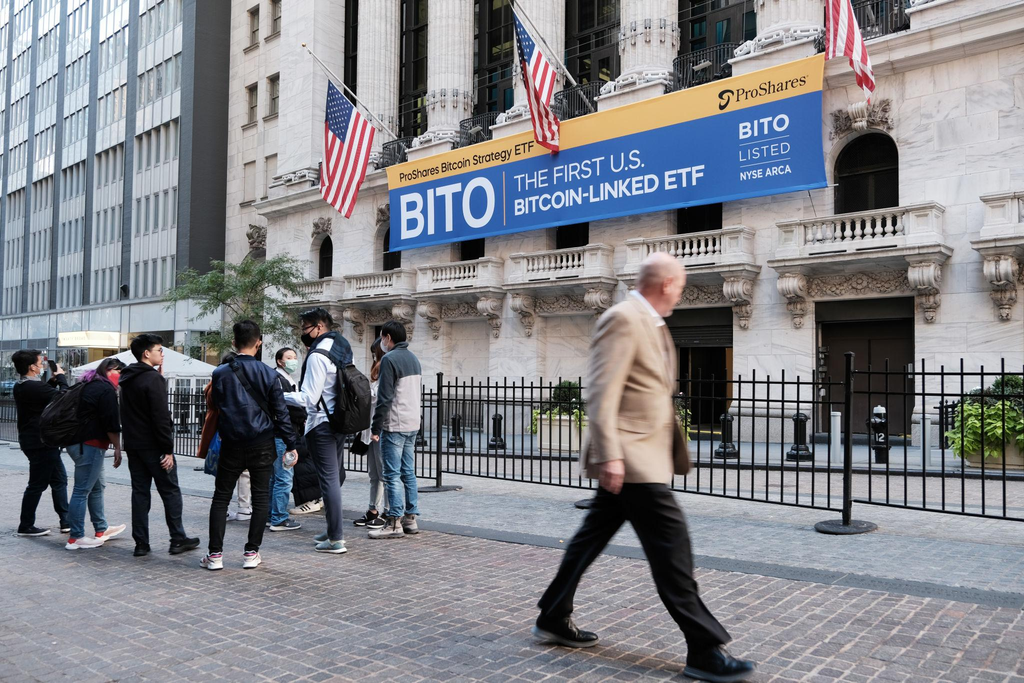
Renewed buying from institutional investors and asset managers could support cryptocurrency prices. Continued ETF withdrawals could create additional selling pressure.
Fed-Zinsentscheid: Aktueller Leitzins und Prognose 2026
2. Federal Reserve decisions

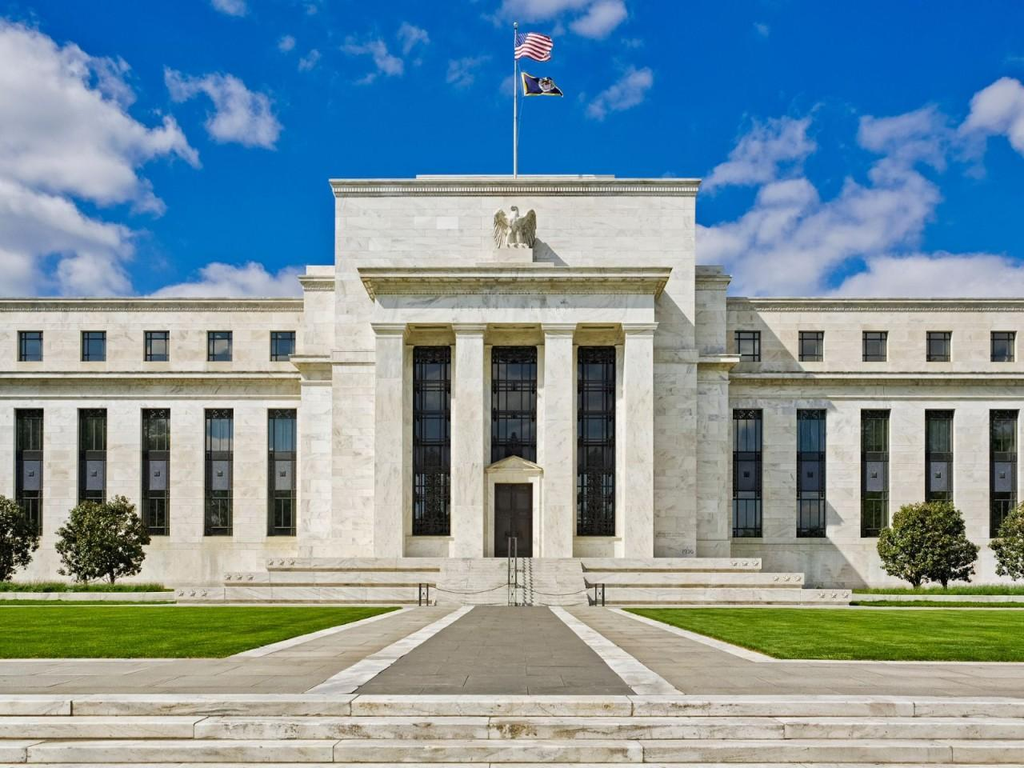
Interest rate announcements and inflation expectations could influence demand for Bitcoin, Ethereum and other risk-sensitive assets.
3. Blockchain adoption


Increasing blockchain applications, decentralised finance and tokenisation could strengthen the long-term relevance of Ethereum and other digital assets.
What Does the SEC’s New Crypto Stance Really Mean
4. Government regulations

Clearer cryptocurrency regulations could encourage institutional participation, while unexpected restrictions could increase uncertainty.
Markets Waver as Oil Retreats on Hopes of Iran Conflict De-Escalation | OPES Family Office
5. Global financial market conditions


Movements in stock markets, bond yields, currencies and commodity prices could influence the willingness of investors to hold cryptocurrencies.
14. Should investors buy Bitcoin and Ethereum during the current market correction?
The recent decline has raised an important question among cryptocurrency investors: does the current correction offer a buying opportunity, or should investors wait for greater market stability?
There is no single answer because cryptocurrency investments involve substantial financial risk.
Bitcoin and Ethereum remain two of the most established digital assets, but their market prices can change dramatically within hours.
Investors considering fresh exposure should examine the following factors.
Avoid emotional buying and selling: Sudden price declines can create panic, while rapid recoveries can encourage excessive optimism. Investment decisions should be based on research rather than emotions.
Consider gradual investment: Investors who have independently decided to invest for the long term may consider a disciplined, staggered investment approach rather than committing their entire planned amount at once. This does not eliminate the risk of losses.
Understand portfolio exposure: Cryptocurrency should be evaluated in the context of an investor’s overall financial position, investment objectives and ability to withstand losses.
Avoid excessive leverage: Futures and margin trading can magnify losses and may result in liquidation.
Follow verified market information: Investors should compare information from reputable financial publications, official exchange announcements and regulatory sources.
The most important consideration is that neither Bitcoin nor Ethereum offers guaranteed returns.
15. What to watch in the cryptocurrency market in the coming days
The next several trading sessions could provide important signals about the strength of the current cryptocurrency market.
Investors should particularly monitor the following developments:
| Market indicator | Why it matters |
|---|---|
| Bitcoin ETF flows | Indicates institutional investment demand |
| Ethereum ETF flows | Helps assess institutional interest in ETH |
| Bitcoin trading volume | Helps evaluate the strength of price movements |
| Ethereum network activity | Provides information about ecosystem usage |
| US Federal Reserve announcements | Influences global financial conditions |
| US inflation data | Can affect interest rate expectations |
| Stablecoin market activity | Offers insights into cryptocurrency liquidity |
| Exchange security developments | Influences investor confidence |
If buying interest improves while institutional inflows return, the market could establish a stronger recovery.
However, if selling pressure continues, investors may face additional volatility.
The coming days should therefore be viewed as an important period for evaluating the market’s underlying strength.
16. Conclusion: Bitcoin and Ethereum face a critical period as crypto market volatility continues
The cryptocurrency market on November 6, 2026, reflects a combination of uncertainty, cautious optimism and renewed selling pressure.
Bitcoin’s latest Indian market price snapshot indicates a decline of approximately 4.56%, while Ethereum has fallen around 6.16% over the reported 24-hour period.
These declines follow a recovery earlier in the week, when Bitcoin moved above $80,000 and Ethereum approached $2,400.
The changing market direction highlights an important characteristic of cryptocurrency investments: short-term recoveries do not necessarily indicate the beginning of a sustained bullish trend.
Institutional investment, ETF flows, US monetary policy, political developments and global economic conditions will continue to influence market sentiment.
Bitcoin’s position as the leading cryptocurrency and Ethereum’s importance in the blockchain application ecosystem make both assets central to the future development of digital finance.
However, their long-term potential should not be confused with guaranteed investment returns.
For Indian investors, understanding cryptocurrency taxation, exchange security, regulatory requirements and financial risks is particularly important.
As November progresses, the market will be looking for evidence of stronger institutional demand, improved trading volumes and greater price stability.
The key question for investors is no longer simply whether Bitcoin and Ethereum can recover their recent losses, but whether the market has sufficient buying demand to support a sustainable recovery.
Frequently Asked Questions (FAQs)
1. What is the Bitcoin price today, November 6, 2026?
According to the latest available Indian price snapshot published by The Economic Times at approximately 1:34 a.m. on November 6, Bitcoin was trading at around ₹72,00,744, down 4.56% over 24 hours. Prices fluctuate continuously across exchanges.
2. What is the Ethereum price today in India?
Ethereum was trading at approximately ₹2,13,094 in the same reported Indian market snapshot, registering a 24-hour decline of 6.16%.
3. Why are Bitcoin and Ethereum prices falling?
The latest weakness reflects changing investor sentiment, cryptocurrency ETF flows, profit booking, leveraged trading and uncertainty surrounding global economic conditions.
4. Can Bitcoin recover above $80,000?
Bitcoin previously recovered above $80,000 during the November 5 trading session. A sustained recovery would depend on buying demand, institutional investment, market liquidity and broader economic conditions. There is no guarantee that it will regain this level.
5. Can Ethereum reach $3,000 again?
Ethereum’s ability to approach $3,000 will depend on market demand, institutional investment, network adoption and broader cryptocurrency conditions. Any price target remains speculative.
6. Is cryptocurrency legal in India?
India has a taxation and compliance framework for virtual digital assets. However, Bitcoin and Ethereum are not legal tender issued or guaranteed by the Indian government.
7. What is the cryptocurrency tax rate in India?
Qualifying income from the transfer of virtual digital assets is generally taxed at 30% under Section 115BBH, plus applicable surcharge and cess. Section 194S also provides for 1% TDS on qualifying transfers, subject to applicable conditions and thresholds.
8. Is Bitcoin safer than Ethereum?
Both cryptocurrencies involve significant market risk. Bitcoin and Ethereum have different technological purposes and risk factors. Neither guarantees the protection of invested capital.
9. What factors influence cryptocurrency prices?
Important factors include institutional investment, ETF flows, interest rates, regulatory developments, market liquidity, technological adoption, trading activity and investor sentiment.
10. Which cryptocurrency should investors watch in November 2026?
Bitcoin and Ethereum remain the two leading cryptocurrencies to monitor. Investors may also follow XRP, BNB and Solana, while independently evaluating their respective risks.
News sources and market references
The following sources were used to prepare this report:
- The Economic Times – Cryptocurrency Prices Today, November 6, 2026.
- The Economic Times – Bitcoin Nears $80,300, Ethereum Trades at $2,400.
- Crypto Today – Bitcoin, Ethereum and ETF Market Developments.
- Reuters – Mapping the Market: Bitcoin Could Extend Losses.
- CoinDesk – Bitcoin Price Analysis After US Midterm Elections.
Editorial note: Cryptocurrency prices are highly volatile. The quoted Indian prices are a dated market snapshot, not a guaranteed live exchange quotation. Dollar-denominated prices and technical levels are from separately dated market reports and should not be interpreted as simultaneous quotations. This article is for news and educational purposes only and does not constitute investment advice.