

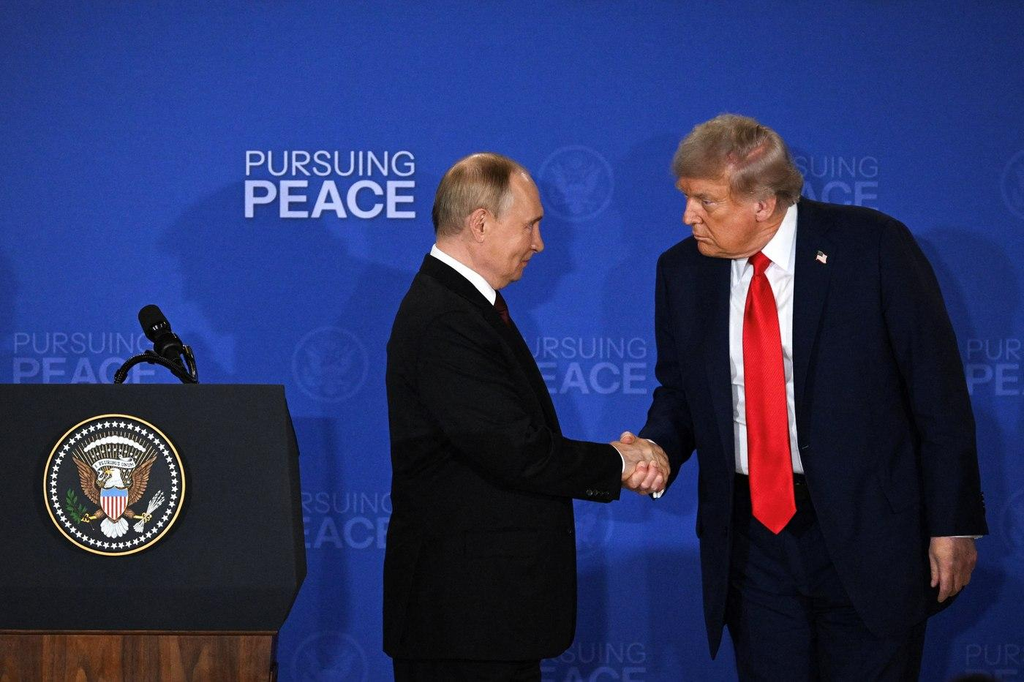
Nearly five years after Russia’s full-scale invasion of Ukraine, a fresh wave of high-level diplomacy centred on U.S. President Donald Trump and Russian President Vladimir Putin has raised cautious hopes—and deep scepticism—that a negotiated end to the conflict might finally be within reach. The latest developments stem from Trump’s meeting with Putin on the sidelines of the Asia-Pacific Economic Cooperation (APEC) summit in Shenzhen, China, in mid-November 2026, followed by a series of public comments in which the American president has expressed optimism that Putin is open to a deal while simultaneously pressing the Russian leader to scale back military pressure across Europe.
The war, which began with Russia’s invasion in February 2022, has settled into a grinding war of attrition marked by heavy casualties, devastated infrastructure, and shifting front lines in eastern and southern Ukraine. Estimates of monthly losses on both sides run into the tens of thousands, a reality Trump has repeatedly described as a “complete bloodbath.” In recent weeks, the Trump administration has intensified mediation through special envoys, including Steve Witkoff and Jared Kushner, seeking to revive trilateral talks among the United States, Russia, and Ukraine after earlier rounds stalled.
The Shenzhen Meeting and Its Aftermath
Trump and Putin met in Shenzhen on November 19, 2026, during the APEC leaders’ gathering. The encounter, which also included a trilateral session with Chinese President Xi Jinping, the White House framed as part of a broader diplomatic push to address the Ukraine conflict alongside other global security issues. Trump later described the discussions as “very good talks,” stating that Putin had expressed a desire to see the war end through diplomatic means. “We’re having very good talks. I think there’s a real good chance that we can get it done,” Trump told reporters upon returning to Washington.
In the days that followed, Trump elaborated on the substance of those conversations. In a Truth Social post and subsequent remarks at his Mar-a-Lago residence in Florida over the Thanksgiving holiday, he said he had spent significant time urging Putin to “pull back all Military aggression against territories throughout Europe” in the hope of facilitating a rapid agreement between Russia and Ukraine. Trump characterised a peace deal as a “strong possibility,” emphasising the human cost of continued fighting. He also indicated that he believes Putin wants an agreement, while identifying the intense personal animosity between Putin and Ukrainian President Volodymyr Zelenskyy as the primary obstacle. “The biggest problem to that settlement is the fact that you have two leaders that really hate each other,” Trump told reporters.
Trump has defended his decision to maintain a cordial public posture toward Putin, including referring to him as a “friend.” When pressed on the apparent contradiction between that language and calls for Russia to curb aggression, Trump argued that hostility would undermine the chance of a deal. “We want to make a deal. We want to stop killing,” he said. “I could say he’s not a friend… I want to make a deal. I got to get a deal done.” He claimed Russian forces were suffering approximately 25,000 casualties a month and stressed that preserving open channels of communication was essential.
Parallel Tracks and NATO Engagement
Alongside the Trump-Putin engagement, the administration has continued lower-level diplomacy. In October 2026, Witkoff met Putin in St. Petersburg, after which the Kremlin indicated willingness “in principle” to resume three-way talks with the United States and Ukraine, potentially focused on post-conflict security arrangements. Discussions involving European partners have also taken place in various European capitals, with Kushner and other officials conveying urgency about reaching an agreement. Reports suggested the Trump team was aiming for progress before a shift in the U.S. Congress following midterm elections, though the precise timeline remains fluid.
Trump briefed NATO Secretary General Mark Rutte on the China talks during a meeting at Mar-a-Lago. A joint statement following that encounter underscored the importance of avoiding any expansion of the war and seeking a rapid peaceful resolution. Trump later posted a version of the statement on Truth Social that referenced both Russia and Ukraine, while the version released by NATO focused more specifically on Russian actions. The episode highlighted ongoing sensitivities about how responsibility for de-escalation is framed.
Zelenskyy has responded warily to Trump’s approach. In interviews, the Ukrainian president has described it as “strange” that Trump calls Putin a friend, insisting that Putin “can’t be a friend” given the scale of Russian aggression. Kyiv continues to demand robust security guarantees, rejection of territorial concessions that would legitimise annexations, and sustained Western support. Ukraine has signalled openness to negotiations but rejects any outcome that freezes Russian gains without meaningful protections against future attacks.
Core Obstacles to a Settlement
Despite the renewed diplomatic activity, fundamental disagreements persist. Russia’s maximalist positions include recognition of its claimed control over Crimea and the four regions of Donetsk, Luhansk, Zaporizhzhia, and Kherson—territories it has partially occupied but not fully secured—as well as Ukrainian neutrality, limits on the size and capabilities of Ukraine’s armed forces, and broader changes to Europe’s security architecture that would constrain NATO’s presence on its eastern flank. Moscow has at times insisted that Ukraine withdraw from remaining positions in the Donbas as a precondition for meaningful talks.
Ukraine and its Western partners have long resisted these demands. Kyiv seeks security guarantees comparable in strength to NATO’s Article 5 collective defence commitment, freedom to pursue European Union membership, and the restoration of territorial integrity. European leaders have pushed back against any rollback of NATO’s post-Cold War enlargement. U.S. officials have floated various formulas, including possible security assurances that would require congressional approval and Russian consent, or scenarios involving territorial adjustments paired with stronger protections. Trump himself has been cautious about detailing security guarantees, arguing that a broader deal must come first.
The personal dimension Trump has highlighted compounds the difficulty. Years of mutual recrimination and wartime propaganda have left little trust between the Ukrainian and Russian leaderships. Any agreement would also need to address humanitarian issues, prisoner exchanges, reconstruction financing, and the status of occupied populations—challenges that have frustrated earlier mediation attempts, including those involving Turkey, the United Nations, and previous U.S. administrations.
Military realities on the ground continue to shape the negotiating environment. Russian forces maintain pressure along multiple sectors of the front, while Ukraine relies on Western-supplied weapons, intelligence, and financial aid to sustain its defence. Energy infrastructure remains a frequent target, contributing to civilian hardship as winter approaches. Drone and missile strikes continue in both directions, underscoring that diplomacy has not yet translated into a significant reduction in violence.
Broader Geopolitical Context
The Ukraine conflict does not exist in isolation. Trump’s outreach to Putin occurs against the backdrop of complex U.S.-China dynamics, ongoing Middle East tensions, and debates within NATO about burden-sharing and long-term European security. The inclusion of Xi in the Shenzhen trilateral signalled Beijing’s potential role as a stakeholder, though China has maintained a position of formal neutrality while expanding economic ties with Russia. European capitals remain divided between those emphasising maximum pressure on Moscow and those more open to exploring compromise formulas that could freeze the fighting.
Public opinion in the United States, Europe, and Ukraine itself will also influence the trajectory. War fatigue is real after years of high costs, yet support for Ukraine’s sovereignty remains substantial among many Western governments and publics. Any deal perceived as rewarding aggression risks political backlash, while prolonged stalemate carries its own risks of escalation or gradual erosion of Ukrainian capacity.
Trump has left open the possibility of Putin attending the G20 summit scheduled for mid-December in Florida, saying the Russian leader would be welcome if he chose to come, though he expressed doubt that Putin would accept. Such a visit would be highly symbolic and politically charged.
Prospects and Uncertainties
Whether the current diplomatic push can succeed remains uncertain. Trump’s emphasis on personal relationships and deal-making has produced moments of engagement that previous approaches did not, and the Kremlin has shown intermittent willingness to return to the table. Yet the gap between stated Russian war aims and Ukrainian red lines has not narrowed substantially. Envoys continue technical discussions, and humanitarian initiatives—including localised ceasefires brokered with the involvement of First Lady Melania Trump—have demonstrated that limited cooperation is possible even amid broader hostility.
Analysts note that a sustainable settlement would likely require more than a ceasefire. It would need enforceable security arrangements, credible verification mechanisms, and political will on all sides to sell painful compromises to domestic audiences. The alternative is continued attrition, with neither side able to achieve decisive victory in the near term and the human and economic toll mounting month after month.
As of late November 2026, the diplomatic window opened by the Trump-Putin contacts remains open but fragile. Trump has framed the effort as an urgent moral and strategic imperative, arguing that stopping the killing takes precedence over perfect outcomes. Zelenskyy and European partners insist that any peace must be just and durable rather than a temporary pause that leaves Ukraine vulnerable. Putin’s ultimate intentions—whether genuine interest in ending the war on acceptable terms or a tactical pause to consolidate gains—will be tested in the coming weeks and months of talks.
The Russia-Ukraine war has already reshaped European security, global energy markets, and the international order. A successful diplomatic breakthrough would rank among the most consequential foreign policy achievements of the Trump presidency and offer relief to millions affected by the conflict. Failure would prolong a war that has already claimed hundreds of thousands of lives and left deep scars across the continent. For now, the talks continue, the front lines remain active, and the question of whether personal diplomacy between Trump and Putin can bridge the divide remains unanswered.