
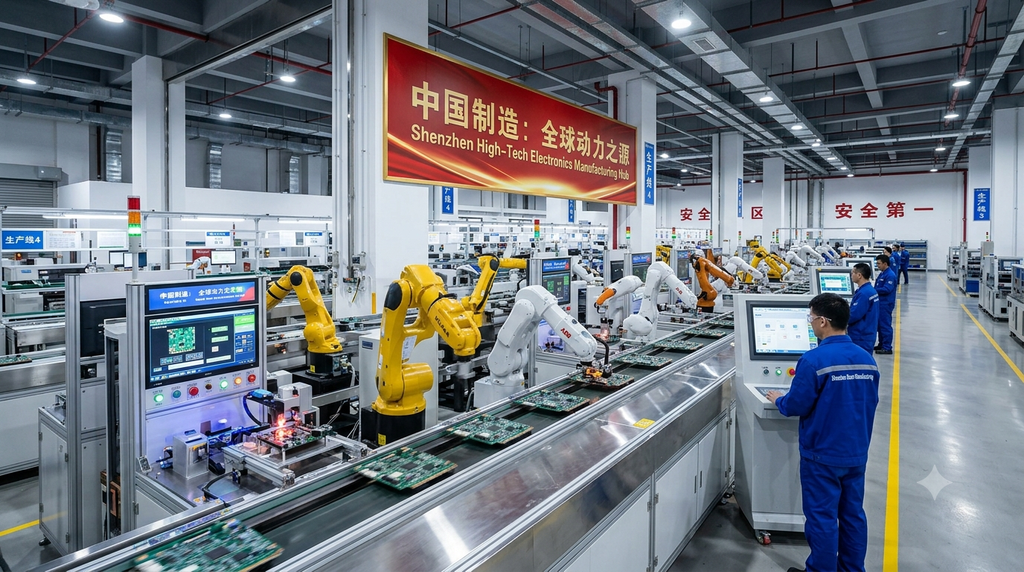
Global News Network 11 | 11 September 2026
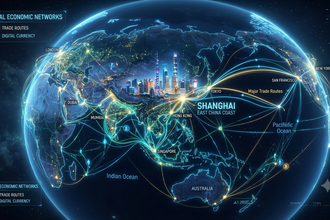
China’s economy remains a central pillar of global growth, trade, and industrial transformation even as it navigates slower expansion, domestic structural adjustments, and geopolitical frictions. In 2025, the economy expanded 5.0 per cent, meeting the government’s target, with GDP exceeding 140 trillion yuan (approximately $19.5–20.8 trillion in nominal terms depending on exchange-rate measures). This marked one of the weaker rates of the past several decades yet still positioned China as the world’s second-largest economy in nominal terms and the largest on a purchasing-power-parity basis. In the first half of 2026, growth moderated to 4.7 per cent year-on-year, with the second quarter at 4.3 per cent—the slowest quarterly pace since late 2022—according to the National Bureau of Statistics. The World Bank has projected around 4.4 per cent growth for the full year 2026, reflecting weaker domestic demand offset by resilient exports and policy support.
China continues to account for a substantial share of global GDP growth and remains the largest single contributor in many recent years. Its manufacturing base, infrastructure networks, technology capabilities, and overseas investment footprint shape outcomes for supply chains, commodity markets, and developing economies worldwide. This report examines the transformation, current position, trade and investment patterns, Belt and Road Initiative, technological leadership, financial markets, the China–India relationship, commodity impacts, challenges, opportunities, and broader implications.
1. China’s Economic Transformation
Over four decades of reform and opening, China shifted from a largely agrarian, closed economy to a manufacturing and export powerhouse and, increasingly, a services- and technology-oriented economy. Real GDP growth averaged well above 8 per cent for long stretches before decelerating as the economy matured, demographics shifted, and the property sector adjusted. By 2025, services accounted for roughly 58 per cent of GDP, industry about 36 per cent, and agriculture under 7 per cent.
Manufacturing remains the core strength. China produces a large share of the world’s electronics, machinery, textiles, steel, and consumer goods. High-tech and equipment manufacturing have grown faster than overall industry; in the first half of 2026, high-tech manufacturing expanded more than 13 per cent while equipment manufacturing rose more than 9 per cent. Infrastructure development—high-speed rail, ports, airports, power grids, and urban transit—created the physical backbone for industrial clusters and logistics efficiency. Domestic consumption has grown in absolute terms but remains constrained by cautious household spending linked to property-market weakness, soft labour conditions in some sectors, and precautionary savings. Retail sales have expanded more slowly than overall GDP in recent periods.
Financial markets have deepened, with equity exchanges in Shanghai, Shenzhen, and Hong Kong, a large government-bond market, and growing corporate-bond issuance. The services economy, including finance, logistics, e-commerce, and digital platforms, has expanded its contribution to growth. Policy continues to emphasise “new quality productive forces,” higher-value manufacturing, technological self-reliance, and a gradual rebalancing toward consumption while managing local-government debt and property-sector risks.
2. China’s Position in the Global Economy
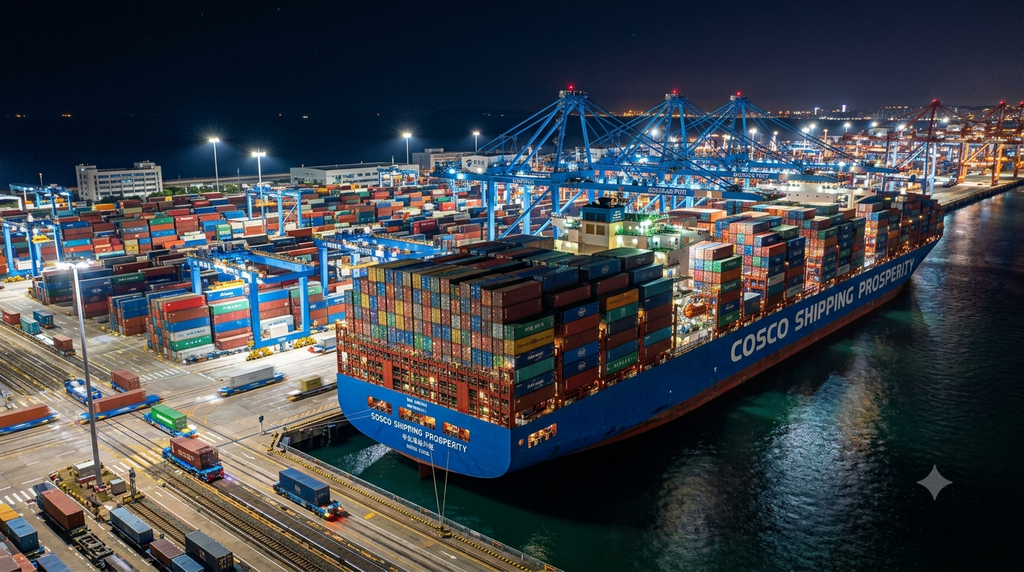
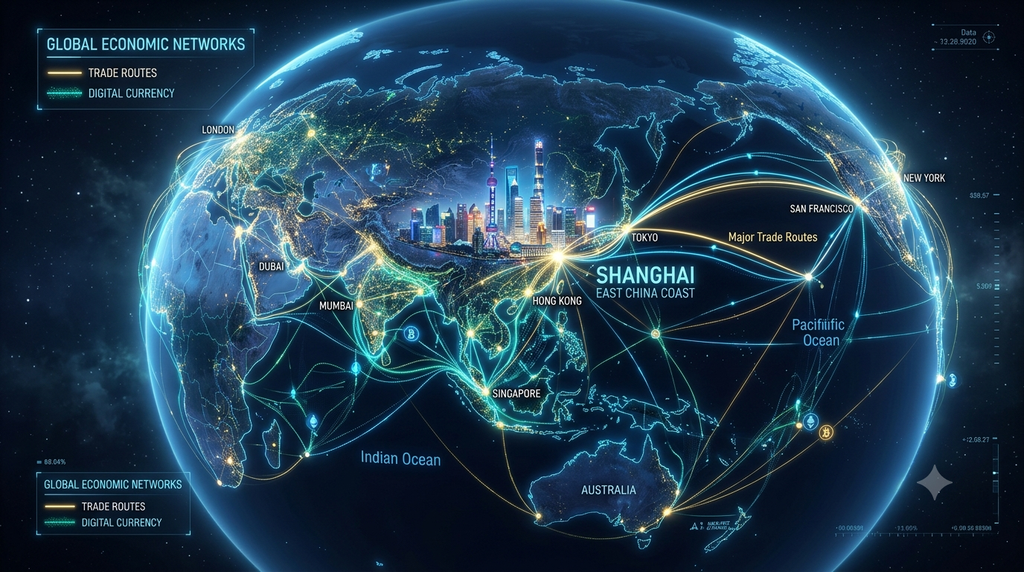
China is the world’s largest goods trader, a top destination for foreign direct investment in many years (though inflows have fluctuated), a major source of outward investment, and a key node in global supply chains. It accounts for roughly one-sixth of global nominal output and a higher share on a PPP basis. Its demand for commodities influences prices of oil, iron ore, copper, and agricultural products. Its industrial production and export volumes affect manufacturing activity from Asia to Europe and Latin America.
Multinational companies continue to view the Chinese market as strategically important because of its scale, manufacturing ecosystem, and growing middle class, even as some diversify production to other Asian locations. At the same time, geopolitical tensions, regulatory shifts, demographic pressures (an ageing population and shrinking workforce), property-sector adjustment, and competition from other emerging markets have prompted risk assessments and selective “China+1” strategies. China remains deeply embedded in electronics, automobiles and electric vehicles, batteries, solar energy, machinery, telecommunications equipment, and consumer goods supply chains.
3. Trade and Export Power
China’s foreign trade remained resilient amid global headwinds. In 2025, total goods trade reached approximately 45.5 trillion yuan (about $6.5 trillion), with exports growing faster than imports and generating a large surplus—reported near $1.2 trillion in some tallies. Exports of electronics, machinery, electric vehicles, batteries, and solar products have been particularly strong. In 2026, monthly export growth has at times exceeded 20 per cent year-on-year, with the cumulative trade surplus approaching high levels.
Major trading relationships illustrate both concentration and diversification. ASEAN has become a leading partner, with trade expanding rapidly as supply chains integrate and Chinese intermediate goods feed regional manufacturing. Trade with the European Union remains large, though the EU records a substantial goods deficit with China. Trade with the United States has been affected by tariffs and policy uncertainty, prompting redirection of some exports toward ASEAN, Africa, Latin America, and other markets. Trade with Africa and Latin America has grown, reflecting demand for Chinese manufactured goods and Chinese demand for resources. India–China trade has expanded in absolute terms, with China becoming India’s largest trading partner in fiscal year 2025–26 at roughly $151 billion, though India’s deficit widened significantly.
China occupies a central position in global value chains for electronics, EV components, solar panels, batteries, machinery, and telecommunications equipment. Many products assembled or finished elsewhere still rely on Chinese intermediate inputs. This centrality confers both influence and vulnerability to trade restrictions or logistics disruptions.
4. Foreign Investment in China
Foreign companies have long invested in China for market access, manufacturing efficiency, and supply-chain integration. Multinationals in automobiles, electronics, chemicals, consumer goods, and services maintain large operations. Reasons for continued presence include the size of the domestic market, the density of supplier networks, skilled labour in advanced manufacturing, and opportunities in electric vehicles, renewable energy, and digital services.
Challenges have increased. Geopolitical tensions and export controls, particularly around advanced semiconductors and dual-use technologies, have complicated planning. Regulatory changes, data-security rules, and industrial-policy preferences for domestic firms have raised compliance costs. Demographic pressures and rising wages in coastal regions have encouraged some relocation of labour-intensive production. The prolonged property-sector adjustment has weighed on related investment and local demand. Competition from Vietnam, India, Mexico, and other emerging markets has intensified for certain manufacturing segments. Net foreign direct investment figures have fluctuated, with periods of lower inflows or outflows reflecting both global conditions and China-specific factors. Despite these headwinds, many firms treat China as an essential market rather than a pure low-cost production base.
5. Chinese Investment Around the World
Chinese outward investment has grown substantially through both state-linked entities and private firms. Destinations include Asia, Africa, Latin America, the Middle East, and Europe. Motivations encompass securing resources, accessing markets, acquiring technology and brands, and supporting infrastructure and industrial projects. Manufacturing, energy, mining, real estate, and technology have been prominent sectors. In recent years, private Chinese companies have increased their share of outward engagement, particularly in green energy and manufacturing.
Overseas investment supports Chinese firms’ global expansion while providing capital and construction capacity to host countries. It also generates returns, employment, and technology transfer—though outcomes vary by project quality, governance, and debt sustainability. Criticisms have focused on debt levels in some recipient countries, environmental and social standards, and strategic implications of infrastructure control. Chinese authorities have emphasised higher-quality, more sustainable projects in recent guidance.
6. Belt and Road Initiative
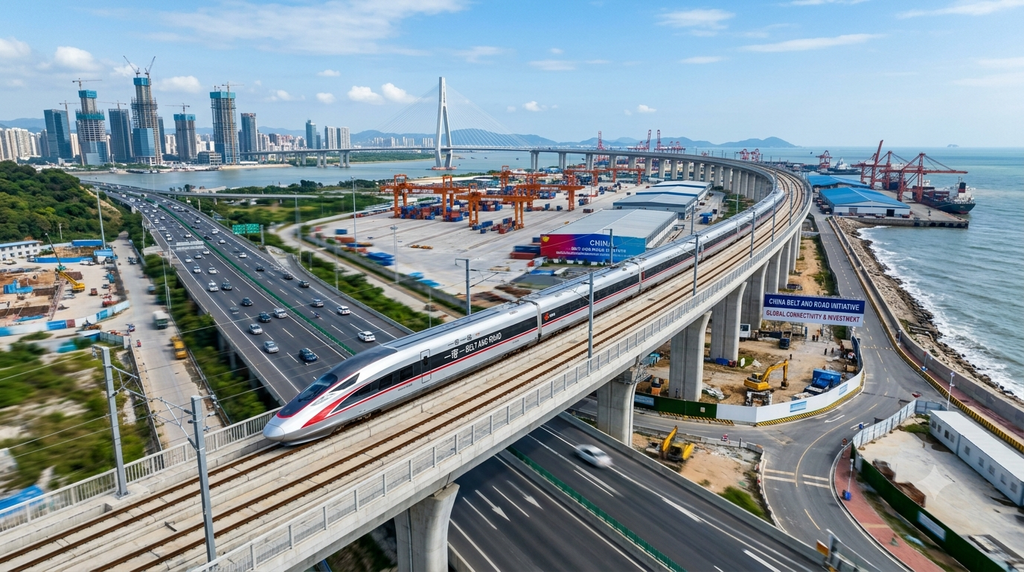
Launched in 2013, the Belt and Road Initiative has financed and constructed infrastructure—ports, railways, roads, power plants, and digital networks—across Asia, Africa, Europe, and the Middle East. It has expanded China’s economic relationships through trade, investment, and people-to-people links. By 2025–26, engagement remained substantial. In the first half of 2026, Chinese investment and construction contracts in BRI countries reached high levels, with energy (especially renewables), metals and mining processing, and transportation prominent. Green energy projects accounted for a record share of energy engagement. Africa ranked high in recent engagement value. Private firms have raised their participation.
Economic opportunities include improved connectivity, lower logistics costs, industrial-park development, and access to Chinese technology and financing for countries seeking infrastructure. Criticisms centre on debt sustainability for some borrowers, environmental impacts of earlier projects, transparency of contracts, and geopolitical influence. Beijing has adjusted toward “small and beautiful” projects at times and more recently toward larger deals alongside a stronger green and digital focus. The 11th Belt and Road Summit in Hong Kong in September 2026 underscored continued official and commercial interest, with numerous memoranda and deals announced.
7. Technology, EVs and Green Energy
China has achieved leading or dominant positions in several advanced and green industries. In electric vehicles, it produces a large majority of global output and accounts for a high share of sales. Chinese battery makers, led by CATL and BYD, held roughly 55–70 per cent of global EV battery installed capacity in 2025, depending on the metric; Chinese firms also dominate energy-storage battery shipments. Solar-panel manufacturing capacity is overwhelmingly concentrated in China, supporting rapid global deployment of renewable energy. High-speed rail technology and construction expertise have been exported. Progress in artificial intelligence, robotics, and certain semiconductor segments continues, though advanced-node chip production and design tools remain areas of lag relative to global leaders and subject to export controls.
These strengths create export opportunities, lower costs for the global energy transition, and competitive pressure on producers elsewhere. They also raise concerns about overcapacity, subsidy practices, and strategic dependencies. Clean-energy sectors contributed meaningfully to China’s own growth in 2025.
8. China’s Financial Markets and Yuan
China’s equity markets (Shanghai, Shenzhen, and the Hong Kong link), government and corporate bond markets, and foreign-exchange reserves (among the world’s largest) give it systemic importance. Changes in Chinese interest rates, growth, industrial production, and commodity demand transmit to global asset prices, risk appetite, and emerging-market capital flows. The renminbi has gradually internationalised through trade settlement, offshore centres, bilateral currency swaps, and inclusion in the IMF’s Special Drawing Rights basket. Its share of global payments and reserves has risen but remains well below the dollar’s dominance. Policy continues to support orderly internationalisation while managing capital-account controls and exchange-rate flexibility.
Volatility in Chinese equities or bond yields can affect global sentiment. Stronger Chinese growth typically supports commodity prices and related equities; weaker growth or policy surprises can reverse those effects. Foreign participation in onshore markets has expanded through various channels, though access and regulatory conditions continue to evolve.
9. China–India Economic Relationship
Bilateral trade has grown substantially. In India’s fiscal year 2025–26, China became the largest trading partner, with total trade around $151 billion. Indian exports to China rose, yet imports of intermediate goods, electronics, machinery, and chemicals far exceeded exports, producing a large and widening deficit exceeding $110 billion. Investment links remain more limited than trade. Manufacturing competition is evident in electronics, pharmaceutical intermediates, and emerging areas such as EVs and solar. Supply-chain diversification efforts in India and elsewhere partly respond to concentration risks associated with China, while Chinese firms also invest in or supply Indian manufacturing.
The broader relationship mixes economic complementarity—China’s manufacturing scale and India’s services and demographic strengths—with strategic rivalry and border tensions that constrain deeper integration. Opportunities exist in technology collaboration, green energy, and regional value chains, yet political and security considerations often limit progress.
10. China’s Impact on Oil and Commodity Markets
China is the world’s largest importer of many commodities and a major consumer of oil, iron ore, copper, coal, soybeans, and other raw materials. Its industrial production, construction activity, and inventory cycles drive price movements. A stronger Chinese economy typically lifts demand for energy and metals, supporting prices and benefiting resource exporters in the Middle East, Australia, Latin America, Africa, and elsewhere. Weaker growth or property-sector contraction reduces that demand and can pressure prices and shipping volumes. China’s shift toward electric vehicles and renewables is altering the composition of energy demand—raising needs for critical minerals while potentially moderating long-term oil-intensity growth. Global shipping, manufacturing output in partner countries, and the terms of trade for commodity exporters are all sensitive to Chinese activity.
11. Major Economic Challenges Facing China
Several structural and cyclical challenges confront policymakers. The property sector remains under pressure after years of adjustment, weighing on local-government finances, household wealth, and related investment. Demographic trends—ageing population, declining birth rates, and a shrinking working-age population—constrain potential growth and raise fiscal pressures for pensions and healthcare. Local-government debt levels require careful management. Economic rebalancing from investment and exports toward consumption has been gradual. Geopolitical tensions and technology restrictions create uncertainty for advanced industries. Competition from other emerging markets and potential trade barriers affect export prospects. Deflationary pressures or very low inflation have appeared in recent periods, complicating monetary policy. Authorities have responded with targeted stimulus, infrastructure support, industrial-policy measures, and efforts to stabilise the property market, while emphasising high-quality development and technological upgrading.
12. Investment Opportunities and Risks
Opportunities exist in China’s domestic market for consumer goods and services, in advanced manufacturing and green technologies, in financial services as markets open further, and in infrastructure and digital projects linked to the Belt and Road. Global investors can access Chinese growth through equities, bonds, and direct investment, or benefit indirectly via commodity and supply-chain exposure. Risks include policy and regulatory uncertainty, geopolitical shocks, slower trend growth, property-related financial stress, demographic headwinds, and potential overcapacity in certain industrial sectors. Currency movements and capital-flow volatility add further considerations. Diversification, careful due diligence, and attention to governance and sustainability standards remain essential.
13. What China’s Economy Means for the World
A stronger Chinese economy supports global growth through import demand, commodity purchases, tourism and education spending (when unrestricted), and technology diffusion. It underpins manufacturing supply chains that keep costs lower for consumers worldwide. A weaker performance reduces those positive spillovers, pressures commodity exporters and shipping, and can tighten financial conditions in emerging markets. Developing countries that have integrated into Chinese-led supply chains or received infrastructure financing face both opportunities for industrialisation and risks related to debt and market concentration. International businesses must navigate a more complex landscape of tariffs, export controls, and dual-circulation strategies while still seeking scale in the Chinese market.
14. Global Economic Outlook
Most forecasts point to continued but moderating Chinese growth in the mid-4-per cent range in the near term, supported by policy measures, resilient exports, and high-tech sectors, while domestic demand and property remain constraints. Global growth will continue to depend significantly on China’s trajectory alongside U.S., European, and other Asian performance. Trade patterns are adjusting toward greater regionalisation and “friend-shoring” in sensitive sectors, yet pure decoupling remains limited by economic realities. The energy transition, digitalisation, and demographic shifts will shape the next phase of interaction between the Chinese and global economies.
Analysis: Manufacturing Powerhouse Evolving into Investor, Technology Leader, and Financial Actor
China is no longer solely the world’s manufacturing workshop. It retains unmatched scale and efficiency in many industrial sectors and continues to power global goods trade. Simultaneously, it has become a major outward investor and infrastructure builder through the Belt and Road and corporate overseas expansion, a technology leader in electric vehicles, batteries, solar energy, and high-speed rail, and an increasingly relevant financial-market participant via the renminbi’s gradual internationalisation and large domestic capital markets. These roles reinforce one another: manufacturing strength generates the trade surpluses and corporate capabilities that fund outward investment and technology development; technology leadership creates new export engines and reduces external dependencies; financial deepening supports both domestic rebalancing and international influence.
The transition is incomplete and contested. Domestic challenges—demographics, property adjustment, debt, and the need for higher productivity—limit the speed of upgrading. External frictions constrain technology access and market access in some areas. Overcapacity concerns in green industries invite trade responses. Yet the direction of travel is clear. China is moving from a primarily export- and investment-driven manufacturing model toward a more balanced, innovation-oriented, and globally invested economy that continues to shape commodity cycles, supply chains, and growth prospects for the rest of the world. How successfully it manages the domestic transition and navigates geopolitical realities will determine the extent of its influence as an investor, technology standard-setter, financial actor, and growth engine in the decade ahead.
Sources include the National Bureau of Statistics of China, World Bank China Economic Updates, General Administration of Customs data, Green Finance & Development Centre BRI reports, SNE Research and industry battery data, and contemporaneous reporting from major financial and economic outlets through mid-2026. Figures are the most recent available at the time of writing and subject to revision; forecasts are identified as such.