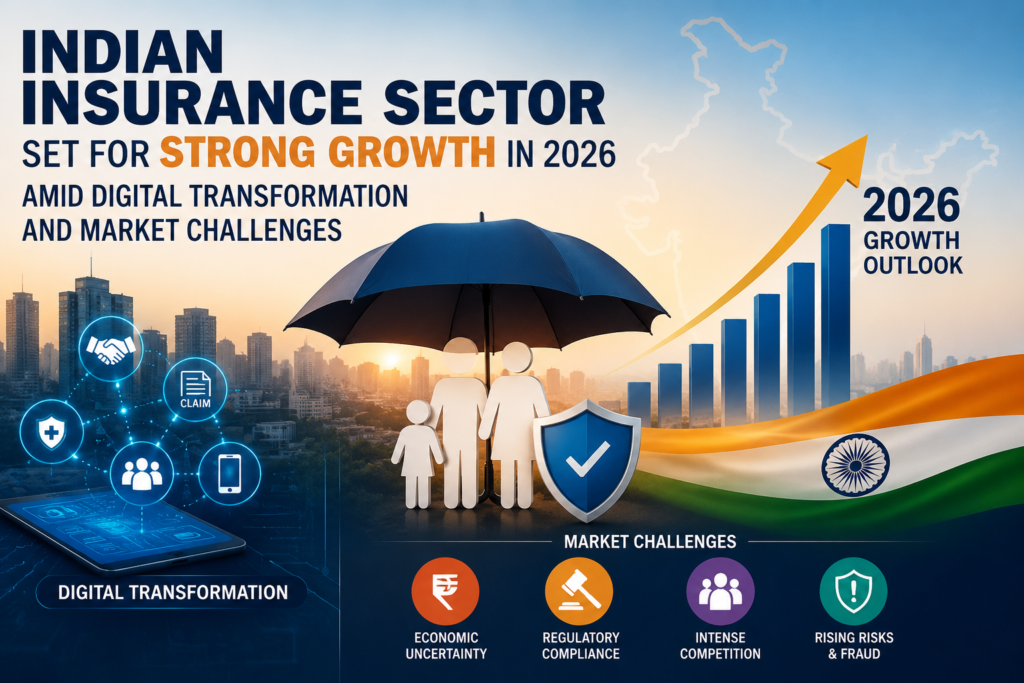
Indian Insurance Sector: Poised for Robust Growth Amidst Challenges and Transformation (as of mid-2026)
The Indian insurance industry stands at a pivotal juncture. Once dominated by state monopolies, it has evolved into a dynamic, competitive market blending public giants with agile private players. With total premiums reaching approximately ₹11.93 lakh crore in FY 2024-25 and assets under management (AUM) touching ₹74.44 lakh crore, the sector is a critical pillar of India’s financial system. Despite low penetration relative to global standards, strong economic tailwinds, regulatory reforms, and digital adoption position it for sustained expansion, potentially becoming one of the world’s top insurance markets within a decade.
Historical Evolution and Regulatory Framework
India’s insurance journey traces back to the 19th century with the establishment of the Oriental Life Insurance Company in 1818. Nationalisation in the 1950s and 1970s created monopolies: the Life Insurance Corporation of India (LIC) in 1956 for life insurance and the General Insurance Corporation (GIC) in 1972 for non-life insurance. The sector opened to private participation following the Malhotra Committee recommendations, leading to the formation of the Insurance Regulatory and Development Authority of India (IRDAI) in 1999.
IRDAI has been instrumental in fostering competition, consumer protection, and innovation. Recent reforms include the push for “Insurance for All by 2047,” simplification of policyholder regulations, and the adoption of Indian Accounting Standards (Ind AS 117) effective April 1, 2026, aligning Indian practices with global standards for better transparency and risk management. Foreign direct investment (FDI) up to 74% in insurance companies and 100% in intermediaries has attracted global capital and expertise.
Current Market Size, Growth, and Structure

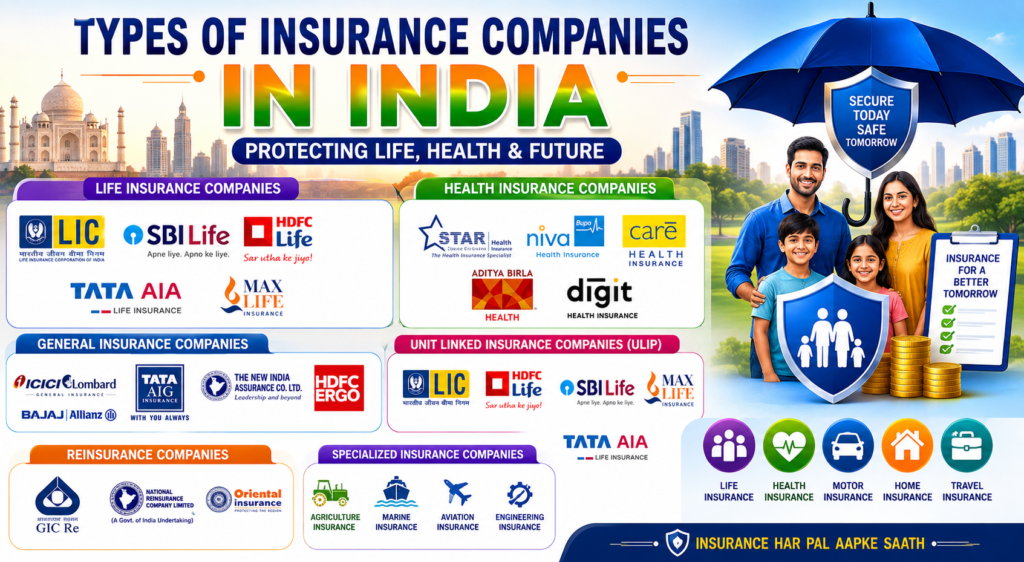
As of FY25, the Indian insurance market is among the world’s top 10 by premium volume but lags in penetration and density. Total premiums grew significantly, with life insurance dominating at around 74-75% of the pie. Life premiums reached about ₹8.86 lakh crore (up ~6.73% YoY), while non-life stood at ₹3.08 lakh crore (up ~6.19%).
Projections are optimistic:
- The overall market is expected to reach ₹19.3 lakh crore (US$222 billion) by FY26.
- Life and non-life premiums combined are projected to grow from ~USD 142-156 billion in 2025-26 toward USD 244 billion by 2031 at a CAGR of ~9.4%.
- Longer-term estimates suggest the market could hit USD 1 trillion+ by 2035 under favourable conditions.
Life Insurance Segment: LIC remains the undisputed leader with a market share of around 57-68% in recent periods (varying by new business vs overall), followed by private players like SBI Life (~9-10%), HDFC Life (~8-10%), ICICI Prudential, and others. Private insurers have steadily eroded LIC’s dominance through innovative products and superior customer service.
Non-Life (General) Insurance: Health insurance has overtaken motor as the largest segment, accounting for ~41% of gross direct premiums in FY25, driven by post-pandemic awareness, rising healthcare costs, and schemes like Ayushman Bharat. Crop insurance and other lines also contribute. Private players are gaining ground, expected to hold ~69.5% share in the coming years.
Insurance penetration hovers around 3.7-4.0% of GDP (life ~2.7-3%, non-life ~1%), far below global averages (~7-8%) and peers like China or South Korea. Density (premium per capita) remains low, signalling vast untapped potential as incomes rise.
Key Drivers of Growth
- Economic Expansion: India’s GDP growth (projected 6.5%+ in real terms) boosts disposable incomes, urbanisation, and risk awareness. The middle class is expanding rapidly, increasing demand for protection and savings products.
- Health and Wellness Focus: Rising medical inflation (10-14% annually), chronic diseases, and awareness have propelled health insurance. It is projected to grow at a 13-20% CAGR in the coming years.
- Digitalisation and Technology: IRDAI’s digital initiatives, online policy issuance, e-claims, telemedicine integration, and AI-driven underwriting are lowering costs and improving accessibility. InsurTech collaborations and mobile platforms are key enablers, especially in semi-urban/rural areas.
- Government Initiatives: PMJJBY, PMSBY, Ayushman Bharat, and crop insurance schemes extend coverage to vulnerable sections. Regulatory easing on commissions, product design, and distribution supports expansion.
- Demographic Dividend: A young population with increasing financial literacy views insurance as both protection and investment.
Major Players and Competitive Landscape
- Public Sector: LIC dominates life with massive scale and trust. Public non-life insurers (e.g., under GIC) hold significant shares but face competition.
- Private Sector: HDFC Life, SBI Life, ICICI Pru, Bajaj Allianz, and others excel in innovation, digital reach, and claim settlement ratios (often 98-99%). Many are pursuing IPOs for capital infusion.
- Reinsurers and Specialists: Growing presence in health, cyber, and parametric products.
Private players have captured significant new business market share through customer-centric approaches, though LIC retains strength in traditional and rural segments.
Challenges Facing the Sector
Despite momentum, several hurdles persist:
- Low Penetration: Cultural reliance on informal savings, lack of awareness in rural areas, and affordability issues limit uptake. Penetration dipped slightly post-peak due to GDP growth outpacing premiums in some years.
- Profitability Pressures: High distribution costs, rising claims (especially health), medical inflation, and competition squeeze margins. Legacy systems in some players hinder efficiency.
- Operational and Fraud Risks: Claim fraud, mis-selling concerns, and integration challenges with new tech. The shift to Ind AS will require significant system upgrades.
- Regulatory and Macro Risks: Interest rate volatility affects life products; economic slowdowns or geopolitical issues could impact growth. Climate risks elevate crop and property claims.
- Talent and Infrastructure: Need for skilled underwriters, data scientists, and widespread digital literacy.
Opportunities and Future Outlook
The sector’s potential is immense. Swiss Re and other forecasts predict steady real premium growth of 5-7%+ annually, outpacing GDP in some scenarios. Key opportunities include:
- Expansion into Underserved Markets: Rural, gig economy, and MSME-focused products.
- Innovative Products: Cyber insurance, wellness-linked policies, parametric (e.g., weather-indexed), and bundled offerings.
- Digital and Data-Driven Models: Big data, AI for personalised pricing/underwriting, blockchain for claims, and ecosystem partnerships (bancassurance, e-commerce).
- Sustainability and ESG: Green insurance products aligned with India’s climate goals.
- IPO Wave and Capital Inflows: Strengthening balance sheets for expansion.
By 2030-31, with supportive policies, the market could see life premiums alone scaling significantly, and non-life growing faster. Achieving “Insurance for All” would require penetration to rise toward 6-8% of GDP, creating trillions in economic value through risk mitigation, long-term savings, and investment in infrastructure.
Conclusion: A Sector in Transformation
India’s insurance sector is transitioning from volume-driven growth to value-led, technology-enabled maturity. While LIC and public entities provide stability and reach, private innovation drives dynamism. Regulatory vigilance by IRDAI ensures consumer protection amid rapid change.
Challenges like low penetration and cost pressures are real, but they pale against the opportunities presented by a fast-growing economy, demographic advantages, and digital leapfrogging. As India aims for developed-nation status by 2047, a robust insurance sector will be indispensable—protecting lives, assets, and aspirations while channelling household savings into productive investments.
Stakeholders—insurers, regulators, distributors, and customers—must collaborate on awareness, affordability, and innovation. With prudent navigation, the Indian insurance story could mirror the country’s broader economic ascent, delivering security and prosperity to millions.
==