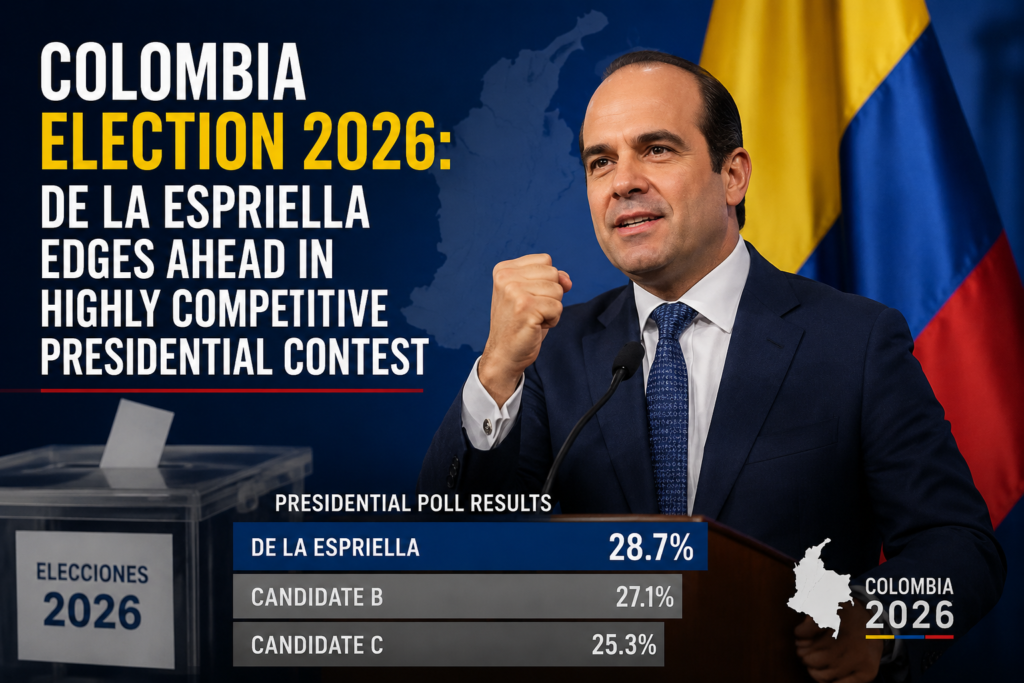
Colombia’s Pivotal Presidential Runoff: Abelardo De La Espriella’s Narrow Victory Signals a Rightward Shift Amid Deep Divisions
BOGOTA, June 22 (Expanded Analysis) — In one of the closest elections in recent Colombian history, right-wing candidate Abelardo De La Espriella has emerged victorious in Sunday’s presidential runoff. He clinched a narrow lead with nearly all ballots counted. As of the latest preliminary tally from the national registrar, De La Espriella secured about 49.66% of the vote—around 12.95 million ballots. Leftist Senator Iván Cepeda trailed at 48.70%, or roughly 12.7 million votes—a margin of about 246,000 to 250,000. Blank ballots, often seen as protest votes, made up about 1.6% of the total.
This razor-thin outcome, with less than one percentage point separating the candidates, underscores the profound polarisation gripping Colombia after four years under President Gustavo Petro, the country’s first leftist leader. De La Espriella is a political outsider and lawyer with no prior elected experience. He campaigned on a platform of law-and-order toughness, economic revitalisation, and a break from Petro’s policies. His victory represents more than a personal triumph. It signals a broader regional realignment toward the right, driven by voter frustration over crime, economic stagnation, and security failures.
The Candidates: Contrasting Visions for Colombia’s Future
Abelardo De La Espriella: The Outsider “Tiger”
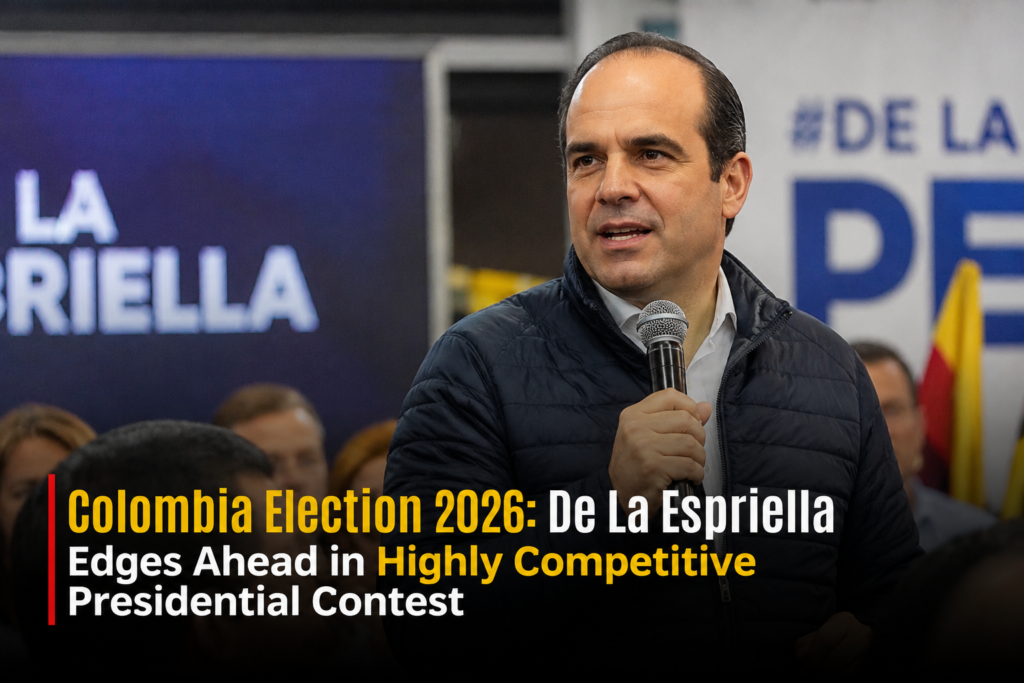
De La Espriella, often nicknamed “El Tigre,” positioned himself as a fresh alternative to the political establishment. A criminal defence lawyer and businessman with dual Colombian-U.S. citizenship, he has represented high-profile clients, including figures linked to paramilitary groups and Alex Saab, a Venezuelan associate facing U.S. charges. He firmly denies any wrongdoing, framing his legal work as a professional duty.
His campaign emphasised a hardline approach to crime and insecurity. Key pledges included building “mega-prisons,” ending peace talks with armed groups and rebels, boosting the oil and gas sector, lowering taxes, and slashing the size of the state by up to 40%. At the same time, he committed to preserving popular social measures from Petro’s era, such as the 23% minimum wage increase. Supporters like Viviana Olivos, a 46-year-old mechanical engineer in Barranquilla, celebrated the result as “a victory for Colombia — a change after four lost years with no clear direction.”
De La Espriella’s messaging resonated in urban middle- and upper-class neighbourhoods in Bogotá and Medellín, where flag-waving crowds cheered, honked horns, and set off fireworks. Major business groups, including the Colombo-American Chamber of Commerce, mining and banking associations, quickly congratulated him. He also received a high-profile endorsement from U.S. President Donald Trump, who called the race “very important to the future of Colombia and its relationship to the United States.” In a YouTube livestream, De La Espriella confirmed he had spoken with Trump, who offered congratulations.
Critics, however, point to his lack of governing experience and past legal associations as red flags. Cepeda’s camp highlighted these ties, accusing De La Espriella of links to right-wing paramilitaries and corruption cases, though he rejects any complicity.
Iván Cepeda: The Leftist Continuity Candidate
At 63, Senator Iván Cepeda, a philosopher, human rights activist, and son of a murdered communist leader, vowed to build on Petro’s legacy. His platform championed state pensions for the poor, union-backed labour reforms, a moratorium on new oil projects, and continued peace negotiations with armed groups that have plagued Colombia for decades.
Cepeda’s Historic Pact coalition performed strongly in Congress, holding the largest bloc in both houses without a majority. This legislative strength could complicate governance for the winner, forcing compromises in a divided political landscape. At his Bogotá event, Cepeda urged supporters to await the final ballot-by-ballot verification, challenging results from about 33,000 of 122,000 ballot boxes. “We are open to dialogue,” he said, “as long as they are respectful, genuine, and reflected in political actions that benefit the nation.”
His supporters, including Yesin Moreno, a 32-year-old audiovisual director, remained hopeful that the verification process—similar to the first round—could shift the outcome. Petro himself posted videos alleging instances of fraud, though election officials described the process as orderly.
Voter Turnout and the Drivers of the Race
Over 26.3 million Colombians voted out of 41.4 million eligible, a solid turnout. Security and the economy dominated concerns after Petro’s term, marked by failed peace talks, rising armed group influence, drug trafficking spikes, murders, and extortion, especially along the Caribbean coast.
De La Espriella blamed Petro for these woes, promising to end rebel negotiations, expand fossil fuels, and pursue austerity. Cepeda highlighted Petro’s achievements, like record cocaine seizures, but struggled to counter narratives of governance failures.
Governance Challenges Ahead
The winner inherits high public debt, a fragmented Congress, and persistent insecurity. De La Espriella will likely need to moderate proposals to secure legislative support, as Cepeda’s party remains influential. Analysts predict a period of negotiation and potential gridlock.
A Regional Rightward Tide
Colombia’s result fits a Latin American pattern. Right-wing leaders have recently won in Chile, Argentina, Costa Rica, Bolivia, and Ecuador. In Peru, conservative Keiko Fujimori appeared poised for victory. These shifts often stem from crime and economic worries.
Trump’s regional moves—arresting Maduro, Caribbean strikes on suspected drug boats, and the “Shield of the Americas” alliance—amplify this dynamic. His endorsement of De La Espriella highlighted U.S. stakes in Colombia’s alignment.
Historical and Social Context
Colombia’s conflict legacy looms large. Petro’s peace efforts largely failed as groups grew stronger. De La Espriella cast opponents as “allies of criminals,” a charge Cepeda rejected, citing evidence gaps. Petro’s government touted anti-drug successes, but public perception favoured tougher measures.
Cepeda’s personal story—as the son of a murdered leader—embodies human rights struggles, appealing to victims and progressives. De La Espriella’s outsider appeal tapped anti-establishment sentiment.
Reactions and the Road Forward
Business sectors welcomed De La Espriella, anticipating investor-friendly policies. Leftist supporters expressed shock and vowed resistance. Verification continues under notaries and judges, with final results expected soon. De La Espriella takes office on August 7.
This election highlights Colombia’s divides: urban vs rural, security hawks vs peace advocates, fiscal conservatives vs social spenders. De La Espriella’s win offers a mandate for change but demands coalition-building in a fractured polity. Success hinges on addressing debt, crime, and inequality without alienating key constituencies.
As one supporter noted amid celebrations, it marks “a change after four lost years.” Yet for millions hoping for continuity in social gains, the coming years will test whether this shift delivers stability or deepens rifts. Colombia’s democracy, resilient yet strained, now faces its next chapter.
===