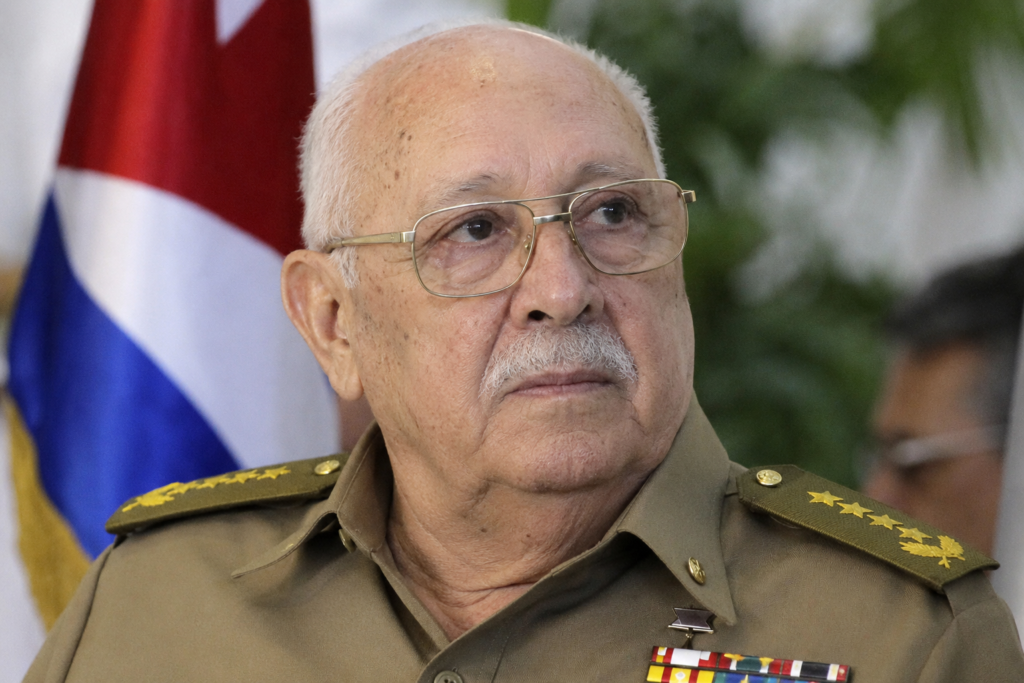
Ramiro Valdés Menéndez: A Pillar of the Cuban Revolution Passes at 94
HAVANA — Ramiro Valdés Menéndez, one of Fidel Castro’s earliest and most steadfast collaborators, a foundational figure of the Cuban Revolution, and a towering presence in the island’s political and security apparatus for more than six decades, died on Sunday, June 21, 2026, at the age of 94. Cuban President Miguel Díaz-Canel announced the news on social media, describing the loss in deeply personal terms.
“The death of Commander Ramiro hurts deeply, like that of a father,” Díaz-Canel wrote on X. “Until victory, always, Commander!”
No cause of death was provided in the official announcement, consistent with the Cuban government’s customary restraint on such details for high-ranking revolutionary figures. Valdés’ passing removes one of the last living links to the “historic generation” that overthrew Fulgencio Batista’s dictatorship in 1959 and shaped Cuba’s socialist system for generations.
Early Life and the Spark of Revolution

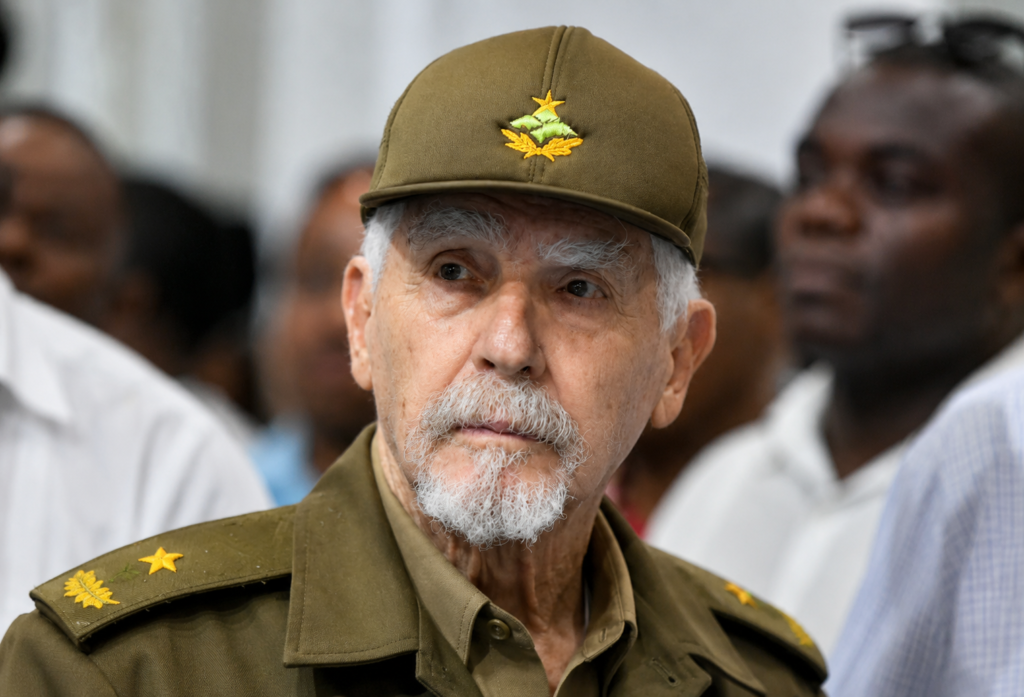
Born on April 28, 1932, in Artemisa, then part of Pinar del Río province (now Artemisa Province), Valdés grew up in a modest environment during a turbulent period in Cuban history. The island was under the authoritarian rule of Fulgencio Batista, whose regime was marked by corruption, inequality, and repression—conditions that radicalised many young Cubans.
At just 21 years old, Valdés joined Fidel Castro and a small group of revolutionaries in the audacious assault on the Moncada Barracks in Santiago de Cuba on July 26, 1953. This failed attack, though militarily disastrous, became the symbolic launch of the 26th of July Movement and the broader insurrection against Batista. Valdés was among the eight selected to storm the main post. He was reportedly the first to enter after helping remove a chain blocking access, alongside companions José Ponce and Jesús Montané. He survived the chaos, sustaining only minor wounds, but was captured days later, tried, and imprisoned on the Isle of Pines (now Isla de la Juventud).
An amnesty in 1955 freed him and other Moncada attackers. Valdés went into exile in Mexico, where he helped organise and train the expedition that would reignite the armed struggle. On November 25, 1956, he was one of 82 men aboard the yacht Granma, which sailed from Tuxpan, Mexico, toward Cuba’s eastern coast. The landing on December 2 was a near-catastrophe: Batista’s forces ambushed the survivors, scattering the group. Only about 12 made it to the Sierra Maestra mountains, including Fidel Castro, his brother Raúl, Ernesto “Che” Guevara, and Valdés himself.
This small band formed the nucleus of the Rebel Army. In the rugged Sierra Maestra, Valdés rose quickly, serving as Guevara’s deputy commander. He participated in key engagements, notably the decisive Battle of Santa Clara in late 1958, where Guevara’s column played a pivotal role in the collapse of Batista’s regime. On January 1, 1959, Batista fled, and the revolutionaries entered Havana in triumph. Valdés, one of the few who took part in Moncada, the Granma landing, and the final offensive, earned legendary status within the movement.
Architect of Cuba’s Security State
In the early days of the revolutionary government, Valdés was entrusted with critical security responsibilities. He helped establish and lead the G-2 intelligence service and became a central figure in the Ministry of the Interior (MININT). He served as Interior Minister in two periods: 1961–1968 and 1979–1985. These roles placed him at the heart of Cuba’s efforts to consolidate power, defend against counter-revolutionary threats (real and perceived), and counter U.S.-backed operations, including the Bay of Pigs invasion in 1961 and ongoing covert activities.
Valdés’ tenure in security was controversial. Supporters viewed him as a tireless guardian of the revolution against imperialism and internal sabotage. Critics, particularly in the Cuban diaspora and human rights circles, associated him with the repressive apparatus, including surveillance, political imprisonment, and the maintenance of one-party rule. His reputation as a hardliner earned him the nickname of Cuba’s “spy chief” in some international accounts.
He received intelligence training in Czechoslovakia in 1960 as part of a Raúl Castro delegation, further professionalising Cuba’s security services along Soviet-bloc models. Despite occasional falls from favour—such as his removal in the late 1960s amid internal rivalries—he repeatedly returned to prominence, demonstrating extraordinary resilience and loyalty.
Personal Style and Enduring Commitment
Valdés projected a distinctive revolutionary image. Like Castro and Guevara, he favoured olive-green fatigues even in government settings. He maintained the distinctive Leon Trotsky-style goatee from his guerrilla days throughout his life. A noted fitness enthusiast, he adhered to a rigorous exercise regimen well into his 80s, embodying the revolutionary ideal of discipline and vitality.
His charisma, organisational skill, and ideological steadfastness made him a reliable pillar. He held a wide array of high-level positions over the decades: Vice Minister of Defense, Minister of Information and Communications (appointed in 2006, where he oversaw the development of Cuba’s telecom and IT sectors in partnership with countries like China, Japan, and Korea), Vice President of the Councils of State and Ministers, and, more recently, Deputy Prime Minister with a focus on the island’s chronic energy challenges.
Even as Raúl Castro initiated a gradual generational transition—handing the presidency to Díaz-Canel in 2018—Valdés remained active. He continued appearing in military attire alongside Díaz-Canel, urging conservation measures during electricity shortages and reinforcing “revolutionary” discipline. His involvement in day-to-day governance, particularly energy issues, underscored his commitment to practical problem-solving alongside ideological purity.
Valdés was a longtime member of the Communist Party’s Politburo (from 1965 until 2019) and held the honorary titles “Hero of the Republic” and “Commander of the Revolution.” His loyalty never wavered, even through economic crises, the collapse of the Soviet Union, and periods of intense hardship for ordinary Cubans.
A Voice for Unity and Historical Memory
In public statements, Valdés consistently emphasised unity as the revolution’s greatest strength. At the 61st anniversary of the Moncada attack in 2014, he declared: “We cannot forget we arrived here thanks to the unity of the people and their trust in the revolution. We must preserve this unity above all things because we are aware this fight has not ended.”
In May 2025, during a meeting with young people at the former prison hospital in Santiago de Cuba, he reflected on history as a guide: “Our guide is in our history… We are guided by history, that’s how it has always been.” He recounted episodes from the liberation struggle and stressed the need for new generations to strengthen revolutionary unity in every community.
Legacy: Hero to Some, Symbol of Repression to Others
In Cuba, official tributes hailed Valdés as a model of dedication and loyalty. A Communist Party statement praised his “absolute loyalty to the leadership of Fidel and Raúl” and his contributions to defence, security, and technological development.
Internationally and among exiles, reactions were more mixed. While acknowledging his revolutionary credentials, many viewed him as emblematic of the regime’s authoritarian structures. His death highlights the fading of the original revolutionary cohort—Fidel Castro died in 2016, and Raúl Castro, though alive, has largely withdrawn from public life—amid ongoing economic difficulties, migration pressures, and debates over Cuba’s future.
Valdés is survived by family, including his spouse, Alicia Alonso Becerra. Funeral arrangements were expected to include full state honours, reflecting his status as one of the revolution’s most enduring figures.
Broader Historical Context
Valdés’ life spanned nearly a century of Cuban history: from the Machado and Batista dictatorships, through the revolutionary triumph, the Cold War confrontation with the United States, the Special Period after the Soviet collapse, and into the current era of limited reforms and persistent challenges. His career illustrates the continuity and adaptability of Cuba’s leadership core.
As one of only a handful who participated in the three defining moments—Moncada, Granma, and the 1958 offensive—he embodied the revolutionary narrative of sacrifice and victory. His later roles in security, communications, and governance showed a willingness to engage with modern challenges, from information technology to energy infrastructure, while never compromising on core socialist principles.
Reflections on an Era Ending
The death of Ramiro Valdés Menéndez closes another chapter in the story of Cuba’s revolution. For supporters, it is a moment to honour a life of unwavering service. For detractors, it prompts reflection on the costs of that commitment. For historians and observers, it offers an opportunity to assess the long arc of a movement that transformed Cuba and influenced global politics for decades.
In his final years, Valdés remained a visible link to the past while addressing present crises. His emphasis on unity, discipline, and historical memory will likely echo in official discourse for years to come. As Cuba navigates an uncertain future—economic pressures, generational change, and shifting international dynamics—the example (and controversies) of figures like Valdés will continue to shape national conversations.
President Díaz-Canel’s poignant farewell—“like that of a father”—captures the emotional weight within the revolutionary family. For millions of Cubans, whether at home or abroad, Valdés represented an era of idealism, conflict, and profound transformation. His departure underscores the passage of time and the enduring question of what comes next for the revolution he helped build and defend.
===