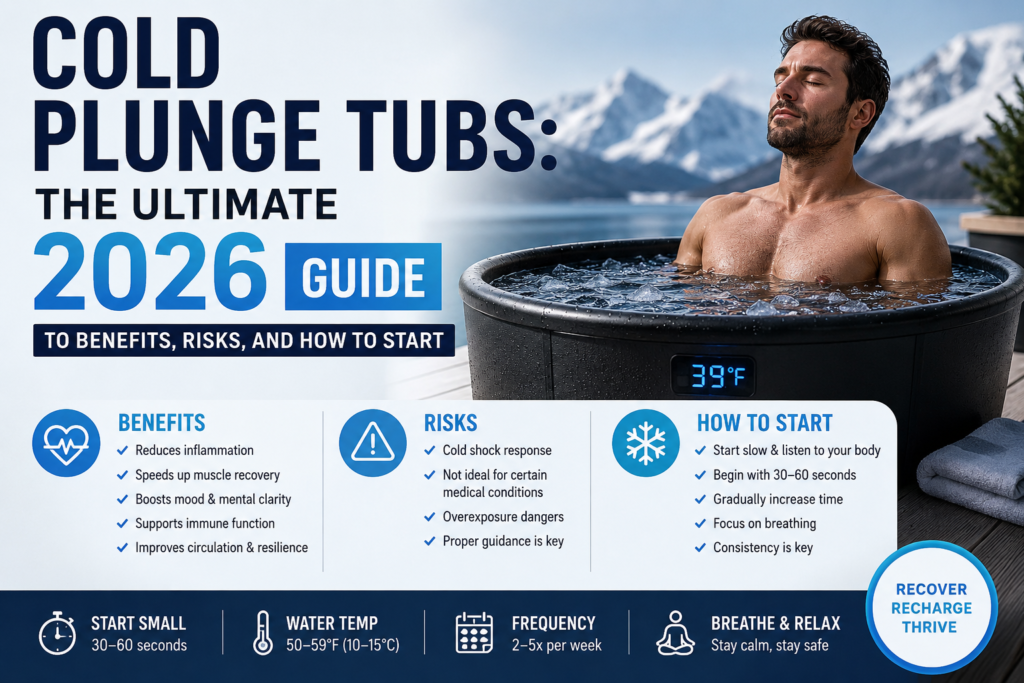
Health & Wellness: The Ultimate Guide to Cold Plunge Tubs
Cold plunge tubs have surged in popularity as a cornerstone of modern wellness routines. Athletes, biohackers, and everyday individuals immerse themselves in icy water for recovery, mental resilience, and potential health gains. Also known as cold-water immersion (CWI) or ice baths, this practice involves submerging the body (or parts of it) in water typically between 50–59°F (10–15°C) for short periods.
What was once a niche athletic recovery tool has become a mainstream trend, fueled by influencers like Wim Hof, celebrities, and social media challenges. But beyond the hype, what does science say? This in-depth article explores the history, mechanisms, benefits, risks, practical guidance, equipment options, and more—aiming for a balanced, evidence-informed perspective on whether cold plunge tubs deserve a place in your wellness regimen.
A Brief History of Cold Plunge Therapy
Cold therapy dates back thousands of years. One of the earliest references appears in the Edwin Smith Papyrus from ancient Egypt around 3500 BCE, which documented cold applications for treating skin irritations and wounds. This marked an early shift toward observational, less mystical approaches to medicine.
In ancient Greece, Hippocrates advocated cold water for fevers and pain relief, aligning with his theory of bodily humours. Romans incorporated frigidaria (cold rooms or baths) into their famous bathhouses as part of contrast therapy—alternating hot and cold for circulation and invigoration. Similar practices appeared in Nordic cultures (vinterbadning or winter bathing), traditional Chinese medicine for balancing yin and yang, and among Native American and Inuit peoples for spiritual purification and resilience.
During the Renaissance and Enlightenment eras, physicians like William Cullen in the 18th century prescribed cold baths for various ailments. In the 19th century, cold water treatments gained traction in hospitals and sanatoriums for fevers and inflammation. Baron de Larrey, a French surgeon, used ice to numb limbs before amputations.
The modern athletic use emerged in the mid-20th century. Researchers like D.H. Clarke explored post-exercise recovery in the 1960s. Marathon runner Paula Radcliffe popularised it in the early 2000s by crediting ice baths for her success. Olympic athletes, NFL players, and professionals like Michael Phelps adopted it widely. Today, innovations like dedicated plunge tubs with chillers make it accessible for home use, while figures like Wim Hof have blended it with breathing techniques for broader appeal.
From ancient ritual to high-tech recovery tool, cold plunging reflects humanity’s enduring fascination with harnessing environmental stressors for health.
The Science Behind Cold Plunges
Cold-water immersion triggers powerful physiological responses. Upon entry, the body experiences the “cold shock response”: rapid increases in heart rate, blood pressure, and breathing rate as blood vessels constrict (vasoconstriction) to conserve heat and redirect blood to vital organs. This is followed by vasodilation upon rewarming, which may enhance circulation.
Key hormonal and biochemical changes include:
- Norepinephrine surge: Up to 530% increase, boosting alertness, focus, and mood regulation.
- Dopamine release: Around 250% increase, contributing to feelings of pleasure and motivation.
- Reduced inflammation: Cold slows metabolic activity, decreasing swelling and delayed-onset muscle soreness (DOMS).
- Brown fat activation: Potential metabolic boost as the body generates heat.
A 2025 systematic review and meta-analysis in PLOS One (11 studies, 3,177 participants) found time-dependent effects: acute increases in inflammation markers right after immersion, followed by stress reduction at 12+ hours, improved sleep, and quality of life. Evidence for immunity and mood was weaker or mixed.
Compared to whole-body cryotherapy (dry air at -100°C to -140°C or colder for 2-4 minutes), cold plunges offer conductive cooling via water, which is more efficient at heat extraction but involves longer exposure (typically 1-5+ minutes). Cryotherapy is quicker and drier but often more expensive and less accessible.
Limitations in research persist: many studies are small, vary in protocols, and focus on athletes. Long-term effects in healthy adults need more robust data. Nonetheless, the practice reliably induces adaptive stress (hormesis), potentially building resilience similar to exercise or fasting.
Proven and Promising Health Benefits
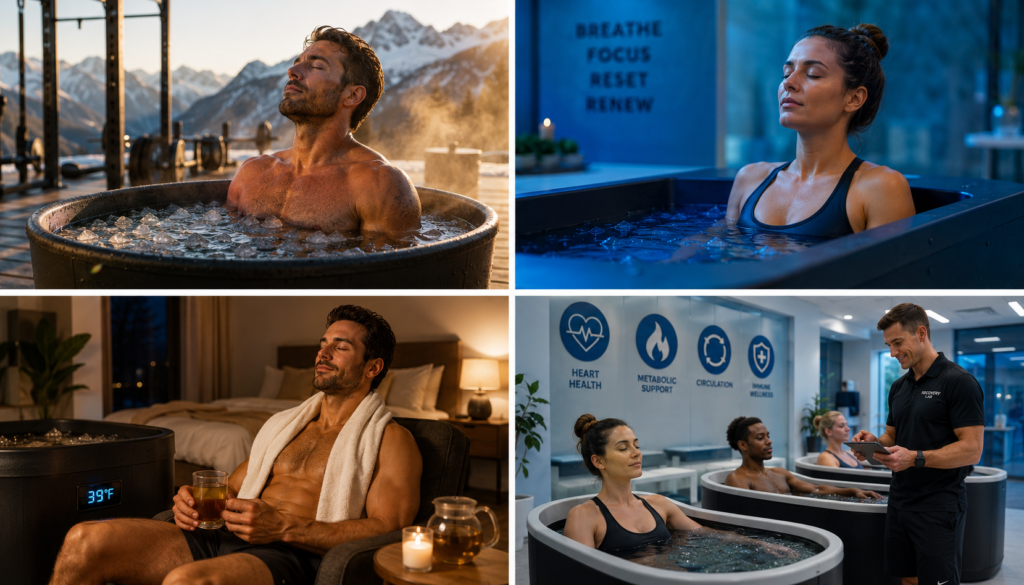
1. Muscle Recovery and Reduced Soreness
Cold plunges excel at mitigating post-exercise inflammation and DOMS. Vasoconstriction flushes metabolic waste, while rewarming improves nutrient delivery. Meta-analyses show reductions in perceived fatigue, muscle soreness, and markers like creatine kinase (CK) at 24-48 hours. Athletes in high-intensity sports (running, team sports, resistance training) often report faster recovery.
However, timing matters. Immediate post-strength training plunges may blunt muscle hypertrophy by limiting inflammatory signals needed for growth. Use on rest days or after endurance sessions for best results.
2. Mental Health and Mood Enhancement
The mental “reset” is one of the most touted benefits. The shock builds tolerance to discomfort, enhancing resilience. Studies link it to reduced anxiety, better focus, and potential antidepressant effects via neurotransmitter boosts. Many describe post-plunge euphoria or clarity. The PLOS One review noted stress reduction delayed by hours.
3. Improved Sleep Quality
Cold exposure, especially in men, correlates with better sleep. Lowering core body temperature mimics natural pre-sleep cooling, potentially reducing nighttime restlessness—valuable for athletes.
4. Immune and Metabolic Support
Preliminary evidence suggests enhanced immune tolerance, fewer sick days (e.g., from cold showers), and brown fat activation for modest metabolic increases. It may help regulate inflammation in autoimmune contexts, though more research is needed. Cardiovascular markers might improve with consistent use.
5. Other Potential Benefits
- Faster cooling after heat stress.
- Enhanced circulation.
- Possible libido or overall vitality boosts (anecdotal).
- Quality of life improvements in regular practitioners.
Benefits are dose-dependent and individual. Consistency (e.g., 2-4 times weekly) often yields better results than sporadic extreme sessions.
Risks, Contraindications, and Safety
Cold plunging is not risk-free. The initial shock can cause hyperventilation, dizziness, or panic. Prolonged exposure risks hypothermia, frostbite, or cardiovascular strain (elevated blood pressure and heart workload).
Key Risks:
- Hypothermia and core temperature drop.
- Cardiac events, especially in those with heart disease, hypertension, or arrhythmias.
- Skin/nerve damage or numbness impairing exit from the tub.
- Interference with muscle gains if mistimed.
Who Should Avoid or Consult a Doctor:
- People with cardiovascular conditions, Raynaud’s, cold agglutinin disease, pregnancy, diabetes (circulation issues), or poor thermoregulation.
Safety Guidelines:
- Never plunge alone.
- Start warm (50-59°F) and short (30 seconds to 2 minutes).
- Exit if feeling unwell.
- Warm up gradually afterwards (dry clothes, light movement, optional sauna contrast).
- Monitor water quality to prevent infections.
A 2022 death linked to an ice bath highlights the need for caution.
How to Use a Cold Plunge Tub: Best Practices
Temperature: The ideal range is 50–59°F (10–15°C) for most. Beginners: higher end. Advanced: 39–50°F, but avoid extremes without experience.
Duration: 1–5 minutes per session. Beginners: 30–120 seconds. Build tolerance gradually. Total weekly exposure: Start low.
Frequency: 2–4 times per week. Daily is possible for acclimated users.
Protocol Tips:
- Breathe steadily (nasal if possible) to manage shock—Wim Hof-style techniques help.
- Immerse to neck or chest; keep head out initially.
- Post-plunge: Rewarm naturally or with contrast (sauna/hot shower).
- Track with a thermometer, journal effects on recovery/mood.
- Combine with training: after endurance or on recovery days.
DIY vs. Dedicated Tub: A bathtub with ice works for starters, but dedicated tubs maintain temperature and filtration better.
Contrast Therapy: Alternating cold plunge with sauna (e.g., 3 min cold / 10-15 min heat) amplifies circulation benefits but increases cardiovascular demand—approach cautiously.
Choosing and Setting Up a Cold Plunge Tub
The market in 2026 offers options from inflatable/portable (~$100–500) to premium chiller-equipped models ($5,000+).
Top Considerations:
- Size and Capacity: Fits one person comfortably; larger for sharing.
- Chiller/Filtration: Essential for consistent temp and hygiene (UV, ozone, or filters).
- Material/Durability: Rotomolded plastic, inflatable, or stainless for indoor/outdoor use.
- Features: App control, insulation, easy drain.
- Budget: Entry-level stock tanks or inflatables for testing; premium like Plunge, Sun Home, Ice Barrel, or Renu Therapy for convenience.
Popular picks include the Plunge (versatile, durable), Ice Barrel (portable, affordable), and high-end customizable units. Test temperature stability, ease of cleaning, and warranty. Indoor models need good drainage and ventilation; outdoor ones require weatherproofing.
Setup Tips: Place on level ground, use a thermometer, establish a cleaning routine (weekly drain/filter), and consider insulation covers to save energy.
Real-World Experiences and Integration
Many athletes swear by plunges for quicker turnaround between sessions. Wellness enthusiasts report sharper focus and stress relief. A consistent routine—perhaps morning plunge for alertness or evening for recovery—integrates well with meditation, breathwork, or sauna.
Listen to your body. Not everyone loves the cold; some prefer cold showers as a gentler entry.
Conclusion: Worth the Plunge?
Cold plunge tubs offer tangible benefits for recovery, mental toughness, and wellness when used intelligently. Science supports reductions in soreness, stress management, and sleep improvements, though not a miracle cure. Risks are manageable with precautions and medical clearance where needed.
Start small, stay consistent, and view it as one tool in a broader toolkit: balanced nutrition, exercise, sleep, and stress management. Whether a simple ice-filled tub or a luxury chiller model, the practice reconnects us with ancient resilience-building wisdom in a modern context.
As with any wellness trend, approach with curiosity and evidence in mind. Consult professionals, experiment safely, and discover what works for your body. The cold awaits—ready to invigorate?
==