

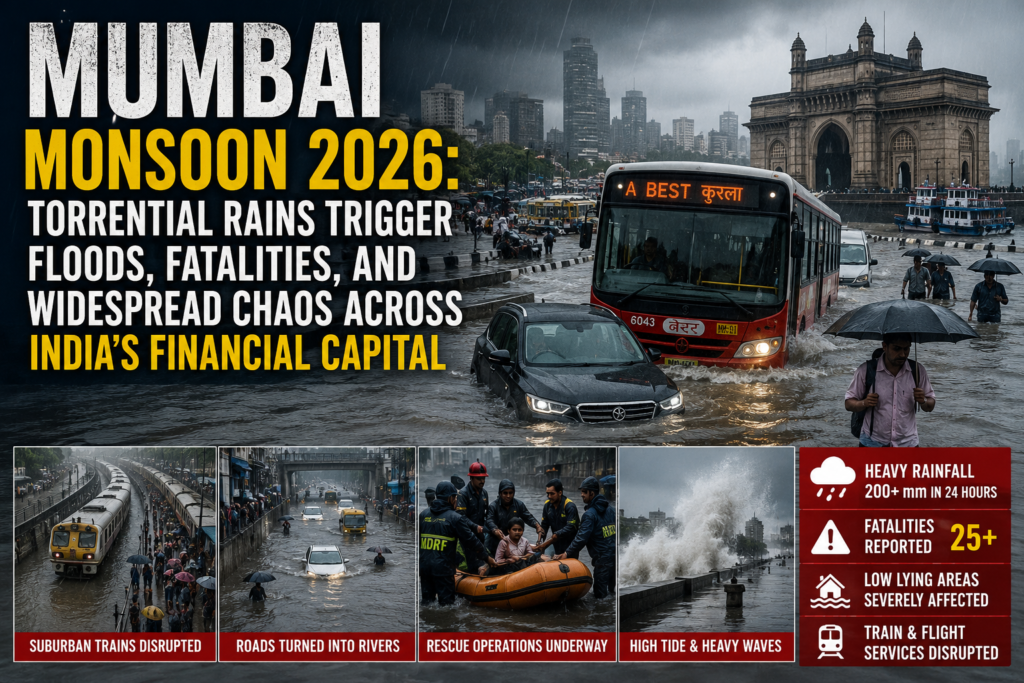
Mumbai Monsoon Mayhem: Torrential Rains Batter India’s Financial Capital, Triggering Floods, Fatalities, and Widespread Chaos (July 2026)
Mumbai, India’s financial capital, is once again grappling with the southwest monsoon. In the first week of July 2026, unprecedented rainfall lashed the city and its suburbs, turning streets into rivers, disrupting essential services, and claiming lives. The India Meteorological Department (IMD) has issued repeated red and orange alerts, warning of heavy to extremely heavy showers, gusty winds up to 60 kmph, and a high risk of flash floods. As of July 6, the situation remains critical, with the Maharashtra government and civic authorities scrambling to respond.
The Deluge Unfolds: Record-Breaking Rainfall
Since intensified monsoon activity began around July 1-2, Mumbai has received a staggering volume of rain. The Santacruz observatory has logged approximately 675 mm, while Colaba has recorded around 500 mm in the initial days, pushing the city’s cumulative monsoon total well past 1,000 mm in just over a week. Several localities, including Powai, Vikhroli, Andheri, and parts of the western and eastern suburbs, witnessed 200-300 mm in a single 24-hour period—accounting for nearly 80% of the average July rainfall in a matter of days.
Overnight rains on July 4-5 were particularly devastating, with some areas reporting up to 315 mm. This extreme precipitation, combined with high tides reaching 4.27-4.40 meters, has overwhelmed the city’s ageing infrastructure. Low-lying areas, coastal stretches, and riverbanks along the Mithi River have borne the brunt, leading to severe waterlogging that persists for hours or even days.
Meteorologists attribute this intensity to active monsoon conditions, possibly amplified by climate change patterns that are making extreme weather events more frequent and severe in the region. Historical parallels are drawn to the catastrophic 2005 floods, when 944 mm fell in a single day, killing over 1,000 people statewide. While 2026’s event has not yet matched that single-day record, the cumulative impact over multiple days is causing comparable disruptions.
Human Toll: Lives Lost Amid the Chaos
The rains have exacted a tragic human cost. As of July 6, reports indicate at least 13 deaths in Maharashtra over the past few days, with Mumbai seeing several incidents directly linked to the downpour. In Mankhurd, a four-storey illegal shanty collapsed on Sunday night, killing six people, including five children, as heavy rain weakened the structure.
Other fatalities include a man killed by a falling tree in Kurla and incidents involving people falling into manholes or drowning in flooded areas. Rescue operations by the National Disaster Response Force (NDRF), fire brigade, and civic teams have been ongoing, with hundreds shifted from vulnerable low-lying zones to temporary shelters. Vulnerable populations in slums and informal settlements face heightened risks due to poor housing and inadequate drainage.
Infrastructure Paralysis: Transport, Flights, and Daily Life Grounded
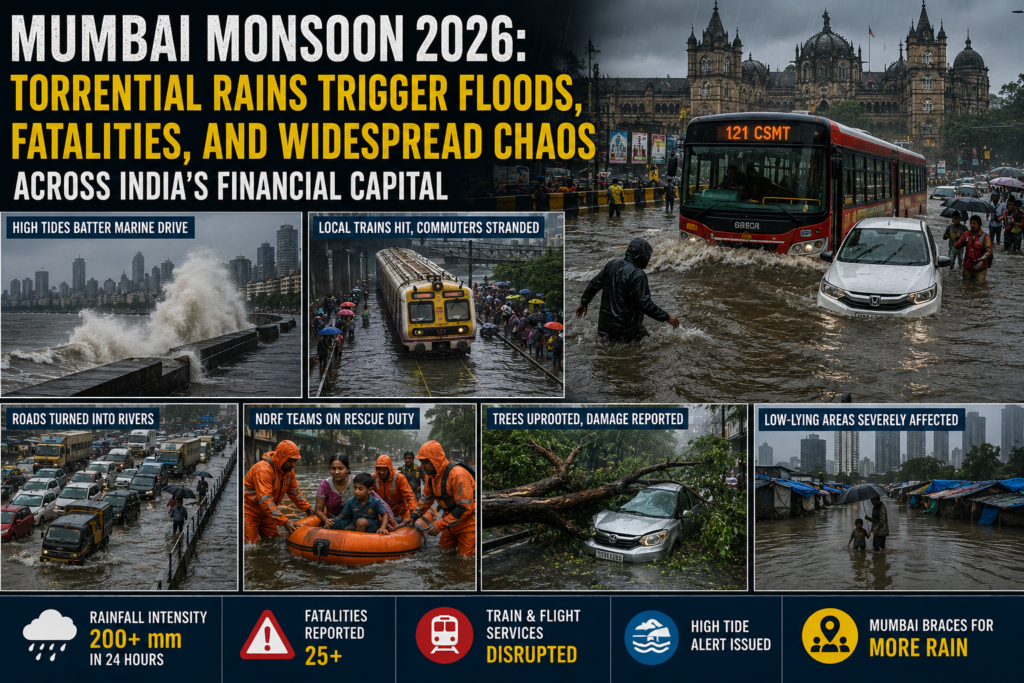
Mumbai’s legendary resilience is being tested like never before. Suburban railway services—the lifeline for millions—have faced severe delays and partial suspensions due to waterlogged tracks and signal failures. Local trains, already strained, crawled at reduced speeds, affecting commuters who rely on them for work.
Road traffic has come to a near standstill in many parts. Major arteries like the Mumbai-Pune Expressway and Eastern Express Highway reported landslides, tree falls, and massive jams. Subways in Andheri and other areas were submerged, forcing vehicles to wade through knee-deep or waist-deep water. Bus services were curtailed, and two-wheelers struggled dangerously.
Air travel has been heavily impacted. Chhatrapati Shivaji Maharaj International Airport suspended runway operations for over an hour during peak disruptions, leading to widespread delays and some cancellations. Airlines issued advisories urging passengers to check status amid congestion on approach roads.
Schools and colleges across Mumbai, Thane, and nearby districts were declared holidays on July 4, 5, and 6 as a precautionary measure. Mumbai University postponed exams scheduled for July 6. The Maharashtra Legislative Assembly was adjourned amid the crisis.
Power outages, mobile network disruptions, and water contamination risks add to the misery. The Brihanmumbai Municipal Corporation (BMC) has activated emergency helplines and deployed pumps, but the sheer volume of water has tested their capacity.
Broader Impact on Maharashtra and Beyond
The deluge extends beyond Mumbai. Neighbouring districts like Thane, Palghar, Raigad, and Ratnagiri are under similar alerts, with landslides and flooding reported. In Gujarat and other parts of the country, monsoon activity has intensified, but Maharashtra has been among the hardest hit. Rivers are swollen, reservoirs have seen levels rise sharply (from single digits to around 17% in some cases), offering some relief for water scarcity but raising flood concerns.
Agricultural impacts in the hinterland, potential damage to kharif crops, and economic losses in Mumbai’s commercial hubs are mounting. The city’s GDP contribution to India makes these disruptions national news.
Root Causes: Why Mumbai Floods Repeatedly
Mumbai’s vulnerability is structural and longstanding. The city’s stormwater drainage system dates back to the early 20th century, designed for far lower rainfall intensities (around 25 mm per hour). Rapid urbanisation, reclamation of mangroves and wetlands, encroachment on the Mithi River, and unplanned development in the suburbs have exacerbated the problem. Climate change is intensifying rainfall patterns, with studies linking extreme events to rising global temperatures.
Encroachments, poor solid waste management leading to clogged drains, and inadequate desilting before the monsoon are perennial issues. Despite billions spent on projects like the Mumbai Urban Flooding Mitigation Plan, implementation lags. Political blame games often surface, with opposition parties criticising the ruling dispensation’s preparedness.
Government and Civic Response
The BMC, under the state government, has mobilised teams for pumping, road clearance, and rescues. Chief Minister and other leaders have reviewed the situation. Warnings urge residents to stay indoors, avoid low-lying areas, and not venture into flooded zones. IMD forecasts suggest the intensity may ease slightly after July 7, but moderate to heavy rain could persist.
Long-term, experts call for integrated solutions: upgrading drainage, restoring mangroves, enforcing building norms, and better urban planning. Public awareness and community resilience programs are also vital.
Stories from the Ground: Mumbai’s Spirit Endures
Amid the hardship, Mumbaikars showcase their trademark grit. Neighbours help each other, volunteers assist in rescues, and essential workers—doctors, police, and cleaners—brave the elements. Social media buzzes with real-time updates, warnings, and even moments of levity, like videos of people navigating flooded streets creatively.
However, the disproportionate impact on the poor, daily wage earners, and slum dwellers highlights deep inequalities. A recent study noted that rainfall-driven flooding contributes significantly to monsoon-season mortality, especially among vulnerable groups.
Looking Ahead: Lessons for a Climate-Resilient Future
As the rains continue into July 6 and potentially beyond, the focus remains on immediate relief and minimising further loss. This event serves as a stark reminder of the urgent need for sustainable urban development in coastal megacities facing climate risks.
Mumbai has weathered many monsoons, but each deluge underscores the gap between its global ambitions and ground realities. With proactive measures, stricter enforcement, and investment in resilient infrastructure, the city can hope to mitigate future tragedies. For now, the “Maximum City” endures another test of its limits, its residents waiting for the skies to clear and normalcy to return.
====