

The Super Mario Galaxy Movie (2026): A Comprehensive, Detailed Overview
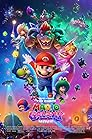
The Super Mario Galaxy Movie, released in 2026, is the highly anticipated sequel to Illumination and Nintendo’s 2023 smash hit The Super Mario Bros. Movie. Directed by Aaron Horvath and Michael Jelenic, with a screenplay by Matthew Fogel, this animated adventure-comedy transports audiences from the familiar Mushroom Kingdom into the vast, whimsical expanse of outer space. Drawing primary inspiration from the beloved Nintendo Wii games Super Mario Galaxy (2007) and Super Mario Galaxy 2 (2010), while incorporating elements from across the Mario franchise—including Super Mario Odyssey, Star Fox, and more—the film blends high-stakes action, heartfelt family themes, and signature Mario humour.
At its core, the story follows Mario, Luigi, Princess Peach, and new allies as they venture into the cosmos to rescue Princess Rosalina from Bowser Jr., who seeks to harness her cosmic powers for a universe-threatening scheme. With a runtime of 98 minutes, a $110 million budget, and a worldwide box office gross of over $1.009 billion, it became the highest-grossing film of 2026 despite mixed-to-negative critical reception.
Plot Summary (Full Spoilers)
The film opens on the serene Comet Observatory, home to Princess Rosalina (voiced by Brie Larson) and her adopted children, the Lumas—star-like beings she nurtures with stories and care. Rosalina, a cosmic guardian with immense stellar powers, is suddenly ambushed by Bowser Jr. (Benny Safdie). Jr., eager to prove himself to his father, kidnaps her to drain her essence and power a massive cannon capable of reshaping or destroying universes, all in service of creating a perfect empire for Bowser.
Meanwhile, back in the Mushroom Kingdom, Mario (Chris Pratt) and Luigi (Charlie Day) are living relatively peaceful lives after their previous adventures. They respond to a disturbance in Tostarena Town (a nod to Super Mario Odyssey), where they encounter and befriend Yoshi (Donald Glover). Yoshi’s backstory is charmingly detailed: he hatched in Brooklyn, accidentally caused chaos in a museum by breaking a dinosaur skeleton, and fled back to his home world. This sequence serves as a fun bridge from the first film, highlighting themes of displacement and found family.
A lone Luma arrives in the Mushroom Kingdom seeking help, enlisting Princess Peach (Anya Taylor-Joy) and Toad (Keegan-Michael Key). While Peach and Toad depart on their quest, Mario, Luigi, and Yoshi stay behind to protect the kingdom and even attempt to rehabilitate the shrunken, imprisoned Bowser (Jack Black), who was defeated and miniaturised at the end of the previous movie.
The plot accelerates when Bowser Jr. uses advanced technology to lift Peach’s castle into space in a bid to free his father. A chaotic battle ensues, causing the castle to plummet into the Honeyhive Galaxy. Here, the heroes encounter bee inhabitants and the Honey Queen (voiced by Issa Rae). Bowser goads Mario into a confrontation that restores his size, but in a surprising twist of reluctant benevolence, he offers himself for arrest in exchange for transporting Mario, Luigi, and Yoshi toward the Gateway Galaxy to aid the search.
Bowser is soon recaptured by his son, leading to emotional father-son dynamics that add depth to the villains. In the Gateway Galaxy, Toad’s backpack is stolen by the mischievous monkey Ukiki, leading the group to a hidden casino run by Wart (Luis Guzmán), the frog-like boss from Super Mario Bros. 2. Peach strong-arms Wart for information on Rosalina’s location in the Space Junk Galaxy, but he betrays them by alerting the Bowsers.
The team reunites and recruits Fox McCloud (Glen Powell) from the Star Fox universe as a pilot. His Arwing is attacked, crash-landing the group in Fossil Falls. Bowser Jr. deploys a Super Scope to turn Mario and Luigi into babies, forcing Yoshi to step up heroically. He retrieves the Scope, battles a T. rex, and restores his friends. The Lumas arrive aboard the Comet Observatory, providing a mobile base reminiscent of the games.
A major revelation unfolds: Peach discovers she possesses latent cosmic powers identical to Rosalina’s and is, in fact, her long-lost younger sister. Born from stardust, they were separated for Peach’s protection from an ancient threat. Their reunion and combined powers become central to the climax, emphasising sisterhood, legacy, and feminine strength in the Mario universe.
The finale takes place on Planet Bowser, a lava-covered world engineered by Jr. as a gift to his father. Epic battles feature power-ups, transformations, and alliances. Mario confronts Bowser on a crumbling bridge, seemingly defeating him into a lava moat where he emerges as Dry Bones Bowser. Luigi and Yoshi provide crucial support. When one of Jr.’s creations turns against him, Mario saves the young Koopa, showcasing mercy. Peach and Rosalina combine their abilities to destroy the reactor and terraform the planet into a thriving new world.
In resolution, the group returns to rebuild Peach’s castle. Fox escorts the Bowsers to a high-security prison (with a humorous Lumalee as a guard delivering nihilistic lines). A post-credits scene teases future adventures with Princess Daisy intervening in another Gateway Galaxy heist.
This plot is a whirlwind of galaxy-hopping set pieces, Easter eggs, and character growth, clocking in at a brisk pace designed to engage families.
Character Analysis and Voice Performances
Mario (Chris Pratt): Pratt reprises his role with the now-familiar Brooklyn accent. Mario evolves from plumber-hero to cosmic adventurer, showing vulnerability in protecting his brother and new friend Yoshi. His leadership shines in zero-gravity battles.
Luigi (Charlie Day): Luigi gets expanded screen time, embracing his timid yet brave nature. His panic in space and bond with Yoshi provide comic relief and heart.
Princess Peach (Anya Taylor-Joy): Peach is more proactive and emotionally layered. Her arc exploring her origins and sisterly bond with Rosalina adds significant depth, moving beyond “damsel” tropes. Taylor-Joy brings regal poise and determination.
Bowser (Jack Black): Black steals scenes again with his rock-ballad energy and comedic villainy. The father-son subplot humanises him without softening his menace.
Bowser Jr. (Benny Safdie): A fresh antagonist full of daddy issues and chaotic invention. Safdie’s performance mixes bratty entitlement with genuine affection.
Yoshi (Donald Glover): Glover’s casting was inspired; he brings playful, energetic vocals and “Yoshi!” ad-libs. Yoshi’s Brooklyn origins and heroism make him a standout newcomer.
Toad (Keegan-Michael Key): Key’s Toad is loyal, resourceful, and hilarious in casino and space sequences.
Princess Rosalina (Brie Larson): Larson delivers a wise, maternal presence. Her backstory revelation ties the lore together beautifully.
Fox McCloud (Glen Powell): A delightful cameo crossover. Powell’s charismatic pilot adds Star Fox flair and action.
Supporting voices like Luis Guzmán as Wart and the Jelenic daughters as Lumas enrich the world.
Production, Animation, and Music
Production began after the first film’s success, with storyboarding emphasising grand cosmic scales. Illumination’s animation style shines in gravity-defying platforming sequences, vibrant galaxies (Honeyhive, Space Junk, etc.), and fluid character movements. The Comet Observatory feels alive with Lumas.
Brian Tyler’s score blends orchestral grandeur with Mario motifs, remixing iconic Galaxy themes alongside new space-funk tracks. Jack Black’s contributions likely include another villain song.
Director Horvath and Jelenic, along with producer Chris Meledandri and Shigeru Miyamoto, focused on fast pacing for kids while layering fan service. Miyamoto emphasised Peach’s relatability and Yoshi elements.
Themes and Cultural Impact
The film explores family (found, biological, and villainous), destiny, redemption, and the wonder of exploration. Sisterhood between Peach and Rosalina stands out as empowering. It balances nostalgia with innovation, appealing to gamers and newcomers.
Commercially dominant, it sparked merchandise booms, theme park tie-ins, and discussions on video game adaptations. Critically, many praised visuals and voice work but critiqued the “threadbare” or frenetic story as prioritising spectacle over coherence.
Comparisons to the Games
The movie faithfully captures Super Mario Galaxy‘s gravity mechanics, hub worlds, and boss fights in cinematic form. Power-ups, Lumas, and Rosalina are central. Crossovers like Fox McCloud expand the universe playfully. It avoids direct retellings, creating an original narrative that honours the source.
Reception and Legacy
Audience scores were strong (around 88% on Rotten Tomatoes), with families loving the humour and action. Critics (41% Tomatometer) noted visual highs but narrative lows. It solidified the Mario film series and hinted at more (e.g., potential Donkey Kong or Luigi’s Mansion projects).
In conclusion, The Super Mario Galaxy Movie is a joyful, star-filled spectacle that expands the Mario cinematic universe. While not perfect, its cosmic ambition, beloved characters, and box-office triumph ensure it “let’s-a-go” into pop culture history. Its blend of heart, humour, and high-flying adventure makes it a must-watch for fans young and old.
===