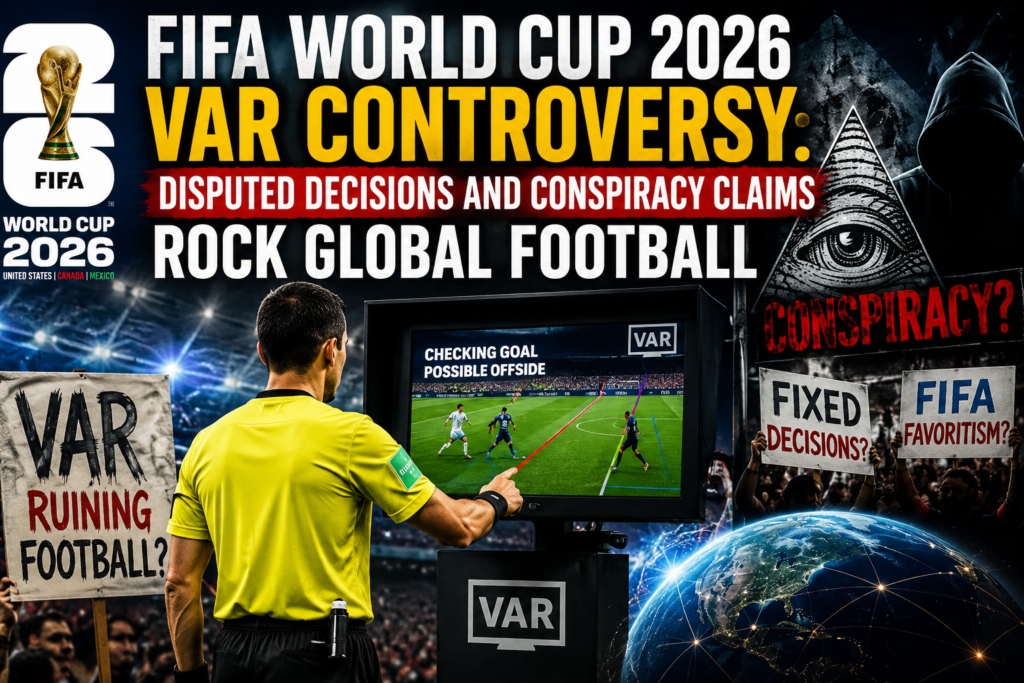
Global Football Controversy: VAR Storms and Conspiracy Claims Rock FIFA World Cup 2026
Atlanta, July 8, 2026 – The FIFA World Cup 2026 has been plunged into one of its most heated controversies yet following Argentina’s dramatic 3-2 comeback victory over Egypt in the Round of 16. What was billed as a tantalising clash between defending champions and African contenders has instead ignited accusations of refereeing bias, inconsistent VAR usage, and a broader narrative of favouritism toward Lionel Messi and Argentina.
The Match That Sparked Outrage
Played on July 7 in Atlanta, the encounter began with Egypt dominating. The Pharaohs took a shock 2-0 lead, with goals from Yasser Ibrahim and Mostafa Zico showcasing their tactical discipline and attacking flair. Mohamed Salah was at the heart of Egypt’s play, pulling strings in attack.
The turning point came in the second half when Zico appeared to have extended Egypt’s lead. After a swift counter involving Salah, Zico slotted home what seemed like a legitimate goal. Celebrations erupted—only for VAR to intervene minutes later. Officials reviewed a foul in the buildup by Egyptian midfielder Marwan Attia (stepping on Lisandro Martínez’s foot) and disallowed the strike, leaving Egypt at 1-0 up at that stage before Argentina mounted their fightback.
Argentina equalised through a goal from Cristian Romero, with Lionel Messi levelling the score in the 83rd minute. Enzo Fernández then headed home the winner in the 92nd minute during stoppage time. Egypt protested furiously, claiming a clear foul on Salah in the penalty area moments before Argentina’s decisive counter-attack went unpunished. No VAR review was called for that incident, further inflaming tensions.
Egypt’s Furious Response
The Egyptian Football Association (EFA) wasted no time in issuing a scathing statement, criticising “blatant errors” and the “improper use” of VAR. They have formally demanded FIFA investigate the refereeing team—led by François Letexier—and remove the officials involved, accusing them of “double standards.”
Egyptian coach Hossam Hassan suggested external pressures were at play: “Perhaps they wanted Messi to stay in the running. In football, there are sometimes external factors that go beyond the technical aspects.” Star striker Mostafa Zico went further, publicly claiming the match felt “fixed,” while captain Mohamed Salah and other players expressed deep frustration over perceived inconsistencies.
The EFA highlighted multiple incidents, including the disallowed goal despite what many viewed as a marginal foul, the ignored penalty shout on Salah, and contrasting decisions earlier in the tournament that appeared to favour Argentina.
The Messi Conspiracy Thriller
Fueling the fire is a swelling narrative of a “Messi protection racket” at this World Cup. Social media and pundits have dissected prior matches, pointing to:
- Messi escaped a potential red card for a studs-up challenge in Argentina’s group stage win over Algeria.
- A controversial goal against Austria, where a foul in the buildup was not overturned by VAR.
- Broader patterns of penalties and lenient officiating are benefiting the Albiceleste.
Commentators and fans have questioned whether FIFA, eager to maximise global interest and Messi’s star power in what could be his final World Cup, has influenced officiating. Al Jazeera and other outlets have noted experts raising concerns about “political influence” and the commercial necessity of keeping Argentina alive.
FIFA has so far remained largely silent on the specific claims, though a spokesperson reiterated the organisation’s trust in the VAR system and referee integrity. President Gianni Infantino has faced renewed scrutiny amid the backlash.
Broader Tournament Context
This is not the first officiating storm of the World Cup 2026. Earlier group stage matches involving Argentina drew complaints from opponents like Algeria and Austria. The expanded 48-team format and introduction of new technologies have amplified debates over consistency, with calls growing louder for greater transparency in VAR reviews, including public audio releases and real-time rather than slow-motion interpretations.
Egypt’s exit has been particularly bitter for African football, which had high hopes after strong group performances. Argentina advances to the quarter-finals, where they remain strong favourites, but the shadow of controversy looms large.
Reactions and Fallout
- Social Media Storm: Hashtags like #VARFix, #MessiProtected, and #EgyptRobbed have trended globally, with millions of views on highlight clips and fan compilations of disputed decisions.
- Player Voices: Messi himself praised his team’s “unyielding spirit” post-match but avoided directly addressing the refereeing debate.
- Expert Calls: Former referees and analysts urge FIFA to address systemic issues to preserve the tournament’s credibility.
As the World Cup progresses toward its climax, this Argentina-Egypt saga underscores ongoing challenges in modern football: balancing technology, human judgment, and the immense commercial and emotional stakes of the beautiful game. Whether Egypt’s complaints lead to any meaningful FIFA action remains to be seen, but one thing is clear—the 2026 edition will be remembered as much for its controversies as its on-pitch drama.
===