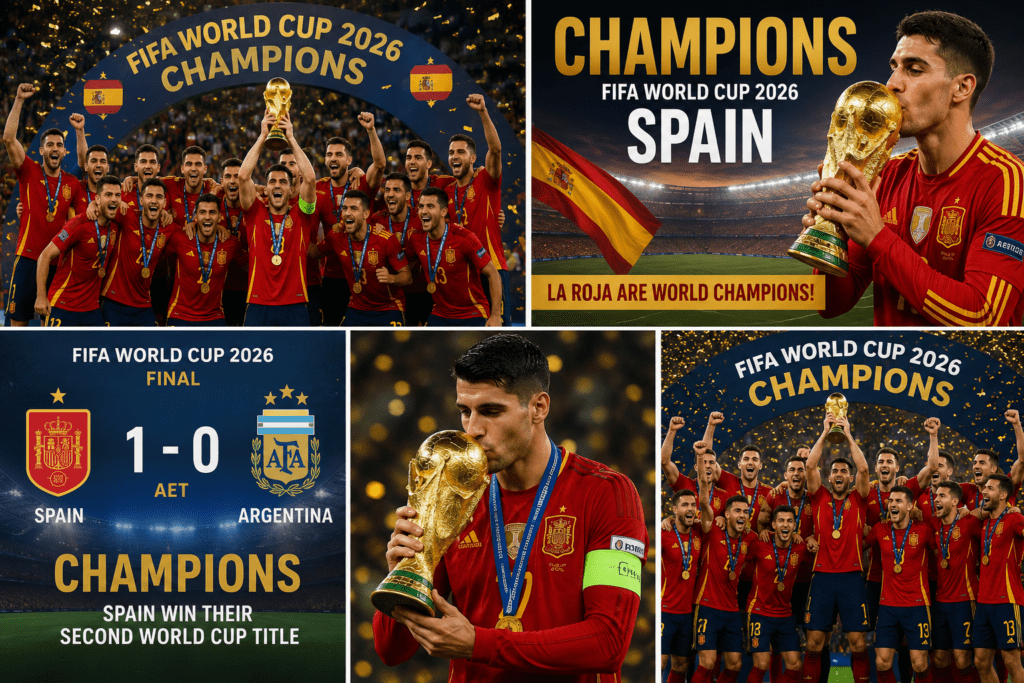
Spain is the FIFA World Cup 2026 Winner.
On July 19, 2026, at the iconic MetLife Stadium in East Rutherford, New Jersey (part of the New York New Jersey Stadium complex), Spain defeated Argentina 1-0 after extra time to claim their second FIFA World Cup title. Substitute Ferran Torres scored the decisive goal in the 106th minute, securing La Roja’s triumph in what was the largest and most expensive World Cup in history, co-hosted by Canada, Mexico, and the United States.
This victory makes Spain the reigning men’s World Cup champions, the first nation to simultaneously hold the men’s and women’s titles after their 2023 women’s World Cup win. It also dethroned Argentina, the 2022 champions led by Lionel Messi, in a highly anticipated final that lived up to the billing of football’s greatest rivalry in the modern era.
The Road to Glory: Spain’s Tournament Journey
Spain entered the 2026 tournament as one of the favourites, boasting a young, dynamic squad blended with experienced leaders. Under manager Luis de la Fuente, La Roja had evolved from their tiki-taka roots into a more versatile, high-pressing, and defensively solid unit. Their path to the final showcased tactical maturity, clinical finishing when needed, and an unbreakable spirit.
Group Stage (Group… – details varied by draw, but Spain topped their group convincingly): Spain cruised through the expanded 48-team format. They recorded strong wins, emphasising possession dominance and quick transitions. Key performers included Rodri, who anchored the midfield with world-class vision and defensive prowess, and emerging stars like Lamine Yamal and Nico Williams on the flanks. Spain’s group stage results highlighted their control: multiple clean sheets and high goal tallies demonstrated their attacking depth.
Knockout Stages:
- Round of 32 and 16: Spain navigated the early knockout rounds with relative ease, dispatching opponents through superior midfield control and set-piece execution. Their defence, marshalled by players like Aymeric Laporte and the ever-reliable Unai Simón in goal, proved difficult to break down.
- Quarterfinals: Spain faced a tougher test against strong European or South American sides. They advanced with narrow victories or dominant displays, relying on the creativity of Pedri and the goal-scoring threat of Álvaro Morata or younger forwards.
- Semifinals: Spain faced a formidable opponent (reports indicate strong performances against teams such as France and England en route). Their semi-final win showcased tactical discipline, with Rodri earning plaudits for his all-around game. By this stage, the squad’s depth—facilitated by the expanded squad sizes and match schedule—became a decisive advantage.
Spain’s journey was characterised by consistency. They conceded few goals, controlled matches through possession (often exceeding 60-70%), and demonstrated adaptability—shifting between high presses and compact defending. The team’s youth movement, featuring talents born in the 2000s, signalled a new golden generation.
The Final: Spain vs Argentina – A Battle for the Ages
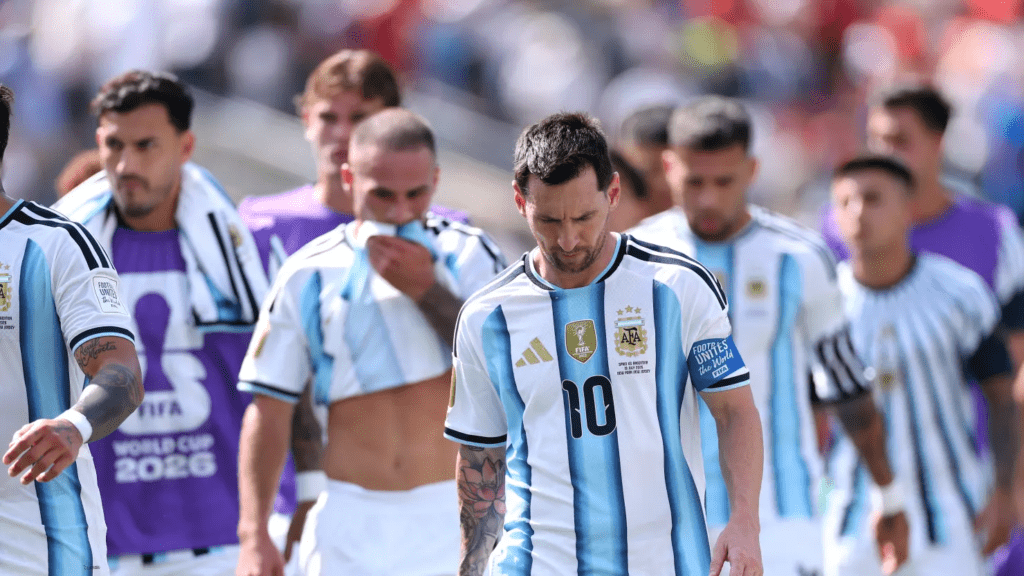
The final pitted Spain against a resilient Argentina side seeking back-to-back titles. The atmosphere at MetLife Stadium, with over 80,000 fans, was electric. Argentina, captained by a 39-year-old Lionel Messi in what was likely his final World Cup, brought experience, flair, and determination. However, Spain’s youthful energy and tactical organisation prevailed.
Match Summary:

- Regulation Time (0-0): A tense, cagey affair. Argentina created chances through Messi and Julián Álvarez, but
- Spain’s defence, led by Rodri and supported by full-backs, neutralised threats effectively. Spain dominated possession but struggled to break down Argentina’s compact setup. Goalkeepers Unai Simón and Emiliano Martínez were standout performers.
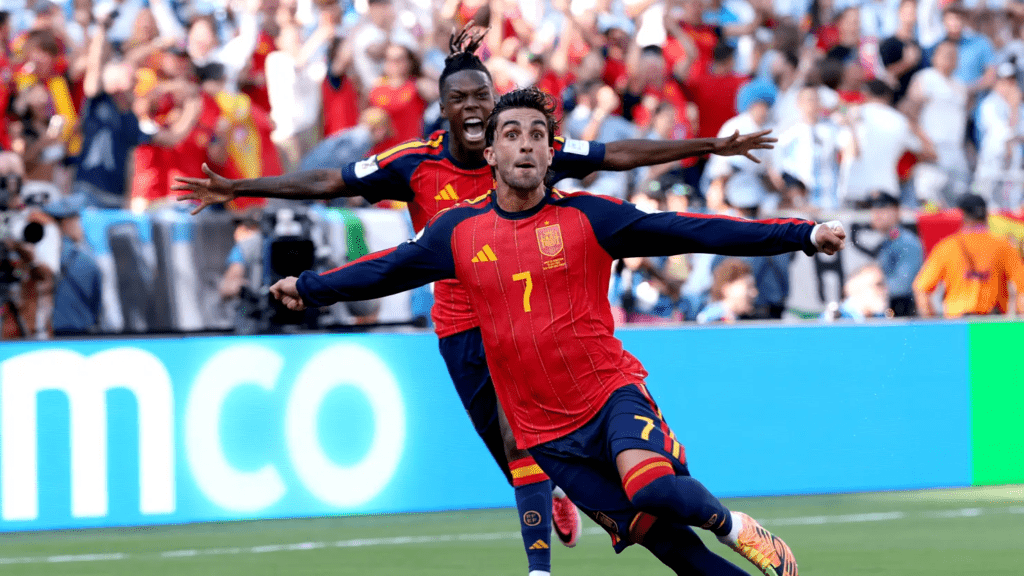
- Extra Time: Spain introduced fresh legs, including Ferran Torres. In the 106th minute, a crucial sequence unfolded: Nico Williams delivered a precise cross or header assist, and Torres, clinical as ever, finished with a composed left-footed strike. The goal ignited Spanish celebrations while deflating Argentina.
- Final Whistle: Spain held firm. Post-match, reports noted on-pitch tensions, including a red card to Argentina’s Leandro Paredes amid frustrations, but the footballing narrative centred on Spain’s composure.
Key Statistics from the Final:
- Spain 1-0 Argentina (a.e.t.)
- Goal: Ferran Torres (106′)
- Possession: Spain ~65%, Argentina ~35%
- Shots: Spain edged the count with better quality.
- Referee: Slavko Vinčić (Slovenia)
- Attendance: 80,663
Rodri was awarded the Adidas Golden Ball as the tournament’s best player, a fitting honour for his midfield mastery. Other individual accolades included potential Golden Boot contenders, with Spain’s attackers contributing across the competition.
Historical Significance
Spain’s 2026 win echoes their 2010 triumph in South Africa, where they also defeated the Netherlands in the final under Vicente del Bosque. That victory ushered in a decade of dominance with multiple European titles. The 2026 success cements Spain as a modern football powerhouse, blending technical brilliance with physicality suited to the modern game.
This was the first 48-team World Cup, featuring 104 matches across 16 host cities. Spain’s victory in this expanded format underscores its ability to manage fixture congestion and squad rotation effectively. It also highlights the shifting global power balance, with European teams continuing their strong showing while South American giants like Argentina pushed to the end.
For Argentina, the defeat was bittersweet. Messi’s legacy remains untarnished, having won in 2022, but the team showed signs of transition. Younger talents will likely build on this experience for future campaigns.
Celebrating the Champions: Spain’s Squad and Heroes
- Rodri: The heartbeat of the team. His vision, tackling, and leadership earned him the Golden Ball. A serial winner with Manchester City, he now adds the ultimate international prize.
- Ferran Torres: The super-sub hero. His extra-time goal will be replayed for generations, overcoming earlier career doubts to etch his name in history.
- Lamine Yamal and Nico Williams: The dynamic wing duo, representing the new wave of Spanish talent. Their speed, dribbling, and creativity terrorised defences.
- Unai Simón: Reliable between the posts with crucial saves.
- Veterans like Morata, Pedri, and others provided leadership and squad depth.
- Manager Luis de la Fuente: Masterminded the campaign with pragmatic yet attacking football.
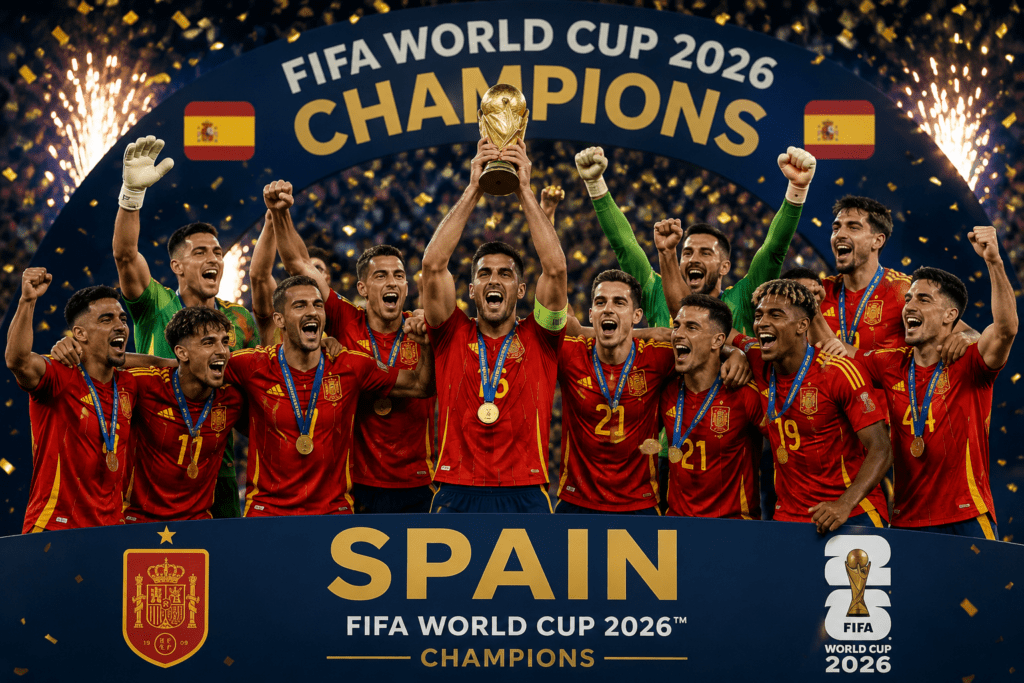
The celebrations were joyous: players hoisting the trophy, emotional scenes in the dressing room, and nationwide parties in Spain. Young stars like Yamal celebrated alongside family, symbolising the passing of the torch.
Broader Impact of the 2026 World Cup
The tournament’s scale—spanning three countries—brought record viewership, economic boosts to host nations, and memorable moments across groups and knockouts. Spain’s win adds to the narrative of European success in recent editions while inspiring global football development.
Legacy for Spain:
- Boost to La Liga and domestic academies (La Masia producing stars like Yamal).
- Increased investment in women’s football synergy.
- National pride and unity at a time of sporting resurgence.
Global Football Reflections:
The matchups highlighted tactical evolutions: high pressing, data-driven preparations, and the importance of squad depth in a long tournament. Controversies, such as post-final incidents or VAR decisions, sparked debates but did not overshadow the sporting achievement.
Detailed Analysis: Why Spain Won
- Tactical Superiority: De la Fuente’s system emphasised midfield control. Rodri’s role allowed creative players freedom while maintaining structure.
- Youth and Experience Balance: A perfect mix prevented burnout and injected energy in later stages.
- Defensive Solidity: Few goals conceded throughout, frustrating attacking powerhouses.
- Clinical Edge in Key Moments: Torres’ goal exemplified opportunism.
- Preparation and Adaptability: Strong qualifying, friendliness, and in-tournament adjustments.
Comparisons to past winners show Spain’s style evolving from 2010’s pure possession to a more complete package.
Player Profiles and Contributions (Expanded)
Rodri (Midfield Maestro): Stats across the tournament likely included high pass accuracy, interceptions, and progressive carries. His leadership in big moments was unmatched.
Ferran Torres: Versatile forward capable of playing across the front line. His goal-scoring record in big games improved dramatically.
Lamine Yamal: At a young age, he dazzled with dribbles, assists, and maturity beyond his years—potentially a future Ballon d’Or contender.
Defensive Unit: Collective effort in shutting down Messi and company.
Goalkeeping and Set Pieces: Spain capitalised on dead-ball situations effectively.
Cultural and Social Echoes
In Spain, the win triggered massive street parties in Madrid, Barcelona, and beyond. Media coverage flooded with analyses, player interviews, and historical retrospectives. Globally, fans celebrated the underdog narratives within the squad and the drama of the final.
Social media exploded with highlights: Torres’ goal, trophy lifts, and memes contrasting the teams’ styles. Brands and sponsors amplified the moment, with FIFA promoting unity and the sport’s growth.
Future Outlook
Spain now eyes defence of the title in 2030 (potentially co-hosted in Spain/Portugal/Morocco). Their young core positions them as favourites for the upcoming Euros and beyond. Argentina will rebuild, with Messi’s influence transitioning to coaching or mentorship roles.
The 2026 World Cup will be remembered for its inclusivity, spectacle, and Spain’s crowning as worthy champions.
==