

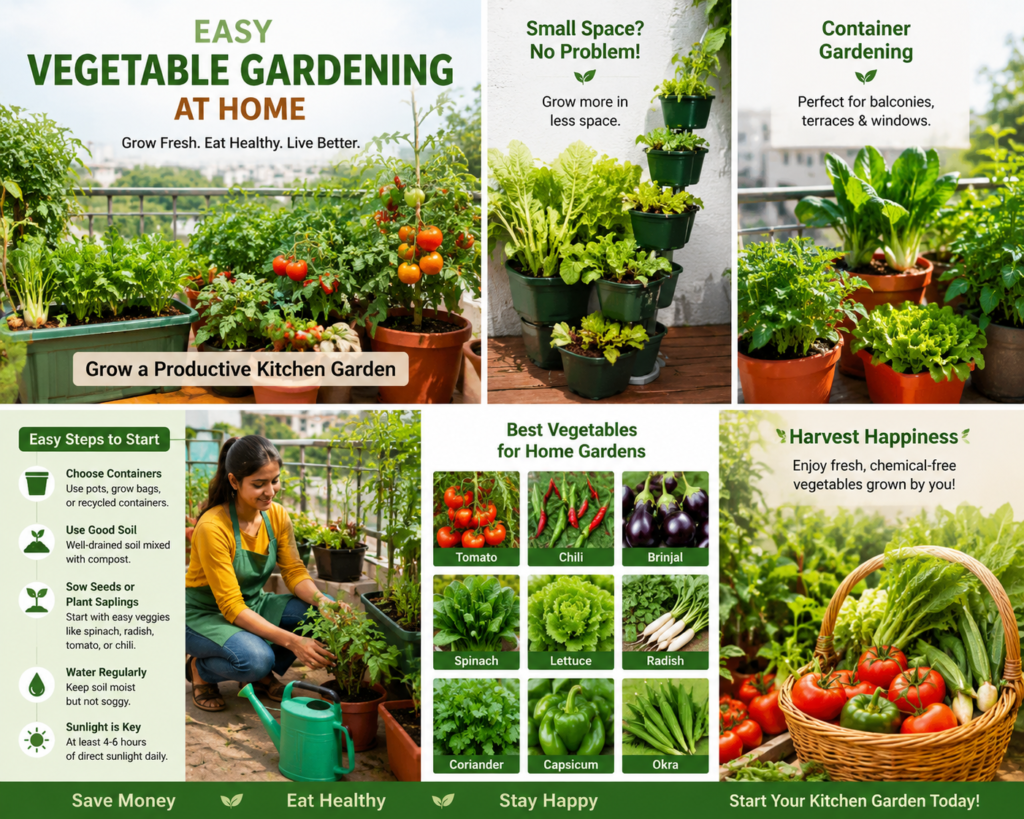
Growing vegetables at home is one of the most rewarding activities you can take up. Fresh produce tastes better, saves money, reduces grocery trips, and connects you directly to the food on your plate. You do not need a large backyard, expensive equipment, or years of experience. Many vegetables thrive in containers on balconies, patios, rooftops, or even sunny windowsills. With the right approach, beginners can harvest crisp salads, juicy tomatoes, and flavorful greens within weeks or months.
This article covers practical, easy methods for growing a wide range of popular vegetables at home. It focuses on simple techniques suitable for small spaces, containers, or modest garden beds. Each section explains the easiest way to succeed with that crop, including variety choices, soil needs, planting steps, care routines, harvesting tips, and common troubleshooting. General principles appear first so you can apply them across crops. The goal is clear, actionable guidance that helps you start and keep plants healthy.
Why Grow Vegetables at Home?
Homegrown vegetables offer superior flavour because they are picked at peak ripeness rather than harvested early for shipping. You control what goes into the soil—no unwanted pesticides or unknown fertilisers if you choose organic methods. Gardening also provides light physical activity, reduces stress, and teaches patience and observation. Children especially benefit from watching seeds turn into food. Even a few pots of leafy greens or herbs can supply regular harvests and cut grocery costs.
Success depends more on matching plants to your conditions than on elaborate setups. Most vegetables need at least 6 hours of direct sunlight daily. Containers must have drainage holes. Consistent watering and basic soil fertility matter more than perfect technique. Start small with two or three crops, learn their rhythms, then expand.
Essential Basics for Home Vegetable Growing
Before planting specific crops, prepare the foundation.
Sunlight and Location. Most fruiting vegetables (tomatoes, peppers, cucumbers, beans) require full sun—6 to 8 hours or more. Leafy greens tolerate partial shade (4–6 hours). Observe your space throughout the day. South-facing balconies or windows usually work best in the Northern Hemisphere. Use reflective surfaces or grow lights if natural light is limited.
Containers vs. Ground. Containers are ideal for apartments and renters. Choose pots at least 8–12 inches deep for most greens and 12–18 inches for larger plants like tomatoes or zucchini. Fabric grow bags, plastic pots, terracotta, or recycled containers all work if they drain well. In-ground or raised beds: amend native soil with compost. Raised beds warm faster in spring and improve drainage.
Soil Mix. Avoid heavy garden soil in pots; it compacts and drains poorly. Use a quality potting mix designed for containers, or make your own with equal parts compost, coco coir or peat alternative, and perlite or vermiculite for aeration. Add slow-release organic fertiliser or worm castings at planting. Replenish nutrients with liquid feed (compost tea, fish emulsion, or balanced organic fertiliser) every 2–4 weeks during active growth.
Watering. Consistency is key. Most vegetables prefer evenly moist soil, not soggy or bone-dry. Check by inserting a finger 1–2 inches deep; water when it feels dry. Morning watering reduces disease risk. Self-watering containers or mulch (straw, shredded leaves, or coco chips) help retain moisture and suppress weeds. In hot weather, containers may need daily watering.
Seeds vs. Transplants. Many crops grow easily from seed sown directly. Others benefit from nursery starts or home-started seedlings for a head start. Follow packet instructions for depth and spacing. Thin seedlings to avoid overcrowding.
Fertilising and Support. Leafy crops need nitrogen-rich feeds. Fruiting crops need balanced nutrition with adequate phosphorus and potassium once flowering begins. Use stakes, cages, or trellises for vining or tall plants to save space and improve air circulation.
Pest and Disease Management. Prevention beats treatment. Healthy soil, proper spacing, and good airflow reduce problems. Hand-pick larger pests, use insecticidal soap or neem oil for soft-bodied insects, and remove diseased leaves promptly. Companion planting (basil near tomatoes, marigolds near many crops) can help deter pests. Rotate crops if possible to limit soil-borne issues.
Season and Climate. Cool-season crops (lettuce, spinach, peas, radishes, kale) prefer spring and fall. Warm-season crops (tomatoes, peppers, cucumbers, beans, zucchini) need warm soil and air after the last frost. Check your local frost dates. In hot climates, provide afternoon shade for sensitive greens. Succession planting—sowing small batches every 1–2 weeks—extends harvests.
With these basics, you can succeed with the following vegetables. Each section emphasises the simplest reliable method for home growers.
Tomatoes: The Classic Homegrown Favourite
Tomatoes reward effort with abundant, flavorful fruit. Choose determinate (bush) varieties for containers or limited space; they grow to a fixed height and produce a concentrated crop. Indeterminate types keep growing and fruiting longer but need stronger support. Cherry and grape tomatoes are often the easiest and most productive for beginners.
Easy Method. Use a 5-gallon (or larger) container with drainage. Fill with quality potting mix enriched with compost. Plant one strong transplant deep—bury the stem up to the first set of true leaves; roots will form along the buried stem, creating a sturdier plant. Place in full sun. Water deeply when the top inch of soil dries. Stake or cage immediately. Side-dress with compost or balanced fertiliser when the first flowers appear, then every 3–4 weeks. Mulch the surface. Prune suckers (side shoots) lightly on indeterminates if desired for better airflow, but it is optional for many home growers.
Harvest when fruit is fully colored and slightly soft. Regular picking encourages more production. Common issues include blossom-end rot (usually calcium imbalance from uneven watering—keep moisture steady) and pests such as hornworms (hand-pick) or aphids (spray with water or soap). In cooler climates, start seeds indoors 6–8 weeks before the last frost or buy healthy transplants.
Tomatoes thrive with consistent care and repay it generously. A single healthy plant can yield several pounds of fruit.
Leafy Greens: Lettuce, Spinach, and Swiss Chard
Leafy greens are among the fastest and most forgiving crops. They grow well in partial shade and produce continuously if harvested properly.
Lettuce (Easy Method). Choose loose-leaf or butterhead types over heading varieties for quicker, cut-and-come-again harvests. Sow seeds directly in containers at least 6–8 inches deep, barely covering them. Keep soil moist. Thin to 4–6 inches apart. Provide 4–6 hours of sun; too much intense heat causes bitterness and bolting. Harvest outer leaves when they reach usable size, leaving the centre to regrow. Succession sow every 2 weeks for a steady supply. In hot weather, grow in partial shade or choose heat-tolerant varieties. Watch for aphids and slugs; hand-remove or use barriers.
Spinach. Similar to lettuce but prefers cooler temperatures. Sow in early spring or fall. Thin to 3–4 inches. Harvest young leaves. Bolting occurs quickly in heat, so time plantings carefully or choose slow-bolt varieties. Keep soil consistently moist.
Swiss Chard. More heat-tolerant than spinach or lettuce. Sow or transplant into containers or beds. It produces large, colourful leaves for months. Harvest outer leaves regularly. It tolerates light frost and continues into cooler weather. Rich soil and steady moisture yield tender leaves.
These greens need less space and sunlight than fruiting crops, making them perfect for beginners and small spaces. A few pots can supply salad greens for weeks.
Radishes: Speedy and Nearly Foolproof
Radishes mature in as little as 3–4 weeks, providing quick success and confidence for new gardeners.
Easy Method. Sow seeds directly in loose, well-draining soil or potting mix, about ½ inch deep and 1 inch apart. Thin to 2 inches once seedlings appear. Full sun to light shade works. Keep evenly moist—dry soil causes woody or spicy roots; excess water can cause splitting. Harvest when roots reach the size indicated on the packet (usually golf-ball size for common types). Do not leave them too long or they become pithy. Succession plant every 7–10 days. The leaves are edible too. Radishes rarely need fertiliser beyond good soil. They pair well as a catch crop between slower plants.
Radishes teach the value of timing and consistent moisture with minimal effort.
Carrots: Sweet Roots from Loose Soil
Homegrown carrots often taste sweeter than store-bought. Choose shorter or round varieties for containers.
Easy Method. Use deep containers (at least 12 inches) or raised beds with light, stone-free soil. Sow seeds thinly, covering lightly. Keep the surface moist until germination, which can take 1–3 weeks. Thin gradually to 2–3 inches apart. Full sun and even moisture produce straight roots. Avoid high-nitrogen fertilisers that favour tops over roots. Harvest when shoulders reach desired size by gently loosening soil and pulling. Baby carrots can be harvested earlier. Mulch helps retain moisture and suppress weeds. Carrot flies are less common in containers; row covers help in ground plantings if needed.
Patience with germination and thinning pays off in crisp, flavorful roots.
Bush Beans: Productive and Space-Efficient
Bush beans produce heavily in a compact form without needing tall trellises.
Easy Method. Sow seeds directly after the soil warms (usually 1–2 weeks after last frost), 1 inch deep and 3–4 inches apart in containers or beds. Provide full sun. Water regularly, especially during flowering and pod set. Beans fix some nitrogen but still benefit from moderate fertility. Harvest pods when they are firm and snap easily, before seeds inside become large and tough. Frequent picking encourages more production. Bush varieties finish in a concentrated period; succession sow for longer harvests. Pole beans yield over a longer season but require support—bush types are simpler for most home growers.
Beans are relatively pest-resistant and rewarding for the space they occupy.
Cucumbers: Crisp and Refreshing
Cucumbers grow vigorously and produce abundantly when given warmth and consistent water.
Easy Method. Choose bush or compact varieties for containers (5-gallon minimum). Sow seeds directly or start indoors. Plant in full sun in a rich, well-draining mix. Provide a small trellis or cage even for bush types to keep fruit clean and improve airflow. Water deeply and regularly—irregular moisture causes bitterness. Fertilise moderately once vines grow. Harvest frequently when fruits reach usable size; overmature cucumbers signal the plant to stop producing. Watch for powdery mildew (improve air circulation, avoid overhead watering) and cucumber beetles (hand-pick or use covers early).
A couple of plants can supply more cucumbers than a small household needs.
Peppers: Sweet and Hot Varieties
Peppers (bell, chilli, or speciality) thrive in warm conditions and containers.
Easy Method. Start with transplants or start seeds indoors 8–10 weeks early. Use 3–5 gallon pots. Full sun and warm temperatures are essential. Plant at the same depth as in the nursery pot. Keep soil evenly moist but not waterlogged. Feed with a balanced fertiliser once flowering begins. Support larger plants if needed. Harvest sweet peppers when fully colored for best flavour; hot peppers can be picked green or fully ripe. Peppers slow in cool weather—grow them in the warmest spot available. Common issues include blossom drop from temperature extremes or uneven watering.
Peppers are productive once established and store well.
Zucchini and Summer Squash: Abundant Producers
One or two zucchini plants can overwhelm a household with fruit.
Easy Method. Sow seeds directly in large containers (at least 5–10 gallons) or hills in beds after soil warms. Full sun and rich soil. Bush varieties suit containers better than sprawling types. Water consistently at the base. Harvest when fruits are young and tender (6–8 inches for wide varieties); large fruits become seedy and signal the plant to reduce production. Check plants daily during peak season. Male and female flowers appear; bees usually handle pollination, but hand-pollination with a brush helps if fruit set is poor. Powdery mildew and squash vine borers are common; good airflow and monitoring help.
Zucchini teaches the importance of timely harvesting.
Peas: Cool-Season Climbers or Bush Types
Peas prefer cool weather and reward early spring or fall planting.
Easy Method. Sow seeds directly in early spring as soon as soil can be worked, or in fall in mild climates. Bush varieties need little support; tall types benefit from a simple trellis or netting. Full sun to light shade. Keep soil moist. Peas fix nitrogen and need little fertiliser. Harvest pods when they are plump but before they become tough. Shelling, snap, and snow peas offer different eating experiences. Once heat arrives, plants decline—time plantings accordingly.
Peas are gentle on the soil and pleasant to harvest.
Green Onions / Scallions and Bunching Onions
These are among the easiest alliums for continuous harvest.
Easy Method. Sow seeds thickly in containers or beds, or plant sets. They tolerate partial shade. Keep moist. Harvest by snipping green tops as needed or pulling whole plants when pencil-thick. Wide varieties regrow after cutting. For a perpetual supply, leave some roots in the soil or regrow grocery-store green onions by placing the white base in water or soil.
They require minimal space and provide flavour year-round in mild climates.
Potatoes: Surprisingly Easy in Containers
Homegrown potatoes offer unique varieties and excellent flavour.
Easy Method. Use large containers, grow bags, or stacked tyres. Place a few seed potatoes (certified disease-free) on a layer of soil or mix, cover with a few inches, and as plants grow, keep adding soil or mix to cover the stems (hilling). This encourages more tubers. Full sun and consistent moisture. Harvest new potatoes when plants flower by gently exploring, or wait until foliage dies back for mature storage potatoes. Avoid green potatoes (they contain solanine). Containers make harvest cleaner and reduce soil-borne disease risk.
Potatoes are fun and productive with this simple hilling technique.
Kale and Other Brassicas (Broccoli, Cabbage – Simplified Approaches)
Kale is the easiest brassica for home growers.
Easy Method for Kale. Sow or transplant into containers or beds. It tolerates cold and some heat better than many relatives. Full sun to partial shade. Harvest outer leaves continuously. Flavour often sweetens after light frost. Aphids and cabbage worms appear; inspect regularly and use covers or hand-picking. Broccoli and cabbage need more space and consistent conditions; start with kale for reliability, then experiment.
Additional Easy Crops Worth Trying
Beets. Sow directly; both roots and greens are edible. Thin for root development. Consistent moisture prevents toughness.
Arugula and Mustard Greens. Fast-growing, peppery leaves. Cut-and-come-again. Bolt quickly in heat—grow in cool seasons or shade.
Eggplant. Similar to peppers: warmth, full sun, consistent water, and support. Choose compact varieties.
Herbs as Companions. While not vegetables, basil, parsley, and cilantro grow easily nearby and enhance the garden. Basil particularly pairs well with tomatoes.
Extending the Season and Maximising Yield
Use row covers or cold frames for early starts and late harvests. Succession planting and interplanting (radishes between slower crops) increase productivity. Save seeds from open-pollinated varieties once you gain experience. Compost kitchen scraps to enrich future soil. Observe your plants daily—early detection of issues prevents bigger problems.
Keep a simple journal of planting dates, varieties, and results. Over time, you will learn what thrives in your microclimate.
Common Challenges and Simple Solutions
- Bolting: Heat or long days cause greens to flower and turn bitter. Harvest early, provide shade, or choose bolt-resistant varieties.
- Poor Fruit Set: Often due to temperature extremes, lack of pollinators, or irregular watering. Hand-pollinate if needed and maintain steady conditions.
- Yellow Leaves: Could be overwatering, underwatering, nutrient deficiency, or natural ageing of lower leaves. Check soil moisture and feed appropriately.
- Pests: Encourage beneficial insects with diverse plantings. Use physical barriers and least-toxic controls first.
- Limited Space: Go vertical with trellises. Choose compact or dwarf varieties. Practice intensive planting with proper thinning.
Harvesting, Storage, and Enjoying the Harvest
Harvest in the cool of the morning for best quality. Many greens and herbs store a few days in the refrigerator in damp paper towels or containers. Tomatoes and peppers keep at room temperature until fully ripe. Preserve excess by freezing, drying, fermenting, or simple canning once you have volume.
Cooking with your own produce is the ultimate reward. Fresh tomato salads, sautéed greens, roasted zucchini, or a simple plate of radishes and green onions highlight the difference in quality.
Getting Started This Season
Begin with 3–5 easy crops that match your season and space: leafy greens, radishes, bush beans, cherry tomatoes, and green onions form an excellent starter set. Prepare containers or a small bed, obtain quality seeds or transplants, and follow the moisture and light guidelines. Within weeks, you will see progress; within a couple of months, you will harvest.
Gardening is iterative. Not every plant will be perfect, and that is part of the process. Each season builds knowledge and confidence. The vegetables you grow will taste better because of the care you invest, and the act of growing them will enrich daily life.
Whether you have a sunny windowsill, a balcony, or a backyard plot, you can produce meaningful amounts of fresh vegetables with straightforward methods. Start simply, observe closely, water consistently, and enjoy the process. Your home garden can become a reliable source of food, flavour, and satisfaction for years to come.