

Lakhisarai/Patna, August 17, 2026: At least seven devotees were killed and more than a dozen others injured on Monday morning in a stampede at the Ashok Dham temple in Lakhisarai district of Bihar. The tragedy occurred amid a heavy rush of pilgrims offering prayers and sacred water (jalabhishek) to Lord Shiva on the third auspicious Monday (teesri Somwari) of the holy month of Shravan (Sawan).
The incident took place around 6:30–6:45 a.m. near the temple premises, close to the Ashok Dham Halt railway station. Thousands of devotees, many of them women, had gathered for the rituals. According to officials and eyewitnesses, the crowd swelled sharply after two trains arrived at the nearby halt station in quick succession, bringing in additional pilgrims who then rushed towards the temple.
Lakhisarai District Magistrate Shailendra Kumar said the sudden surge caused a section of the bamboo barricades to collapse under pressure. An electric pole carrying a cable wire also snapped or fell on the right side of the men’s queue area. This sparked panic and widespread rumours that a live electric wire had fallen and that people were at risk of electrocution. The resulting chaos triggered a crush, particularly affecting the women’s queue on the left side, where people fell over one another.
“The incident happened at 6:40 in the morning today due to a heavy rush of devotees… the barricade broke down, which triggered a sudden stampede,” DM Kumar said. He noted that district officials were present at the site and that arrangements had been made in anticipation of the crowd, but the influx proved unprecedented. Preliminary reports indicated that some younger devotees also attempted to push through the barricades, adding to the disorder.
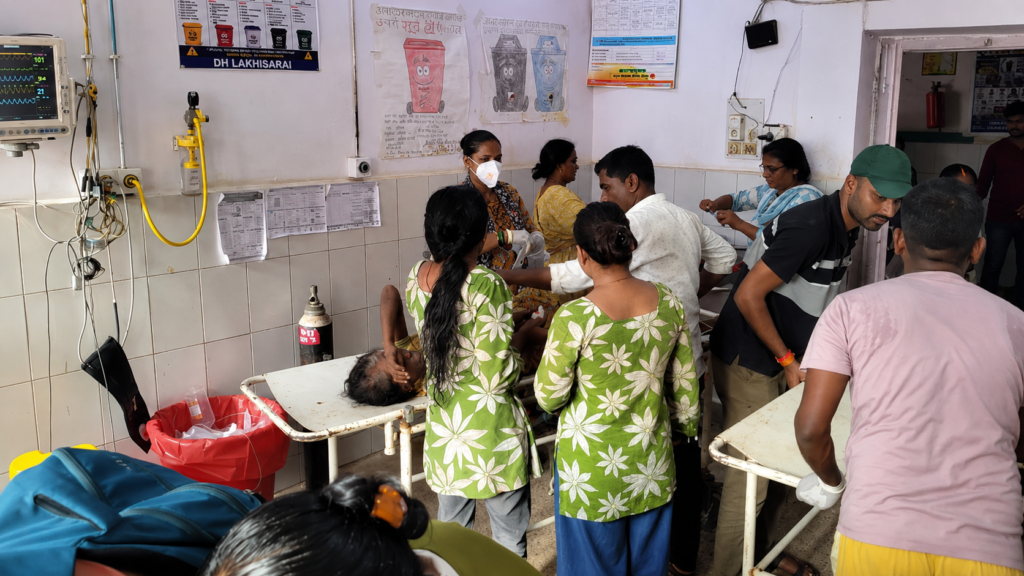
Most of the deceased were women. Four victims have been identified as Hemlata Devi, Lalita Devi, Rinku Devi and Manmala Devi; efforts continued to identify the remaining three. The injured were shifted to the local Sadar government hospital for treatment. Reports on the exact number of injured varied slightly in the initial hours, ranging from over a dozen to around 19, with some described as being in critical condition.
Ashok Dham (also associated with the Indrameshwar Mahadev temple) is a popular Shiva shrine in the region that draws large crowds during Shravan Mondays for jalabhishek rituals. The holy month, typically falling between July and August, is dedicated to Lord Shiva and sees devotees observe fasts and flock to temples across India. Crowd crushes remain a recurring hazard at such gatherings in India, often linked to high footfall in confined spaces and challenges in crowd management.
Bihar Chief Minister Samrat Choudhary expressed deep grief over the deaths, describing the incident as “tragic and heartbreaking.” He announced an ex-gratia payment of ₹4 lakh to the kin of each deceased and directed the administration to ensure prompt medical care for the injured. “My heartfelt condolences to the bereaved families… May God grant peace to the departed souls and a speedy recovery to those who have been injured,” he posted on X.
Opposition leader Tejashwi Yadav also expressed sorrow and criticised the state government for alleged shortcomings in security and crowd-control arrangements. Local BJP leaders pointed to possible negligence by the electricity department and called for a high-level investigation.
Police and district administration teams remained at the site to manage the situation, assist the injured, and restore order. An inquiry into the exact sequence of events and the causes of the stampede was underway. Officials clarified that the fallen wire was a cable wire rather than a live electricity line, but the rumour of electrocution had already fuelled the panic.
The tragedy once again highlights the risks associated with large religious congregations in India and the need for robust crowd-management protocols, especially during peak festival periods such as Shravan.